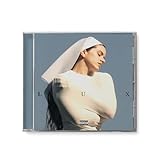
LUX is Rosalía’s fourth full-length album, released through Columbia Records on November 7, 2025. It makes orchestral scale and multilingual singing central to its sound, but its ambition matters most when it sharpens the music rather than simply enlarging it. The result is a pop record that asks for attentive listening: its spiritual and feminine-mystique framing is a point of entry, not a substitute for hearing how its voices and textures work together.
What kind of album is LUX?
LUX is a deliberate turn toward orchestral, classically inflected pop. Sony Music says the album was recorded with the London Symphonic Orchestra, conducted by Daníel Bjarnason, and lists collaborators including Björk, Carminho, Estrella Morente, Silvia Pérez Cruz, Yahritza and Yves Tumor, alongside choir performers. Those credits establish the scale of the project; they do not mean every song behaves like a conventional orchestral showcase.
| # | Preview | Product | Price | |
|---|---|---|---|---|
| 1 |
|
LUX | $13.03 | Buy on Amazon |
| 2 |

|
Lux CD Signed Autographed By Rosalia Vila Tobella Framed PSA/DNA COA | $499.99 | Buy on Amazon |
Apple Music’s editorial notes point to a more hybrid palette: cajón and handclaps alongside urbano bass, Auto-Tune and somber strings. That mix is a useful way to approach the record. The orchestral setting does not erase Rosalía’s pop vocabulary; it places familiar rhythmic and vocal tools in a more ceremonious frame. The tension between those registers is part of the album’s character.
How do the arrangements serve the songs?
The orchestra gives LUX breadth and gravity, and the shifts in texture make the album feel conceived as a larger statement rather than a sequence of unrelated singles. At its best, that scale intensifies the contrast between intimate vocal phrasing and a surrounding musical world that feels expansive. At other points, the concept can seem to lead the listening experience: the grand frame is immediately legible, while the individual song’s pop pull may take longer to surface.
#1 Best Overall
That balance is the central test of the record. Its most persuasive moments are not simply the biggest ones; they are the moments when orchestral color, rhythm and voice make one another more expressive. The classical ambition would be less compelling if it merely decorated the songs. Here, the hybrid approach gives Rosalía room to move between starkness and fullness without abandoning the physical pulse of pop.
What do the multilingual vocals add?
The Associated Press reports that Rosalía performs across 13 languages and calls the performance “a phonetic miracle.” The phrase belongs to the AP review, but it captures the album’s unusual vocal emphasis: language itself becomes part of the sound, alongside melody, tone and rhythm. The shifts help make the record feel expansive, though they can also ask listeners to follow unfamiliar words by ear rather than rely on immediate lyrical comprehension.
That does not make the vocals a gimmick. They reinforce the album’s sense of movement across different musical and cultural registers, while Rosalía’s changing delivery remains a continuous thread. Apple Music’s editorial notes say she views the lyrics as containing only “little pieces” of herself. That is platform editorial context, not a verified interview quotation; it offers a useful caution against treating the album as a straightforward autobiographical confession.
Do the spiritual themes work as pop?
The record’s spiritual and feminine-mystique ideas are part of its public framing, but they are most convincing when they emerge through sound and performance rather than explanation. The choral and orchestral scale lends the music a sense of ceremony; the contrast with contemporary production keeps that ceremony from becoming simply a period-piece gesture. Whether a listener finds the spiritual register moving or overly formal will depend in part on how readily they accept that deliberate elevation.
Free tools Windows power users keep installed
One-click scans. No signup required.
Pitchfork characterizes LUX as avant-garde classical pop and discusses its religious ideas and engagement with female saints and poets. That is one critic’s interpretive framing, not a neutral measure of what the album achieves. The more useful question is whether the ideas deepen the listening. The record offers a coherent atmosphere and a strong point of view, even if its symbolic scale can sometimes feel more apparent than the shape of any one song.
Rank #2
- Signed Autograph CD Framed PSA/DNA COA
- PSA/DNA Certificate of Authenticity
How does LUX relate to Rosalía’s earlier work?
The Associated Press contrasts LUX with Motomami, describing the new album as a full-hearted embrace of Rosalía’s classical training through orchestral movements. That contrast helps clarify the shift in emphasis: the sound is less defined by the expectation of a sleek, compact pop statement and more by breadth, vocal transformation and formal ambition. Yet the use of urbano bass, Auto-Tune and sharply physical percussion keeps the album connected to contemporary pop rather than severing it from Rosalía’s prior language.
So the break is real, but it is not a rejection of pop. LUX seems interested in what happens when pop instincts operate inside a more theatrical, orchestral design. The change will suit listeners who welcome scale and deliberate pacing; those looking primarily for the immediate compression of a radio-ready single may find the album demanding.
Which edition’s length and track count are being cited?
Published listings describe different configurations, so the edition matters when citing a count or running time. Apple Music’s US streaming album listing gives 15 songs and 49 minutes. The Associated Press review describes an 18-track, hourlong album. The available sources do not establish whether those figures reflect distinct editions or fully document the differences between them.
Recommended Free Tools
| Source and listing | Track count | Running time | Qualification |
|---|---|---|---|
| Apple Music, US streaming album listing | 15 songs | 49 minutes | Catalog listing |
| Associated Press review | 18 tracks | Hourlong | Review description; edition not specified in the available account |
There is also an official Sony Music Japan announcement for a domestic CD release. The available information confirms that release path, but not a complete territory-by-territory comparison of physical and streaming configurations. Confirm the exact edition and current availability with the seller before buying.
Verdict: who should listen?
LUX is most rewarding for listeners open to pop that expands into orchestral movement, shifting vocal textures and spiritual scale. Its hybrid production keeps the classical ambition from becoming purely formal, while the multilingual performance makes voice a central instrument. The album’s grand concept can sometimes overshadow the immediate identity of an individual song, but its best passages make that ambition feel like a musical choice rather than a costume.
Quick Recap
Product prices and availability are accurate as of the date/time indicated and are subject to change. Any price and availability information displayed on Amazon at the time of purchase will apply.




