Recommended Free Tools
Robin Hood has survived centuries of reinvention because the legend bends easily to the needs of each era. Sometimes he’s a mythic outlaw in Lincoln green, sometimes a grounded rebel shaped by political unrest, and sometimes a romantic hero defined by the people around him as much as his own ideals. Film and television keep returning to Sherwood Forest because its characters offer a familiar framework that invites reinterpretation rather than repetition.
Every new adaptation lives or dies on its ensemble, not just the man with the bow. From Marian’s evolving agency to the Sheriff’s many shades of villainy, Robin Hood stories thrive on recognizable roles that actors can reshape through performance. Casting choices often signal a filmmaker’s intent, whether leaning into historical grit, swashbuckling adventure, or modern revisionism.
| # | Preview | Product | Price | |
|---|---|---|---|---|
| 1 |

|
Robin Hood | $11.64 | Buy on Amazon |
| 2 |

|
Robin Hood: Prince Of Thieves | $12.09 | Buy on Amazon |
| 3 |
|
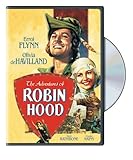
Adventures of Robin Hood, The (1938) (DVD) | $8.99 | Buy on Amazon |
| 4 |
|
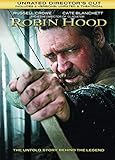
Robin Hood | $8.99 | Buy on Amazon |
| 5 |

|
4 Film Favorites: Kevin Costner (Robin Hood: Prince of Thieves, Wyatt Earp, The Postman, JFK) | $10.24 | Buy on Amazon |
This guide breaks down who’s who in the latest Robin Hood adaptation, clarifying how each character functions within the story and the larger mythos. By examining the cast and their interpretations, it becomes easier to see how these familiar figures are refreshed for contemporary audiences while still honoring the legend that keeps pulling storytellers back to Sherwood.
Robin of Loxley: The Outlaw Hero Reimagined
At the center of the legend is Robin of Loxley, the nobleman turned outlaw whose personal awakening fuels the entire story. In this adaptation, Robin is introduced not as a fully formed folk hero, but as a man shaped by loss, political corruption, and the growing divide between England’s ruling class and its forgotten poor. His journey from privileged landowner to masked revolutionary gives the narrative its emotional spine.
#1 Best Overall
- The Robin Hood legend told with animals portraying the famous characters. Foxy Robin helps the overtaxed citizens of Nottingham by stealing from the rich and giving to the poor.
Rather than leaning into pure myth, this version frames Robin as a reluctant symbol who earns his legend through action rather than destiny. The bow remains his signature weapon, but it’s his evolving moral clarity that defines him. Each choice Robin makes pushes him closer to becoming an idea larger than himself, one that inspires resistance across Nottingham.
The Actor Behind the Hood
The role is played by Taron Egerton, whose performance emphasizes physical intensity and emotional immediacy over traditional swashbuckling charm. Egerton’s Robin is bruised, impulsive, and visibly learning as he goes, grounding the character in human vulnerability rather than folklore perfection. His athleticism brings credibility to the action-heavy reinvention, while his quieter moments reveal a man wrestling with guilt and responsibility.
This interpretation marks a departure from the effortless heroics of earlier screen Robins. Instead of a carefree outlaw, Egerton presents Robin as someone forged by consequence, making his transformation feel earned rather than inherited.
Robin’s Place in the Mythos
Robin of Loxley has always been a reflection of the era telling his story, and this version aligns him with modern audiences’ skepticism toward power and institutions. His rebellion is less about personal vengeance and more about exposing systemic injustice, reframing the legend as a story of organized resistance rather than individual bravado.
Do these 3 things before closing this tab:
1Fix the driver behind crashes, sound loss and screen glitches2Clear out junk files and repair common Windows errors3Scan for outdated or missing drivers - takes under a minuteBy positioning Robin as both participant and catalyst, the film reinforces why he remains the axis around which all other characters revolve. Marian’s resolve, John’s mentorship, and the Sheriff’s tyranny all gain meaning through their collision with Robin’s awakening. It’s a reimagining that honors the myth while reshaping the hero at its core.
Marian: From Damsel to Strategic Partner
In this reimagining, Marian is no longer a passive figure waiting on the sidelines of Robin’s heroism. Instead, she emerges as an active force within the story, operating with political awareness and moral urgency equal to the men around her. The film reframes her not as a prize to be rescued, but as a strategist whose convictions help shape the rebellion itself.
This Marian understands the machinery of power in Nottingham long before Robin does. Embedded within the ruling elite, she witnesses firsthand how corruption is normalized and justified, giving her a perspective that proves invaluable once resistance begins to take shape. Her intelligence and resolve make her a bridge between the oppressed and the institutions exploiting them.
The Actor Reimagining Marian
Marian is portrayed by Eve Hewson, who brings a grounded intensity to the role that aligns with the film’s modern sensibilities. Hewson plays Marian as sharp, controlled, and quietly defiant, often communicating more through restraint than grand speeches. It’s a performance that emphasizes observation and calculation, reinforcing the idea that Marian’s strength lies in foresight rather than force.
Crashes, No Sound, or Screen Glitches?
Random freezes, missing sound and display glitches usually trace back to one bad driver. Find and replace yours safely.Free scan · under a minutePC Slower Than It Used to Be?
A free scan shows the junk files, broken settings and background clutter dragging Windows down - then fixes them in one click.Free scan · Windows 10 & 11Rather than positioning her as Robin’s emotional anchor alone, Hewson’s Marian feels like his intellectual equal. Their dynamic is built on debate and shared purpose, not idealized romance, which allows their relationship to evolve alongside the larger political awakening of the story.
Marian’s Role in the Larger Myth
Historically, Maid Marian has oscillated between romantic interest and symbolic virtue, often sidelined once the adventure begins. This adaptation corrects that imbalance by giving her narrative agency, placing her at the heart of the resistance’s planning and moral compass. She challenges Robin’s instincts, questions his methods, and pushes him to think beyond impulse.
By redefining Marian as a strategic partner, the film modernizes one of the legend’s most underdeveloped figures. Her presence reinforces the idea that revolutions are not built by lone heroes, but by alliances forged through shared risk and clarity of purpose. In doing so, Marian becomes essential not just to Robin’s journey, but to the credibility of the rebellion itself.
Rank #2
The Merry Men: Little John, Friar Tuck, and the Brotherhood
Every Robin Hood story ultimately lives or dies by its supporting outlaws, and this adaptation leans heavily into the idea that rebellion is collective. The Merry Men are not a colorful backdrop or comic relief, but a network of veterans, laborers, and dissidents forged by shared loss and survival. Their presence reframes Sherwood Forest as an organized resistance rather than a romantic hideaway.
Quick wins for a faster PC:
Scan for outdated or missing drivers - takes under a minuteDriver Scan →Clear out junk files and repair common Windows errorsFree Scan →Fix the driver behind crashes, sound loss and screen glitchesFind Drivers →Little John: The Soldier Behind the Legend
Little John is portrayed by Jamie Foxx, who reimagines the character as a hardened Moorish warrior shaped by the Crusades. This version is less jovial giant and more tactical mentor, guiding Robin with discipline learned on real battlefields. Foxx brings gravity and lived-in authority, positioning Little John as the ideological backbone of the movement.
Rather than simply supporting Robin’s rise, Little John actively challenges his assumptions about heroism and violence. He understands systems of power and exploitation on a global scale, grounding the rebellion in purpose rather than impulse. In many ways, he is the architect who ensures the legend becomes something sustainable.
Friar Tuck: Faith, Frustration, and Fire
Tim Minchin’s Friar Tuck is a sharp departure from the jolly monk of earlier adaptations. Here, Tuck is a former man of faith whose idealism has been eroded by institutional hypocrisy and the suffering of the poor. Minchin plays him with caustic wit and simmering anger, giving the character an edge that feels distinctly modern.
Friar Tuck serves as the moral accelerant of the group, articulating what others feel but hesitate to say. His disillusionment with authority mirrors the film’s broader critique of power structures, making him a vocal catalyst for open rebellion. The humor remains, but it’s sharpened into protest rather than comfort.
What’s actually slowing this PC down?
Pick the symptom - the matching free tool is one click away.
Will Scarlet and the Shape of the Brotherhood
Jamie Dornan’s Will Scarlet embodies the internal conflict of the ruling class, torn between inherited privilege and personal conscience. As Robin’s closest friend, Will represents a path not taken, showing how fear and compromise can coexist with good intentions. Dornan plays the role with restraint, emphasizing emotional distance rather than overt villainy.
Beyond individual figures, the Brotherhood itself is portrayed as fluid and evolving. Blacksmiths, laborers, and soldiers move in and out of the resistance, reinforcing the idea that the legend of Robin Hood is built from many hands. This collective identity grounds the myth in social unrest, reminding viewers that revolutions are born not from symbols, but from people willing to stand together.
Villains and Power Players: The Sheriff of Nottingham and Royal Authority
If the Brotherhood represents collective resistance, the film’s antagonists embody the machinery that makes such resistance necessary. Power here is not abstract or distant; it has faces, offices, and ledgers, all working in quiet coordination. Rather than cartoon villainy, the opposition is framed as a system designed to profit from endless conflict.
The Sheriff of Nottingham: Power as Performance
Ben Mendelsohn’s Sheriff of Nottingham is less a mustache-twirling tyrant than a sleek political operator. He understands that authority is about optics as much as enforcement, presenting himself as a civil servant while ruthlessly extracting wealth from the poor. Mendelsohn plays him with a calculated calm, making every smile feel transactional.
The Tool Desk
Outbyte PC Repair FREEClear out junk files and repair common Windows errorsFree Scan →Outbyte Driver Updater FREEScan for outdated or missing drivers - takes under a minuteDriver Scan →This Sheriff is a middle manager of oppression, enforcing royal will while enriching himself in the process. His obsession with control and surveillance turns Nottingham into a pressure cooker, where rebellion feels inevitable rather than heroic. By grounding the character in bureaucratic cruelty, the film reframes the Sheriff as a modern villain hiding behind procedure and patriotism.
Cardinal and Crown: Corruption at the Highest Level
Above the Sheriff sits the true architect of exploitation: F. Murray Abraham’s Cardinal. As a religious authority entwined with the monarchy, the Cardinal represents the fusion of church, state, and military ambition. Abraham brings icy gravitas to the role, portraying a man who speaks of faith while engineering war for profit.
Rank #3
- The Adventures of Robin Hood [DVD] [1938] [Region 1] [US Import] [NTSC]
- Product Type: PHYSICAL_MOVIE
- Brand: Warner Manufacturing
Royal authority itself is depicted as distant and indifferent, more concept than character. The crown’s demands for funding endless campaigns abroad justify crushing taxation at home, creating the conditions that birth the rebellion. In this version of the myth, tyranny is not the failure of one ruler, but the success of a system designed to feed on inequality.
Power Without Honor
What unites the Sheriff, the Cardinal, and the unseen monarchy is their complete absence of moral accountability. They are not warriors or leaders willing to bear consequences, but administrators who weaponize fear and faith. By contrasting them with Robin’s evolving sense of responsibility, the film sharpens its central conflict into one of legitimacy versus exploitation.
These power players redefine the stakes of the legend. Robin Hood is no longer stealing from a bad man, but challenging an entire structure built to protect itself. In doing so, the film positions its villains as essential mirrors to the heroes, revealing exactly what kind of world the rebellion is fighting to dismantle.
Allies, Rivals, and Moral Foils: Supporting Characters Who Shape the Legend
If the villains define the system Robin Hood rebels against, his allies and rivals define the kind of hero he becomes. This supporting ensemble transforms the familiar outlaw myth into a story about shared purpose, ethical compromise, and competing visions of justice. Each character refracts Robin’s ideals in a different way, forcing him to evolve beyond impulse into leadership.
Little John: The Strategist Behind the Symbol
Jamie Foxx’s Little John is a radical reinterpretation of the character, reimagined as a Moorish commander hardened by crusade warfare. Rather than serving as comic relief or mere muscle, he becomes Robin’s mentor, teaching him discipline, tactics, and the cost of rebellion. Foxx plays him with quiet intensity, grounding the film’s action in lived trauma and political awareness.
This Little John is less interested in folklore than outcomes. He pushes Robin to think systemically, framing theft not as defiance but as redistribution with intent. In doing so, the character anchors the legend in global consequence, reminding viewers that Nottingham’s suffering is part of a much larger cycle of imperial violence.
Marian: Conscience, Catalyst, and Covert Revolutionary
Eve Hewson’s Marian steps firmly outside the damsel archetype, functioning instead as the film’s moral and logistical engine. Publicly aligned with the ruling elite, she secretly funds and organizes resistance efforts, using proximity to power as a weapon. Hewson gives Marian a restrained steeliness, allowing empathy and resolve to coexist without sentimentality.
Marian challenges Robin’s early recklessness by demanding accountability and patience. Her belief in change through coordination and sacrifice contrasts with Robin’s instinct for direct action. Together, they form a dual vision of rebellion: one visible and symbolic, the other hidden and infrastructural.
Will Scarlet: Privilege Turned Antagonist
Jamie Dornan’s Will Scarlet is one of the film’s most pointed moral foils. A childhood ally who chooses comfort and advancement within the system, Will embodies the seductive safety of collaboration. Dornan plays him not as a mustache-twirling traitor, but as a man who convinces himself that survival justifies complicity.
Will’s arc reframes betrayal as a social condition rather than a personal flaw. His choices expose how oppression sustains itself not only through cruelty, but through the willing participation of those who benefit from proximity to power. As a counterpoint to Robin, Will represents the road not taken.
Free tools Windows power users keep installed
One-click scans. No signup required.
Friar Tuck: Faith Without Illusion
Tim Minchin’s Friar Tuck brings unexpected gravity to the role, portraying a man of faith disillusioned with the institution that claims to represent his beliefs. Rather than offering easy absolution, this Tuck serves as a witness to suffering, quietly aiding the rebellion while questioning the moral cost of violence. Minchin tempers wit with weariness, making the character feel lived-in rather than folkloric.
Rank #4
- Condition: New
- Format: DVD
- AC-3; Color; Dolby; Dubbed; DVD; Subtitled; Widescreen; NTSC
Friar Tuck’s presence reinforces the film’s skepticism toward organized authority. His faith is personal and ethical, not hierarchical, positioning him as a spiritual counterweight to the Cardinal’s weaponized religion. In a world where belief is routinely exploited, Tuck stands for conscience without spectacle.
Collective Resistance Over Lone Heroism
Taken together, these supporting characters shift the Robin Hood myth away from solitary legend-building and toward collective uprising. Each ally and rival reflects a different response to injustice, whether through resistance, compromise, or quiet survival. Their interactions with Robin sharpen the story’s central question: not whether rebellion is justified, but how it should be carried out, and at what cost.
By expanding the moral landscape around its hero, the film reinforces the idea that legends are forged not in isolation, but through the choices of the community that surrounds them.
Actor Interpretations: How the Cast Reinvents Familiar Archetypes
Rather than leaning on mythic shorthand, the film’s casting choices actively challenge the audience’s expectations of who these characters are supposed to be. Each performance reframes a familiar role through contemporary emotional logic, grounding the legend in character psychology instead of pageantry. The result is an ensemble that feels less like a gallery of folk heroes and more like people shaped by power, war, and systemic injustice.
Robin of Loxley: From Folk Hero to Radicalized Survivor
Taron Egerton’s Robin is not born a legend but broken into one, and his performance emphasizes process over destiny. This Robin is impulsive, emotionally reactive, and often unsure, a man radicalized by violence rather than guided by prophecy. Egerton leans into physical vulnerability and moral frustration, presenting heroism as something learned through failure.
By stripping away effortless nobility, the film reframes Robin Hood as a product of historical forces rather than mythic inevitability. Egerton’s interpretation suggests that rebellion is not an inherited virtue, but a response to witnessing cruelty firsthand. It’s a grounded take that aligns the character with modern political awakenings.
Little John: Mentor, Strategist, and Survivor
Jamie Foxx’s Little John, reimagined here as Yahya, departs sharply from the jovial companion of earlier adaptations. Foxx plays him as a seasoned tactician shaped by war and loss, someone who understands rebellion as discipline rather than impulse. His gravitas reframes Little John as the movement’s architect, not its muscle.
This interpretation elevates the role into one of moral authority and lived experience. Foxx brings weary intelligence to the performance, positioning Yahya as both mentor and mirror to Robin’s anger. In doing so, the film acknowledges rebellion as something taught, not stumbled into.
Marian: Agency Over Idealization
Eve Hewson’s Marian resists the traditional damsel framing by operating within the system she quietly undermines. Rather than existing on the margins of the conflict, she navigates political spaces with calculation and restraint. Hewson plays Marian as observant and pragmatic, aware that survival sometimes requires performance.
Her interpretation emphasizes intelligence and moral compromise over romantic purity. Marian becomes a study in constrained power, someone who understands the limits placed on her but refuses passivity. It’s a modern recalibration that grants the character narrative weight beyond love interest status.
The Sheriff of Nottingham: Bureaucratic Cruelty
Ben Mendelsohn’s Sheriff abandons operatic villainy in favor of institutional menace. He is not fueled by personal hatred but by administrative efficiency, enforcing tyranny with calm certainty. Mendelsohn’s restrained performance makes the character unsettling precisely because of his normalcy.
Best Value
This Sheriff represents violence as policy rather than passion. His power comes from proximity to the system, not theatrical evil, reinforcing the film’s broader critique of normalized oppression. Mendelsohn turns a stock villain into a symbol of how cruelty thrives under the guise of order.
Authority Figures as Ideological Enforcers
Beyond the Sheriff, the film’s clerical and political figures are played with deliberate severity, emphasizing ideology over individuality. These performances avoid caricature, presenting authority as a network rather than a single tyrant. The actors embody roles that function as extensions of a larger machine.
By minimizing personal villain arcs, the cast reinforces the idea that injustice is structural. The archetypes remain recognizable, but their power lies in how convincingly they reflect systems audiences recognize today. This approach ensures the legend feels less like fantasy and more like historical inevitability in motion.
Classic Myth vs. Modern Sensibility: What This Ensemble Adds to the Robin Hood Canon
This cast’s greatest achievement lies in how confidently it bridges folklore and contemporary relevance. The familiar silhouettes of Robin, Marian, Little John, and the Sheriff remain intact, but the performances recalibrate their motivations to reflect modern anxieties about power, inequality, and resistance. Rather than treating the legend as a static fairy tale, the ensemble treats it as a living narrative shaped by social pressure and political consequence.
Free tools Windows power users keep installed
One-click scans. No signup required.
The result is a Robin Hood story that feels less like a heroic fantasy and more like a grounded revolt. Each actor plays their role with an awareness of the myth’s cultural weight while refusing to romanticize it. The legend survives, but it evolves.
Heroes Defined by Systems, Not Destiny
Traditionally, Robin Hood is framed as an outlaw by fate, a nobleman wronged by circumstance. This ensemble reframes him as a product of empire, war, and economic exploitation, with Jamie Foxx’s John and Taron Egerton’s Robin forming a partnership forged through shared disillusionment. Their dynamic emphasizes strategy and survival over destiny, grounding heroism in choice rather than birthright.
Supporting characters echo this shift. Little John and the Merry Men are no longer colorful rebels but displaced individuals shaped by conflict and scarcity. The actors collectively stress that rebellion is not romantic escapism but a reaction to systemic failure.
Women and Power in the Margins
Eve Hewson’s Marian exemplifies how the film modernizes its emotional core without breaking from tradition. Her presence within the ruling class allows the story to explore resistance from inside the system, offering a counterpoint to Robin’s external rebellion. This interpretation enriches the ensemble by showing how power operates differently depending on access and visibility.
Recommended Free Tools
Rather than positioning Marian as a singular exception, the cast’s approach suggests a broader landscape of constrained agency. Power is fragmented, negotiated, and often compromised, a theme that resonates through even the smallest supporting roles.
Villains as Structures, Not Monsters
Ben Mendelsohn’s Sheriff anchors an ensemble-wide rejection of theatrical villainy. His performance sets the tone for how antagonism functions in this adaptation: quiet, procedural, and chillingly rational. The supporting authority figures reinforce this by operating as interchangeable enforcers rather than flamboyant nemeses.
This collective portrayal shifts the myth away from good-versus-evil simplicity. The enemy is not a single corrupt man but an entire system that rewards obedience and efficiency over justice. It’s a modern interpretation that aligns the legend with real historical power dynamics.
A Canon That Reflects Its Time
What ultimately distinguishes this ensemble is its awareness of why Robin Hood stories endure. By emphasizing class struggle, surveillance, and institutional violence, the cast situates the myth firmly within contemporary discourse without stripping it of its medieval identity. The performances respect the iconography while challenging the comfort it often provides.
In doing so, this adaptation earns its place in the Robin Hood canon. It reminds audiences that legends survive not because they stay the same, but because each generation finds new meaning within them. This ensemble doesn’t just retell the myth; it interrogates it, ensuring Robin Hood remains a story worth revisiting.
Quick Recap
Product prices and availability are accurate as of the date/time indicated and are subject to change. Any price and availability information displayed on Amazon at the time of purchase will apply.

