Star Trek can feel intimidating to start because it isn’t just one long story told in a straight line. Over nearly six decades, the franchise has jumped backward, leapt forward, and occasionally split reality itself, creating multiple timelines that coexist within the same canon. Understanding which timeline you’re watching is the key to enjoying the franchise without confusion.
Before diving into chronological order, it’s important to know that most Star Trek shows share a single primary continuity, while a smaller subset of films exists in a separate alternate timeline. This distinction affects not only where you begin, but how certain characters, events, and technological leaps fit together across eras. Once the timelines are clear, the watch order becomes far less overwhelming.
| # | Preview | Product | Price | |
|---|---|---|---|---|
| 1 |
|
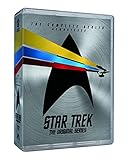
Star Trek: The Original Series: The Complete Series | $53.59 | Buy on Amazon |
| 2 |
![Star Trek Trilogy Collection [DVD]](https://m.media-amazon.com/images/I/51YMbQiSBML._SL160_.jpg)
|
Star Trek Trilogy Collection [DVD] | $14.95 | Buy on Amazon |
| 3 |
|
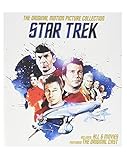
Star Trek: Original Motion Picture Collection | $16.09 | Buy on Amazon |
| 4 |

|
Star Trek: The Next Generation: The Complete Series | $84.99 | Buy on Amazon |
| 5 |
|
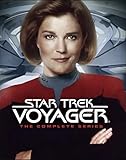
Star Trek: Voyager: The Complete Series | $93.94 | Buy on Amazon |
The Prime Timeline
The Prime Timeline is the main continuity of Star Trek and the one that contains the vast majority of television series. It begins with humanity’s early steps into space exploration and stretches centuries into the future, forming a mostly continuous historical arc. Classic shows, modern streaming-era series, and animated entries all belong here unless explicitly stated otherwise.
Series like Enterprise, The Original Series, The Next Generation, Deep Space Nine, Voyager, and newer shows such as Discovery, Picard, Strange New Worlds, Lower Decks, and Prodigy all take place within this shared reality. While some of these are prequels and others leap far ahead, they reference the same history and treat past events as fixed. This is the timeline most fans think of when they talk about Star Trek canon.
#1 Best Overall
- Genre: TV Sci-Fi
- Number of Discs: 25
- Number of Tracks: 0
- Playback Duration: 4121
- Rating: NR
The Kelvin Timeline
The Kelvin Timeline is an alternate reality created by a time-travel event depicted in the 2009 Star Trek film. This single change causes familiar characters and events to unfold differently, resulting in a parallel universe that runs alongside the Prime Timeline rather than replacing it. Visually flashier and more action-driven, this timeline was designed to reintroduce Star Trek to a new generation of moviegoers.
Only three theatrical films take place in the Kelvin Timeline, all centered on younger versions of the original crew. None of the television series are set here, which makes it easy to separate from the broader watch order. You can view these films on their own without disrupting a chronological TV-series marathon.
Why This Matters for Watching in Order
When people talk about watching Star Trek chronologically, they are almost always referring to the Prime Timeline. Mixing Kelvin Timeline films into that sequence can create confusion, since they intentionally diverge from established history. Knowing which timeline you’re in ensures that character arcs, political developments, and technological progressions make sense as you move from series to series.
With that foundation in place, watching Star Trek in timeline order becomes less about memorizing dates and more about experiencing the evolution of the galaxy as it was meant to unfold.
What’s actually slowing this PC down?
Pick the symptom - the matching free tool is one click away.
The Earliest Era: Humanity’s First Steps Into Space (Enterprise and the 22nd Century)
If you want to begin Star Trek at the very start of humanity’s interstellar story, this is where the Prime Timeline truly begins. Set decades before the Federation exists, this era shows Earth taking its first uncertain steps into a much larger and often dangerous galaxy. The technology is rougher, diplomacy is fragile, and the sense of exploration feels closer to real-world spaceflight than later, more polished series.
Chronologically, this entire era is told through a single show, but its impact ripples across everything that comes after. Watching it first provides valuable context for the political alliances, cultural tensions, and philosophical ideals that later define Starfleet.
Star Trek: Enterprise (2151–2161)
Star Trek: Enterprise is set in the mid-22nd century, beginning in the year 2151, roughly a century before Captain Kirk’s adventures. Humanity has just developed warp five capability, allowing Earth to explore deep space without constant Vulcan oversight. The series follows Captain Jonathan Archer and the crew of the Enterprise NX-01, Earth’s first true deep-space exploration vessel.
Unlike later Star Trek series, Enterprise presents a galaxy that is openly hostile and suspicious of humans. Starfleet is inexperienced, first contact protocols are still being invented, and many familiar species, including Klingons, Andorians, and Vulcans, are far less cooperative than fans may expect. This makes the show especially useful for understanding why the Federation’s ideals matter so much later on.
Crashes, No Sound, or Screen Glitches?
Random freezes, missing sound and display glitches usually trace back to one bad driver. Find and replace yours safely.Free scan · under a minuteWindows Errors? Fix Them Before They Spread
Repair common Windows errors and clear accumulated junk for a smoother, more stable PC - no reinstall needed.Free scan · no reinstallWhy Enterprise Comes First in a Chronological Watch
From a timeline perspective, Enterprise is the earliest live-action Star Trek series in the Prime Timeline. It depicts the founding events that eventually lead to the United Federation of Planets, including early alliances and conflicts that echo throughout the franchise. Elements introduced here are directly referenced in The Original Series, The Next Generation, and even modern shows like Discovery and Strange New Worlds.
For new viewers, starting with Enterprise can reframe familiar Star Trek concepts. Transporters are controversial, the Prime Directive does not yet exist, and Starfleet officers are learning through trial and error rather than tradition. Watching this era first allows the franchise’s optimism to feel earned rather than assumed.
A Note on Tone, Continuity, and Viewing Expectations
Enterprise often feels more grounded and serialized than earlier-produced Star Trek shows, especially in its later seasons. Long-form story arcs explore war, espionage, and moral compromise in ways that anticipate modern television storytelling. While it was produced decades after some later-set series, its place at the beginning of the timeline remains clean and self-contained.
There are occasional continuity nods designed for longtime fans, but nothing here requires prior Star Trek knowledge. If your goal is to experience the Prime Timeline unfolding from humanity’s first warp flight forward, Enterprise is the clear and logical starting point before moving into the 23rd century and the rise of Starfleet as a galactic institution.
Recommended Free Tools
The Pre-Federation to Early Federation Years: Discovery Seasons 1–2 and Strange New Worlds
With Enterprise establishing humanity’s earliest steps into deep space, the next chronological phase jumps forward roughly a century into the mid-23rd century. This is the era where Starfleet is no longer experimental, but the United Federation of Planets is still young, politically fragile, and defining its moral identity. Star Trek: Discovery Seasons 1 and 2, followed immediately by Star Trek: Strange New Worlds, all take place before the events of The Original Series, offering a modern lens on a classic period of Trek history.
Star Trek: Discovery Seasons 1–2 (2256–2258)
Discovery begins around a decade before Captain Kirk’s five-year mission, at a moment when Starfleet is powerful but far from unified. The series opens with a devastating war between the Federation and the Klingon Empire, presenting a darker, more militarized version of Starfleet than audiences may expect from this era. Chronologically, this conflict helps explain why the Federation of Kirk’s time is so committed to diplomacy and restraint.
While Discovery’s tone is more serialized and emotionally intense than earlier Trek, its placement here is deliberate. The show explores experimental technology, internal divisions within Starfleet, and ethical dilemmas that push the Federation’s ideals to their limits. These seasons function as a bridge between the rougher, post-Enterprise galaxy and the more optimistic future seen in later 23rd-century stories.
Season 2 is especially important for timeline watchers. It introduces Captain Christopher Pike, Spock, and the USS Enterprise in a way that directly sets up Strange New Worlds. It also resolves several continuity-sensitive elements that explain why Discovery itself effectively exits the Prime Timeline after this point, preventing contradictions with established canon.
The Tool Desk
Outbyte Driver Updater FREEScan for outdated or missing drivers - takes under a minuteDriver Scan →Outbyte PC Repair FREEClear out junk files and repair common Windows errorsFree Scan →Rank #2
- Genre: Science Fiction
- Number of Discs: 3
- Number of Tracks: 0
- Playback Duration: 381
- Rating: PG13
Star Trek: Strange New Worlds (2259 onward)
Strange New Worlds begins immediately after Discovery Season 2 and follows Captain Pike’s Enterprise during its classic five-year mission, just a few years before Kirk takes command. In chronological terms, this is the clearest spiritual and narrative successor to The Original Series, despite being produced decades later. The Federation here is more stable, exploration-focused, and philosophically aligned with what many viewers consider “traditional” Star Trek.
Unlike Discovery, Strange New Worlds largely embraces episodic storytelling. Each mission highlights first contact scenarios, ethical debates, and cultural misunderstandings that define the Federation’s growing role in the galaxy. This makes it an ideal entry point for viewers who want a cleaner, more approachable version of 23rd-century Trek without losing modern production values.
Importantly, Strange New Worlds also contextualizes familiar characters before their most famous incarnations. Spock, Uhura, Chapel, and others are still evolving into the figures audiences recognize, and watching them here adds depth to their appearances later in The Original Series. Chronologically, this is the final stop before Trek transitions into its most iconic era, where Starfleet’s ideals become fully crystallized under Captain Kirk’s command.
The Classic Era Proper: The Original Series, The Animated Series, and Their Overlapping Timeline
With Strange New Worlds establishing the immediate prelude, the timeline now arrives at Star Trek’s most iconic stretch. This is where the Federation’s identity fully solidifies, Starfleet’s exploratory mission becomes culturally codified, and many of the franchise’s defining themes are introduced in their purest form. Chronologically, this era spans roughly a decade, but its influence extends across every Trek that follows.
Do these 3 things before closing this tab:
1Clear out junk files and repair common Windows errors2Fix the driver behind crashes, sound loss and screen glitches3Repair Windows errors before they cause bigger problemsStar Trek: The Original Series (2265–2269)
The Original Series begins in 2265, when Captain James T. Kirk assumes command of the USS Enterprise for its historic five-year mission. This is the moment when Star Trek’s philosophical foundation truly locks into place, balancing space opera adventure with social commentary and moral allegory. For timeline viewers, this is the point where the Federation’s ideals are no longer aspirational but operational.
Although produced in the 1960s, The Original Series fits cleanly after Strange New Worlds with only minimal visual and tonal adjustment. Spock’s character development, Starfleet’s command structure, and the Enterprise itself all evolve naturally from what viewers have already seen. Watching in chronological order helps smooth over aesthetic differences and highlights how consistently the core values remain intact.
Importantly, this era introduces long-standing species, political tensions, and ethical precedents that echo throughout later centuries of Trek storytelling. Klingon-Federation hostility, Vulcan philosophy, and the Prime Directive all take their most recognizable shape here. These elements become fixed reference points for nearly every future series.
Star Trek: The Animated Series (2269–2270)
Immediately following Kirk’s televised five-year mission, The Animated Series continues the story without resetting the timeline. Set largely during the final year of that mission, it functions as a direct continuation rather than a reinterpretation. Chronologically, it slots directly after The Original Series with no narrative gap.
Quick wins for a faster PC:
Repair Windows errors before they cause bigger problemsFix Now →Scan for outdated or missing drivers - takes under a minuteDriver Scan →Clear out junk files and repair common Windows errorsFree Scan →While its animation and tone reflect its era, The Animated Series is considered canon and expands the universe in meaningful ways. It explores alien species, technologies, and concepts that live-action budgets of the time could not accommodate. Several ideas introduced here are later revisited or fully realized in modern Trek.
For viewers watching in timeline order, The Animated Series works best when treated as an extension rather than a detour. Character relationships, command dynamics, and Starfleet’s exploratory mandate remain consistent. Watching it here preserves narrative momentum before the franchise transitions into its next major evolutionary phase.
Understanding the Overlap and Canonical Flow
The Classic Era Proper is less about strict episode-by-episode precision and more about maintaining thematic continuity. The Original Series and The Animated Series together represent a single creative era unfolding across two formats. There are no timeline splits, alternate realities, or retroactive canon resets at this stage.
This clarity makes the Classic Era uniquely approachable for new viewers. Once Strange New Worlds hands off to Kirk’s Enterprise, the timeline proceeds in a straight line for several in-universe years. That linearity will not return until much later in the franchise.
Free tools Windows power users keep installed
One-click scans. No signup required.
By the end of The Animated Series, the Federation stands confident, battle-tested, and philosophically unified. The galaxy is larger, stranger, and more complex than when Pike first took command, setting the stage for the political shifts, generational changes, and tonal evolution that define Star Trek’s next chronological chapter.
The Golden Age of Starfleet: The Next Generation, Deep Space Nine, and Voyager (Parallel Viewing Explained)
Roughly a century after Captain Kirk’s era, Star Trek enters what many fans consider its creative and narrative peak. This period spans the late 24th century and is defined by three interconnected series that collectively reshape the Federation’s identity. Unlike earlier chapters, these shows overlap in real time, requiring a slightly more nuanced viewing approach.
The Next Generation establishes the era, while Deep Space Nine and Voyager expand it outward in radically different directions. Together, they depict Starfleet at its most ideologically confident, politically challenged, and morally tested. Watching them in chronological order means understanding how these series run alongside one another rather than in isolation.
Star Trek: The Next Generation (Primary Anchor Series)
Star Trek: The Next Generation begins in 2364 and serves as the backbone of the late-24th-century timeline. Set aboard the USS Enterprise-D, it reintroduces the Federation as a mature interstellar power focused on diplomacy, ethics, and exploration rather than frontier survival. For new viewers, this is the natural re-entry point after the Classic Era.
Rank #3
Chronologically, the first five seasons of The Next Generation stand alone before any major overlap begins. These early years establish key political players, technological norms, and philosophical debates that later series build upon. Watching these seasons first provides essential context for everything that follows.
Deep Space Nine Enters the Timeline (Concurrent With TNG)
Deep Space Nine begins during The Next Generation’s sixth season, shifting the franchise’s focus from exploration to long-term consequence. Set on a stationary outpost near a strategically vital wormhole, it explores religion, occupation, and the cost of maintaining Federation ideals in unstable regions of space. This marks Star Trek’s first sustained look at serialized storytelling.
For chronological viewing, Deep Space Nine seasons one and two run parallel to the final years of The Next Generation. While crossover events are limited, political developments and shared characters reflect a unified galaxy. Alternating seasons or blocks rather than episodes is sufficient to preserve narrative clarity without overcomplicating the watch order.
The End of TNG and the Rise of a Shared Status Quo
The Next Generation concludes in 2370, but its influence does not end there. Many of its characters, institutions, and unresolved tensions continue directly into Deep Space Nine’s middle seasons. By this point, the Federation is no longer an uncontested stabilizing force, and the tone of the franchise noticeably darkens.
Chronologically, viewers should complete The Next Generation before moving deeper into Deep Space Nine’s third and fourth seasons. This preserves the emotional and thematic weight of the transition. The galaxy is changing, and Starfleet is increasingly forced to react rather than lead.
Voyager’s Displacement and Parallel Isolation
Star Trek: Voyager begins during Deep Space Nine’s third season but occupies a unique position in the timeline. Although it launches from the same Federation era, its premise removes it almost entirely from shared political events. The USS Voyager’s journey unfolds simultaneously but largely in isolation.
For timeline-focused viewers, Voyager can be watched alongside Deep Space Nine from this point forward. Alternating seasons works well, as there is minimal narrative dependency between the two. What matters is understanding that Voyager reflects how Starfleet principles endure when stripped of institutional support.
How to Watch This Era Without Overthinking It
The cleanest chronological approach is to watch The Next Generation straight through its first five seasons. From there, begin Deep Space Nine while finishing TNG, then add Voyager once Deep Space Nine reaches its third season. Episode-by-episode alternation is unnecessary unless you want maximum precision.
This era rewards viewers who grasp the broader flow rather than chase exact dates. All three series depict different responses to the same historical moment in Federation history. Together, they form a layered portrait of Starfleet at its most complex, vulnerable, and compelling.
Life After the Dominion War: Lower Decks and Prodigy in the Post‑TNG Era
With the Dominion War concluded and Voyager returned home, the Star Trek timeline enters a reflective rebuilding phase. Starfleet is still operationally strong, but the Federation is carrying political scars, ethical baggage, and unresolved questions about its future direction. This era is less about galactic survival and more about what kind of institution Starfleet chooses to be next.
Chronologically, this period bridges the classic TNG-era shows and the more serialized, modern storytelling of the franchise. It is also where Star Trek begins to experiment with tone and format without abandoning canon continuity. Two animated series, Lower Decks and Prodigy, define this post-war chapter.
Star Trek: Lower Decks (2380–)
Star Trek: Lower Decks is set in 2380, roughly one year after the events of Star Trek: Nemesis. Although animated and comedic on the surface, it is firmly rooted in the same canon as The Next Generation, Deep Space Nine, and Voyager. The show assumes the Dominion War happened, the Borg were a real threat, and Starfleet is still reckoning with both.
Do these 3 things before closing this tab:
1Repair Windows errors before they cause bigger problems2Fix the driver behind crashes, sound loss and screen glitches3Clear out junk files and repair common Windows errorsLower Decks follows the USS Cerritos, a California-class support ship tasked with unglamorous second-contact missions. This perspective allows the series to explore how everyday Starfleet officers live in the shadow of galaxy-shaping events. For timeline viewers, it functions as the first true look at the Federation’s post-war status quo.
Despite its humor, Lower Decks frequently references specific characters, technologies, and political realities from earlier shows. Watching it after completing TNG, DS9, Voyager, and Nemesis ensures that its jokes and worldbuilding land without confusion. Chronologically, it is the cleanest next step in the timeline.
Star Trek: Prodigy (2383–2384)
Star Trek: Prodigy takes place a few years later, beginning around 2383. While designed to welcome new viewers, it is deeply connected to Voyager-era continuity. The series follows a group of young outsiders who discover an abandoned Starfleet ship in the Delta Quadrant and gradually learn what Starfleet stands for.
Unlike Lower Decks, Prodigy is more earnest and serialized, focusing on identity, mentorship, and the moral legacy of the Federation. Its strongest connective tissue is Admiral Kathryn Janeway, whose role anchors the show firmly in post-Voyager continuity. The Federation depicted here is aspirational but cautious, still rebuilding trust after years of existential threats.
Rank #4
- Genre: TV Sci-Fi
- Number of Discs: 48
- Number of Tracks: 0
- Playback Duration: 8082
- Rating: NR
For chronological viewing, Prodigy works best after Lower Decks or alongside its later seasons. It reflects a slightly later phase of recovery, where Starfleet is again extending outward rather than inward. The tone signals a franchise beginning to look forward rather than process trauma.
Why This Era Matters in Timeline Order
Lower Decks and Prodigy are essential because they show the Federation living with consequences rather than reacting to crises. The Dominion War is over, but its impact lingers in training, mission structure, and institutional self-awareness. This makes the era feel grounded, even when the storytelling style shifts.
In timeline terms, this post-TNG era serves as a narrative palate cleanser before Star Trek moves into darker, more fractured futures. Watching these series in order helps preserve the sense of historical continuity. The Federation you see here is stable, imperfect, and still very much evolving.
Independent reader supportYour contribution helps us test, update, and keep practical guides available for everyone.The Far Future Jump: Discovery Seasons 3–5 and the 32nd Century
After centuries of relatively linear progression, Star Trek makes its most dramatic chronological leap with Star Trek: Discovery Seasons 3 through 5. These seasons abandon the familiar 23rd and 24th centuries entirely, jumping forward more than 900 years into the 32nd century. In timeline order, this is the furthest point the franchise has explored, placing it well beyond every other series.
For viewers watching chronologically, this jump can feel jarring by design. Discovery intentionally contrasts the hopeful, cautiously rebuilding Federation seen in Lower Decks and Prodigy with a future where that optimism has fractured. The result is a soft reset of the status quo without erasing the past.
How Discovery Reaches the 32nd Century
Discovery begins as a prequel set before The Original Series, but that context becomes less relevant once the series pivots into its far-future era. At the end of Season 2, the USS Discovery travels through time to prevent dangerous technology from corrupting the galaxy. From a chronological viewing perspective, Seasons 1 and 2 belong much earlier, while Seasons 3–5 stand entirely on their own at the end of the timeline.
Because of this split, many timeline-focused viewers choose to save all of Discovery until this point, or at least treat Seasons 3–5 as a separate entry. Doing so preserves the emotional and historical weight of seeing how the Federation ultimately changes. It also avoids tonal whiplash when moving through earlier, more cohesive eras.
The Burn and a Broken Federation
Season 3 introduces the central mystery of the 32nd century: the Burn, a cataclysmic event that caused the near-total collapse of warp travel. This single moment reshaped the galaxy, fragmenting the Federation into isolated systems and eroding its authority. Starfleet still exists, but more as an idea struggling to survive than a dominant force.
Chronologically, this represents the long-term consequences of everything that came before. The ideals championed in Enterprise, TOS, and TNG-era series are remembered, but not universally trusted. Watching Discovery here reframes the entire franchise as a question of whether those ideals are resilient enough to endure a millennium.
Rebuilding the Future, Not Escaping the Past
Seasons 4 and 5 shift Discovery’s focus from survival to restoration. Rather than simply lamenting what was lost, the series explores how the Federation might earn its future again through diplomacy, empathy, and institutional reform. These themes deliberately echo earlier Trek, creating a conversation across centuries of in-universe history.
For chronological viewers, this makes Discovery’s far-future era feel like a thematic endpoint rather than an outlier. It is Star Trek asking what remains when legacy alone is no longer enough. Placed at the end of the timeline, Discovery Seasons 3–5 function as a lens through which the entire franchise can be reinterpreted.
Alternate Reality Viewing: Where the Kelvin Timeline Fits (Optional but Canon‑Adjacent)
Once you reach the far end of the Prime Timeline, Star Trek opens a side door rather than a detour. The Kelvin Timeline exists as a parallel reality created by a specific historical rupture, not a reboot that overwrites what came before. For viewers committed to chronological order, this makes the Kelvin films optional, but still meaningfully connected.
Recommended Free Tools
The Point of Divergence: A Split Born From the Prime Timeline
The Kelvin Timeline begins with a canon event from the Prime Timeline: the destruction of Romulus in the late 24th century. This catastrophe, referenced directly in Star Trek (2009) and later explored in Star Trek: Picard, sends the Romulan miner Nero back in time to 2233. His arrival alters history, creating a branching reality where familiar characters and events unfold differently.
From a chronological standpoint, this means the Kelvin Timeline technically begins after the events of The Next Generation, Deep Space Nine, and Voyager, even though its stories take place during an alternate version of the 23rd century. It is a future-caused past, not a replacement for The Original Series era.
Where to Place the Kelvin Films in a Timeline Watchthrough
If you are watching strictly in in-universe chronological order, the cleanest placement for the Kelvin films is after completing Voyager and before or after Picard. This preserves the logic that the timeline split cannot occur until Romulus exists to be destroyed. Watching them earlier may feel intuitive because of the era, but it disrupts the cause-and-effect logic Trek carefully established.
The three films, Star Trek (2009), Star Trek Into Darkness, and Star Trek Beyond, function as a self-contained arc once that split occurs. They require no prior knowledge of Discovery or Strange New Worlds, and only benefit emotionally from familiarity with The Original Series characters they reimagine.
The Tool Desk
Outbyte Driver Updater FREEFix the driver behind crashes, sound loss and screen glitchesFind Drivers →Outbyte PC Repair FREERepair Windows errors before they cause bigger problemsFix Now →Best Value
- Genre: TV Sci-Fi
- Number of Tracks: 0
- Playback Duration: 7778
- Movie Title: Star Trek - Voyager: The Complete Series
- Movie Year: 2020
Canon-Adjacent, Not Canon-Light
Importantly, the Kelvin Timeline is fully canonical within Star Trek’s multiverse framework. Prime Timeline characters acknowledge its existence, and Picard confirms the long-term consequences of the Romulan disaster that triggered it. This gives the films narrative weight even if their events never directly affect Prime continuity.
For some viewers, this makes the Kelvin films feel like a thematic epilogue to the 24th-century era. They explore identity, legacy, and destiny through contrast, showing how small changes ripple outward across history. Others prefer to treat them as an alternate showcase, enjoyed without interrupting the main timeline’s momentum.
An Optional Path, Not a Required One
For newcomers, the Kelvin Timeline can be safely skipped without losing understanding of any Star Trek series. For returning fans, it offers a high-production, character-focused remix that stands apart while still honoring canon rules. Chronological purists will appreciate knowing exactly why it exists and where it belongs.
Ultimately, the Kelvin Timeline works best when approached as a deliberate branch rather than a missing chapter. It is Star Trek asking a familiar question from a new angle: how much of our future is shaped by who we are, and how much by the moment everything changes.
Choosing Your Starting Point: Recommended Chronological Paths for New vs. Returning Viewers
With Star Trek spanning centuries, timelines, and tones, the biggest challenge is not what to watch, but where to begin. A strict chronological order is rewarding, but it is not always the most welcoming entry point for first-time viewers. The key is matching your familiarity level to a path that preserves clarity without flattening the franchise’s sense of discovery.
Below are recommended chronological approaches tailored to different types of viewers, all rooted in in-universe continuity rather than release order.
For Brand-New Viewers: A Soft Chronological On-Ramp
If you are completely new to Star Trek, beginning at the absolute start of the timeline with Enterprise, Discovery, and Strange New Worlds can feel dense and stylistically uneven. These shows assume a basic understanding of Federation ideals and Trek storytelling grammar that newcomers may not yet have. Chronological purity can wait.
A smoother entry is to start with Strange New Worlds, which is set before The Original Series but structured like a modern, accessible ensemble drama. From there, you can move into The Original Series and its films, then progress naturally into The Next Generation, Deep Space Nine, Voyager, and Picard. Once that foundation is built, circling back to Enterprise and Discovery adds context rather than confusion.
Free tools Windows power users keep installed
One-click scans. No signup required.
This path preserves the timeline while letting the franchise teach you how to watch it.
For Returning or Lapsed Fans: Full Chronological Order
Viewers with any prior Trek experience are best served by a true chronological watch. Starting with Enterprise establishes humanity’s first steps into deep space, followed by Discovery’s early seasons and Strange New Worlds, which together bridge directly into The Original Series era.
From there, the timeline flows cleanly through The Original Series, the original films, The Next Generation, Deep Space Nine, and Voyager. Picard then functions as the natural endpoint of the Prime Timeline, reflecting on the legacy of everything that came before. The Kelvin Timeline films can be placed after Voyager or after Picard, depending on whether you prefer thematic closure or historical sequencing.
For longtime fans, this order transforms familiar stories into a cohesive generational saga.
For Completionists: Embracing Overlaps and Side Roads
Some viewers want the most granular experience possible, including overlapping series and concurrent storylines. This means accepting that parts of Deep Space Nine and Voyager occur simultaneously, as do later seasons of Discovery alongside Strange New Worlds’ early timeline placement.
This approach rewards attention to detail and highlights how Star Trek evolved stylistically while its universe expanded narratively. It is less about narrative momentum and more about appreciating the franchise as a living, serialized history. While not recommended for first-timers, it offers the richest possible context for seasoned fans.
The Big Picture: There Is No Wrong Way In
Star Trek is uniquely flexible because its core values remain consistent even when its timelines fracture. Whether you begin with early exploration, classic morality plays, or modern prestige storytelling, the franchise is designed to meet viewers where they are.
Chronological order is not a test of fandom, but a tool for perspective. Choose the path that keeps you engaged, curious, and emotionally connected, and the larger canon will reveal itself in time. In a universe built on infinite diversity in infinite combinations, how you watch Star Trek is part of the journey.
Quick wins for a faster PC:
Clear out junk files and repair common Windows errorsFree Scan →Fix the driver behind crashes, sound loss and screen glitchesFind Drivers →Repair Windows errors before they cause bigger problemsFix Now →Quick Recap
Product prices and availability are accurate as of the date/time indicated and are subject to change. Any price and availability information displayed on Amazon at the time of purchase will apply.

