Quick wins for a faster PC:
Clear out junk files and repair common Windows errorsFree Scan →Scan for outdated or missing drivers - takes under a minuteDriver Scan →Red One wastes no time announcing its ambition: this isn’t a cozy fireside Christmas tale, but a globetrotting action-comedy built around one very festive crisis. When Santa Claus is kidnapped days before Christmas, the holiday itself becomes a ticking clock, turning goodwill and wonder into the stakes of a full-scale rescue mission. It’s a premise that sounds absurd on paper, yet that absurdity is precisely the point.
The film frames the North Pole less like a magical village and more like a top-secret military installation, complete with advanced tech, elite operatives, and global surveillance. Dwayne Johnson’s stoic, hyper-competent head of North Pole security is forced into an uneasy alliance with Chris Evans’ morally flexible outsider, pushing the story into buddy-cop territory with a yuletide coat of paint. The result is a holiday heist setup that blends mythological lore with modern blockbuster mechanics.
| # | Preview | Product | Price | |
|---|---|---|---|---|
| 1 |

|
Red One (DVD) | $15.39 | Buy on Amazon |
| 2 |
|
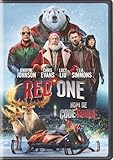
Red One | $14.99 | Buy on Amazon |
| 3 |

|
Red One | Buy on Amazon | |
| 4 |

|
The Big Red One (Special Edition, 2 DVDs) | $59.00 | Buy on Amazon |
| 5 |

|
Red One DVD | Dwayne Johnson, Chris Evans, Lucy Liu, J.K. Simmons | Region 4 (Australia) | $15.98 | Buy on Amazon |
What makes the concept unexpectedly clever is how seriously Red One commits to its world-building, even as it embraces its own silliness. Christmas iconography becomes narrative infrastructure, not just decoration, allowing the film to play within familiar traditions while subverting them through action set pieces and genre mash-ups. It’s an approach that signals Red One wants to be more than seasonal fluff, positioning itself as a contemporary holiday movie engineered for audiences raised on superhero films and global spy thrillers.
Santa Goes Blockbuster: How Red One Reimagines Christmas Mythology
Rather than treating Christmas lore as sacred, Red One treats it as scalable. The film’s biggest conceptual swing is transforming familiar holiday mythology into a fully operational blockbuster ecosystem, where magic and logistics coexist, and belief is just another resource to be managed. Santa isn’t a distant, mystical figure here; he’s a high-value global asset whose disappearance triggers protocols, panic, and international fallout.
Windows Errors? Fix Them Before They Spread
Repair common Windows errors and clear accumulated junk for a smoother, more stable PC - no reinstall needed.Free scan · no reinstallCrashes, No Sound, or Screen Glitches?
Random freezes, missing sound and display glitches usually trace back to one bad driver. Find and replace yours safely.Free scan · under a minute#1 Best Overall
This shift allows the movie to approach Christmas with the same infrastructure-minded logic usually reserved for superhero franchises. Naughty and nice lists become data systems, reindeer are elite transport units, and the North Pole operates with the urgency of a command center rather than a storybook village. It’s a playful but pointed update that frames Christmas as a worldwide operation, not just a seasonal feeling.
The North Pole as a Tactical Playground
Red One’s most inspired idea is reimagining the North Pole as a fortified, high-tech facility, complete with armed security, cutting-edge surveillance, and rapid-response teams. It’s a clever visual and tonal pivot that immediately signals the film’s intentions, grounding fantasy in the language of modern action cinema. By doing so, the movie finds humor not in parody, but in the sheer seriousness with which it treats holiday magic.
This approach also gives Dwayne Johnson’s character a clear function beyond muscle. As the head of North Pole security, he embodies the film’s thesis: Christmas only works because someone is making sure it does. The mythology becomes procedural, which is both funny and oddly convincing, especially for audiences used to seeing fantastical worlds explained through bureaucratic systems.
Santa, Reframed for a Franchise Era
Santa himself benefits from this blockbuster reframing, positioned less as a jolly symbol and more as a linchpin holding an entire global operation together. His kidnapping isn’t just emotionally disruptive; it’s structurally catastrophic, turning the holiday into a logistical nightmare. That escalation gives the story real momentum, transforming Christmas Eve into a deadline with genuine stakes.
Free tools Windows power users keep installed
One-click scans. No signup required.
At the same time, Red One is careful not to strip Santa of his warmth entirely. The film understands that the character still needs to represent generosity and belief, even within a more industrialized mythos. It’s a balancing act that mostly works, though the emphasis on systems and spectacle occasionally sidelines the emotional simplicity that makes Santa resonate in the first place.
Where the Mythology Stretches Thin
While the expanded lore is often imaginative, it can feel over-engineered. The film sometimes mistakes complexity for depth, layering in rules, factions, and explanations that don’t always enhance the story. In trying to build a Christmas universe sturdy enough to support action set pieces, Red One occasionally forgets that holiday mythology thrives on suggestion as much as structure.
This is where the action-comedy balance wobbles. The movie’s commitment to its blockbuster identity means quieter, more whimsical moments are rarer than expected. When they do appear, they’re effective reminders of what makes Christmas movies endure, even if Red One seems more interested in redefining the genre than indulging in its softer traditions.
Action, Comedy, and Candy Canes: Does the Genre Mash-Up Actually Work?
Red One’s biggest gamble is also its most intriguing hook: treating Christmas like an action franchise without losing its festive soul. The film doesn’t merely sprinkle holiday aesthetics over standard blockbuster beats; it actively integrates yuletide mythology into its action logic. Sleighs become tactical vehicles, magical artifacts function like high-tech MacGuffins, and Christmas Eve operates with the urgency of a ticking bomb thriller.
Recommended Free Tools
That commitment helps the mash-up feel intentional rather than novelty-driven. Even when the film leans hard into spectacle, it rarely forgets that it’s operating in a world powered by belief, tradition, and seasonal absurdity. The result is a tone that’s more Mission: Impossible than Miracle on 34th Street, but not entirely disconnected from either.
Action That Leans Into the Absurd
The action sequences are staged with a knowing wink, embracing the inherent silliness of candy cane weaponry and mythological creatures thrown into combat scenarios. Red One understands that a straight-faced approach would collapse under its own weight, so it lets the absurdity play as part of the fun. That self-awareness keeps the action buoyant, even when the scale becomes aggressively blockbuster.
Dwayne Johnson’s physicality grounds the chaos, while the film’s choreography emphasizes momentum over realism. These aren’t gritty, bone-crunching fights so much as kinetic set pieces designed to move the story forward. The emphasis on speed and spectacle suits a Christmas movie better than a heavier, more punishing style ever would.
Rank #2
Comedy as Structural Glue
Comedy does much of the heavy lifting when the genre seams threaten to show. Jokes frequently emerge from the contrast between holiday iconography and action-movie seriousness, with characters treating magical nonsense like routine office work. That bureaucratic humor, established earlier in the film, continues to pay dividends here.
The humor isn’t wall-to-wall laugh-out-loud, but it’s consistent and situationally sharp. Importantly, the film resists turning its characters into punchlines, allowing comedy to arise from circumstance rather than constant mugging. That restraint gives the action room to breathe without collapsing into parody.
Where the Balance Slips
Still, the mash-up isn’t flawless. At times, the action pacing overwhelms the seasonal atmosphere, making Christmas feel like a skin rather than a sensation. The film occasionally races past moments that could have benefited from stillness, warmth, or emotional payoff.
This is where Red One feels most like a product of modern studio thinking. It’s designed to keep audiences engaged minute-to-minute, sometimes at the expense of the reflective beats that define classic holiday films. The result is entertaining and clever, but not always comforting in the way many viewers expect from a Christmas watch.
A New Kind of Holiday Crowd-Pleaser
Where Red One ultimately succeeds is in recognizing that holiday films don’t have to be static or nostalgic to earn a place in the rotation. Its action-comedy hybrid reflects a broader shift in seasonal entertainment, where comfort viewing now includes spectacle and franchise-friendly worldbuilding. The film’s cleverness lies in treating Christmas not as sacred ground, but as adaptable myth.
That approach won’t satisfy purists craving cocoa-and-fireplace vibes, but it opens the door for a different kind of tradition. Red One positions itself as a holiday option for audiences who want festive flavor without sacrificing momentum. In doing so, it proves that candy canes and car chases don’t have to cancel each other out.
Star Power Under the Tree: Performances That Elevate (or Undercut) the Film
A high-concept holiday action movie lives or dies on whether its cast sells the absurdity with conviction. Red One mostly pulls that off, leaning on recognizable stars who understand the tone they’re operating in. When the performances click, the film feels sharper and more confident than its premise initially suggests.
Dwayne Johnson: Playing Against the Christmas Grain
Dwayne Johnson’s Callum Drift is intentionally subdued, a straight-faced enforcer navigating a world of magical chaos with procedural seriousness. It’s a smart counterpoint to the film’s sillier elements, even if it occasionally feels like Johnson is operating on autopilot. Still, his physical presence and measured delivery anchor the action, giving the film a sturdy spine when the mythology starts piling up.
Where the performance works best is in its restraint. Johnson doesn’t strain for laughs, allowing humor to bounce off his seriousness rather than compete with it. That choice reinforces the film’s bureaucratic fantasy tone, even if it keeps his character at a slight emotional distance.
Chris Evans Brings the Necessary Holiday Spark
Chris Evans is the film’s most effective source of personality. As Jack O’Malley, a morally flexible operator dragged into North Pole espionage, Evans leans into charm, exasperation, and self-awareness. His comedic timing helps soften the film’s more mechanical plot turns, especially when paired with Johnson’s stoicism.
Evans understands the assignment: this is a Christmas movie that knows it’s a Christmas movie. His performance injects warmth and levity without tipping into irony, making him the closest thing Red One has to a traditional holiday protagonist.
Rank #3
The Supporting Cast: Mythology Made Flesh
J.K. Simmons brings an unexpectedly grounded presence to Santa Claus, portraying him less as a jolly mascot and more as a weathered executive overseeing an impossible operation. It’s a clever recalibration that fits the film’s modernized mythos, even if it sacrifices some of Santa’s innate wonder.
Elsewhere, Lucy Liu adds authority and clarity as the film’s mythological liaison, while Kiernan Shipka’s villainous turn injects theatrical menace into the back half. Not every supporting role gets enough screen time to fully resonate, but the ensemble commitment helps sell a world that could have easily collapsed under its own lore.
When Star Power Can’t Quite Save the Moment
The downside of such a loaded cast is that character arcs sometimes feel compressed. Emotional beats are often implied rather than earned, especially for characters introduced primarily as franchise pieces. It’s here that Red One’s blockbuster instincts occasionally undercut its holiday ambitions.
Even so, the performances do more lifting than dragging. The cast largely understands that sincerity, not winking detachment, is what allows this strange blend of Christmas mythology and action spectacle to work. When Red One surprises, it’s often because the actors are playing it straighter than expected.
Surprisingly Clever or Just Loud Fun? The Film’s Humor and Self-Awareness
Red One walks a careful tonal tightrope, aware that its premise could easily tip into parody. Instead of leaning on constant winks at the camera, the film opts for situational humor rooted in its absurd logistics: North Pole bureaucracy, mythological workplace politics, and the sheer inconvenience of saving Christmas like a covert ops mission. The comedy works best when it treats these elements as mundane problems rather than punchlines.
That restraint gives the film an unexpected confidence. Red One knows the joke is baked into the concept, so it doesn’t feel the need to overexplain it. When characters react with exhaustion or irritation instead of disbelief, the humor lands with a dry, modern edge that feels more clever than chaotic.
The Tool Desk
Outbyte Driver Updater FREEFix the driver behind crashes, sound loss and screen glitchesFind Drivers →Outbyte PC Repair FREEClear out junk files and repair common Windows errorsFree Scan →Comedy Through World-Building, Not Gags
Much of the film’s humor emerges organically from its reimagined Christmas mythology. The idea of Santa as a high-level executive, elves as specialized operatives, and holiday magic as regulated infrastructure creates a steady undercurrent of amusement without stopping the story cold. These details reward attentive viewers and make the world feel intentionally designed rather than randomly assembled.
That said, not every joke lands with equal precision. Some comedic beats rely on familiar action-comedy rhythms, including predictable banter during chase scenes or one-liners that feel engineered for trailers. When Red One defaults to noise over nuance, it briefly loses the smart footing it otherwise maintains.
Self-Awareness Without Full Meta Satire
Unlike recent holiday films that lean hard into irony or outright spoof, Red One largely avoids meta-commentary. It acknowledges its own excess, but rarely comments on it directly. This choice helps preserve a sense of sincerity that aligns with its Christmas aspirations, even when the action veers into blockbuster bombast.
The film’s self-awareness is most effective when it shows rather than tells. Characters behave as if this bizarre world has always existed, and that commitment invites the audience to accept it too. It’s a subtle but important distinction that keeps Red One from feeling disposable.
Where the Humor Collides With the Action
The biggest challenge comes when the film shifts fully into action mode. Set pieces are energetic and competently staged, but they sometimes drown out the quieter comedic texture established earlier. Explosions and spectacle take precedence, leaving less room for the character-based humor that initially distinguishes the film.
Still, even at its loudest, Red One rarely feels cynical. Its jokes are designed to entertain rather than mock the holiday genre, positioning the film as part of Christmas movie tradition rather than a commentary on it. That balance may not satisfy viewers looking for sharp satire, but it does help Red One carve out a distinct space in the modern holiday canon.
Spectacle vs. Spirit: Visual Effects, Action Set Pieces, and Holiday Atmosphere
A Blockbuster Shine With a Winter Coating
Red One looks every bit like a modern studio tentpole, with glossy visual effects and a budget that’s clearly on the screen. The CGI-heavy environments lean more toward heightened fantasy than tactile realism, but the film wisely embraces that artificiality as part of its mythic holiday logic. Snow falls a little too perfectly, gadgets glow a little too cleanly, and the North Pole feels engineered rather than rustic, which fits the film’s corporate-magic worldview.
What’s impressive is how often the spectacle is tied directly to seasonal iconography. Candy-cane colors bleed into chase scenes, sleigh tech replaces military hardware, and even the film’s lighting design favors warm reds and icy blues over generic action-movie gray. It may not feel cozy in a traditional sense, but it is unmistakably festive.
What’s actually slowing this PC down?
Pick the symptom - the matching free tool is one click away.
Action That Moves, Even When It Overwhelms
The action set pieces are brisk, loud, and competently assembled, clearly designed to appeal to audiences raised on superhero films and globe-trotting franchises. Hand-to-hand fights, high-speed pursuits, and large-scale confrontations arrive at regular intervals, occasionally at the expense of quieter character beats. When Red One leans too hard into this rhythm, it risks flattening its more charming instincts.
Still, there’s a cleverness in how the action is contextualized. These aren’t generic shootouts swapped into a Christmas setting; they’re conflicts built around holiday mythology reimagined as operational logistics. Even when the scale becomes overwhelming, the film rarely forgets its premise, which helps the action feel purposeful rather than obligatory.
Does the Holiday Spirit Survive the Noise?
This is where Red One walks its tightrope. It doesn’t aim for the emotional warmth of classic Christmas films, and viewers looking for sentimentality may find it restrained. Instead, the film frames holiday spirit as a collective responsibility, something maintained through systems, teamwork, and belief rather than overt heart-tugging moments.
That approach won’t work for everyone, but it does give Red One a distinct identity within the modern holiday landscape. It treats Christmas less as nostalgia and more as an evolving cultural machine, one that requires maintenance as much as magic. In doing so, the film manages to feel seasonal without feeling old-fashioned, even when the spectacle threatens to steal the spotlight.
Do these 3 things before closing this tab:
1Repair Windows errors before they cause bigger problems2Scan for outdated or missing drivers - takes under a minute3Clear out junk files and repair common Windows errorsWhere Red One Stumbles: Pacing Issues, Tonal Clashes, and Missed Opportunities
For all its ambition and polish, Red One isn’t immune to the kind of growing pains that plague many high-concept studio hybrids. The film wants to be a globe-trotting action spectacle, a holiday reinvention, and a crowd-pleasing comedy all at once, and it doesn’t always balance those impulses gracefully. When it stumbles, it’s less about individual scenes failing and more about how they’re arranged.
Pacing That Forgets to Breathe
Red One moves fast, sometimes too fast for its own good. Plot beats stack on top of one another with franchise-level urgency, giving the film a breathless quality that can feel exhilarating in the moment but exhausting over time. There are stretches where the movie seems afraid to pause, as if slowing down might risk losing audience attention.
That relentlessness undercuts character development, particularly for relationships that could have benefited from quieter connective tissue. The film clearly has emotional ideas it wants to explore, but it often races past them to reach the next set piece. A few strategically placed moments of stillness could have given the spectacle more weight.
A Tonal Juggle That Occasionally Drops the Ball
The tonal blend of Christmas whimsy and action-movie seriousness is part of Red One’s appeal, but it’s also one of its biggest challenges. The film shifts between playful holiday absurdity and high-stakes intensity so frequently that the transitions don’t always land smoothly. When jokes collide with dramatic tension, the effect can feel slightly forced rather than fluid.
Best Value
- DVD Movies, DVD TV Shows
This isn’t a complete misfire, and many scenes manage the balance well. Still, there are moments where the movie seems uncertain whether it wants laughter, awe, or suspense to dominate. The best holiday action-comedies commit fully to their tonal identity, and Red One sometimes feels like it’s still negotiating that commitment in real time.
World-Building That Teases More Than It Delivers
Perhaps the most frustrating shortcoming is how much potential the film’s mythology hints at without fully exploring. The infrastructure behind Christmas is imaginative and ripe for storytelling, yet much of it is treated as background flavor rather than narrative fuel. Viewers may find themselves intrigued by systems and characters that exist just beyond the edges of the plot.
This creates a sense of missed opportunity rather than outright failure. Red One feels like the first chapter of a much larger holiday universe, even when it’s trying to function as a standalone experience. That forward-looking mindset is exciting, but it occasionally comes at the expense of making this particular story feel as rich and complete as it could have been.
The Verdict: Is Red One the Future of Modern Christmas Movies or a Seasonal Curiosity?
Red One ultimately lands somewhere between a bold experiment and an entertaining outlier, and that middle ground is what makes it so interesting. It doesn’t fully redefine the Christmas movie, but it does push against the boundaries of what holiday entertainment can look like in a blockbuster era. As both an action-comedy and a seasonal film, it’s more successful than it has any right to be, even when its ambition slightly outpaces its execution.
Recommended Free Tools
A Christmas Movie That Earns Its Sleigh Bells
Despite the explosions and globe-trotting spectacle, Red One never forgets it’s a Christmas movie. The themes of belief, responsibility, and shared goodwill are woven into the narrative, even if they’re not always given the breathing room they deserve. It may not aim for the cozy nostalgia of a classic, but it clearly understands the emotional framework that makes holiday films endure.
For viewers who enjoy Christmas stories with a contemporary edge, that counts for a lot. The film embraces the season’s iconography while remixing it for a modern audience raised on franchises and cinematic universes. It feels designed for repeat holiday streaming rather than one-and-done novelty.
Action-First, But Smarter Than It Looks
As an action-comedy, Red One is slick, energetic, and surprisingly self-aware. The script often acknowledges the absurdity of its premise, using humor as a pressure valve rather than a crutch. When the jokes land, they enhance the action instead of undercutting it, giving the film a playful confidence that many holiday hybrids lack.
That said, the relentless pacing and occasional tonal misfires keep it from achieving true greatness. There’s a sharper, more emotionally resonant version of this movie lurking beneath the surface. What we get is still entertaining, just not quite as impactful as its premise promises.
The Tool Desk
Outbyte PC Repair FREERepair Windows errors before they cause bigger problemsFix Now →Outbyte Driver Updater FREEScan for outdated or missing drivers - takes under a minuteDriver Scan →A Blueprint, Not a Finished Tradition
If Red One represents the future of modern Christmas movies, it’s as a starting point rather than a finished model. Its blend of mythology, action, and holiday spirit feels engineered for franchise expansion, and that’s both its strength and its limitation. The film plants a lot of narrative seeds but doesn’t fully let them bloom.
As a result, Red One works best as a seasonal crowd-pleaser with ambitions beyond its runtime. It’s clever, polished, and often fun, even when it feels like it’s holding something back for a sequel that may or may not come.
In the end, Red One isn’t a new holiday classic, but it’s far from a throwaway curiosity. It’s a smartly constructed, big-budget Christmas action-comedy that understands its audience and largely delivers on its promise. Whether it becomes a yearly tradition or a festive detour will depend on how viewers respond, but one thing is clear: the holidays just got a little louder, faster, and more adventurous.
Quick Recap
Product prices and availability are accurate as of the date/time indicated and are subject to change. Any price and availability information displayed on Amazon at the time of purchase will apply.
What’s actually slowing this PC down?
Pick the symptom - the matching free tool is one click away.

