Windows Errors? Fix Them Before They Spread
Repair common Windows errors and clear accumulated junk for a smoother, more stable PC - no reinstall needed.Free scan · no reinstallOutdated Drivers Are Slowing You Down
One free scan finds every outdated or missing driver and matches the right update for your exact hardware.Free scan · exact hardware matchEntertainment Weekly’s March 15, 2026 ranking, republished by AOL, places Eddie Redmayne’s Stephen Hawking at No. 1 and Marlon Brando’s Terry Malloy at No. 30. It is a critics’ selection, not an Academy ranking or a measured consensus: “memorable” can mean transformation, emotional force, a lasting character, or an image and line that remain in popular culture. Here is the full order, with the film’s release year shown separately from the Oscar ceremony year where relevant.
How to read this ranking
The order below is the one published by Entertainment Weekly writers Kevin Jacobsen, Devan Coggan, and Chris Nashawaty and republished by AOL. It reflects editorial judgment; the Academy records winners and nominees but does not rank winning performances by memorability. The Academy describes its database as “the official record of past Academy Award winners and nominees.” Its data are complete through the 2025 (98th) Academy Awards, presented March 15, 2026. Check the Academy Awards Database for the official category and ceremony record.
![Hop [Blu-ray]](https://m.media-amazon.com/images/I/51zRpExiiFL._SL160_.jpg)
Years in parentheses are the films’ release years, not necessarily the year the award was presented. For instance, a film released in 2023 competed at the ceremony held in 2024. The ranking contains 30 performances, not 30 different actors: Marlon Brando and Daniel Day-Lewis each appear twice.
The 30 performances, in the publication’s order
- Eddie Redmayne, The Theory of Everything (2014). A biographical portrayal shaped by physical transformation and close attention to Stephen Hawking’s changing movement and speech.
- James Cagney, Yankee Doodle Dandy (1942). A high-energy musical performance that draws on Cagney’s theatricality and dance ability.
- Jamie Foxx, Ray (2004). A musical and biographical portrayal of Ray Charles, combining performance, voice, and physical detail.
- Ben Kingsley, Gandhi (1982). A carefully composed portrayal of a widely recognized historical figure, emphasizing transformation and restraint.
- Michael Douglas, Wall Street (1987). Gordon Gekko’s confidence and appetite for power give the performance a memorable place in popular culture.
- Denzel Washington, Training Day (2001). Washington makes the morally compromised detective Alonzo Harris commanding and unpredictable.
- Laurence Olivier, Hamlet (1948). A screen version of a celebrated stage role, built around Olivier’s theatrical command and interpretation of Shakespeare.
- Gene Hackman, The French Connection (1971). Hackman gives detective Jimmy “Popeye” Doyle a rough, restless intensity.
- Tom Hanks, Philadelphia (1993). A restrained performance that brings emotional weight to a lawyer confronting discrimination and illness.
- Sean Penn, Milk (2008). Penn portrays activist and politician Harvey Milk through an expressive, energetic character study.
- Jeremy Irons, Reversal of Fortune (1990). Irons plays Claus von Bülow with measured reserve, keeping the character’s motives difficult to read.
- F. Murray Abraham, Amadeus (1984). Abraham anchors the film as Salieri, blending envy, grievance, and reflection.
- Cillian Murphy, Oppenheimer (2023). Murphy’s contained performance makes J. Robert Oppenheimer’s inner tension central to a large-scale historical drama.
- Anthony Hopkins, The Silence of the Lambs (1991). Hopkins creates an unnerving presence as Hannibal Lecter through controlled stillness and precision.
- Clark Gable, It Happened One Night (1934). Gable’s effortless comic timing and chemistry with Claudette Colbert help define the film’s screwball rhythm.
- Leonardo DiCaprio, The Revenant (2015). A physically demanding performance that foregrounds endurance and survival.
- Philip Seymour Hoffman, Capote (2005). Hoffman’s transformation into Truman Capote is paired with a detailed portrayal of the writer’s voice and manner.
- Gregory Peck, To Kill a Mockingbird (1962). Peck’s Atticus Finch is remembered for moral steadiness and quiet authority.
- Daniel Day-Lewis, There Will Be Blood (2007). Day-Lewis gives oilman Daniel Plainview a forceful presence that turns ambition into menace.
- Peter Finch, Network (1976). Finch’s performance as broadcaster Howard Beale is tied to the film’s enduring picture of television as spectacle.
- Fredric March, Dr. Jekyll and Mr. Hyde (1931). March plays the scientist and his alter ego in a landmark early sound-era horror role. His win came in a category tie: Wallace Beery also won Best Actor in 1932, for The Champ.
- Daniel Day-Lewis, Lincoln (2012). A second Day-Lewis performance on the list, this one built around the measured speech and political calculation of Abraham Lincoln.
- Alec Guinness, The Bridge on the River Kwai (1957). Guinness gives Colonel Nicholson a disciplined, increasingly troubling sense of purpose.
- Sidney Poitier, Lilies of the Field (1963). Poitier’s warmth and resourcefulness carry a modest, character-driven story.
- Jack Nicholson, One Flew Over the Cuckoo’s Nest (1975). Nicholson’s rebellious Randle McMurphy supplies the film with volatile humor and defiance.
- Marlon Brando, The Godfather (1972). Brando’s Don Corleone is defined by an unmistakable vocal and physical style that became widely imitated.
- George C. Scott, Patton (1970). Scott’s commanding portrayal of General George S. Patton captures both theatrical force and abrasive authority.
- Adrien Brody, The Pianist (2002). Brody’s portrayal of Władysław Szpilman emphasizes vulnerability and survival, alongside the physical transformation noted in the ranking.
- Robert De Niro, Raging Bull (1980). De Niro’s Jake LaMotta is an intense character study, shaped by both physical change and emotional volatility.
- Marlon Brando, On the Waterfront (1954). Brando’s Terry Malloy is a defining example of an inward, naturalistic screen performance.
What makes these performances memorable?
The list groups no single style as the standard for greatness. Its range is easier to understand through several overlapping qualities:
Recommended Free Tools
#1 Best Overall
- Transformation and biography: Redmayne, Foxx, Kingsley, DiCaprio, and Brody are cited for portrayals involving physical change, recognizable real-life subjects, or the demands of embodying a person whose story is already known.
- Theatrical, musical, and comic energy: Cagney, Olivier, and Gable show how a performance can endure through rhythm, stagecraft, musical skill, or comic timing.
- Restraint and interiority: Murphy, Hanks, and Irons offer a contrasting kind of impact, relying on controlled expression and implication rather than constant display.
- Characters that outlast the film: Washington, Day-Lewis, Finch, and Brando are associated with roles whose characterization, images, or lines have had a durable cultural afterlife.
- Moral and emotional resonance: Peck, Poitier, and Hoffman demonstrate how empathy, conviction, or emotional complexity can stay with viewers beyond a performance’s most recognizable moments.
These are useful ways to compare the entries, not a scoring system the publication claims to have used. There is no established numerical measure of “memorability” in the sources cited here.
Where the ranking meets Oscar history
The list includes two performances by Daniel Day-Lewis, and he holds a distinct record: Vanity Fair identifies him as the only actor to win three Best Actor Oscars, for My Left Foot, There Will Be Blood, and Lincoln. The ranking includes the latter two performances, not his first. See Vanity Fair’s history of Best Actor winners.
Rank #2
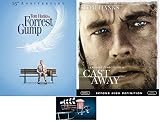
- 2 Blu Ray Set
- Theatrical Editions
- Includes Movie Set Take 4.25 x 5.5 Inch Glossy Print Art Card
- Blu Ray Special Features
March’s win for Dr. Jekyll and Mr. Hyde also belongs to an unusual moment in the category: in 1932, he tied with Wallace Beery, who won for The Champ. Rotten Tomatoes notes the tie in its Best Actor Oscar-winning movies guide. These examples are reminders to check ceremony records rather than infer the award year from a film’s release date.
Independent reader supportYour contribution helps us test, update, and keep practical guides available for everyone.How to use the list
For a watchlist, the ranking works best as a set of different entry points into acting rather than a definitive viewing order. Choose by the quality you want to see: a biographical transformation, a performance led by comic or musical timing, a quiet character study, or a role that became part of movie culture. If accuracy about awards matters, confirm each film and category in the Academy’s database; if the question is which performance is “most memorable,” the answer remains a matter of taste.
Rank #3
![Oscar Winners: Argo / Gravity / The Great Gatsby [ Blu-Ray, Reg.A/B/C Import - Belgium ]](https://m.media-amazon.com/images/I/41nhcX8uNLL._SL160_.jpg)
- Oscar Winners: Argo / Gravity / The Great Gatsby
- Oscar Winners: Argo / Gravity / The Great Gatsby
Read the original Entertainment Weekly ranking republished by AOL for its full commentary on the individual choices.
Quick Recap
Rank #4
![Oscar Winners: Argo / Gravity / The Great Gatsby [ Blu-Ray, Reg.A/B/C Import - Belgium ]](https://m.media-amazon.com/images/I/41fiV3tTPpL._SL160_.jpg)
- Oscar Winners: Argo / Gravity / The Great Gatsby
- Oscar Winners: Argo / Gravity / The Great Gatsby
Product prices and availability are accurate as of the date/time indicated and are subject to change. Any price and availability information displayed on Amazon at the time of purchase will apply.



