Quentin Tarantino has long framed his career as a ten-film canon, a self-imposed mythology that has shaped how audiences watch every new release. The Movie Critic matters not just because it is his next project, but because it is positioned as the culmination of that philosophy—a potential final feature that invites viewers to read it as both a standalone story and a summation of a filmmaker’s obsessions. Whether or not it ultimately ends his directing career, Tarantino has already ensured that the conversation around the film carries unusual historical weight.
Unlike the operatic violence of Kill Bill or the revisionist spectacle of Once Upon a Time in Hollywood, The Movie Critic is rooted in criticism itself: movies as culture, movies as argument, movies as identity. Set against the backdrop of 1970s American cinema—a formative era for Tarantino—the project reflects a filmmaker turning inward, interrogating the role movies play in shaping taste, masculinity, and mythology. That self-reflexive angle places it closer in spirit to Jackie Brown and Hollywood than to his more maximalist genre exercises.
![Inglourious Basterds - 4K Ultra HD + Blu-ray + Digital [4K UHD]](https://m.media-amazon.com/images/I/51OwT-uTw0L._SL160_.jpg)


What elevates the film’s significance further is Tarantino’s shifting stance on finality. He has publicly questioned whether The Movie Critic will truly be his last, but the fact that it was conceived under that pressure informs every detail surrounding it. As a result, the movie arrives with the rare status of being both a new Tarantino film and a referendum on his legacy, inviting scrutiny not just of what he’s saying now, but of everything he’s said before.
The Origins of The Movie Critic: Inspiration, Setting, and Autobiographical Roots
The earliest clues about The Movie Critic framed it less as a traditional narrative and more as a personal excavation. Tarantino has described the project as stemming from his teenage years in Southern California, when movies were not just entertainment but a language he was learning to speak fluently. That vantage point—critical, argumentative, and proudly opinionated—shapes the film’s DNA more than any single genre homage.
Quick wins for a faster PC:
Scan for outdated or missing drivers - takes under a minuteDriver Scan →Repair Windows errors before they cause bigger problemsFix Now →Fix the driver behind crashes, sound loss and screen glitchesFind Drivers →#1 Best Overall
Rather than announcing itself as a revenge saga or revisionist history, The Movie Critic appears built around perspective: who gets to define taste, how cultural authority is formed, and why movies matter so deeply to the people who love them. In that sense, it is Tarantino’s most explicitly introspective concept since Jackie Brown, and possibly his most revealing.
A 1970s Setting Steeped in Cinephile Memory
Multiple reports have placed the film in 1977 California, a moment when American cinema was in transition and film criticism wielded unusual cultural power. This was the era of New Hollywood’s last gasp, when critics could elevate or eviscerate films with near-mythic authority. For Tarantino, who came of age devouring movies and their surrounding discourse, it is a historically loaded backdrop.
The setting also aligns with his recurring fascination with the texture of the 1970s: newsprint, grindhouse marquees, and the tactile rituals of moviegoing. As with Once Upon a Time in Hollywood, the period is not decorative but emotional, recreating a world as it felt to live inside it. The Movie Critic seems poised to explore that era from the vantage point of someone still forming their identity through cinema.
Not Pauline Kael, But the Spirit of Criticism
Early speculation linked the film to Pauline Kael, the influential New Yorker critic whose prose Tarantino has both admired and sparred with over the years. Tarantino has been unequivocal in dismissing the idea that The Movie Critic is a Kael biopic. Instead, he has pointed to a lesser-known, real-life figure: a sharp-tongued critic who wrote for a pornographic magazine Tarantino encountered as a teenager.
What’s actually slowing this PC down?
Pick the symptom - the matching free tool is one click away.
That distinction matters. The film is not about institutional prestige or critical celebrity, but about the raw, sometimes abrasive relationship between movies and the people who judge them. It suggests a protagonist closer to a working-class provocateur than an academic tastemaker, someone whose voice is shaped by enthusiasm as much as contrarianism.
Autobiography Through Attitude, Not Plot
While Tarantino has stopped short of calling The Movie Critic autobiographical, its roots are unmistakably personal. As a young man delivering porn magazines and absorbing everything from exploitation cinema to high-minded criticism, he developed a worldview where movies were inseparable from identity. That formative tension—between lowbrow pleasure and highbrow analysis—appears central to the film’s thematic engine.
Rather than dramatizing Tarantino’s life directly, The Movie Critic seems to channel his sensibility at its most formative: argumentative, obsessive, and deeply romantic about the power of cinema. If this is indeed a late-career statement, its origins suggest a filmmaker circling back not to his greatest hits, but to the moment when loving movies first became a way of being.
Plot Details and Story Scope: What We Know, What’s Been Reported, and What’s Still Speculation
At this stage, The Movie Critic remains one of Tarantino’s most deliberately opaque projects. What’s clear is that the film is set in 1970s Los Angeles and centers on a caustic, working-class film critic whose relationship to movies is obsessive, opinionated, and deeply personal. Beyond that core premise, Tarantino has allowed the details to surface only in fragments, forcing observers to triangulate the story from interviews, trade reporting, and informed inference.
Free tools Windows power users keep installed
One-click scans. No signup required.
The Core Premise: A Critic on the Margins
Tarantino has confirmed that the protagonist is inspired by a real critic who wrote for a porn magazine in the early 1970s, not a mainstream publication. This places the character firmly outside the cultural establishment, engaging with cinema from the fringes rather than the ivory tower. The critic’s writing voice, by Tarantino’s own description, was smart, biting, and unexpectedly thoughtful, even when discussing exploitation or grindhouse fare.
That outsider perspective is key to understanding the film’s likely scope. Rather than a traditional rise-and-fall narrative or a journalistic procedural, The Movie Critic appears poised to explore how movies function as lifelines, weapons, and identity markers for people who live slightly off-center. It’s a story about engagement with cinema as a lived experience, not an academic exercise.
Structure and Narrative Shape: Talky, Episodic, or Something Else?
While no official plot outline has been released, multiple reports suggest a dialogue-heavy screenplay, consistent with Tarantino’s later work. The film may unfold episodically, moving through reviews, arguments, and encounters rather than building toward a conventional third-act showdown. This would align with the idea of criticism itself as the narrative engine: reaction, interpretation, and confrontation instead of action.
There has also been speculation that the story may follow the critic across a specific period of his life, possibly a year or even a few months, allowing Tarantino to immerse the audience in a hyper-specific cultural moment. If so, the plot would be less about what happens and more about how a worldview solidifies under pressure from art, commerce, and personal circumstance.
Recommended Free Tools
Hollywood, But Seen From the Cheap Seats
Although set in Los Angeles, The Movie Critic is not expected to be another insider Hollywood fairy tale in the vein of Once Upon a Time in Hollywood. Instead, the industry is likely viewed obliquely, through screens, magazines, and word-of-mouth rather than studio offices and film sets. This is Hollywood as consumed, debated, and mythologized by someone without access or influence.
That angle opens the door to Tarantino revisiting familiar territory from a new vantage point. Studios, stars, and genres may appear, but filtered through the resentment, awe, and critical scrutiny of someone who loves movies precisely because they are out of reach. It’s a corrective lens to the nostalgia of his previous film, grounded in class and cultural friction.
Connections to Tarantino’s Filmography: Echoes, Not Continuations
Despite early rumors, The Movie Critic is not a sequel or spinoff to Once Upon a Time in Hollywood, nor is it officially part of Tarantino’s loose shared universe. That said, the overlap in era and milieu invites thematic resonance. Both films interrogate how movies shape self-image, masculinity, and memory during a volatile cultural shift in American cinema.
What distinguishes The Movie Critic is its inward-facing focus. Instead of industry professionals wrestling with obsolescence, the central figure is someone defining himself through judgment and taste. In that sense, the film may function as Tarantino’s most self-reflective work yet, examining the impulse to critique, canonize, and argue about art rather than to create it.
What Remains Pure Speculation
Nearly everything beyond the protagonist’s occupation and era remains unconfirmed. There is no verified information about a central conflict, antagonist, or overarching dramatic event. Whether the film engages directly with real historical figures, specific publications, or landmark releases of the era is still unknown.
There is also ongoing speculation about tone. Some expect a caustic comedy, others a surprisingly introspective character study. Given Tarantino’s late-career pivot toward mood, conversation, and moral ambiguity, the safest assumption is that The Movie Critic will resist easy categorization, functioning less as a plot-driven narrative and more as a cinematic essay disguised as a feature film.
Themes and Influences: Film Criticism, ’70s Hollywood, and Tarantino’s Longstanding Obsessions
At its core, The Movie Critic appears poised to interrogate the power and poison of criticism itself. Not criticism as an abstract intellectual exercise, but as a deeply personal act shaped by insecurity, class resentment, and obsessive love. Tarantino has spent his entire career responding to critics, sometimes combatively, sometimes playfully, and this film offers a chance to dramatize that dynamic from the inside out.
The choice to center the story on a non-elite observer marks a subtle but significant shift. Rather than filmmakers, stars, or industry fixers, the protagonist exists on the margins, responding to movies rather than making them. That outsider status reframes cinema as something to be argued over, weaponized, and used as identity, not just consumed or produced.
The Tool Desk
Outbyte PC Repair FREEClear out junk files and repair common Windows errorsFree Scan →Outbyte Driver Updater FREEScan for outdated or missing drivers - takes under a minuteDriver Scan →Film Criticism as Character Study
Unlike celebratory portraits of criticism as cultural stewardship, Tarantino seems more interested in its emotional undercurrents. The Movie Critic reportedly draws inspiration from a real underground reviewer whose writing was abrasive, opinionated, and defiantly unsophisticated. This suggests a portrait of criticism as confrontation, where taste becomes a proxy for authority in a system designed to exclude certain voices.
That tension aligns neatly with Tarantino’s long-standing fascination with people who build their identities through knowledge of pop culture. From reservoir criminals debating Madonna lyrics to cinephiles weaponizing genre trivia, his characters often define themselves by what they know and what they dismiss. A critic protagonist simply makes that impulse explicit.
’70s Hollywood Beyond Nostalgia
While the 1970s setting inevitably invites comparisons to Once Upon a Time in Hollywood, the lens here appears far less romantic. Instead of sun-drenched mythmaking, The Movie Critic seems attuned to the grit of second-run theaters, exploitation screenings, and the fading boundary between high and low culture. This was an era when film criticism wielded real influence, shaping reputations and box office outcomes in ways that feel almost alien today.
Tarantino has often expressed reverence for this period as the last moment when American cinema felt dangerous, argumentative, and artistically unruly. By anchoring the story in that cultural battleground, he can explore how movies were debated as fiercely as politics or sports. It’s a Hollywood defined less by glamour than by friction.
Rank #3
Tarantino’s Enduring Fixations: Taste, Masculinity, and Authority
Taste has always functioned as a moral compass in Tarantino’s work, revealing who his characters are and what they value. The Movie Critic reportedly pushes that idea further, examining how taste can be performative, defensive, or even cruel. The act of judging movies becomes inseparable from judging people, institutions, and oneself.
There is also an undercurrent of masculine identity tied to expertise and dominance. Many Tarantino protagonists assert control through language, knowledge, or intimidation, and a critic armed with opinions fits squarely into that lineage. If this is indeed his final film, it reads less like a victory lap and more like a reckoning with the instincts that shaped his voice.
A Meta Conversation With the Audience
Perhaps most intriguingly, The Movie Critic threatens to collapse the distance between subject and spectator. Tarantino is not just portraying a critic; he is inviting viewers to consider their own habits of judgment, nostalgia, and gatekeeping. In an era where everyone is a critic by default, the film’s questions feel pointed rather than quaint.
By dramatizing criticism as obsession rather than authority, Tarantino may be challenging the audience to sit with discomfort rather than consensus. That impulse has defined his career from the beginning. Ending it with a film about argument, taste, and the limits of opinion would be less an exit than a provocation.
Do these 3 things before closing this tab:
1Clear out junk files and repair common Windows errors2Scan for outdated or missing drivers - takes under a minute3Repair Windows errors before they cause bigger problemsCasting Rumors and Confirmed Attachments: From Brad Pitt to the Changing Ensemble
If The Movie Critic has proven elusive on the page, it has been even more mercurial when it comes to casting. Tarantino’s films often generate speculation long before cameras roll, but this project has existed in a near-constant state of flux, with attachments forming, dissolving, and reforming as the script itself evolved. The result is a casting narrative that mirrors the film’s themes of authority, opinion, and revisionism.
Brad Pitt and the Cliff Booth Question
The most significant and widely reported attachment has been Brad Pitt, Tarantino’s longtime collaborator and the only actor ever confirmed in connection with the film. Industry reporting indicated Pitt would play the central figure, with strong suggestions that the role might be a variation on, or even a continuation of, Cliff Booth from Once Upon a Time in Hollywood. Tarantino later clarified that the character was not technically Booth, though the spiritual overlap only fueled intrigue.
That ambiguity feels intentional. Pitt’s Booth embodied a kind of laid-back authority and cultural confidence that aligns cleanly with the archetype of a powerful, opinionated critic in the early 1970s. Whether the character is a direct extension or a thematic cousin, Pitt’s presence signaled a reflective turn for Tarantino, revisiting a familiar persona through a more explicitly intellectual lens.
The Names That Circulated, and Why None Stuck
Beyond Pitt, casting rumors moved quickly and often contradicted one another. Margot Robbie’s name surfaced early due to her close collaboration with Tarantino and the film’s period setting, while character actors like Paul Walter Hauser were floated in trade chatter as possible fits for Tarantino’s dialogue-driven ensembles. None of these reports were ever confirmed, and no additional deals were publicly finalized.
That absence is notable. Tarantino typically locks in his ensembles early, building characters around specific performers. The lack of concrete announcements suggests a script still in motion, or a director unwilling to commit until the film’s final shape fully revealed itself.
A Moving Target by Design
Part of the confusion stems from Tarantino’s own shifting relationship to the project. At various points, The Movie Critic was described as imminent, then quietly paused, then reportedly retooled altogether. Casting, in this context, became less about availability and more about philosophy: who belongs in what Tarantino has repeatedly framed as his final statement as a filmmaker.
That instability may ultimately serve the film’s purpose. A story about criticism, taste, and authority demands performers who can project certainty while inviting contradiction. Until Tarantino decides exactly what version of that story he wants to tell, the ensemble remains an open question rather than a fixed lineup.
What the Silence Suggests
The restrained flow of casting news is itself revealing. Tarantino has never been shy about spectacle, but he has always guarded his creative endgame closely. By keeping The Movie Critic’s cast largely undefined, he preserves the film’s status as a living idea rather than a locked product.
Outdated Drivers Are Slowing You Down
One free scan finds every outdated or missing driver and matches the right update for your exact hardware.Free scan · exact hardware matchPC Slower Than It Used to Be?
A free scan shows the junk files, broken settings and background clutter dragging Windows down - then fixes them in one click.Free scan · Windows 10 & 11Rank #4
For now, Brad Pitt remains the only constant in an otherwise shifting ensemble. Whether that constancy signals narrative continuity, personal trust, or simply unfinished business, it underscores how personal this project appears to be. In a film about judgment and legacy, who Tarantino chooses to embody those ideas may matter as much as the story itself.
Production Timeline and Creative Shifts: Script Rewrites, Delays, and Tarantino’s Reconsideration
From the moment The Movie Critic entered the public conversation, its timeline felt deliberately elastic. Early reports in 2023 framed the film as Tarantino’s next immediate project, with a script reportedly completed and pre-production quietly underway. Industry expectations pointed toward a late 2024 shoot, positioning the film as a capstone to his self-imposed ten-film canon.
That clarity did not last long. By early 2024, multiple outlets reported that Tarantino had returned to the script, rethinking not just individual scenes but the fundamental shape of the story. What initially sounded like routine polishing soon appeared to be something more substantial: a filmmaker reassessing whether this version of the film truly deserved to be his last.
Rewrites as Philosophy, Not Process
Tarantino has always rewritten aggressively, but The Movie Critic occupies a different category. This is not a case of tightening dialogue or refining structure; it is about purpose. As Tarantino has repeatedly said in interviews over the years, he does not want his final film to feel like a victory lap or an echo of past glories.
Reports suggesting that he effectively walked away from a completed draft reflect that mindset. Rather than rush a project that felt merely “very good,” Tarantino appeared willing to pause indefinitely until the film aligned with his personal standard for a closing statement. In that sense, the delay is less a setback than a declaration of intent.
The Question of the “Final Film”
Complicating matters further is Tarantino’s own evolving language around retirement. While he continues to reference the ten-film rule, he has also openly questioned whether directing a final feature should come sooner or later. That ambiguity hangs directly over The Movie Critic, transforming it from a scheduled production into a philosophical crossroads.
Some industry observers have suggested that Tarantino’s hesitation stems from the film’s intimacy. A story centered on criticism, authorship, and cultural authority inevitably invites self-examination. Making that film as his last would turn it into a mirror, not just a narrative, and that may be a heavier burden than anticipated.
Where the Film Stands Now
As of the most recent credible reporting, The Movie Critic remains in a state of creative suspension rather than cancellation. There has been no formal announcement of abandonment, nor any indication that Tarantino has moved on to a different feature project. What has changed is the certainty that this film will arrive on any predefined schedule.
The Tool Desk
Outbyte PC Repair FREERepair Windows errors before they cause bigger problemsFix Now →Outbyte Driver Updater FREEScan for outdated or missing drivers - takes under a minuteDriver Scan →That open-endedness may be the most honest reflection of Tarantino’s process. He has always worked best when time is an ally rather than a constraint. If The Movie Critic ultimately emerges in a different form, or after a longer silence, it will likely be because Tarantino chose conviction over momentum—a choice entirely consistent with a filmmaker determined to end on his own terms.
Independent reader supportYour contribution helps us test, update, and keep practical guides available for everyone.Release Date Outlook and Distribution Questions: When (and How) We Might See The Movie Critic
With the project no longer tied to a production start date, any discussion of release timing for The Movie Critic necessarily shifts from calendar math to educated inference. Unlike Tarantino’s previous films, which moved briskly once scripts were locked, this one exists outside the usual momentum cycle. Until the filmmaker publicly recommits to the material, the question is less “when” than “under what circumstances.”
If Tarantino does return to The Movie Critic, most insiders agree it would still move quickly once cameras roll. His films are meticulously prepped, tightly scheduled, and designed to avoid extended post-production delays. A theoretical shoot in one year could still plausibly yield a release within 12 to 18 months, but that clock has not yet started.
A Theatrical-First Mentality, Even in a Changing Market
One of the few constants in this equation is Tarantino’s unwavering commitment to theatrical exhibition. He has been among the most vocal defenders of cinemas in the streaming era, and there is little reason to believe his final film would premiere anywhere other than the big screen. Even his recent revival programming at the New Beverly Cinema underscores how central theatrical experience remains to his identity.
PC Slower Than It Used to Be?
A free scan shows the junk files, broken settings and background clutter dragging Windows down - then fixes them in one click.Free scan · Windows 10 & 11Crashes, No Sound, or Screen Glitches?
Random freezes, missing sound and display glitches usually trace back to one bad driver. Find and replace yours safely.Free scan · under a minuteBest Value

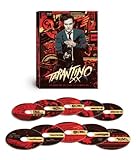
- Own four of Tarantino's greatest films in one convenient blu-ray bundle.
That stance narrows the list of potential distributors. Traditional studio partners like Sony, which released Once Upon a Time in Hollywood, remain logical fits, as do prestige-focused outfits capable of mounting a global theatrical rollout. A streaming-first debut, even with a limited theatrical window, would almost certainly conflict with Tarantino’s long-standing philosophy.
The Festival Factor and Awards Season Timing
If and when The Movie Critic materializes, a major festival premiere would be expected. Cannes, where Tarantino has a deep history and once presided as jury president, remains the most thematically and personally aligned launchpad. Venice and Telluride are also viable, particularly if the film leans inward rather than operatic.
Awards positioning would be secondary but not irrelevant. While Tarantino has never chased Oscars, his films reliably enter the conversation, especially when they engage with Hollywood history or meta-textual themes. A fall release following a festival debut would align with that tradition, even if accolades are not the primary goal.
Could the Film’s Release Look Different Than Expected?
There is also the possibility that The Movie Critic challenges assumptions about what a Tarantino release even looks like. Some industry watchers have floated the idea of a smaller-scale theatrical run, followed by an expanded director’s cut or curated exhibition strategy. Given Tarantino’s interest in alternative versions and extended cuts, this would not be out of character.
What seems least likely is a quiet arrival. Whether delayed or transformed, The Movie Critic carries too much symbolic weight to slip into the marketplace unnoticed. Whenever it arrives, its release will not simply mark another entry in Tarantino’s filmography, but a moment of reckoning with his legacy, his audience, and the idea of endings themselves.
How The Movie Critic Fits into Tarantino’s Filmography—and What It Could Mean as a Finale
For a filmmaker who has spent his career remixing cinema history, The Movie Critic appears poised to turn the lens inward. Early reporting suggests a story rooted in 1970s film culture, criticism, and the uneasy relationship between art and commentary, all terrain Tarantino has circled for decades. If this is indeed his tenth and final feature, it reads less like a victory lap and more like a summation.
Rather than chasing escalation or spectacle, The Movie Critic seems aligned with Tarantino’s recent pivot toward reflection. Once Upon a Time in Hollywood was less about plot mechanics than mood, memory, and myth-making. This project, by contrast, could be even more intimate, reframing cinema not as fantasy, but as something argued over, dissected, and deeply personal.
A Career Built on Dialogue with Cinema
From Reservoir Dogs onward, Tarantino’s films have functioned as conversations with movies themselves. His characters speak in the language of genre, critique, and pop-cultural obsession, often blurring the line between fan and filmmaker. A film centered on a critic completes that loop, dramatizing the discourse that has always lived just beneath the surface of his work.
It also reflects Tarantino’s own complicated relationship with criticism. He has sparred publicly with reviewers, embraced others, and consistently framed his films as theatrical experiences meant to be felt rather than decoded. By making a critic his subject, Tarantino may be interrogating the power dynamics between creators and commentators, or simply dramatizing the passion that binds them.
Thematic Echoes of His Late-Period Films
Inglourious Basterds, Django Unchained, and Once Upon a Time in Hollywood all reimagined history through a filmmaker’s gaze, reshaping cultural trauma with pulp bravado and fantasy. The Movie Critic, while likely smaller in scope, could be just as meta-textual. Instead of rewriting world events, it may rewrite how cinema itself is remembered, argued over, and canonized.
There is also the recurring Tarantino fascination with the end of eras. The decline of New Hollywood, the fading relevance of print criticism, and the transformation of theatrical moviegoing all intersect in this premise. As with Hollywood, nostalgia may be present, but never unchallenged.
A Deliberate Ending, Not a Grand Finale
If Tarantino truly stops at ten, The Movie Critic feels intentionally unmonumental. It does not promise the operatic violence of Kill Bill or the historical audacity of Basterds. Instead, it suggests a filmmaker choosing to exit on a conversation rather than a crescendo.
Quick wins for a faster PC:
Scan for outdated or missing drivers - takes under a minuteDriver Scan →Repair Windows errors before they cause bigger problemsFix Now →Fix the driver behind crashes, sound loss and screen glitchesFind Drivers →That choice aligns with Tarantino’s long-stated belief that directors should leave before their voice dulls. Ending with a film about criticism, taste, and cultural authority would be a final act of authorship, asserting that cinema is not only made on screen, but debated, defended, and loved off it as well.
In that sense, The Movie Critic may matter less for what happens in its story than for what it represents. It would stand as Tarantino’s closing argument: a reminder that movies endure not just through images, but through the arguments they inspire, the communities they build, and the fiercely subjective passions that keep cinema alive.
Quick Recap
Product prices and availability are accurate as of the date/time indicated and are subject to change. Any price and availability information displayed on Amazon at the time of purchase will apply.

