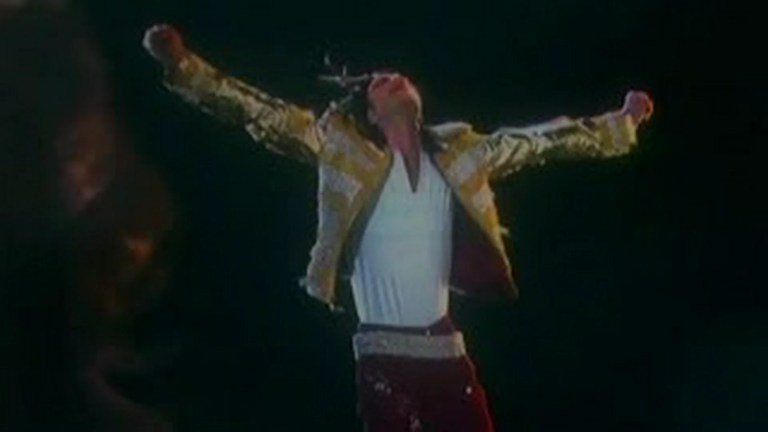
Every Super Bowl halftime show from 1993 to 2024 covers 32 performances, beginning with Michael Jackson at Super Bowl XXVII on January 31, 1993, and ending with Usher at Super Bowl LVIII on February 11, 2024. Jackson’s Rose Bowl appearance turned halftime from an intermission into a television and pop-culture centerpiece; later shows expanded that model through guests, technology, and visual storytelling.
This chronological gallery separates headliners from guests and supporting performers, records the confirmed location information, and identifies the visual idea that makes each show photographically distinctive. The chronology is cross-checked against year-by-year lists from CBS Sports, ESPN, and Sports Illustrated.


Key takeaways
- Michael Jackson’s Super Bowl XXVII performance on January 31, 1993, is the decisive turning point that made halftime a central television and pop-culture event.
- The 32-show run moved from themed variety productions and legacy performers toward tightly designed pop, hip-hop, R&B, Latin, and multi-artist spectacles.
- Guest appearances increasingly became part of the show’s narrative, from Aerosmith’s 2001 ensemble to Usher’s 2024 collaboration-heavy performance.
- Visual architecture often defines the memory of a halftime show: rooftop entrances, moving platforms, suspended stages, drones, projections, fireworks, costumes, and stadium-wide lighting all matter as much as the set list.
- Audience figures are not perfectly comparable because older totals measured television viewing while newer figures can include cross-platform, digital, and out-of-home audiences.
- NFL, AP, Getty, Reuters, and other editorial galleries are references to licensed imagery, not automatic permission to reuse photographs.
How did Michael Jackson change the Super Bowl halftime show?
Michael Jackson changed the Super Bowl halftime show by making the performance itself the event rather than a short intermission between football halves. Jackson appeared at Super Bowl XXVII at the Rose Bowl in Pasadena on January 31, 1993, using a dramatic entrance, an extended moment of stillness, the moonwalk, and stadium-scale choreography to command the television frame.
The NFL’s official halftime-show history and its Super Bowl XXVII photo gallery preserve the performance’s visual grammar. The Associated Press also describes Jackson’s appearance as a breakthrough in the format’s evolution from pageantry to pop culture’s biggest stage. The change was not simply that a famous singer performed; the change was that entrance, pause, choreography, camera framing, and spectacle became central to the broadcast’s identity.
Recommended Free Tools
#1 Best Overall
How did the halftime format evolve from 1993 to 2024?
The format evolved in recognizable stages. The 1990s still favored themed productions, regional identity, legacy acts, and large casts. The 2000s increasingly paired a headline artist with younger guest performers. The 2010s made the guest cameo, visual reveal, technology, and social-media-ready image part of the design. By the 2020s, the halftime show could function as a compressed history of a city or genre, as in the Los Angeles hip-hop narrative of 2022, or as a choreographed vertical image, as in Rihanna’s suspended-platform show in 2023.
| Year | Super Bowl | Headliner or billing model | Guests or supporting performers | Defining visual idea |
|---|---|---|---|---|
| 1993 | XXVII | Michael Jackson | No guest performers identified in the chronology | Dramatic entrance, stillness, moonwalk, stadium choreography |
| 1994 | XXVIII | “Rockin’ Country Sunday” ensemble | Clint Black, Tanya Tucker, Travis Tritt, The Judds/Wynonna | Country-themed variety production |
| 1995 | XXIX | Indiana Jones-themed ensemble | Tony Bennett, Patti LaBelle, Arturo Sandoval, Miami Sound Machine, James Ingram | Adventure-film framing and multi-artist spectacle |
| 1996 | XXX | Diana Ross | No guest performers identified in the chronology | Super Bowl history retrospective and helicopter exit |
| 1997 | XXXI | Themed ensemble | The Blues Brothers, James Brown, ZZ Top | Blues, soul, and rock crossover |
| 1998 | XXXII | Motown-centered ensemble | Boyz II Men, Smokey Robinson, Martha Reeves, The Temptations, Queen Latifah | Generational Motown celebration |
| 1999 | XXXIII | Gloria Estefan-led ensemble | Stevie Wonder, Big Bad Voodoo Daddy | Pop, soul, and swing combination |
| 2000 | XXXIV | Popular-music ensemble | Phil Collins, Christina Aguilera, Enrique Iglesias, Toni Braxton | Popular music, dance, and cast staging |
| 2001 | XXXV | Aerosmith | NSYNC, Britney Spears, Mary J. Blige, Nelly | Rock headliner surrounded by pop and R&B guests |
| 2002 | XXXVI | U2 | No guest performers identified in the chronology | Memorial screen bearing September 11 victims’ names |
| 2003 | XXXVII | Shania Twain | No Doubt, Sting | Country-pop, alternative rock, and legacy-rock blend |
| 2004 | XXXVIII | Janet Jackson | Justin Timberlake, Nelly, P. Diddy, Kid Rock | Multi-artist production inseparable from its live-broadcast controversy |
| 2005 | XXXIX | Paul McCartney | No guest performers identified in the chronology | Solo legacy performance centered on catalog recognition |
| 2006 | XL | The Rolling Stones | No guest performers identified in the chronology | Legacy rock presented as a large stadium event |
| 2007 | XLI | Prince | No guest performers identified in the chronology | Solo artist and guitar-centered performance |
| 2008 | XLII | Tom Petty and the Heartbreakers | No guest performers identified in the chronology | Band-led classic-rock presentation |
| 2009 | XLIII | Bruce Springsteen and the E Street Band | Clarence Clemons, Patti Scialfa, Steven Van Zandt within the band | Four-song set with a full-band tableau |
| 2010 | XLIV | The Who | No guest performers identified in the chronology | Legacy rock and catalog-driven staging |
| 2011 | XLV | The Black Eyed Peas | Usher, Slash | Pop spectacle with high-profile cameos |
| 2012 | XLVI | Madonna | LMFAO, Nicki Minaj, CeeLo Green, Cirque du Soleil performers | Theatrical procession and circus-inflected staging |
| 2013 | XLVII | Beyoncé | Destiny’s Child | Reunion reveal followed by a separate stadium blackout |
| 2014 | XLVIII | Bruno Mars | Red Hot Chili Peppers | Fireworks and audience-wide LED effects |
| 2015 | XLIX | Katy Perry | Lenny Kravitz, Missy Elliott | Mechanical tiger, animated beach, dancing sharks, floating-star finale |
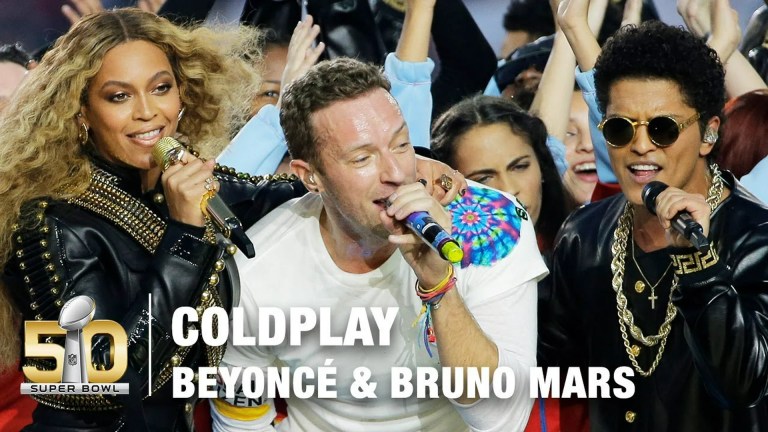
| 2016 | 50 | Coldplay | Beyoncé, Bruno Mars, Mark Ronson | Multi-artist collaboration built around color and scale |
| 2017 | LI | Lady Gaga | No guest performers identified in the chronology | Rooftop entrance and 300 LED-equipped drones forming an American-flag image |
| 2018 | LII | Justin Timberlake | University of Minnesota Marching Band; Prince tribute | Moving platforms, mirrors, projected imagery, and purple-lit Minneapolis |
| 2019 | LIII | Maroon 5 | Travis Scott, Big Boi | Pop-rock headliner with hip-hop guests |
| 2020 | LIV | Shakira and Jennifer Lopez | Bad Bunny, J Balvin, Emme Muñiz | Latin music, bilingual performance, and family/guest staging |
| 2021 | LV | The Weeknd | No guest performers identified in the chronology | Solo narrative performance using interior corridors and field scale |
| 2022 | LVI | Dr. Dre-led hip-hop ensemble | Snoop Dogg, Eminem, Mary J. Blige, Kendrick Lamar, 50 Cent, Anderson .Paak | Los Angeles neighborhood-like stage and coordinated projection |
| 2023 | LVII | Rihanna | No guest performers identified in the chronology | Suspended illuminated platforms and strong negative space |
| 2024 | LVIII | Usher | Alicia Keys, H.E.R., will.i.am, Lil Jon, Ludacris, and other guests | Catalog-driven collaboration and Las Vegas performance identity |
How should photos of every Super Bowl halftime show be sourced?
Photos of every Super Bowl halftime show should be sourced from official or licensed editorial archives, with each image checked for photographer, provider, caption, and reuse rights. The NFL’s official gallery is the strongest identified source for Jackson’s 1993 performance, while the ESPN halftime performances gallery demonstrates the kind of AP-attributed editorial archive useful for the wider chronology. The Washington Post illustrated history is another visual reference, not a blanket license.
A search result, fan upload, screenshot, or photograph embedded in a news article does not establish permission to republish the image. Captions should identify the year, Super Bowl number, venue or location, performer, photographer or provider, and license status where required. Across a long gallery, vary the visual assignments: use entrances, full-stage tableaus, close portraits, guest interactions, technology, and finales rather than repeating the same type of frame.
Every Super Bowl halftime show from 1993 to 2024
The year-by-year chronology below separates the main headliner from guests and supporting cast. In several 1990s productions, the billing was an ensemble or theme rather than a single star. Venue information is included where the supplied records verify it; otherwise, the confirmed city is given without guessing a specific stadium.
1993 — Super Bowl XXVII: Michael Jackson
Venue and location: Rose Bowl, Pasadena, California, on January 31, 1993. Headliner: Michael Jackson. Guests: No guest performers are identified in the chronology.
Visual story: Jackson’s dramatic entrance, the deliberate stillness before the opening, the moonwalk, and the stadium-scale choreography supplied the essential images. The performance’s power came from controlling attention before the first musical movement as much as from the songs themselves.
Strongest image source: Begin with the NFL’s official Super Bowl XXVII photo gallery. Confirm reuse rights and the exact image metadata before publication.
1994 — Super Bowl XXVIII: “Rockin’ Country Sunday”
Venue and location: Atlanta, Georgia; the specific venue is not verified in the supplied chronology. Headliner model: Themed country ensemble, rather than one solo headliner. Performers: Clint Black, Tanya Tucker, Travis Tritt, and The Judds/Wynonna.
Windows Errors? Fix Them Before They Spread
Repair common Windows errors and clear accumulated junk for a smoother, more stable PC - no reinstall needed.Free scan · no reinstallCrashes, No Sound, or Screen Glitches?
Random freezes, missing sound and display glitches usually trace back to one bad driver. Find and replace yours safely.Free scan · under a minuteVisual story: The production represented the 1990s preference for a named theme and a broad cast. A useful image should show the country presentation as a group spectacle, while the caption should avoid implying that every listed artist had identical billing.
Strongest image source: Use a rights-cleared AP, Getty, or comparable editorial photograph located through the established halftime-show galleries, and verify the individual performer’s role in the caption.
1995 — Super Bowl XXIX: Indiana Jones-themed ensemble
Venue and location: Miami, Florida; the specific venue is not verified in the supplied chronology. Headliner model: Indiana Jones-themed ensemble. Performers: Tony Bennett, Patti LaBelle, Arturo Sandoval, Miami Sound Machine, and James Ingram.
Visual story: The production placed multiple musical styles inside an adventure-film framework. The strongest photograph would establish the Indiana Jones setting and then show the contrast between the theatrical environment and the performers.
Do these 3 things before closing this tab:
1Clear out junk files and repair common Windows errors2Fix the driver behind crashes, sound loss and screen glitches3Repair Windows errors before they cause bigger problemsStrongest image source: Seek a licensed editorial image with provider metadata; do not treat a still from the themed broadcast or a fan-uploaded frame as cleared material.
1996 — Super Bowl XXX: Diana Ross
Venue and location: Tempe, Arizona; the specific venue is not verified in the supplied chronology. Headliner: Diana Ross. Guests: No guest performers are identified in the chronology.
Visual story: Ross’s performance looked backward across Super Bowl history and ended with the famous helicopter departure. The helicopter is the defining image for a photo-led entry because it turns the exit into a second spectacle.
Strongest image source: Use a licensed editorial archive for either Ross’s stage appearance or helicopter departure, checking that the provider’s caption identifies Super Bowl XXX rather than a different Ross performance.
1997 — Super Bowl XXXI: The Blues Brothers, James Brown, and ZZ Top
Venue and location: New Orleans, Louisiana; the specific venue is not verified in the supplied chronology. Headliner model: Themed multi-act ensemble, with The Blues Brothers, James Brown, and ZZ Top as the named performers. Guests: The available chronology does not designate a separate guest tier.
Visual story: The entry belongs to the variety-show tradition: blues, soul, and rock were presented together rather than subordinated to one contemporary pop star. A wide group photograph is more representative than a single close-up.
Strongest image source: Select a licensed AP, Getty, or equivalent editorial group image and preserve the provider’s exact performer identification.
1998 — Super Bowl XXXII: Motown-centered ensemble
Venue and location: San Diego, California; the specific venue is not verified in the supplied chronology. Headliner model: Motown-centered ensemble. Performers: Boyz II Men, Smokey Robinson, Martha Reeves, The Temptations, and Queen Latifah.
What’s actually slowing this PC down?
Pick the symptom - the matching free tool is one click away.
Visual story: The performance connected contemporary R&B with Motown’s older catalog and performers. The best gallery image should make the generational handoff visible, using a multi-performer tableau or interaction rather than labeling the entire cast as co-headliners.
Strongest image source: Use a licensed editorial archive and verify whether each frame shows a principal act, a supporting performer, or a broader cast member.
1999 — Super Bowl XXXIII: Gloria Estefan, Stevie Wonder, and Big Bad Voodoo Daddy
Venue and location: Miami, Florida; the specific venue is not verified in the supplied chronology. Headliner model: Gloria Estefan-led ensemble. Supporting performers: Stevie Wonder and Big Bad Voodoo Daddy.
Visual story: The show combined pop, soul, and swing, illustrating how the late-1990s halftime format could move between genres within one compact production. A frame containing the stage and multiple musicians best communicates that crossover.
The Tool Desk
Outbyte PC Repair FREEClear out junk files and repair common Windows errorsFree Scan →Outbyte Driver Updater FREEFix the driver behind crashes, sound loss and screen glitchesFind Drivers →Strongest image source: Obtain a rights-cleared editorial photograph with the performer names and Super Bowl number confirmed in the image metadata.
2000 — Super Bowl XXXIV: popular-music ensemble
Venue and location: Atlanta, Georgia; the specific venue is not verified in the supplied chronology. Headliner model: Popular-music ensemble. Performers: Phil Collins, Christina Aguilera, Enrique Iglesias, and Toni Braxton.
Visual story: The production was built around popular music and dance rather than one isolated concert set. A full-stage image showing the dance cast and the changing performer positions is the most useful editorial choice.
Strongest image source: Use a licensed editorial image, checking the archive caption because cast lists for themed shows can vary in whether dancers and supporting singers are included.
2001 — Super Bowl XXXV: Aerosmith with pop and R&B guests
Venue and location: Tampa, Florida; the specific venue is not verified in the supplied chronology. Headliner: Aerosmith. Guests: NSYNC, Britney Spears, Mary J. Blige, and Nelly.
Visual story: The show made the guest cameo a central part of its design: a rock band anchored a deliberately cross-generational cast of pop and R&B artists. The gallery should distinguish Aerosmith’s lead role from the guest appearances.
Strongest image source: Choose a licensed editorial photograph that shows the collaboration, but caption the frame precisely instead of calling every visible artist a headliner.
2002 — Super Bowl XXXVI: U2
Venue and location: New Orleans, Louisiana; the specific venue is not verified in the supplied chronology. Headliner: U2. Guests: No guest performers are identified in the chronology.
Quick wins for a faster PC:
Fix the driver behind crashes, sound loss and screen glitchesFind Drivers →Repair Windows errors before they cause bigger problemsFix Now →Scan for outdated or missing drivers - takes under a minuteDriver Scan →Visual story: The performance’s defining device was a memorial screen displaying the names of September 11 victims. The screen transformed the halftime stage into a memorial image, giving the performance an emotional and cultural frame beyond a conventional concert.
Strongest image source: Use a licensed image in which the memorial screen is legible enough to establish the visual concept, while following any provider restrictions on reproducing names or broadcast frames.
2003 — Super Bowl XXXVII: Shania Twain, No Doubt, and Sting
Venue and location: San Diego, California; the specific venue is not verified in the supplied chronology. Headliner model: Shania Twain-led multi-artist presentation. Supporting performers: No Doubt and Sting.
Visual story: Country-pop, alternative rock, and legacy rock shared the same short broadcast window. A three-act stage image can show the genre range, but the caption should identify Twain as the lead act and No Doubt and Sting as supporting performers.
Free tools Windows power users keep installed
One-click scans. No signup required.
Strongest image source: Select a licensed editorial image with an exact caption from AP, Getty, or another recognized provider.
2004 — Super Bowl XXXVIII: Janet Jackson and Justin Timberlake
Venue and location: Houston, Texas; the specific venue is not verified in the supplied chronology. Headliner: Janet Jackson. Guests: Justin Timberlake, Nelly, P. Diddy, and Kid Rock.
Visual story: The show remains inseparable from the live-broadcast controversy involving Jackson and Timberlake. A factual caption should identify the performers and the moment shown without sensationalizing the incident or confusing a controversial broadcast moment with the entire production.
Strongest image source: Use a licensed editorial photograph whose metadata states exactly which performer or moment it depicts; do not rely on an uncropped screenshot circulated by a fan account.
2005 — Super Bowl XXXIX: Paul McCartney
Venue and location: Jacksonville, Florida; the specific venue is not verified in the supplied chronology. Headliner: Paul McCartney. Guests: No guest performers are identified in the chronology.
Visual story: McCartney’s show centered on a single legacy artist and catalog recognition. The strongest image should be a clear performance portrait or a wide stadium view that shows how a solo headliner filled the field.
Strongest image source: Obtain a rights-cleared editorial image and check the caption carefully because McCartney has performed at many major televised events.
2006 — Super Bowl XL: The Rolling Stones
Venue and location: Detroit, Michigan; the specific venue is not verified in the supplied chronology. Headliner: The Rolling Stones. Guests: No guest performers are identified in the chronology.
PC Slower Than It Used to Be?
A free scan shows the junk files, broken settings and background clutter dragging Windows down - then fixes them in one click.Free scan · Windows 10 & 11Crashes, No Sound, or Screen Glitches?
Random freezes, missing sound and display glitches usually trace back to one bad driver. Find and replace yours safely.Free scan · under a minuteRank #3

- In Just Here for the Halftime Show Football. Wear this cool football clothing on your teams next match.
- It's Game Day so show why you are here and make everyone Laught with this humorous football design. Perfect for women men kids adults everyone who loves football
- Hardcover journal with 240 line-ruled pages (120 sheets)
- Built-in elastic closure and ribbon bookmark
- Includes an expandable inner storage pocket and a pen holder
Visual story: The show presented a legacy rock band as a large stadium event. A frame emphasizing the band against the field and crowd captures the contrast between a traditional concert lineup and the scale of the Super Bowl broadcast.
Strongest image source: Use a licensed sports or entertainment photo archive with the Super Bowl number and provider credit confirmed.
2007 — Super Bowl XLI: Prince
Venue and location: Miami, Florida; the specific venue is not verified in the supplied chronology. Headliner: Prince. Guests: No guest performers are identified in the chronology.
Visual story: Prince’s entry is a solo-artist performance built around stage presence and guitar-centered imagery. A close portrait and a contrasting wide shot would show both the performer’s identity and the scale of the stadium setting.
Recommended Free Tools
Strongest image source: Select a licensed editorial photograph with verified performer and event metadata, rather than a still extracted from a video.
2008 — Super Bowl XLII: Tom Petty and the Heartbreakers
Venue and location: Glendale, Arizona; the specific venue is not verified in the supplied chronology. Headliner: Tom Petty and the Heartbreakers. Guests: No guest performers are identified in the chronology.
Visual story: The band-led presentation continued the catalog-focused legacy-rock model. The most representative photograph is a full-band tableau showing the Heartbreakers rather than a single isolated portrait of Petty.
Strongest image source: Use a licensed editorial group photograph and preserve the exact band credit in the caption.
The Tool Desk
Outbyte Driver Updater FREEScan for outdated or missing drivers - takes under a minuteDriver Scan →Outbyte PC Repair FREEClear out junk files and repair common Windows errorsFree Scan →2009 — Super Bowl XLIII: Bruce Springsteen and the E Street Band
Venue and location: Tampa, Florida; the specific venue is not verified in the supplied chronology. Headliner: Bruce Springsteen and the E Street Band. Supporting performers: Clarence Clemons, Patti Scialfa, and Steven Van Zandt are among the visible performers within the band.
Visual story: The NFL’s contemporary account describes a four-song set featuring “Tenth Avenue Freeze-Out” and “Working on a Dream.” The photo story should favor the full-band energy and Springsteen’s interaction with the stage over a claim that the named E Street Band members were separate guest acts.
Strongest image source: Use a licensed editorial image that identifies the E Street Band members accurately and distinguishes band membership from guest billing.
2010 — Super Bowl XLIV: The Who
Venue and location: Miami, Florida; the specific venue is not verified in the supplied chronology. Headliner: The Who. Guests: No guest performers are identified in the chronology.
What’s actually slowing this PC down?
Pick the symptom - the matching free tool is one click away.
Visual story: The show continued the established use of a major legacy band as the central attraction. A wide stage image should show the band’s relationship to the field, while a close portrait can provide the human counterpoint.
Strongest image source: Choose a licensed editorial photograph with the exact event and performer information verified by the archive.
2011 — Super Bowl XLV: The Black Eyed Peas
Venue and location: Arlington, Texas; the specific venue is not verified in the supplied chronology. Headliner: The Black Eyed Peas. Guests: Usher and Slash.
Visual story: This was a clear shift toward the tightly packaged pop spectacle: the headliner’s set was enlarged by recognizable cameos. A useful image should show one guest interaction while the caption continues to identify The Black Eyed Peas as the headlining act.
Quick wins for a faster PC:
Repair Windows errors before they cause bigger problemsFix Now →Scan for outdated or missing drivers - takes under a minuteDriver Scan →Clear out junk files and repair common Windows errorsFree Scan →Strongest image source: Use a rights-cleared editorial photograph with guest identity confirmed; the presence of Usher or Slash should not be treated as evidence of co-headlining.
2012 — Super Bowl XLVI: Madonna
Venue and location: Indianapolis, Indiana; the specific venue is not verified in the supplied chronology. Headliner: Madonna. Guests and supporting performers: LMFAO, Nicki Minaj, CeeLo Green, and Cirque du Soleil performers.
Visual story: Madonna’s production leaned into theatrical procession and circus-inflected staging. The strongest gallery sequence would pair a theatrical entrance with a full-stage image showing the performers and Cirque du Soleil architecture.
Strongest image source: Select licensed editorial images that identify Madonna, the guest artists, and the Cirque du Soleil performers according to the exact frame.
2013 — Super Bowl XLVII: Beyoncé and Destiny’s Child
Venue and location: New Orleans, Louisiana; the specific venue is not verified in the supplied chronology. Headliner: Beyoncé. Guest appearance: Destiny’s Child.
Visual story: The Destiny’s Child appearance supplied the reunion image, while the blackout that followed became part of the event’s visual afterlife. The blackout should be described as a subsequent event, not conflated with Beyoncé’s performance itself.
Strongest image source: Use a licensed photograph of Beyoncé or the Destiny’s Child reunion, and caption the frame according to who is actually visible.
2014 — Super Bowl XLVIII: Bruno Mars and Red Hot Chili Peppers
Venue and location: East Rutherford, New Jersey; the specific venue is not verified in the supplied chronology. Headliner: Bruno Mars. Guest appearance: Red Hot Chili Peppers.
Visual story: Large-scale fireworks and audience LED effects expanded the performance beyond the central stage. Captions should identify stadium-wide lighting effects separately from Bruno Mars and the Red Hot Chili Peppers rather than attributing every illuminated element to the performers.
Strongest image source: Choose a licensed wide stadium photograph for the LED and fireworks architecture, plus a separate performance portrait if the gallery needs a closer human image.
2015 — Super Bowl XLIX: Katy Perry
Venue and location: Glendale, Arizona; the specific venue is not verified in the supplied chronology. Headliner: Katy Perry. Guests: Lenny Kravitz and Missy Elliott.
Visual story: Perry’s show is one of the clearest examples of visual concepts becoming cultural shorthand: the mechanical tiger entrance, animated beach imagery, dancing sharks, and floating-star finale each created a distinct photo opportunity. The guest appearances should remain separate from the visual characters and staging elements.
Strongest image source: Use licensed editorial photographs that cover different beats—tiger, beach, shark, guest, and finale—instead of repeating several frames from one sequence.
2016 — Super Bowl 50: Coldplay, Beyoncé, Bruno Mars, and Mark Ronson
Venue and location: Santa Clara, California; the specific venue is not verified in the supplied chronology. Headliner model: Coldplay-led multi-artist collaboration. Featured performers: Beyoncé, Bruno Mars, and Mark Ronson.
Visual story: The show used collaboration as its organizing principle, with Coldplay sharing the event’s visual and musical space with major guests. A full-field image is essential because the performance’s impact came from combined scale rather than a single isolated stage portrait.
Strongest image source: Select a licensed editorial wide shot and a separate guest-performance image, checking the archive captions for billing distinctions.
2017 — Super Bowl LI: Lady Gaga
Venue and location: Houston, Texas; the specific venue is not verified in the supplied chronology. Headliner: Lady Gaga. Guests: No guest performers are identified in the chronology.
Visual story: Gaga’s rooftop staging created the entrance image, while production reporting described a synchronized fleet of 300 LED-equipped drones forming an American-flag image. The drone count and first-use description belong to production reporting, not independent observation, and should be attributed accordingly.
Strongest image source: Use a licensed editorial image of the rooftop or drone formation, with the provider’s metadata distinguishing the live performer from the separately generated aerial image.
2018 — Super Bowl LII: Justin Timberlake and the Prince tribute
Venue and location: Minneapolis, Minnesota; the specific venue is not verified in the supplied chronology. Headliner: Justin Timberlake. Supporting participants: The University of Minnesota Marching Band and a Prince tribute.
Free tools Windows power users keep installed
One-click scans. No signup required.
Visual story: Moving platforms, mirrors, projected imagery, and purple-lit Minneapolis carried more of the visual design than pyrotechnics. The Prince tribute and the live Timberlake performance should be captioned as distinct elements of the production.
Strongest image source: Choose a licensed editorial sequence that includes the moving-stage architecture, the marching band, and the purple tribute image where rights and metadata permit.
2019 — Super Bowl LIII: Maroon 5, Travis Scott, and Big Boi
Venue and location: Atlanta, Georgia; the specific venue is not verified in the supplied chronology. Headliner: Maroon 5. Guests: Travis Scott and Big Boi.
Visual story: The show paired a mainstream pop-rock headliner with hip-hop guests. A photo-led entry should show the contrast between the band’s stage presence and the guest appearances rather than flattening the billing into one undifferentiated cast.
Strongest image source: Use licensed editorial photographs with individual performer captions verified against provider metadata.
2020 — Super Bowl LIV: Shakira and Jennifer Lopez
Venue and location: Miami, Florida; the specific venue is not verified in the supplied chronology. Co-headliners: Shakira and Jennifer Lopez. Guests: Bad Bunny, J Balvin, and Emme Muñiz.
Visual story: The performance made Latin music, bilingual presentation, and collaboration central to the halftime narrative. The gallery should clearly label the two co-headliners and identify Bad Bunny, J Balvin, and Emme Muñiz as guests or supporting participants.
Strongest image source: Use a licensed editorial archive for separate Shakira, Jennifer Lopez, guest, and full-stage images, with language and performer credits checked in each caption.
Do these 3 things before closing this tab:
1Clear out junk files and repair common Windows errors2Fix the driver behind crashes, sound loss and screen glitches3Repair Windows errors before they cause bigger problems2021 — Super Bowl LV: The Weeknd
Venue and location: Tampa, Florida; the specific venue is not verified in the supplied chronology. Headliner: The Weeknd. Guests: No guest performers are identified in the chronology.
Visual story: The Weeknd’s solo production used interior corridors and field scale to create a narrative visual language rather than relying on a parade of celebrity cameos. A close image from the maze-like sequence should be balanced with a stadium-wide frame.
Strongest image source: Select licensed editorial images that preserve the distinction between the performer, the staged environment, and the broadcast camera’s close framing.
2022 — Super Bowl LVI: Dr. Dre-led Los Angeles hip-hop ensemble
Venue and location: Inglewood, California; the specific venue is not verified in the supplied chronology. Headliner model: Dr. Dre-led ensemble rather than a solo performance. Featured performers: Snoop Dogg, Eminem, Mary J. Blige, Kendrick Lamar, 50 Cent, and Anderson .Paak.
What’s actually slowing this PC down?
Pick the symptom - the matching free tool is one click away.
Visual story: The production was designed as a narrative celebration of Los Angeles hip-hop, using a neighborhood-like stage environment, coordinated projection, and lighting. The ensemble should not be captioned as seven separate solo headliners; Dr. Dre’s organizing role and each featured appearance should be distinguished.
Strongest image source: Use licensed editorial images showing the neighborhood stage, individual artists, and group tableau, with each frame’s performer list checked against its provider metadata.
2023 — Super Bowl LVII: Rihanna
Venue and location: Glendale, Arizona; the specific venue is not verified in the supplied chronology. Headliner: Rihanna. Guests: No guest performers are identified in the chronology.
Visual story: Rihanna’s performance was staged on suspended illuminated platforms, creating vertical composition and large areas of negative space. The platforms are not just a technical detail; they determined how the broadcast framed Rihanna against the field and stadium.
Quick wins for a faster PC:
Scan for outdated or missing drivers - takes under a minuteDriver Scan →Clear out junk files and repair common Windows errorsFree Scan →Updated Nielsen reporting placed Rihanna’s performance above 121 million viewers, but that modern cross-platform total should not be compared directly with older television-only audience figures.
Strongest image source: Choose a licensed wide image that shows the suspended platforms and a separate close performance portrait. Verify the photographer and rights status before reuse.
2024 — Super Bowl LVIII: Usher
Venue and location: Allegiant Stadium, Las Vegas, Nevada, on February 11, 2024. Headliner: Usher. Guests: Alicia Keys, H.E.R., will.i.am, Lil Jon, Ludacris, and other guest performers. The NFL’s official announcement identified Usher as the headliner.
Visual story: Usher’s show used a catalog-driven, collaboration-heavy format associated with Las Vegas performance culture. Alicia Keys, H.E.R., will.i.am, Lil Jon, and Ludacris should be identified as guests rather than presented as co-headliners.
Strongest image source: Use licensed editorial photographs of Usher, each guest interaction, and the full-stage production. Confirm the exact guest shown in every caption because “other guest performers” is broader than the named list.
Independent reader supportYour contribution helps us test, update, and keep practical guides available for everyone.How do the audience figures compare?
Super Bowl halftime audience figures require a measurement note because historical television totals and modern cross-platform totals describe different viewing universes.
| Performance | Reported figure | Source and date | Measurement caution |
|---|---|---|---|
| Michael Jackson, 1993 | 133.4 million viewers | Cash Box, 1993 | Historical television-era audience figure, not a modern cross-platform total |
| Rihanna, 2023 | More than 121 million viewers | Updated Nielsen reporting, 2023 | Modern cross-platform reporting; not directly comparable with the 1993 figure |
| Usher, 2024 halftime performance | 129.3 million viewers | Subsequent NFL/Nielsen-related reporting, 2024 | Halftime-performance figure; do not substitute it for the full-game average |
| Super Bowl LVIII, full game, 2024 | 123.7 million average viewers | Nielsen’s 2024 measurement release | Full-game average, a different measurement from a halftime-performance total |
The figures show why “most watched” claims need a date and methodology attached. The 133.4 million figure associated with Jackson comes from a contemporary television-era report. The 2023 and 2024 totals come from later measurement systems that can incorporate more viewing platforms and different reporting windows.
What should a final gallery caption include?
A final gallery caption should include the calendar year, Super Bowl number, confirmed venue and location, performer shown, photographer or image provider, and licensing information where required. Captions should identify a headliner separately from a guest, describe visual effects such as drones or LED audience lighting as production elements, and avoid presenting an event that followed the performance—such as the 2013 blackout—as part of the performance itself.
The most useful gallery does more than place one celebrity photograph under each year. The 32-show sequence becomes legible when the images track the format’s changing camera language: Jackson’s entrance, ensemble variety staging, memorial imagery, guest reunions, moving platforms, rooftop staging, drones, suspended stages, and stadium-wide effects. Those visual choices explain why the halftime show became a cultural event in its own right.
Frequently Asked Questions
Did every Super Bowl halftime show have one headliner?
No. Michael Jackson is the headliner for Super Bowl XXVII in 1993, while later shows distinguish between a main headliner, co-headliners, featured guests, supporting bands, marching bands, and themed ensembles. Ensemble productions such as 1994, 1995, 1998, 2000, and 2022 do not necessarily have one solo headliner.
Can I reuse photos from Super Bowl halftime shows?
No. NFL, AP, Getty, Reuters, ESPN, and other editorial photographs may be protected by copyright and licensing restrictions. A gallery or image embedded in a news story is a source reference, not automatic permission to republish the image.
The Tool Desk
Outbyte Driver Updater FREEFix the driver behind crashes, sound loss and screen glitchesFind Drivers →Outbyte PC Repair FREEClear out junk files and repair common Windows errorsFree Scan →Are Super Bowl halftime-show audience figures directly comparable across decades?
No. The 133.4 million figure associated with Michael Jackson in 1993 is a historical television-era audience report, while newer totals can include cross-platform viewing or refer to a different reporting window. The full-game average reported by Nielsen for Super Bowl LVIII was 123.7 million, which is not the same measurement as a halftime-performance total.
The Bottom Line
Bottom line: Michael Jackson’s 1993 Super Bowl XXVII appearance is the essential opening image because it transformed halftime into appointment television. The 31 shows that followed expanded the format through themed ensembles, legacy acts, guest collaborations, genre representation, and increasingly ambitious visual architecture.
Quick Recap
Product prices and availability are accurate as of the date/time indicated and are subject to change. Any price and availability information displayed on Amazon at the time of purchase will apply.