Do these 3 things before closing this tab:
1Fix the driver behind crashes, sound loss and screen glitches2Repair Windows errors before they cause bigger problems3Scan for outdated or missing drivers - takes under a minuteFew moments in war cinema announce themselves with such thunderous authority as the opening of Patton. Before a single battle unfolds, before tanks roll or strategies clash, the film stops dead and lets one voice define everything that follows. Standing rigid before an immense American flag, George C. Scott’s General George S. Patton Jr. delivers a line so blunt, profane, and philosophically loaded that it reshaped how war films spoke about heroism. “No bastard ever won a war by dying for his country. He won it by making the other poor dumb bastard die for his country.”
That line lands like artillery. Written by Francis Ford Coppola and Edmund H. North, and delivered with Scott’s razor-edged precision, it rejects sentimental sacrifice in favor of brutal clarity. In 1970, with Vietnam raging and American confidence fractured, Patton dared to say what earlier war films danced around: victory is not noble in theory, it is ruthless in practice. The quote doesn’t glorify death; it weaponizes realism, framing war as an exercise in will, dominance, and survival rather than abstract patriotism.
| # | Preview | Product | Price | |
|---|---|---|---|---|
| 1 |
![Patton (40th Anniversary Limited Edition) [Blu-ray Book]](https://m.media-amazon.com/images/I/51njl8M-liL._SL160_.jpg)
|
Patton (40th Anniversary Limited Edition) [Blu-ray Book] | $18.00 | Buy on Amazon |
| 2 |
![Patton [Blu-ray]](https://m.media-amazon.com/images/I/51r5J6sbyIL._SL160_.jpg)
|
Patton [Blu-ray] | $34.85 | Buy on Amazon |
| 3 |
|
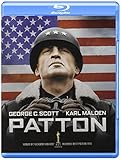
Patton | $9.06 | Buy on Amazon |
| 4 |
![Patton [Blu-ray]](https://m.media-amazon.com/images/I/51nsukLXd0L._SL160_.jpg)
|
Patton [Blu-ray] | $43.99 | Buy on Amazon |
What makes the line immortal is not just its shock value, but how perfectly it fuses performance, writing, and historical timing. Scott’s measured cadence, his controlled fury, and the almost confrontational staging turn the audience into Patton’s troops, implicated and challenged from the first minute. In a single sentence, Patton announces a new genre language for war movies, one that prizes psychological truth over comforting myth, and it has echoed through cinema ever since.
Opening Shock and Awe: How the Speech Lands Before the Story Even Begins
The audacity of Patton’s opening lies in its refusal to ease the audience into its worldview. There is no preamble, no montage of historical context, no gentle orientation. The film opens with George C. Scott alone, centered, immobile, filling the frame as completely as the flag behind him, and the effect is confrontational by design. Before viewers know where they are in time or place, they know exactly who is in command.
What’s actually slowing this PC down?
Pick the symptom - the matching free tool is one click away.
#1 Best Overall
- Factory sealed DVD
A Direct Address That Breaks the Fourth Wall Without Shattering It
What makes the speech so jarring is how it functions as a direct address without ever acknowledging the camera. Scott does not play to the audience; he commands them. The staging transforms viewers into soldiers standing at attention, receiving doctrine rather than drama, and the absence of music or movement strips away any emotional cushioning.
This choice collapses the distance between character and spectator. The film does not invite interpretation or debate in its opening moments; it issues a thesis statement. Patton is not introduced as a man to be understood gradually, but as a force whose philosophy arrives fully formed and unapologetically dominant.
Performance as Psychological Warfare
Scott’s delivery is as crucial as the words themselves. His voice rises and falls with calculated precision, alternating between measured authority and flashes of barely contained contempt. Every pause feels deliberate, as though Patton is allowing the weight of his ideas to settle before pressing forward again.
There is no grandstanding in the traditional sense. The performance is rigid, controlled, and almost militaristically restrained, which makes the profanity and aggression hit harder. Scott plays Patton not as a charismatic rebel, but as an absolutist thinker who believes deeply in the violence of his own logic.
Why the Film Starts Here, and Nowhere Else
By placing the speech before any narrative momentum, Patton frames the entire film as a character study filtered through ideology. Battles, victories, and defeats that follow are not meant to soften or contradict the speech, but to test it. Every tactical triumph and personal flaw is measured against the worldview Patton declares in the opening minutes.
This structural decision was radical for its time. Instead of letting action define character, the film lets character define action from the outset. The result is an opening that doesn’t just grab attention, but establishes a moral and psychological battlefield that the film will never leave.
An Opening That Redefined War Movie Grammar
In 1970, audiences were conditioned to expect war films to begin with spectacle or sentiment. Patton offered neither. Its opening speech functions as a manifesto, announcing that this film will interrogate power, ego, and victory rather than simply celebrate them.
That shock of recognition, of being spoken to rather than entertained, is why the quote endures. It lands before the story begins because it is the story, distilled into a single, unforgettable declaration of how Patton sees war, and how the film demands the audience see it too.
PC Slower Than It Used to Be?
A free scan shows the junk files, broken settings and background clutter dragging Windows down - then fixes them in one click.Free scan · Windows 10 & 11Outdated Drivers Are Slowing You Down
One free scan finds every outdated or missing driver and matches the right update for your exact hardware.Free scan · exact hardware matchGeorge C. Scott’s Commanding Delivery: Performance as Weapon
If the words of Patton’s opening speech are the ammunition, George C. Scott is the artillery. His performance doesn’t merely communicate the speech; it weaponizes it. Scott turns rhetoric into force, making the quote unforgettable not because of what is said, but because of how it is embodied.
A Voice That Dominates the Frame
Scott’s voice is famously unyielding, a blunt instrument sharpened by rhythm and control. He doesn’t shout the speech into submission; he commands it, letting phrases land with the certainty of orders that expect obedience. Each sentence feels issued, not spoken, as if dissent has already been accounted for and dismissed.
The cadence matters as much as volume. Scott stretches certain words just long enough to let them bruise the listener, then snaps to the next thought with military efficiency. It creates the sensation that the speech is advancing, step by step, with no room to retreat.
Stillness as Authority
One of the most radical choices in Scott’s performance is how little he moves. Framed against the massive American flag, he stands rigid, almost sculptural, refusing theatrical flourish. The lack of motion forces attention onto his face and voice, transforming restraint into dominance.
Recommended Free Tools
This stillness amplifies the menace beneath the rhetoric. Scott suggests that Patton doesn’t need to pace or gesture because power, to him, is assumed. The speech becomes less a motivational address and more a declaration of natural order, delivered by a man who believes he embodies it.
Refusing Charm, Embracing Absolutism
Crucially, Scott avoids making Patton likable in conventional terms. There is no wink to the audience, no softening irony, no attempt to cushion the speech’s brutality. He plays Patton as a man who is utterly convinced of his worldview, and dangerously uninterested in alternatives.
That refusal of charm is what gives the quote its lasting discomfort. Scott doesn’t ask the audience to agree with Patton; he dares them to withstand him. The line becomes unforgettable because it is confrontational, delivered by a performance that denies easy admiration while demanding attention.
Rank #2
- Factory sealed DVD
A Performance That Defines the Film’s Moral Tension
From this opening moment, Scott establishes the central conflict Patton will never resolve. His Patton is brilliant, effective, and terrifyingly certain, qualities that win wars and corrode humanity in equal measure. The speech doesn’t invite interpretation; Scott’s delivery imposes one.
Free tools Windows power users keep installed
One-click scans. No signup required.
That is why the quote survives outside the film, echoing through pop culture and military lore alike. It carries the imprint of Scott’s performance, inseparable from his voice, posture, and absolute conviction. Remove the actor, and the words lose their edge; with him, they become legend.
Words Forged in Iron: Screenwriting, Rhetoric, and Military Mythmaking
What ultimately elevates Patton’s opening quote beyond performance is the precision of its construction. Written by Francis Ford Coppola and Edmund H. North, the speech is not documentary realism but rhetorical architecture, carefully engineered to sound ancient, inevitable, and brutal. Every sentence feels hammered into place, shaped less by conversational logic than by battlefield cadence.
The result is language that doesn’t merely describe war but mythologizes it. The speech frames combat as destiny, violence as virtue, and victory as moral proof. It doesn’t persuade through argument; it overwhelms through certainty.
Rhetoric as Weapon
The speech borrows heavily from classical oratory, echoing Roman generals, Shakespearean kings, and Old Testament prophets. Short declarative sentences collide with sweeping historical claims, creating a rhythm that feels both instructional and prophetic. Patton isn’t just motivating soldiers; he is narrating history in advance.
This rhetorical strategy transforms language into a weapon. Words are deployed with the same efficiency as artillery, clearing space for obedience rather than reflection. The quote endures because it sounds like something that could only be spoken by a man who believes history bends toward his command.
Selective History, Deliberate Myth
Coppola and North were keenly aware that the speech was not an objective portrait of George S. Patton, but a curated legend. Real Patton speeches were often rambling, profane, and inconsistent; the film distills them into a single, concentrated mythic voice. What remains is not a man, but an idea of command.
That compression is crucial to the quote’s power. By stripping away contradiction and doubt, the script creates a version of Patton who feels inevitable, almost preordained. The line survives because it speaks in absolutes, even as the film itself quietly questions them.
Cold War Echoes and American Identity
Released in 1970, Patton arrived during a moment of profound American uncertainty. Vietnam had fractured faith in military leadership, yet nostalgia for decisive victory still lingered. The speech channels that tension, offering a vision of war that is brutally clear, morally uncomplicated, and terrifyingly seductive.
Quick wins for a faster PC:
Clear out junk files and repair common Windows errorsFree Scan →Scan for outdated or missing drivers - takes under a minuteDriver Scan →That historical timing cemented the quote’s legacy. It became a lightning rod, embraced by some as inspirational clarity and rejected by others as dangerous militarism. Its endurance lies in that friction, a line forged in iron not because it is comforting, but because it refuses to bend.
Mythmaking That Outlives the Film
Over time, the quote has escaped Patton and entered cultural shorthand. It’s referenced in political speeches, parodied in comedies, and quoted in military training with varying degrees of irony. Each reuse reinforces its status as cinematic scripture.
Yet the words never fully detach from their origin. They still carry the weight of Scott’s delivery, Coppola’s construction, and a nation wrestling with its relationship to war. That fusion of writing, rhetoric, and mythmaking is why Patton’s most famous line doesn’t just linger in memory; it looms.
1960s America and the Vietnam Shadow: Why the Quote Hit So Hard
The timing of Patton’s release was not incidental; it was combustible. By 1970, America was exhausted by Vietnam, disillusioned by shifting objectives and televised stalemates. Into that uncertainty marched a speech that spoke with thunderous certainty, daring audiences to remember a time when war felt comprehensible, even winnable.
A Nation Torn Between Doubt and Longing
Vietnam had shattered the post–World War II myth of American military infallibility. Trust in generals, politicians, and institutions was eroding, replaced by protest and skepticism. Patton’s opening speech, with its unapologetic swagger and moral absolutism, collided head-on with that mood.
For some viewers, the quote felt like a rebuke to hesitation and dissent, a reminder of what decisive leadership once looked like. For others, it sounded like a warning, the very mindset that had led America into a quagmire it no longer understood. That division was not a flaw; it was the speech’s fuel.
Rank #3
- Blu-ray
- Multiple Formats, Blu-ray, AC-3
- English (Subtitled), Spanish (Subtitled), French (Dubbed)
- 2
- 170
The Fantasy of Clarity in an Unclear War
What makes the quote resonate so deeply is its promise of simplicity. Patton offers a worldview where courage, aggression, and willpower guarantee victory, where history rewards those who refuse to question their own righteousness. In the fog of Vietnam, that clarity was intoxicating.
The speech doesn’t acknowledge civilian casualties, political complexity, or moral ambiguity. Instead, it frames war as a proving ground for national and personal greatness. At a moment when Americans were being asked to confront uncomfortable truths, the quote presented an alternate reality where doubt itself was the enemy.
Performance as Provocation
George C. Scott’s delivery sharpened that provocation. He doesn’t plead for belief; he assumes it, staring directly into the audience as if daring them to disagree. The quote lands not as rhetoric but as command, a theatrical act of dominance that mirrors the authority it celebrates.
That confrontational intimacy mattered in 1970. Audiences weren’t just watching Patton address troops; they were being addressed themselves, challenged to reckon with what kind of war story they still wanted to believe. The quote hit so hard because it forced a choice: reject it as dangerous nostalgia, or feel the pull of its certainty despite knowing better.
In the shadow of Vietnam, that tension was unavoidable. The line endured because it captured a national argument in a single, unyielding declaration, echoing with pride, menace, and longing all at once.
From Battlefield to Pop Culture: How the Quote Took on a Life of Its Own
Once Patton left the theaters, its opening declaration didn’t stay confined to the world of cinema. The quote detached itself from its historical setting and began circulating as a piece of cultural shorthand, invoked whenever ideas of toughness, resolve, or uncompromising leadership were in play. What had been written for a specific character and moment became a portable expression of attitude.
That portability was key. The line is concise, blunt, and confrontational, easily lifted from context without losing its punch. Even stripped of uniforms and flags, it still sounds like a challenge issued directly to whoever is listening.
Quoted, Parodied, Reclaimed
Over the decades, the quote has been endlessly echoed, sometimes reverently, sometimes ironically. It appears in political speeches, sports locker rooms, business seminars, and countless films and television shows, often as a signal for hard-nosed determination. In comedies and satires, it’s exaggerated to expose the bravado and absurdity beneath its certainty.
That range of usage only strengthened its legacy. A line that can function both as sincere motivation and as self-aware parody proves its cultural saturation. Even when mocked, it retains its authority, because everyone recognizes the original power it’s playing against.
A Quote Bigger Than the Man Who Spoke It
As the quote traveled, it also drifted away from George S. Patton himself. Many who recognize the line couldn’t recite the full speech or place it precisely within the film. It has become less about the historical general and more about an archetype: the unflinching commander who rejects doubt and demands absolute commitment.
The Tool Desk
Outbyte PC Repair FREEClear out junk files and repair common Windows errorsFree Scan →Outbyte Driver Updater FREEFix the driver behind crashes, sound loss and screen glitchesFind Drivers →That transformation is rare. Most famous movie lines remain tied to a character or a scene, but this one evolved into a broader cultural symbol. It represents a mindset as much as a moment, which is why it continues to resurface whenever society debates strength versus reflection.
Endurance Through Ambiguity
What’s remarkable is that the quote’s longevity hasn’t required consensus about its message. Some still embrace it as a rallying cry, while others cite it as an example of dangerous oversimplification. The line survives precisely because it invites that argument, refusing to settle into a single, comfortable meaning.
In that sense, its pop culture afterlife mirrors its original impact. Just as it once reflected America’s conflicted feelings about war and authority, it continues to surface whenever those tensions resurface. The quote didn’t just leave the battlefield; it embedded itself in the ongoing conversation about power, leadership, and the stories nations tell themselves.
Independent reader supportYour contribution helps us test, update, and keep practical guides available for everyone.Comparing War Movie Speeches: Why Patton Still Reigns Supreme
War cinema is filled with speeches designed to stir blood and steel resolve, but few have escaped their films as completely as Patton’s opening address. Other monologues are beloved, even iconic, yet they remain anchored to a specific character arc or emotional beat. Patton’s speech, by contrast, feels like it exists outside the movie, standing as a thesis statement for an entire philosophy of warfare.
What separates it is not volume or eloquence alone, but the precision with which performance, language, and historical moment align. It doesn’t ask the audience to feel; it tells them what to believe, then dares them to disagree.
Rank #4
Rousing vs. Revealing
Many famous war speeches aim to inspire through shared humanity. Mel Gibson’s rally in Braveheart is built on emotional catharsis, transforming fear into collective defiance. It works because it’s intimate and mythic, a cry for freedom rooted in personal loss.
Patton’s speech is colder and more confrontational. It doesn’t comfort the soldiers or acknowledge their vulnerability; it challenges their worthiness to stand there at all. That confrontational edge gives it a harder staying power, one that feels less like a pep talk and more like a provocation.
Idealism Against Irony
Films like Saving Private Ryan and A Few Good Men frame their speeches around moral reckoning. They wrestle openly with sacrifice, duty, and the cost of obedience, inviting reflection as much as resolve. These moments linger because they articulate the doubts audiences already carry.
Do these 3 things before closing this tab:
1Scan for outdated or missing drivers - takes under a minute2Clear out junk files and repair common Windows errors3Fix the driver behind crashes, sound loss and screen glitchesPatton offers no such reassurance. Its famous line rejects hesitation outright, presenting war as a test of dominance rather than conscience. That starkness makes it endlessly quotable, because it expresses an extreme position with unapologetic clarity.
Performance as Command
George C. Scott’s delivery is inseparable from the speech’s legacy. Shot against an oversized American flag, he speaks directly to the camera, collapsing the distance between commander and viewer. It feels less like a scene unfolding and more like an order being issued.
Other war speeches are often shared among characters, emotionally collaborative in tone. Patton’s is authoritarian by design, a solo performance that establishes hierarchy instantly. Scott doesn’t invite the audience into Patton’s worldview; he imposes it.
A Speech That Defines Its Film
Perhaps most importantly, Patton’s speech doesn’t summarize a moment, it defines the movie that follows. Everything after it is either confirmation or complication of what’s already been declared. The film spends its runtime interrogating the worldview introduced in that first address.
Crashes, No Sound, or Screen Glitches?
Random freezes, missing sound and display glitches usually trace back to one bad driver. Find and replace yours safely.Free scan · under a minuteWindows Errors? Fix Them Before They Spread
Repair common Windows errors and clear accumulated junk for a smoother, more stable PC - no reinstall needed.Free scan · no reinstallFew war movies front-load their ideology so boldly. By doing so, Patton ensures its most famous quote isn’t just remembered, but constantly re-evaluated. That ongoing tension between assertion and aftermath is why, decades later, no war movie speech has managed to dethrone it.
The Enduring Legacy: What the Quote Reveals About War, Leadership, and Cinema
More than a memorable line, Patton’s opening address endures because it exposes the uncomfortable truths war films often soften. It presents combat not as a necessary evil or tragic burden, but as a proving ground for ego, ambition, and historical destiny. That perspective is deliberately abrasive, and its refusal to seek approval is precisely why it still provokes debate.
War as Spectacle and Self-Mythology
The quote reveals how war can be framed as theater, a stage on which leaders perform versions of themselves they want remembered. Patton speaks as if history itself is listening, positioning victory not merely as strategy, but as legacy. In doing so, the film captures how warfare often feeds personal mythology as much as national purpose.
This framing unsettles modern audiences because it strips away comforting illusions. There is little acknowledgment of collateral damage or moral ambiguity in the speech itself, only the intoxicating promise of glory. That omission forces viewers to confront how easily rhetoric can elevate conflict into something dangerously seductive.
Free tools Windows power users keep installed
One-click scans. No signup required.
Leadership Without Apology
As a portrait of command, the quote is brutally honest about the kind of leadership Patton embodies. It is not empathetic or democratic; it is charismatic, domineering, and utterly convinced of its own correctness. The speech makes clear that such leadership can inspire extraordinary results while simultaneously courting catastrophe.
Cinema rarely allows such figures to speak so plainly anymore. Contemporary war films often contextualize or critique authority within the moment, but Patton lets its protagonist declare his philosophy without filter. That clarity turns the quote into a litmus test, revealing as much about the listener’s values as the speaker’s.
A Turning Point in War Cinema
Historically, the speech marks a shift in how American war films addressed heroism. Released at the height of Vietnam-era disillusionment, it arrived when audiences were increasingly skeptical of martial bravado. Rather than adjusting its tone, Patton doubled down, daring viewers to wrestle with admiration and discomfort at the same time.
That tension influenced generations of filmmakers. The quote’s legacy can be felt in later films that either consciously reject its worldview or echo it with irony. In both cases, Patton remains the reference point, the benchmark against which war movie rhetoric is measured.
Why It Still Endures
Ultimately, the quote lasts because it refuses to resolve itself. It is neither endorsement nor condemnation, but a declaration that demands response. Each era hears it differently, shaped by its own relationship to war, authority, and national identity.
In that sense, Patton’s most famous line transcends the film that birthed it. It stands as a reminder of cinema’s power to confront audiences with ideas they may admire, resist, or fear, often all at once. That unresolved intensity is why, decades on, no war movie quote has proven more unforgettable.
Quick Recap
Product prices and availability are accurate as of the date/time indicated and are subject to change. Any price and availability information displayed on Amazon at the time of purchase will apply.




