Do these 3 things before closing this tab:
1Repair Windows errors before they cause bigger problems2Scan for outdated or missing drivers - takes under a minute3Clear out junk files and repair common Windows errorsAbdulrazak Gurnah’s Paradise follows Yusuf, a twelve-year-old whose father hands him over to a powerful merchant to clear a family debt. The novel is a coming-of-age story, but its journey takes place inside a trading world where commerce, war, faith and European intrusion pull against one another. It was published in 1994, shortlisted for the Booker Prize that year, and it is the book in which Gurnah, who later won the 2021 Nobel Prize in Literature, first drew wide attention. This guide covers the premise, the setting, the Joseph story that runs beneath it, and how to read the book without reducing it to a simple colonial allegory.
The premise: a debt, a boy, and a journey
The story begins with a transaction. Yusuf’s father owes money, and he settles the debt by giving his son to a merchant. The Booker Prize’s official synopsis says Yusuf travels with a man initially presented as his uncle, who is in fact a powerful merchant, and that Yusuf has been pawned to settle his father’s debts. Penguin Random House’s description says Yusuf is twelve and is sold by his father in repayment of a debt. The two publishers frame the same act slightly differently, and the difference matters: a pawn is held against a debt and may be redeemed, while a sale is final. The novel keeps the boy’s status uncertain for much of its length, and that uncertainty is one of its engines.
| # | Preview | Product | Price | |
|---|---|---|---|---|
| 1 |
|
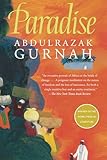
Paradise | $9.87 | Buy on Amazon |
| 2 |

|
Paraíso / Paradise (Spanish Edition) | $22.32 | Buy on Amazon |
| 3 |

|
Abdulrazak Gurnah, Paradise | $51.40 | Buy on Amazon |
| 4 |

|
The Last Gift | $1.99 | Buy on Amazon |
| 5 |
|
Study Guide: Paradise by Abdulrazak Gurnah (SuperSummary) | $9.95 | Buy on Amazon |
Once Yusuf’s status changes, the book moves him out of rural life and into an urban, multi-ethnic commercial world. A 1994 Publishers Weekly review describes him entering indentured servitude at twelve and working in the shop of the merchant Aziz before joining a trade caravan. The review is a contemporary account of the plot, not a neutral history of the region, but its sequence of events matches the publishers’ summaries.
What kind of novel it is
Publishers and critics have described Paradise in three overlapping ways, and each one points to a different part of the book.
The Tool Desk
Outbyte Driver Updater FREEScan for outdated or missing drivers - takes under a minuteDriver Scan →Outbyte PC Repair FREERepair Windows errors before they cause bigger problemsFix Now →#1 Best Overall
| Source | How it frames the novel | What it emphasises |
|---|---|---|
| The Booker Prize (official synopsis) | A boy’s coming of age in an East Africa “increasingly corrupted by colonialism and violence” | Adolescence, war, and the moral damage of a changing region |
| Penguin Random House (catalog description) | A coming-of-age story, a tragic love story, and a narrative about the corruption of African tradition by European colonialism | Romance and the loss of older social order alongside colonial pressure |
| Nobel Prize biobibliography (2021) | Gurnah’s fourth novel and breakthrough, with a sad love story at its centre and Joseph-story antecedents | The novel’s place in Gurnah’s career and its religious source material |
Read together, these framings show that the book is not a single-thesis novel. The Booker synopsis puts colonial violence in the foreground; Penguin’s description gives equal weight to the romance; the Nobel biobibliography treats the book as a turning point in the writer’s own development and points to the older narrative that shapes its shape.
Setting: East Africa on the edge of colonisation
The Nobel biobibliography places the story in the colonisation of East Africa in the late nineteenth century. Penguin Random House describes an Africa “on the brink of colonization,” and says the book moves Yusuf from rural life into what the publisher calls pre-colonial urban East Africa. These descriptions do not conflict so much as they describe different moments: the novel’s trading towns are already shaped by outside commerce and rival powers, and the colonial order is still forming around them.
Rank #2
That is why the book works poorly as a simple allegory in which Africans are innocent and Europeans are the only source of harm. Yusuf’s world contains several communities with their own interests, and the merchants who shape his life are not presented as a single block. Publishers Weekly notes the competing communities and colonial forces the novel represents. Readers should expect a complex map of loyalties rather than a clean moral division.
The Joseph story beneath the surface
The Nobel biobibliography connects Paradise to the Quranic account of Joseph and to Joseph’s journey from slavery. Readers who know the biblical or Quranic version will recognise the outline: a young man sold or given away by his family, taken into a foreign household, and tested by new loyalties. Gurnah does not retell the story. He uses its shape to ask what a boy owes his family, his master, and the people who are merely passing through his life.
Recommended Free Tools
Rank #3
Knowing this background does not require a theological reading. It gives the book’s journeys a second structure, so that Yusuf’s movements can be followed as a sequence of trials and small reversals rather than as a loose travel narrative.
How to read the novel
- Track Yusuf’s status at each stage. The book keeps asking whether he is a servant, a relative, a commodity, or a free young man, and the answer changes with each household he enters.
- Follow the merchant’s household and the caravan separately. Each shows a different face of the trading economy and a different set of relationships.
- Watch the romance as a moral thread, not a side story. Penguin’s description calls the book a tragic love story, and the love plot is where the novel’s ideas about loyalty and sacrifice are tested most directly.
- Note what the novel leaves to the margins: the colonial administration appears as a force shaping events rather than as a fully explained institution, which keeps the focus on Yusuf’s experience.
Publication and recognition
The Booker Prize record lists Paradise as written by Abdulrazak Gurnah, published by Hamish Hamilton, and shortlisted for the 1994 Booker Prize. The record gives a publication date of 1 January 1994, which is a catalogue convention for the year of publication rather than a precise release day. Penguin Random House also says the novel was shortlisted for the Whitbread Award; that claim appears in the publisher’s own copy and is the one prize listing here that rests on a single source.
Rank #4
The Nobel biobibliography dates the work to 1994 and calls it Gurnah’s breakthrough. That is the most useful source for the novel’s place in his career, because it is written from the perspective of his later Nobel recognition rather than from the publisher’s marketing.
Independent reader supportYour contribution helps us test, update, and keep practical guides available for everyone.Editions and formats
The Booker record identifies the original 1994 Hamish Hamilton publication. The Penguin Random House catalog record that is most easily found online is for an audiobook download, ISBN 9780593678701, read by Chukwudi Iwuji, with a listed length of 9 hours 30 minutes and a publication date of March 7, 2023. That record describes a digital audio edition. It should not be read as a description of a paperback or other physical format. Translated editions also exist, but this guide does not compare them.
Best Value
Check the current format, ISBN, and availability on the publisher’s page before buying, since listings change: Penguin Random House’s Paradise by Abdulrazak Gurnah catalog page.
Sources for the claims in this guide
- The Booker Prizes, “Paradise”: the official synopsis, publisher, publication year, and 1994 shortlist.
- Nobel Prize, “The Nobel Prize in Literature 2021: Biobibliography”: the novel’s place in Gurnah’s career, the Joseph connection, and the late nineteenth-century setting.
- Publishers Weekly, “Paradise by Abdulrazak Gurnah”: a 1994 contemporary review of the plot and colonial setting.
The quotations from publisher and prize copy above are the publishers’ own wording, not statements by Gurnah. No interview with the author about this novel is cited here.
Quick Recap
”
The Bottom Line
“”
Product prices and availability are accurate as of the date/time indicated and are subject to change. Any price and availability information displayed on Amazon at the time of purchase will apply.




