The Tool Desk
Outbyte Driver Updater FREEScan for outdated or missing drivers - takes under a minuteDriver Scan →Outbyte PC Repair FREEClear out junk files and repair common Windows errorsFree Scan →Hollywood finally has a name to attach to one of its most tantalizing long-gestating follow-ups. The sequel to Once Upon a Time… in Hollywood is officially titled The Continuing Adventures of Cliff Booth, a choice that immediately clarifies both its creative intent and its narrative center of gravity. Where Quentin Tarantino’s 2019 film luxuriated in ensemble nostalgia and alternate-history fantasy, this title announces a more focused, character-driven continuation anchored squarely to Brad Pitt’s Oscar-winning fixer.
That specificity matters. Cliff Booth was always the gravitational oddity of Tarantino’s fairy tale version of late-’60s Los Angeles, a man drifting between myth and menace, defined as much by implication as by action. Naming the sequel after him signals a shift away from the broader industry satire of the original and toward a pulpy, episodic exploration of Cliff’s life after the night that rewrote Hollywood history.
![Once Upon a Time in Hollywood [Blu-ray] [2019] [Region Free]](https://m.media-amazon.com/images/I/51SZrIi1KIL._SL160_.jpg)
Why the Title Signals a Creative Pivot
According to early plot details, The Continuing Adventures of Cliff Booth follows Pitt’s laid-back enforcer as he navigates a changing early-1970s Hollywood, a town growing more corporate, more violent, and less romantic than the one Tarantino previously mythologized. The story reportedly leans into Cliff’s work on the fringes of the industry, handling problems studios don’t want to acknowledge while confronting the long-simmering questions about his past that the original film left deliberately unresolved.
For Pitt, the title cements Cliff Booth as more than a scene-stealing supporting player; it elevates him into a legacy character rare in Tarantino’s filmography. For Tarantino’s larger legacy, it suggests a filmmaker increasingly interested in deepening his own fictional canon rather than simply closing the book on it. In a sequel landscape often driven by IP obligation, this title frames the project as something more personal, more novelistic, and unmistakably authored.
Do these 3 things before closing this tab:
1Fix the driver behind crashes, sound loss and screen glitches2Clear out junk files and repair common Windows errors3Scan for outdated or missing drivers - takes under a minute#1 Best Overall

- The 9th film from Quentin Tarantino features a large ensemble cast and multiple storylines in a tribute to the final moments of Hollywood?s golden age.
What We Know So Far: Plot Details and the New Chapter for Cliff Booth
A Hollywood That’s Lost Its Illusions
Set in the early 1970s, The Continuing Adventures of Cliff Booth reportedly picks up as Hollywood sheds the last of its counterculture innocence. Studios are consolidating power, stars are becoming brands, and the industry’s underbelly is no longer hiding behind studio gates. Cliff finds himself navigating this harsher terrain as a freelance problem-solver, operating in the gray zones where publicity departments, producers, and talent intersect.
Unlike the sun-drenched nostalgia of the original film, this chapter is said to lean into a moodier, more morally ambiguous Los Angeles. Cliff’s easygoing charm remains, but it’s now contrasted against a world that’s less forgiving and more transactional. The fairy tale has ended, and Cliff Booth is still standing in its aftermath.
Cliff Booth as Fixer, Enigma, and Survivor
Early plot descriptions emphasize Cliff’s reputation as a man who handles situations no one else wants to touch. He moves between film sets, studio offices, and back-alley deals, smoothing over scandals and quietly neutralizing threats to Hollywood’s carefully managed image. This work places him closer to the machinery of the industry than ever before, even as he remains fundamentally outside it.
Crucially, the sequel is expected to address the questions Tarantino intentionally left unanswered in 2019. Cliff’s wartime history, his alleged involvement in his wife’s death, and his comfort with violence aren’t treated as throwaway rumors this time. They form the psychological backbone of the story, pushing Cliff to confront whether the myths surrounding him are tools he can keep using or burdens he can no longer outrun.
What’s actually slowing this PC down?
Pick the symptom - the matching free tool is one click away.
Life After Rick Dalton
One of the most notable shifts is the absence of Rick Dalton as Cliff’s narrative anchor. With Leonardo DiCaprio’s character reportedly off-screen or only referenced, Cliff exists without the safety net of a fading star to orbit. That freedom allows the film to explore who Cliff is when he’s no longer defined by loyalty or employment, but by choice.
This change reframes Cliff not as a sidekick, but as a man building a life from the margins inward. His relationships are looser, his allegiances more conditional, and his moral compass increasingly tested by the jobs he accepts. It’s a natural evolution for a character who always seemed destined to walk alone once the credits rolled.
A More Episodic, Pulp-Driven Structure
Sources close to the project suggest the film adopts a looser, episodic structure, echoing pulp paperbacks and serialized crime stories of the era. Rather than one singular conspiracy or showdown, Cliff’s journey unfolds through a series of interconnected encounters, each revealing a different facet of Hollywood’s decay. This approach allows the character to drift through genres, from noir to dark comedy to bursts of sudden violence.
That structure also positions the sequel as a tonal counterpoint to the original. Where Once Upon a Time… in Hollywood built toward a single explosive night, this film reportedly thrives on accumulation, layering incident upon incident until Cliff’s accumulated choices demand reckoning. It’s less about rewriting history and more about living with the consequences of surviving it.
What This Means for Brad Pitt and Tarantino’s Canon
For Brad Pitt, the project represents a rare opportunity to fully inhabit a character audiences already see as iconic. Cliff Booth isn’t being rebooted or reimagined; he’s being expanded, aged, and complicated. That kind of character continuity is unusual in modern Hollywood, particularly outside of franchise filmmaking.
For Quentin Tarantino’s legacy, the sequel signals an intriguing evolution. Rather than closing his cinematic universe with finality, he appears willing to revisit it with the perspective of time, treating his characters less like one-off creations and more like figures in an ongoing mythology. In a sequel landscape dominated by brand management, The Continuing Adventures of Cliff Booth stands out as a deeply personal extension of a filmmaker’s world, shaped by character first and nostalgia second.
How the Sequel Connects to Quentin Tarantino’s Original Film
At its core, the sequel is less a traditional follow-up and more a lateral expansion of Quentin Tarantino’s Hollywood mythology. While Once Upon a Time… in Hollywood functioned as a nostalgic snapshot of a dying era, The Continuing Adventures of Cliff Booth reportedly shifts focus to what happens after the dream curdles. The connective tissue isn’t plot mechanics or returning spectacle, but character memory and moral fallout.
Cliff Booth as the Throughline
Brad Pitt’s Cliff Booth remains the narrative anchor, carrying forward the scars, rumors, and contradictions established in the original film. The sequel leans into the ambiguity Tarantino cultivated around Cliff, particularly his reputation for violence and his uneasy relationship with Hollywood power structures. Rather than clarifying those mysteries, the new story reportedly weaponizes them, using Cliff’s past as currency in a town that remembers everything and forgives very little.
Recommended Free Tools
Importantly, the film doesn’t retcon Cliff’s arc or attempt to top his iconic moments. It treats his survival of the Spahn Ranch era and the Manson fallout as history that weighs on him, shaping the choices he makes as Hollywood’s margins grow darker. That continuity grounds the sequel emotionally, even as the plot moves into rougher, more cynical territory.
Hollywood After the Fairy Tale
Once Upon a Time… in Hollywood famously rewrote history to preserve innocence and fantasy. The sequel, by contrast, reportedly explores the cost of that fantasy lingering too long. Set deeper into the 1970s, it presents an industry less forgiving and more transactional, where stuntmen, fixers, and disposable laborers like Cliff are quietly pushed aside.
Rank #2
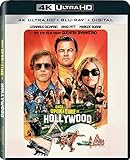
- The 9th film from Quentin Tarantino features a large ensemble cast and multiple storylines in a tribute to the final moments of Hollywood?s golden age.
This shift allows the sequel to comment on the same themes as the original from a harsher angle. Fame is fleeting, loyalty is conditional, and the old codes no longer apply. The Hollywood Cliff navigates now feels like a natural extension of the one Tarantino lovingly reconstructed, only stripped of its rose-colored glow.
Echoes Without Replication
While familiar names and locations may surface, the film reportedly avoids leaning on overt callbacks or cameo-driven nostalgia. Rick Dalton’s absence looms large, not as a gimmick, but as a narrative absence that reinforces Cliff’s isolation. Their friendship remains part of the story’s DNA, even as the sequel resists turning it into a safety net.
PC Slower Than It Used to Be?
A free scan shows the junk files, broken settings and background clutter dragging Windows down - then fixes them in one click.Free scan · Windows 10 & 11Crashes, No Sound, or Screen Glitches?
Random freezes, missing sound and display glitches usually trace back to one bad driver. Find and replace yours safely.Free scan · under a minuteThat restraint is key to how the sequel connects to the original. It trusts the audience’s memory rather than replaying greatest hits, allowing Tarantino’s world to feel lived-in rather than preserved in amber. The result is a continuation that feels organic, shaped by time rather than frozen by legacy.
A Thematic Bridge Within Tarantino’s Filmography
On a broader level, the sequel positions itself as a bridge between Tarantino’s late-career reflections and his long-standing fascination with men operating outside the law. Cliff Booth becomes a lens through which the filmmaker revisits ideas of violence, consequence, and myth-making without the operatic revisionism that defined Once Upon a Time… in Hollywood.
That makes the project feel less like a commercial sequel and more like an addendum to Tarantino’s ongoing conversation with his own work. It connects not just to one film, but to an entire career built on interrogating how stories, especially violent ones, shape the people who survive them.
Brad Pitt’s Return: Cliff Booth’s Evolution and Star Power
Brad Pitt stepping back into Cliff Booth’s boots is the sequel’s most concrete point of continuity, and arguably its strongest selling point. With the project now carrying the reported title The Continuing Adventures of Cliff Booth, the emphasis is clear: this is not a reunion piece, but a character study built around Pitt’s Oscar-winning turn. Cliff is no longer the loyal shadow to a fading star; he is the story.
The newly revealed plot details position Cliff as a man drifting through a Hollywood that has little use for him. Set years after the events of Once Upon a Time… in Hollywood, the sequel reportedly follows Booth as he navigates work on the fringes of the industry, occasionally crossing paths with producers, criminals, and cultural tastemakers who barely remember the era he came from. It’s a quieter, more corrosive arc, one that trades fairy-tale heroics for moral gray zones.
Cliff Booth Without Rick Dalton
Removing Rick Dalton from the equation fundamentally changes Cliff’s emotional geometry. In the original film, Cliff’s identity was partially defined by service, loyalty, and unspoken affection. Here, those traits remain, but they curdle into something heavier: resentment, inertia, and a simmering sense of obsolescence.
The sequel reportedly leans into this discomfort rather than smoothing it over. Cliff is still capable, still dangerous, but no longer protected by friendship or proximity to fame. Pitt’s performance is said to reflect that erosion, presenting a man whose confidence masks a growing awareness that the world has moved on without him.
Brad Pitt as a Late-Career Movie Star
Pitt’s involvement also speaks volumes about where he is as a leading man. In recent years, he has gravitated toward roles that foreground weariness and self-awareness, from Ad Astra to Babylon. Cliff Booth fits neatly into that lineage, offering Pitt a chance to explore masculinity stripped of glamour.
Unlike many legacy sequels that use stars as nostalgic anchors, this project appears to weaponize Pitt’s charisma against the character himself. His natural likability becomes a tension point, forcing audiences to confront how charm and violence coexist in Booth. It’s a risky move, but one that aligns with Pitt’s increasingly selective, auteur-driven choices.
Star Power in a Sequel-Obsessed Landscape
In a Hollywood climate dominated by IP extensions and brand-safe returns, Pitt’s Cliff Booth sequel feels unusually adult. There are no indications of expanded universes or crossovers, just a singular focus on character and consequence. That restraint gives Pitt room to carry the film without leaning on ensemble fireworks or stunt casting.
If successful, The Continuing Adventures of Cliff Booth could redefine what a sequel centered on a supporting character can achieve. Rather than resurrecting the past, it allows Pitt to age into the role, transforming Cliff Booth from a mythic enforcer into a living, uneasy relic of Hollywood history.
Tarantino’s Creative Involvement: Script Origins, Canon, and Legacy Questions
One of the most intriguing aspects of The Continuing Adventures of Cliff Booth is Quentin Tarantino’s precise level of creative involvement. While he is not directing the sequel, multiple reports indicate that the project originates from a script Tarantino himself wrote, drawing directly from material he developed after Once Upon a Time… in Hollywood. That distinction matters, especially for a filmmaker whose authorship is often inseparable from his films’ identity.
Free tools Windows power users keep installed
One-click scans. No signup required.
This is not a studio-generated extension built from notes or discarded IP. The sequel’s narrative spine reportedly comes from a screenplay Tarantino wrote as a standalone Cliff Booth story, later adapted to fit a continuation framework. In effect, the film occupies a liminal space between Tarantino’s personal canon and a more conventional sequel model.
From Novel to Screen: Cliff Booth’s Expanded Backstory
Tarantino’s 2021 novelization of Once Upon a Time… in Hollywood significantly reshaped how audiences understand Cliff Booth. The book confirmed long-rumored details about Cliff’s violent past, his moral code, and his comfort with lethal force, reframing him as less of a charming cipher and more of a hardened survivor. The sequel reportedly builds directly on that interpretation, treating the novel as semi-canonical rather than ancillary.
Plot details suggest the story follows Cliff in the early 1970s as he drifts through a Hollywood that no longer has much use for him, taking on work that sits somewhere between fix-it man, enforcer, and freelance problem-solver. That premise aligns closely with Tarantino’s expanded vision of Cliff as a man who thrives in moral gray zones, long after the studio system that created him has begun to collapse.
Is This Official Tarantino Canon?
The question of canon looms large, especially for a filmmaker who has been meticulous about controlling his filmography. Tarantino has publicly framed his movies as existing within overlapping universes, with Once Upon a Time… in Hollywood already positioned as a heightened, alternate-history reality. A sequel not directed by him complicates that framework, even if the script bears his DNA.
Industry insiders suggest Tarantino has granted the project a form of tacit legitimacy, treating it as an authorized continuation rather than an external spinoff. That distinction may be enough for fans, particularly given that Cliff Booth is a character Tarantino has repeatedly described as one of his personal favorites.
Legacy Implications for Tarantino and Hollywood Sequels
There is also a broader legacy question at play. Tarantino has long maintained that he will retire after ten films, making any extension of his cinematic worlds feel consequential. Allowing Cliff Booth to live on without him in the director’s chair could signal a softening of his famously rigid stance on artistic closure.
At the same time, it offers Tarantino a way to expand his mythology without diluting his core filmography. If successful, The Continuing Adventures of Cliff Booth may stand as a rare example of a sequel that respects auteur authorship while embracing collaboration, redefining how singular filmmakers can engage with legacy storytelling in a sequel-driven Hollywood.
Independent reader supportYour contribution helps us test, update, and keep practical guides available for everyone.Tone, Genre, and Influences: How This Sequel May Differ from ‘Once Upon a Time… in Hollywood’
While Once Upon a Time… in Hollywood unfolded as a sun-drenched hangout movie steeped in nostalgia, the sequel appears poised to move into darker, rougher territory. Early plot descriptions point to a Los Angeles that has lost its innocence, mirroring Cliff Booth’s own drift from reliable studio muscle to something closer to a professional survivor. The tonal shift feels deliberate, reflecting the early 1970s as a period when Hollywood’s dream factory gave way to cynicism, paranoia, and moral ambiguity.
Quick wins for a faster PC:
Scan for outdated or missing drivers - takes under a minuteDriver Scan →Repair Windows errors before they cause bigger problemsFix Now →Fix the driver behind crashes, sound loss and screen glitchesFind Drivers →From Hangout Movie to Gritty Character Study
Tarantino’s original film luxuriated in long drives, casual conversations, and the rhythms of daily life at the end of the studio era. The sequel, by contrast, is structured more like a character-driven odyssey, with Cliff navigating a series of increasingly dubious jobs. This suggests a tighter narrative engine, less about vibe and more about consequence, even if Tarantino’s fondness for digressions and texture remains baked into the script.
Cliff Booth was always the film’s most dangerous presence, and this sequel seems intent on pulling that threat into the foreground. The easygoing charm is still there, but it now masks a man operating in shadows rather than backlots.
Genre Roots in 1970s Neo-Noir and Pulp Crime
Influence-wise, The Continuing Adventures of Cliff Booth reportedly leans heavily on 1970s crime cinema. Think the fatalism of neo-noir, the bruised masculinity of films like Get Carter or The Long Goodbye, and the episodic grit of pulp paperbacks. This is a Hollywood where violence is less cartoonish than in Tarantino’s revenge fantasies, and more procedural, transactional, and weary.
That shift could be key to differentiating the sequel from its predecessor. Instead of rewriting history with operatic flair, this story seems content to live in the margins, where problems are buried rather than broadcast.
A More Grounded Showcase for Brad Pitt
For Brad Pitt, the tonal recalibration offers a different kind of showcase. His Oscar-winning turn as Cliff balanced humor, menace, and mythmaking, but the sequel promises something more introspective. An older Cliff, scraping by in a town that’s moved on, allows Pitt to explore vulnerability beneath the swagger, aligning the performance with the actor’s recent interest in worn-down, morally complex figures.
The result may be a sequel that feels less like a nostalgic love letter and more like a reckoning. By embracing a harsher genre palette and a colder emotional register, the film has the potential to stand apart from Once Upon a Time… in Hollywood while deepening the mythology around one of Tarantino’s most enduring creations.
Rank #4
![Once Upon a Time in Hollywood [Blu-ray 4K] [2019] [Region Free] [4K UHD]](https://m.media-amazon.com/images/I/51LDurm9KpL._SL160_.jpg)
- The disk has English audio and subtitles.
Why This Sequel Is Unusual in Today’s Hollywood Franchise Landscape
In an era dominated by shared universes, IP consolidation, and algorithm-driven nostalgia, a sequel like The Continuing Adventures of Cliff Booth is something of an anomaly. It isn’t engineered to launch a trilogy, spawn spinoffs, or reboot a recognizable brand. Instead, it exists to follow one character further into the shadows, even if that journey complicates the audience’s affection for him.
A Sequel Without Franchise Ambitions
Most modern sequels are designed as infrastructure, narrative bridges to larger cinematic ecosystems. This project rejects that logic entirely. By focusing narrowly on Cliff Booth’s post-Hollywood drift through morally murky work, the film positions itself as a standalone continuation rather than a commercial expansion.
That choice feels almost defiant in today’s marketplace. There’s no sense that Cliff Booth is being positioned as a recurring IP asset, just a character whose story hasn’t quite finished unraveling.
From Ensemble Nostalgia to Singular Descent
Once Upon a Time… in Hollywood thrived on ensemble energy, star power, and a mythologized version of late-1960s Los Angeles. The sequel abandons that comfort zone. Its plot reportedly traces Cliff’s involvement in increasingly questionable fixer jobs, moving the story away from celebrity adjacency and into the unglamorous labor that props up the industry’s underbelly.
That shift reframes the original film retroactively. Cliff is no longer just a cool enforcer orbiting movie stars, but a man whose usefulness to Hollywood persists long after its affection fades.
Brad Pitt as the Center, Not the Icon
For Brad Pitt, this sequel represents a rare opportunity in contemporary Hollywood: revisiting an Oscar-winning role without embalming it in nostalgia. Cliff Booth is older, less mythic, and more exposed here, which runs counter to how legacy characters are typically preserved. Rather than freezing Pitt in amber, the film allows his character to degrade, ethically and physically.
That approach aligns with Pitt’s recent career trajectory, favoring riskier, character-driven projects over safe returns. It also reinforces the sense that this sequel exists for artistic curiosity, not brand maintenance.
Tarantino’s Legacy, Refracted Through Restraint
Although Tarantino’s influence remains embedded in the script’s dialogue, violence, and genre DNA, the sequel’s very existence challenges assumptions about his legacy. This isn’t a grand, operatic capstone or a maximalist revision of history. It’s a quieter extension, one that treats its world as lived-in rather than legendary.
In doing so, the film positions itself outside the dominant sequel economy. It suggests an alternate model, where continuation is about deepening character and consequence, not escalating spectacle or prolonging relevance at all costs.
What It Means for Fans and What Comes Next
For fans of Once Upon a Time… in Hollywood, the newly revealed title and plot details clarify that this sequel isn’t designed to recreate the original’s sun-drenched nostalgia. Instead, it pushes deeper into the moral gray zones that Tarantino only hinted at, using Cliff Booth as a guide through a Hollywood that’s older, meaner, and far less enchanted with itself. The title’s emphasis on Cliff underscores that this is no longer a fairy tale about stardom, but a character study about survival after the dream curdles.
Crashes, No Sound, or Screen Glitches?
Random freezes, missing sound and display glitches usually trace back to one bad driver. Find and replace yours safely.Free scan · under a minutePC Slower Than It Used to Be?
A free scan shows the junk files, broken settings and background clutter dragging Windows down - then fixes them in one click.Free scan · Windows 10 & 11A Different Kind of Payoff for Tarantino Fans
This direction will likely divide audiences in a productive way. Viewers hoping for extended hangouts with familiar faces and playful revisionism may find the sequel deliberately austere, even confrontational. But for long-time Tarantino fans, the appeal lies in watching his worldview applied with restraint, letting character erosion replace narrative fireworks.
The plot’s focus on fixer work and off-the-books problem solving also deepens Cliff Booth retroactively. His competence, once played for cool mystique, now reads as a liability, a skill set that traps him in a cycle of moral compromise. That reframing adds texture to the original film, inviting reappraisal rather than simple nostalgia.
Brad Pitt’s Cliff Booth as a Rare Hollywood Continuation
Brad Pitt’s return gains weight in this context. Instead of reprising Cliff as a victory lap, the sequel positions him as a man aging out of usefulness in an industry that has no safety net for its loyal enforcers. It’s a rare example of a star allowing a beloved character to deteriorate on screen, rather than protecting the image that made him iconic.
For Pitt, that choice reinforces his late-career pivot toward roles that interrogate masculinity and legacy rather than celebrate them. Cliff Booth becomes less a symbol of cool and more a case study in what happens when violence and loyalty outlive their original purpose.
What Comes Next for the Film Itself
Industry-wise, the project occupies an unusual space. It’s a sequel in name, but its scale and intent align more with prestige character drama than franchise extension. That positioning could influence how studios think about legacy properties, especially those tied to auteur-driven worlds rather than easily expandable universes.
Whether this film becomes a singular epilogue or the quiet beginning of an unexpected character saga remains an open question. What’s clear is that this sequel isn’t chasing relevance or cultural dominance. It’s asking a narrower, more interesting question: what happens to the people Hollywood uses when the story everyone else remembers has already ended.
Quick Recap
Product prices and availability are accurate as of the date/time indicated and are subject to change. Any price and availability information displayed on Amazon at the time of purchase will apply.

