Recommended Free Tools
The first-look images emerging from the long-gestating Lord of War sequel carry an immediate sense of déjà vu. Nicolas Cage is back in the tailored suits and morally flexible posture of Yuri Orlov, once again framed against the shadowy corridors of global arms trafficking. Even in still images, the character’s unsettling calm and transactional worldview feel intact, signaling that the sequel isn’t interested in softening one of Cage’s most chillingly grounded performances.
What makes these images especially striking is how confidently they lean into the aesthetic and tone of the 2005 original. Lord of War was never an action spectacle in the traditional sense; it was a slick, cynical crime drama that treated geopolitics like a business ledger. Seeing Cage slip back into that world suggests a continuation of the film’s bleak thesis rather than a nostalgia-driven reboot, which is increasingly rare in today’s legacy sequel landscape.


A New Generation Enters Yuri Orlov’s Orbit
Alongside Cage, Bill Skarsgård’s presence in the first-look photos immediately reframes the sequel’s stakes. Positioned opposite Cage with an intensity that reads as both wary and volatile, Skarsgård appears poised to represent a new era of power, ambition, or consequence within the arms trade. Casting Skarsgård, an actor known for unsettling charisma and psychological edge, hints that the sequel may explore generational shifts in global crime, where Orlov is no longer just a predator, but potentially a relic navigating a more ruthless, digitized underworld.
Why ‘Lord of War’ Still Matters: Revisiting the Cult Status of Andrew Niccol’s 2005 Crime Epic
When Lord of War arrived in 2005, it slipped past mainstream audiences with the quiet confidence of a film that knew it wasn’t chasing box office glory. Andrew Niccol’s globe-trotting crime drama positioned itself somewhere between satirical thriller and moral exposé, using Nicolas Cage’s unnervingly calm arms dealer as a guide through the economics of global conflict. Over time, that restraint became its strength, allowing the film to age into something sharper and more unsettling than many louder crime epics of its era.
#1 Best Overall
The film’s cult reputation stems largely from how unapologetically it framed its subject matter. Lord of War didn’t offer redemption arcs or moral loopholes; it treated war as an industry sustained by bureaucracy, hypocrisy, and consumer demand. Niccol’s script and Cage’s performance aligned perfectly, presenting Yuri Orlov as neither monster nor hero, but as a product of a system that quietly rewards amorality.
Nicolas Cage’s Most Controlled Performance
For many fans and critics, Lord of War represents one of Cage’s most disciplined and effective performances. Stripped of operatic excess, Cage played Orlov with a chilling stillness, letting his intelligence and cynicism do the work. The performance feels almost prophetic today, anticipating the actor’s later career renaissance where restraint and precision have once again become central to his appeal.
That measured approach is exactly why Cage’s return in the first-look images carries weight. Yuri Orlov was never a character built for spectacle, but for observation, and seeing Cage inhabit that posture again reinforces why the original film endures. It wasn’t flashy violence that defined Lord of War, but the casual normalcy with which it depicted global destruction.
A Crime Epic Ahead of Its Time
Lord of War also stands out for how contemporary it feels nearly two decades later. Its focus on privatized warfare, political complicity, and international loopholes feels less like a period piece and more like a mirror held up to the present. In an era where true-crime storytelling and morally ambiguous antiheroes dominate prestige television and cinema, Niccol’s film reads as a precursor rather than a relic.
This relevance is what elevates the sequel beyond simple nostalgia. By re-entering this world now, with Bill Skarsgård positioned as a destabilizing new presence, the franchise taps into conversations about power, legacy, and escalation that resonate even more strongly today. Lord of War didn’t just earn cult status through style; it earned it by refusing to let audiences off the hook, a quality that still feels rare and necessary in modern crime storytelling.
Bill Skarsgård Enters the Franchise: What His Casting Signals About the Sequel’s Tone and Stakes
Bill Skarsgård’s arrival in the Lord of War universe immediately reframes expectations for the sequel. This is not stunt casting or a nostalgic handoff; it’s a deliberate tonal choice that suggests escalation rather than repetition. Where the original film thrived on cold pragmatism and bureaucratic evil, Skarsgård’s presence hints at volatility, generational tension, and a more dangerous emotional edge.
The first-look images underscore that intent. Positioned opposite Nicolas Cage’s Yuri Orlov, Skarsgård appears less like a student and more like a rival shaped by a harsher, faster-moving global underworld. The visual contrast alone implies a power shift, one where experience and cynicism collide with ambition unburdened by history.
A Performer Defined by Controlled Menace
Skarsgård has built his career on characters who weaponize stillness and unpredictability. From It to The Devil All the Time and Infinity Pool, his most effective performances hinge on the idea that violence is not always loud or impulsive, but methodical and internalized. That makes him an inspired fit for a franchise rooted in moral rot rather than shootouts.
Quick wins for a faster PC:
Repair Windows errors before they cause bigger problemsFix Now →Fix the driver behind crashes, sound loss and screen glitchesFind Drivers →Clear out junk files and repair common Windows errorsFree Scan →In the context of Lord of War, this suggests a sequel more interested in psychological threat than spectacle. Skarsgård doesn’t project chaos for its own sake; he projects intent. That quality positions him as a credible challenge to Yuri Orlov’s detached worldview, not through brute force, but through ideological opposition.
Generational Power and the Evolution of the Arms Trade
Casting Skarsgård also allows the sequel to interrogate how power evolves across generations. Orlov represents an era defined by Cold War leftovers, paper trails, and geopolitical loopholes. Skarsgård’s character, by contrast, appears born into a world where information moves faster, alliances are more fluid, and morality is even easier to outsource.
This dynamic reframes the arms trade not as a static industry, but as one that adapts with technology, surveillance, and global instability. The sequel’s stakes, then, are not just about who controls the market, but who understands the modern rules of engagement. Skarsgård’s presence signals that the game has changed, and that Orlov may no longer be the smartest man in the room.
Legacy Sequel Done with Intent
In an era saturated with legacy sequels, Lord of War’s return feels unusually purposeful. Instead of soft reboots or sentimental callbacks, the film appears to be using its new casting to interrogate legacy itself. Skarsgård is not there to echo Cage, but to challenge him, both narratively and thematically.
Do these 3 things before closing this tab:
1Repair Windows errors before they cause bigger problems2Scan for outdated or missing drivers - takes under a minute3Clear out junk files and repair common Windows errorsThat approach aligns with the best modern continuations, where the past is neither discarded nor worshipped, but tested. By placing Skarsgård at the center of that tension, the sequel positions itself as a confrontation between eras, ethics, and methods. It’s a reminder that the most dangerous evolution isn’t louder weapons, but sharper minds willing to operate without restraint.
A Legacy Sequel Done Differently: How the ‘Lord of War’ Follow-Up Fits Today’s Hollywood Trend
In today’s sequel economy, legacy continuations are often built around familiarity. Faces return, lines are echoed, and iconography is repackaged for reassurance rather than confrontation. What makes the Lord of War follow-up immediately intriguing is that it seems to resist that instinct, using its legacy status not as a safety net, but as a pressure point.
The first-look images of Nicolas Cage and Bill Skarsgård underscore that intent. Cage’s Yuri Orlov appears older, leaner, and visibly worn by the weight of survival rather than success. Skarsgård, meanwhile, isn’t framed as a disciple or imitator, but as a looming presence, someone who operates comfortably in a world Orlov helped create but no longer fully understands.
From Cult Classic to Cultural Reassessment
When Lord of War debuted in 2005, it was a bracing outlier: a glossy crime drama with the moral cynicism of an arthouse thriller. Its narration and dark humor exposed the arms trade as a business sustained by hypocrisy rather than villains in the traditional sense. Over time, the film’s reputation has only grown, especially as real-world conflicts made its themes feel less satirical and more prophetic.
Revisiting that world now isn’t about nostalgia; it’s about reassessment. The sequel arrives in a landscape shaped by drone warfare, privatized militaries, and digital anonymity. By placing Orlov back into circulation, the film isn’t asking whether he was right or wrong, but whether his worldview is even relevant anymore.
Bill Skarsgård and the Modern Legacy-Sequel Playbook
Hollywood’s smartest legacy sequels increasingly hinge on contrast rather than continuity. Think of how new characters are used to expose the limitations of older icons, not replace them outright. Skarsgård fits squarely into that approach, positioned less as a successor and more as a disruptor.
His casting suggests a sequel interested in evolution over escalation. Rather than upping the body count or scale, the film appears focused on shifting power dynamics. Skarsgård represents a generation that doesn’t mythologize the arms trade; it optimizes it. That ideological gap is where the sequel finds its tension, aligning it with prestige-driven continuations rather than franchise maintenance.
Why This Sequel Feels Timely, Not Inevitable
Many legacy sequels exist because the market demands them. Lord of War’s return feels motivated by something more specific: the sense that its core thesis has aged into something darker and more urgent. The first-look images don’t promise spectacle; they promise conversation, conflict, and consequence.
Free tools Windows power users keep installed
One-click scans. No signup required.
Rank #3
By anchoring the sequel in generational opposition and moral obsolescence, the film aligns itself with a modern trend that values interrogation over homage. It’s not asking audiences to remember why Yuri Orlov mattered. It’s asking whether men like him can survive in a world that’s learned from his playbook and stripped it of whatever ethics it once pretended to have.
Inside the Story Possibilities: Generational Crime, Global Conflict, and Moral Ambiguity
The first-look images of Nicolas Cage and Bill Skarsgård don’t reveal plot specifics, but they communicate something more telling: posture, proximity, and power. Cage’s Yuri Orlov appears less flamboyant than before, visually coded as a man operating in the shadows of a system he once dominated. Skarsgård, by contrast, reads as controlled and contemporary, suggesting a character who thrives not on excess but on efficiency.
This visual contrast alone hints that the sequel isn’t interested in repeating the rise-and-fall arc of the original. Instead, it appears poised to examine what happens when old-world criminal logic collides with a new era of globalized, digitized warfare. The story possibilities open outward from that clash, framing crime not as an individual enterprise, but as a generational ecosystem.
Generational Crime as Ideological Conflict
If the original Lord of War framed arms dealing as a grotesque extension of capitalism, the sequel seems positioned to explore its corporate evolution. Skarsgård’s presence implies a character shaped by systems rather than instincts, someone who understands conflict as data, logistics, and plausible deniability. This creates a natural ideological rift with Orlov, whose methods were brazen, personal, and driven by ego as much as profit.
PC Slower Than It Used to Be?
A free scan shows the junk files, broken settings and background clutter dragging Windows down - then fixes them in one click.Free scan · Windows 10 & 11Crashes, No Sound, or Screen Glitches?
Random freezes, missing sound and display glitches usually trace back to one bad driver. Find and replace yours safely.Free scan · under a minuteRather than a mentor-protégé dynamic, the film appears to be building toward mutual obsolescence anxiety. Orlov represents a generation that believed power came from access and audacity. Skarsgård’s character likely embodies a colder truth: that modern influence comes from invisibility, legal gray zones, and the ability to outsource violence without ever touching a weapon.
From Black Markets to Borderless Conflict
The global context surrounding Lord of War has radically shifted since 2005, and the sequel’s narrative potential lies in acknowledging that evolution. Traditional arms trafficking has been supplemented, and in some cases replaced, by cyber warfare, private military contracts, and state-sanctioned ambiguity. This allows the film to expand its scope without inflating its scale, trading spectacle for unsettling realism.
Skarsgård’s character could easily function as a bridge between criminal enterprise and institutional power, reflecting how modern conflicts are often fought through intermediaries rather than armies. In that framework, Orlov isn’t just a criminal relic; he’s a liability. The story tension emerges not from who can move more weapons, but from who understands the new rules of engagement.
Moral Ambiguity Without Nostalgia
What made Lord of War endure wasn’t its cynicism, but its refusal to offer moral relief. The sequel seems intent on preserving that discomfort, while updating its questions for a world that has grown more desensitized. Orlov’s infamous rationalizations once felt shocking; now they risk sounding almost quaint next to a generation that has normalized remote violence and algorithmic decision-making.
Skarsgård’s involvement signals a sequel uninterested in redemption arcs or easy villains. If anything, it suggests a narrative where moral clarity becomes harder to locate the more “efficient” the system becomes. In that sense, the film’s story possibilities align perfectly with modern legacy sequel culture: not resurrecting a character to celebrate him, but to interrogate what his survival says about the world that still needs him.
Nicolas Cage’s Late-Career Renaissance and Why This Role Hits at the Right Moment
Nicolas Cage’s return to Yuri Orlov lands during one of the most creatively liberated phases of his career. Over the past decade, Cage has shifted from industry excess to auteur-driven risk-taking, embracing roles that foreground volatility, introspection, and moral fracture. That evolution makes Orlov feel less like a character being revived and more like one being re-examined through hard-earned perspective.
Rank #4
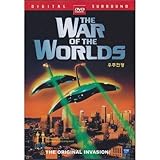
- ★ Format: DVD
- ★ Region ALL, World Wide, it can be played at any DVD player
- ★ Language: English
- ★ Subtitles: Korean, None (you can choose one or turn off subtitle)
- ★ MADE in KOREA
A Career Reclaimed Through Creative Risk
Films like Mandy, Pig, and The Unbearable Weight of Massive Talent reframed Cage not as a nostalgia act, but as a performer operating on instinct and thematic depth. These performances didn’t just restore credibility; they recalibrated expectations. Audiences now approach a Nicolas Cage project assuming intention, not irony.
That recalibration matters for a Lord of War sequel, which depends on moral discomfort rather than spectacle. Cage’s modern screen persona carries an exhaustion that suits Orlov, a man who once thrived on bravado and now exists in the aftermath of his own philosophy. The role no longer requires seduction; it requires reckoning.
What’s actually slowing this PC down?
Pick the symptom - the matching free tool is one click away.
The First-Look Images and What They Communicate
The first-look images featuring Cage alongside Bill Skarsgård quietly reinforce this shift in power and tone. Cage appears more restrained, less performative, visually coded as someone observing rather than commanding. It suggests an Orlov who understands the machinery he helped build but no longer controls.
Placed opposite Skarsgård’s cool, contemporary presence, the contrast feels deliberate. The images sell generational displacement rather than rivalry, positioning Cage as the embodiment of a system nearing obsolescence. In a genre often obsessed with escalation, that visual language signals something more introspective and politically attuned.
Why Orlov Resonates Differently Now
When Lord of War debuted in 2005, Orlov represented unchecked globalization and post-Cold War opportunism. Today, those forces have calcified into systems so normalized they barely register as transgressive. Cage’s late-career gravitas allows the sequel to treat Orlov not as a provocateur, but as evidence.
This is where the project distinguishes itself from typical legacy sequels. Instead of restoring a character to former glory, it interrogates the damage he survived. Cage’s willingness to inhabit characters shaped by regret and consequence makes this continuation feel less like fan service and more like cultural accounting.
The Tool Desk
Outbyte Driver Updater FREEFix the driver behind crashes, sound loss and screen glitchesFind Drivers →Outbyte PC Repair FREEClear out junk files and repair common Windows errorsFree Scan →Auteur Intentions and Creative Continuity: What We Know About the Team Behind the Sequel
The most reassuring signal surrounding the Lord of War sequel isn’t just the casting—it’s the creative continuity behind the camera. Andrew Niccol, the original film’s writer-director, is returning to shape the follow-up, preserving the sharp, morally destabilizing perspective that defined the 2005 original. In an era where legacy sequels often outsource vision in favor of brand management, Niccol’s involvement suggests authorship, not maintenance.
Niccol has always treated genre as a Trojan horse. From Gattaca to In Time, his work interrogates systems of power through character-driven narratives rather than overt spectacle. Lord of War was never simply a crime film; it was a political essay disguised as a rise-and-fall story, and Niccol’s return implies the sequel will maintain that intellectual aggression.
Why Niccol’s Return Changes the Stakes
The original Lord of War succeeded because it refused to moralize cleanly. Niccol framed Yuri Orlov as both symptom and beneficiary of global hypocrisy, allowing audiences to feel complicit rather than comforted. That sensibility feels even more pointed today, when the arms trade is less a shadow economy and more an institutional constant.
Niccol’s modern work has leaned increasingly somber, favoring consequence over cleverness. That tonal evolution aligns with the first-look imagery, which presents a quieter, more reflective continuation rather than a heightened reprise. This is not a sequel chasing relevance; it’s one assuming the audience is ready for discomfort.
Best Value
Positioning Bill Skarsgård Within Niccol’s Framework
Skarsgård’s casting becomes more revealing when viewed through Niccol’s auteur lens. Niccol often uses younger characters not as disruptors, but as inheritors—figures shaped by systems they didn’t build but now operate fluently. Skarsgård’s screen persona, defined by controlled intensity and emotional opacity, fits neatly into that tradition.
Rather than positioning him as a conventional antagonist, the creative team appears to be framing Skarsgård as evolution itself. He represents a generation that doesn’t mythologize the arms trade, but optimizes it. That dynamic reframes the sequel’s conflict away from power struggles and toward ideological succession.
A Legacy Sequel Built on Continuity, Not Imitation
What distinguishes this project within modern legacy sequel culture is its resistance to nostalgia as a driving force. There’s no indication of stylistic mimicry or iconic moments being resurrected for recognition alone. Instead, the sequel seems intent on extending the original film’s thesis into a harsher, less illusion-driven world.
With Niccol steering the narrative and Cage embracing a diminished, reflective Orlov, the sequel positions itself as a thematic continuation rather than a revival. The creative team isn’t asking what audiences loved about Lord of War—they’re asking what the film warned us about, and why those warnings still echo.
What Comes Next: Release Expectations, Industry Buzz, and Why Cinephiles Are Paying Attention
Release Timing and Distribution Signals
While an official release date has yet to be announced, industry chatter points toward a strategic rollout rather than a splashy tentpole launch. Given the film’s adult themes and Niccol’s preference for measured impact, a late-year festival debut followed by a limited theatrical run feels plausible. This is the kind of project that benefits from critical oxygen and word-of-mouth, not opening-weekend theatrics.
Studios and distributors have increasingly embraced prestige crime dramas as counterprogramming, especially when anchored by recognizable talent. Nicolas Cage’s current career renaissance only amplifies that appeal, positioning the sequel as both a serious-minded drama and a star-driven event for discerning audiences.
Why the First-Look Images Are Driving Industry Buzz
The restrained tone of the first-look images has done more than confirm Cage’s return—it has clarified intent. There’s no visual escalation, no attempt to modernize the aesthetic for algorithm-friendly consumption. Instead, the imagery leans into age, consequence, and moral exhaustion, signaling confidence in the material rather than anxiety about relevance.
For industry observers, that restraint reads as a creative gamble worth watching. In an era when many sequels overcorrect with spectacle, this one appears comfortable letting performance, subtext, and thematic weight do the heavy lifting. That alone sets it apart in the current sequel economy.
Crashes, No Sound, or Screen Glitches?
Random freezes, missing sound and display glitches usually trace back to one bad driver. Find and replace yours safely.Free scan · under a minutePC Slower Than It Used to Be?
A free scan shows the junk files, broken settings and background clutter dragging Windows down - then fixes them in one click.Free scan · Windows 10 & 11Why Cinephiles Are Leaning In
Lord of War has aged into a cult touchstone precisely because it refused to flatter its audience. The sequel’s early signals suggest that same confrontational intelligence, now reframed through generational transition. Bill Skarsgård’s presence isn’t about injecting youth for its own sake—it’s about dramatizing how systems persist by evolving their stewards.
For cinephiles, that makes the film feel less like an extension of intellectual property and more like a continuation of an argument. It invites comparison not just to the original, but to contemporary geopolitical thrillers that grapple with institutional complicity and moral fatigue.
In a marketplace crowded with legacy sequels designed to reassure, this one appears intent on unsettling. If Lord of War once exposed the machinery behind global conflict, its sequel seems poised to examine who inherits that machinery—and why dismantling it remains so elusive. That question, more than nostalgia or casting headlines, is why this project has captured serious attention.
Quick Recap
Product prices and availability are accurate as of the date/time indicated and are subject to change. Any price and availability information displayed on Amazon at the time of purchase will apply.
What’s actually slowing this PC down?
Pick the symptom - the matching free tool is one click away.

