Netflix’s The Witcher is entering its most precarious chapter yet, and Season 4 is more than just another continuation—it’s a referendum on the franchise’s future. With Henry Cavill officially out and Liam Hemsworth stepping into Geralt of Rivia’s boots, every new casting announcement now carries extra weight. These choices aren’t just about filling out the world; they’re about reassuring fans that the series still understands its own mythology and tone.
The newly revealed cast members for Seasons 4 and 5 signal a deliberate recalibration rather than a soft reboot. Netflix is leaning into characters that loom large in Andrzej Sapkowski’s later novels, including figures tied to political intrigue, ancient monster lore, and the shadowy power plays of the Continent. Roles associated with fan-favorite arcs—such as Geralt’s unexpected alliances, the expanding influence of the Lodge of Sorceresses, and Nilfgaard’s tightening grip—suggest the writers are committing to a denser, more novel-faithful narrative spine.

In the post-Cavill era, casting has become the clearest window into Netflix’s creative intent. By bringing in seasoned genre performers and prestige-TV veterans, the show appears to be betting on gravitas and character depth rather than spectacle alone. Seasons 4 and 5 won’t just test whether Hemsworth can redefine Geralt—they’ll reveal whether The Witcher can evolve, mature, and hold its cultural ground without the actor who once defined it.
The Newly Announced Cast: Actors, Backgrounds, and First Impressions
Netflix’s latest casting reveal for The Witcher Seasons 4 and 5 doesn’t just expand the ensemble—it sharpens it. The newly announced actors are stepping into roles that mark a tonal shift toward darker politics, crueler antagonists, and morally compromised alliances. For longtime readers of Andrzej Sapkowski’s novels, these names immediately signal which storylines the show is preparing to embrace.
#1 Best Overall
Rather than padding the margins of the Continent, these characters sit at the heart of its most brutal arcs. That alone makes the casting choices feel intentional, even corrective, as the series recalibrates after its most turbulent transition.
Sharlto Copley as Leo Bonhart
Perhaps the most striking announcement is Sharlto Copley as Leo Bonhart, one of the most feared human antagonists in the Witcher saga. In the books, Bonhart is not a mage or monster, but something more unsettling—a sadistic bounty hunter whose reputation is built on killing witchers and collecting their medallions. He represents the cruelty of men in a world already teeming with supernatural horrors.
Copley’s casting feels inspired. Known for unhinged intensity in District 9, Elysium, and Hardcore Henry, he excels at portraying characters who are both charismatic and deeply disturbing. If the series leans into Bonhart’s psychological menace rather than turning him into a generic villain, Copley could deliver one of the show’s most memorable performances to date.
James Purefoy as Stefan Skellen
James Purefoy joins the Continent as Stefan Skellen, a calculating Nilfgaardian intelligence chief whose influence is felt long before he ever draws a blade. Skellen is a linchpin of the empire’s political machinery, orchestrating assassinations, coups, and proxy wars with a detached sense of pragmatism. His presence suggests that Seasons 4 and 5 will double down on court intrigue rather than rushing from battle to battle.
Windows Errors? Fix Them Before They Spread
Repair common Windows errors and clear accumulated junk for a smoother, more stable PC - no reinstall needed.Free scan · no reinstallOutdated Drivers Are Slowing You Down
One free scan finds every outdated or missing driver and matches the right update for your exact hardware.Free scan · exact hardware matchPurefoy’s résumé—Rome, The Following, and Sex Education—makes him a natural fit for a role built on authority and moral ambiguity. He brings a refined menace that aligns with Nilfgaard’s cold, bureaucratic brand of evil. This casting choice hints that the show is finally ready to let politics be just as dangerous as monsters.
Laurence Fishburne’s Regis Looms Larger Than Ever
While previously announced, Laurence Fishburne’s Regis becomes increasingly central as Seasons 4 and 5 take shape. Regis is one of the saga’s most beloved characters: a higher vampire with a philosopher’s soul and an unexpectedly gentle moral compass. His bond with Geralt represents one of the series’ most profound explorations of friendship and redemption.
Fishburne’s gravitas adds immediate credibility to this arc, especially as Liam Hemsworth inherits a Geralt defined by loss and dislocation. Regis isn’t just a companion; he’s a thematic anchor, reinforcing the idea that monstrosity is defined by choice, not nature. Netflix clearly understands how crucial this relationship will be in stabilizing the post-Cavill era.
Taken together, these castings reveal a clear creative strategy. Netflix is prioritizing characters who challenge Geralt psychologically, politically, and ethically rather than simply physically. It’s a move that suggests confidence—not just in the source material, but in the audience’s willingness to follow The Witcher into darker, more demanding territory.
Who Are They Playing? Breaking Down the New Characters and Their Witcher Lore Significance
With Netflix finally lifting the veil on several new additions, the focus now shifts from star power to story function. Each character being introduced in Seasons 4 and 5 isn’t filler or flavor; they are pressure points in Andrzej Sapkowski’s saga, designed to fracture alliances, redefine morality, and push Geralt, Ciri, and Yennefer into irreversible territory. What’s striking is how carefully these roles align with the show’s pivot toward darker, more politically and psychologically complex storytelling.
Leo Bonhart Brings a Different Kind of Monster
Among the most ominous newcomers is Leo Bonhart, a character who embodies the idea that humans can be far more terrifying than any supernatural creature. In the books, Bonhart is a merciless bounty hunter who collects Witcher medallions as trophies, not because he is mutated, but because he is brutally skilled. His presence reframes combat in The Witcher, stripping away fantasy spectacle in favor of raw, humiliating violence.
Narratively, Bonhart is crucial to Ciri’s arc. He represents the Continent at its cruelest, forcing her to confront trauma, survival, and the cost of power long before she’s ready. Introducing him now signals that the series isn’t pulling punches as Ciri’s story veers into its bleakest and most formative chapters.
Milva Grounds the Saga in Human Cost
Another key addition is Milva, a hunter-turned-rebel whose sharp tongue and sharper aim make her one of the saga’s most grounded characters. Milva isn’t royalty, a mage, or a mutant; she’s a product of war, displacement, and hard-earned resilience. Her role expands the emotional texture of Geralt’s traveling company, reminding viewers what the Continent looks like for those without destiny or prophecy.
What’s actually slowing this PC down?
Pick the symptom - the matching free tool is one click away.
Lore-wise, Milva is essential to shifting Geralt away from isolation and toward reluctant leadership. She challenges his neutrality, mocks his self-mythologizing, and forces him to reckon with the real consequences of the wars raging around him. Including her underscores Netflix’s commitment to exploring found family rather than lone-wolf heroics.
Angoulême Injects Chaos and Youthful Defiance
Angoulême arrives as a volatile counterbalance to the more disciplined members of Geralt’s orbit. A street survivor shaped by violence and abandonment, she brings a feral unpredictability that mirrors Ciri’s own internal conflict. In the novels, Angoulême functions as both cautionary tale and kindred spirit, reflecting the paths Ciri could take if left untethered.
Her inclusion signals that Seasons 4 and 5 will lean heavily into generational storytelling. By surrounding Ciri with distorted reflections of herself, the series can externalize her fears about identity, freedom, and moral erosion. It’s a smart way to deepen Ciri’s arc without relying solely on exposition or prophecy.
Why These Characters Matter Now
What unites these new roles is intention. They aren’t being introduced to inflate the cast; they’re narrative accelerants, each designed to destabilize the status quo. Bonhart weaponizes fear, Milva humanizes the cost of conflict, and Angoulême embodies the chaos of a world collapsing under imperial ambition.
Together with figures like Skellen and Regis, these characters suggest a Witcher series that’s less concerned with replacing Henry Cavill and more focused on recalibrating its thematic core. Seasons 4 and 5 appear poised to interrogate power, trauma, and choice with sharper teeth than ever before, trusting the strength of Sapkowski’s ensemble-driven storytelling to carry the Continent forward.
Recasting the Continent: How These Additions Reshape Key Power Players and Factions
Beyond Geralt’s road-bound ensemble, Netflix’s newly announced cast members point to a broader recalibration of power across the Continent. Seasons 4 and 5 appear ready to zoom out, reframing The Witcher not just as a story of personal destiny, but as a chessboard where empires, mages, and criminal syndicates collide. These roles don’t simply fill gaps left by departing characters; they redraw the political map.
Redania’s Inner Circle Grows More Dangerous
The expansion of Redanian characters signals that court intrigue will become even more central. With Dijkstra and Philippa already positioned as shadow architects, new faces tied to Redania suggest a storyline less about righteous resistance and more about calculated survival. In the novels, Redania thrives not through honor, but through manipulation, espionage, and moral compromise.
Casting actors known for sharp, cerebral performances reinforces this direction. These characters aren’t warriors meant to dominate the battlefield; they’re strategists designed to outthink their enemies. Their presence hints that Seasons 4 and 5 will treat political maneuvering with the same gravity as monster hunting.
Free tools Windows power users keep installed
One-click scans. No signup required.
The Lodge of Sorceresses Reasserts Its Influence
Additional sorceress roles imply that the Lodge is far from a background player. After being fragmented and sidelined in earlier seasons, the group appears poised to re-emerge as an organized, if deeply divided, force. This aligns closely with Sapkowski’s later books, where the Lodge becomes a self-interested power bloc willing to sacrifice kingdoms for long-term control.
These casting choices suggest Netflix is leaning into ideological conflict among magic users rather than simple good-versus-evil dynamics. Expect alliances built on convenience, not trust, and female power portrayed as politically formidable rather than mystically ornamental.
Nilfgaard’s Evolution From Invader to Occupier
New Nilfgaardian figures indicate a tonal shift in how the empire is portrayed. Earlier seasons emphasized religious fanaticism and imperial expansion; upcoming episodes seem more interested in governance, assimilation, and the moral rot of empire-building. This is Nilfgaard not as a distant threat, but as an everyday reality for conquered territories.
Introducing characters embedded in Nilfgaard’s administrative and military apparatus allows the show to explore occupation from the inside. It also creates space for more morally ambiguous Nilfgaardians, complicating the binary that previously defined the war.
Quick wins for a faster PC:
Clear out junk files and repair common Windows errorsFree Scan →Scan for outdated or missing drivers - takes under a minuteDriver Scan →Criminal Networks and the Power of the Margins
Not all power players wear crowns or robes. The inclusion of characters tied to crime syndicates and mercenary circles underscores how influence flows through unofficial channels. In the novels, underworld figures often shape events as decisively as kings, particularly in cities destabilized by war.
By investing in these roles, Netflix signals an interest in showing how ordinary people navigate collapsing systems. It’s a move that grounds the high fantasy in social reality, reinforcing the idea that the Continent’s future is being shaped as much in back alleys as in royal courts.
A Franchise Leaning Into Systems, Not Saviors
Taken together, these casting additions reflect a creative philosophy shift. Rather than anchoring the series around a singular heroic presence, Seasons 4 and 5 appear structured around intersecting factions and competing agendas. Power becomes diffuse, unstable, and constantly contested.
This approach doesn’t diminish Geralt’s importance; it contextualizes it. In a world increasingly defined by institutions and empires, even a witcher becomes just one variable in a much larger equation.
The Tool Desk
Outbyte Driver Updater FREEScan for outdated or missing drivers - takes under a minuteDriver Scan →Outbyte PC Repair FREERepair Windows errors before they cause bigger problemsFix Now →Liam Hemsworth’s Geralt and the Supporting Cast Around Him
Liam Hemsworth stepping into the role of Geralt of Rivia remains the defining pivot point for The Witcher’s next chapter. Rather than attempting to replicate Henry Cavill’s stoic intensity beat for beat, early indications suggest Hemsworth’s Geralt will be framed by contrast: quieter, more internally conflicted, and shaped by a world that no longer revolves around him. Seasons 4 and 5 appear designed to let the role breathe through interaction, not monologue.
That intent is reflected in the caliber and type of characters now orbiting Geralt. Netflix’s latest casting reveals prioritize figures who challenge him philosophically and physically, reinforcing the idea that this version of Geralt exists in constant friction with his surroundings. The show seems less interested in reintroducing Geralt as a mythic icon and more focused on testing his relevance in an increasingly brutal political landscape.
Regis, Bonhart, and the Forces That Define Geralt’s Path
Laurence Fishburne’s return as Regis anchors Geralt emotionally in the coming seasons. Regis represents conscience, restraint, and moral clarity, a crucial counterweight as Geralt navigates escalating violence and political manipulation. Keeping this relationship intact helps maintain continuity during the recast while signaling that Geralt’s ethical framework remains recognizable.
The reported casting of Sharlto Copley as Leo Bonhart, however, introduces a far more destabilizing presence. In the novels, Bonhart is not just a villain but a terrifying inversion of Geralt himself: a human who hunts witchers for sport. Positioning Bonhart prominently around Geralt reframes the narrative from monster-of-the-week storytelling to existential threat, forcing Geralt to confront what separates him from the killers he’s spent a lifetime tracking.
Recommended Free Tools
Witchers, Mercenaries, and the Weight of Reputation
Newly introduced supporting characters tied to mercenary groups and remaining witchers further complicate Geralt’s standing in the world. These figures don’t treat witchers as legendary heroes; they see them as relics, competitors, or tools. That dynamic reinforces a recurring theme in the later books, where Geralt’s reputation precedes him, often to his detriment.
By surrounding Hemsworth’s Geralt with characters who question his usefulness or challenge his methods, the series avoids framing him as an untouchable constant. Instead, Geralt becomes a man navigating diminishing relevance, a choice that aligns with the franchise’s broader shift toward systems over saviors.
Rebuilding Geralt Through Ensemble Storytelling
Netflix’s creative direction becomes clearest in how little these seasons rely on Geralt alone to carry narrative weight. The expanded supporting cast functions as both pressure and mirror, shaping how audiences understand this new incarnation of the character. Hemsworth isn’t being asked to replace Cavill; he’s being positioned within a recalibrated ecosystem.
That ecosystem suggests a Witcher less defined by destiny and more by consequence. As the Continent fractures under imperial control and criminal influence, Geralt’s journey is no longer about standing apart from the world, but surviving within it.
Do these 3 things before closing this tab:
1Clear out junk files and repair common Windows errors2Scan for outdated or missing drivers - takes under a minute3Repair Windows errors before they cause bigger problemsSeason 4 vs. Season 5: Which New Characters Matter Now—and Which Are Being Positioned for the Endgame
Netflix’s casting announcements make it increasingly clear that Seasons 4 and 5 are not operating on equal narrative footing. Season 4 functions as the pressure cooker, introducing volatile players who immediately destabilize the board. Season 5, by contrast, appears designed as the reckoning, quietly positioning characters whose true importance may not fully surface until the endgame.
Season 4’s Immediate Disruptors
Characters introduced for Season 4 are largely accelerants rather than long-term mysteries. Figures like Leo Bonhart are designed to collide headfirst with the existing cast, forcing confrontations that reshape relationships and motivations in real time. These characters don’t need slow-burn development; their narrative function is to break things open.
Several newly cast mercenaries, political operators, and secondary witchers also fall into this category. They embody the Continent’s shifting power dynamics, where brute force, reputation, and opportunism increasingly override ideals. Their presence sharpens the show’s tone, pushing Season 4 into darker, more morally unstable territory almost immediately.
Season 5’s Quiet Architects
Season 5’s additions, on the other hand, feel more deliberate and strategic. These characters are less about instant spectacle and more about positioning, often tied to imperial courts, criminal syndicates, or long-simmering magical factions. They are being seeded now so their influence can mature when the story narrows toward resolution.
In the books, many endgame players operate from the shadows before stepping into the light. Netflix appears to be honoring that structure by casting actors who can command attention without dominating early scenes. Their importance lies not in how loudly they arrive, but in how much control they eventually wield.
Ciri’s Trajectory as the Dividing Line
The clearest way to distinguish Season 4 characters from Season 5 players is to look at their relationship to Ciri. Season 4 introduces hunters, manipulators, and threats actively pursuing her, turning her storyline into a survival narrative. These characters matter now because they define the danger of the moment.
Rank #3

- Perfect For Bibliophile
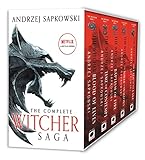
- This Boxed Set Contains All Eight Books: The Last Wish, Sword Of Destiny, Blood Of Elves, Time Of Contempt, Baptism Of Fire, The Tower Of The Swallow, The Lady Of The Lake, Season Of Storms.
- It Ensures You Get The Best Usage For A Longer Period
Season 5’s cast additions, however, are more likely connected to what Ciri represents rather than where she is. Political claimants, ideological zealots, and figures tied to prophecy and succession are being positioned for a world that reacts to Ciri’s choices rather than chasing her across it. That shift signals the series’ long-term focus.
What This Split Reveals About Netflix’s Endgame
The bifurcation between Seasons 4 and 5 suggests Netflix is thinking structurally, not episodically. Season 4 destabilizes the Continent through confrontation and chaos, while Season 5 consolidates those consequences into lasting outcomes. Casting reflects that intent, favoring immediacy now and inevitability later.
In a post-Cavill era, this approach minimizes reliance on any single character while maximizing narrative momentum. The Witcher is no longer about who carries the sword, but who survives the systems closing in around them. The newly revealed cast makes it clear that the end is being carefully, and patiently, built.
Independent reader supportYour contribution helps us test, update, and keep practical guides available for everyone.Netflix’s Creative Strategy: What This Casting Signals About Tone, Storytelling, and Book Accuracy
The newly revealed cast additions for Seasons 4 and 5 point to a Netflix Witcher that is recalibrating rather than reinventing itself. Instead of chasing headline-friendly names or radically retooling the show’s identity, the series appears to be doubling down on structural fidelity to Andrzej Sapkowski’s later books. These casting choices suggest a quieter confidence, one rooted in long-form storytelling rather than short-term spectacle.
Where earlier seasons leaned heavily on star power and explosive introductions, the incoming actors are being slotted into roles that reward patience. This reflects a series that now understands its endgame and is casting accordingly, prioritizing performers who can sustain intrigue across multiple episodes or even seasons. The result is a tonal shift toward inevitability rather than surprise.
A Move Toward Political and Ideological Complexity
Several of the new cast members are widely believed to be playing figures tied to Nilfgaard’s internal politics, the Lodge of Sorceresses, or rival royal courts. These are not action-forward roles, but characters whose influence is exerted through manipulation, belief systems, and long-term strategy. Casting seasoned dramatic actors for these parts signals that dialogue, alliances, and ideological clashes will carry more narrative weight moving forward.
Quick wins for a faster PC:
Repair Windows errors before they cause bigger problemsFix Now →Fix the driver behind crashes, sound loss and screen glitchesFind Drivers →Clear out junk files and repair common Windows errorsFree Scan →This aligns closely with the novels, where wars are often decided in council chambers long before they’re settled on battlefields. By investing in actors capable of conveying restraint and calculation, Netflix appears to be embracing the morally gray, politically dense texture that defines the latter half of Sapkowski’s saga.
Character-First Storytelling in a Post-Cavill Era
With Henry Cavill’s Geralt no longer anchoring the series, the casting strategy reveals a deliberate effort to decentralize narrative authority. The new additions are not replacements for Geralt’s presence, but counterweights to it, reinforcing the idea that the world of The Witcher is bigger than any single protagonist. This allows Liam Hemsworth’s take on Geralt to exist within a broader ensemble rather than carrying the entire dramatic burden.
Importantly, this approach mirrors the books, where Geralt gradually becomes one perspective among many. By strengthening the supporting cast with actors suited for long arcs, Netflix is signaling confidence in the material’s ensemble nature rather than attempting to replicate past dynamics.
Faithfulness Through Function, Not Imitation
Rather than casting lookalikes or rigidly adhering to fan-canon interpretations, Netflix seems focused on functional accuracy. The new actors fit the narrative roles their characters serve, even if their portrayals may differ in surface details. This suggests an adaptation philosophy that values thematic alignment over literal translation.
What’s actually slowing this PC down?
Pick the symptom - the matching free tool is one click away.
In practice, this means characters tied to prophecy feel ominous, political players feel dangerous without drawing swords, and magical figures feel burdened by knowledge rather than empowered by it. If Seasons 4 and 5 succeed, it will be because the casting supports the story’s underlying machinery, not because it checks boxes.
Setting the Stage for an Inevitable Ending
Ultimately, these casting decisions indicate that Netflix is playing the long game. The series is no longer building toward twists, but toward conclusions that feel earned and structurally sound. By seeding key figures now, the show ensures that when power shifts and fates collide, the audience understands how and why it happened.
For fans concerned about tone, direction, or book accuracy, this strategy offers cautious reassurance. The Witcher’s future on Netflix appears less reactive and more deliberate, shaped by characters who may arrive quietly, but are designed to matter when it counts.
What Comes Next for The Witcher Franchise: Fan Expectations, Risks, and the Road Ahead
With the new cast members now revealed and positioned across Seasons 4 and 5, Netflix’s version of The Witcher enters its most precarious yet potentially rewarding phase. The series is no longer defined by what it has lost, but by what it’s choosing to become. For fans, that shift brings cautious optimism alongside lingering skepticism, especially as the show moves deeper into the saga’s most politically and emotionally complex chapters.
Crashes, No Sound, or Screen Glitches?
Random freezes, missing sound and display glitches usually trace back to one bad driver. Find and replace yours safely.Free scan · under a minuteWindows Errors? Fix Them Before They Spread
Repair common Windows errors and clear accumulated junk for a smoother, more stable PC - no reinstall needed.Free scan · no reinstallWinning Back Trust in a Post-Cavill Era
The departure of Henry Cavill remains the franchise’s defining rupture, and no amount of casting news can fully erase that reality. However, the emphasis on strengthening the ensemble rather than overcorrecting around Geralt suggests Netflix understands the nature of the challenge. Liam Hemsworth’s Geralt will succeed or fail not as a replacement icon, but as one part of a world that increasingly belongs to Ciri, Yennefer, and the forces closing in around them.
For longtime viewers, trust will be rebuilt through consistency rather than spectacle. If the newly introduced characters are given room to breathe, make consequential choices, and influence the narrative in meaningful ways, the transition may finally feel intentional instead of reactive.
High Stakes Storytelling Requires High Stakes Casting
The characters reportedly being introduced in Seasons 4 and 5 are not peripheral additions. Many are deeply tied to prophecy, imperial ambition, and the moral decay at the heart of the Continent. By casting actors known for restraint and gravitas rather than overt fantasy bombast, Netflix appears to be leaning into the story’s darker, more introspective qualities.
This is a crucial signal. The Witcher’s later arcs are less about monster-of-the-week spectacle and more about systems of power grinding people down. If these actors can convincingly embody rulers, schemers, and survivors shaped by that world, the series stands a real chance of maturing alongside its source material.
The Tool Desk
Outbyte PC Repair FREERepair Windows errors before they cause bigger problemsFix Now →Outbyte Driver Updater FREEFix the driver behind crashes, sound loss and screen glitchesFind Drivers →The Risk of Condensation and Narrative Fatigue
That said, the road ahead is not without danger. Compressing sprawling novels into two remaining seasons risks flattening motivations and rushing payoffs, especially for newly introduced figures who carry enormous narrative weight. Even strong casting can falter if characters are treated as plot devices rather than evolving participants in the story.
There is also the question of audience fatigue. After years of discourse around creative changes, lore deviations, and behind-the-scenes tension, some viewers may be waiting for a reason to disengage rather than recommit. Seasons 4 and 5 must prove that the franchise still has something urgent to say, not just an obligation to finish.
A Franchise at a Crossroads
Ultimately, the newly revealed cast members represent more than fresh faces. They are Netflix’s statement of intent that The Witcher will conclude as a fully realized ensemble epic rather than a diminished version of its early success. If the show honors the functions these characters serve in the lore and allows their arcs to unfold with patience and consequence, it may yet deliver an ending that feels earned.
For fans watching closely, the message is clear. The Witcher is no longer asking to be loved for what it was, but judged for what it becomes. Seasons 4 and 5 will determine whether this ambitious adaptation closes as a cautionary tale of missed potential, or as a rare fantasy series that found its footing just in time to stick the landing.
Quick Recap
Product prices and availability are accurate as of the date/time indicated and are subject to change. Any price and availability information displayed on Amazon at the time of purchase will apply.




