Windows Errors? Fix Them Before They Spread
Repair common Windows errors and clear accumulated junk for a smoother, more stable PC - no reinstall needed.Free scan · no reinstallCrashes, No Sound, or Screen Glitches?
Random freezes, missing sound and display glitches usually trace back to one bad driver. Find and replace yours safely.Free scan · under a minuteShort answer: Netflix has not ended every form of Google Cast. It now says mobile casting is unsupported on most TVs and TV-streaming devices, including many remote-equipped Google TV products. Older, remote-less Chromecast models may still work. The idea that “no one casts anymore” is plausible, but Netflix has not confirmed it as the reason.
What Netflix actually changed
Netflix distinguishes between several technologies that are often called “casting.” With app-based casting, a phone or tablet selects a title and sends playback instructions to a receiver. A native TV app runs Netflix directly on the television or streamer, with a physical remote controlling playback. Screen mirroring duplicates the phone’s display, while a wired HDMI connection sends video through a cable.
Netflix’s current support page says it “no longer supports casting shows from a mobile device to most TVs and TV-streaming devices.” That is a restriction on Netflix’s mobile Cast function, not a universal shutdown of Google Cast. See Netflix’s Cast-device guidance.
The policy mainly affects receivers that already run a full Netflix application. A phone is no longer needed to start playback on those products: the intended path is the Netflix app on the TV or streamer, controlled by its remote.
#1 Best Overall
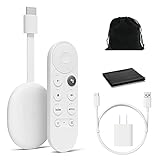
- Watch the entertainment you love with Chromecast with Google TV, including live TV in up to 4K HDR; discover over 700,000 movies and TV episodes, plus millions of songs
- Get fast streaming, and enjoy a crystal clear picture up to 4K and brighter colors with HDR
- Your home screen displays movies and TV shows from all your services in one place with Chromecast 4K; get personal recommendations based on your subscriptions, viewing habits, and content you own
- Press the Google Assistant button on the remote and use voice search to find specific shows, youtube tv streaming, or search by mood, genre, actress, and more; control the volume, switch inputs, play music, and get answers, hands-free
- Chromecast is easy to install and compatible with almost any TV that has an HDMI port; to get started, just plug it into your TV’s HDMI port, connect to Wi-Fi, and start streaming
Which devices are affected?
Status can change with Netflix app versions, firmware, country and account conditions. The following reflects Netflix’s documentation and device reporting checked on August 18, 2026.
| Device type | Netflix mobile casting status | Practical choice |
|---|---|---|
| Remote-less Chromecast, including Chromecast (3rd generation) or older | May remain supported where Netflix lists the model | Check model, plan, app, operating system and Wi-Fi |
| Chromecast with Google TV | Generally not supported for Netflix mobile casting | Use the native Netflix app and remote |
| Google TV Streamer | Generally not supported for Netflix mobile casting | Use the native app and remote |
| Google Cast smart TV | Depends on the specific television and Netflix’s current support list | Check Netflix’s device guidance |
| Google Nest Hub smart display | May be supported in listed cases | Check both Google and Netflix requirements |
| Roku, Fire TV, Apple TV, consoles and other streamers | Usually expected to use their native Netflix app | Use the platform’s app; Cast support is not guaranteed |
Netflix’s “No devices found” article specifically identifies older Chromecast generations and some Google Nest Hub displays. Independent reports from Android Authority and 9to5Google observed the Cast option disappearing on newer Chromecast and Google TV hardware. Netflix’s own list should be treated as the controlling source.
Does the Netflix plan matter?
Yes, but it is only one part of the test. Google’s help documentation says mobile casting is not supported on Netflix’s ad-supported plan: Google Home and Nest guidance. An ad-free plan therefore does not automatically restore casting to a receiver that Netflix has removed from its supported device category.
Think of the restrictions separately: the subscription must permit mobile casting, and the receiver must still be eligible. Changing plans cannot bypass a device-level policy.
Quick wins for a faster PC:
Fix the driver behind crashes, sound loss and screen glitchesFind Drivers →Repair Windows errors before they cause bigger problemsFix Now →Scan for outdated or missing drivers - takes under a minuteDriver Scan →Rank #2

- The Google TV Streamer (4K) delivers your favorite entertainment quickly, easily, and personalized to you[1,2]
- HDMI 2.1 cable required (sold separately)
- See movies and TV shows from all your services right from your home screen[2]; and find new things to watch with tailored recommendations for everyone in your home based on their interests and viewing habits
- Watch live TV and access over 800 free channels from Pluto TV, Tubi, and more[3]; if you find an interesting show or movie on your TV, mobile app, or Google search, you can easily add it to your watchlist, so it’s ready when you are[2]
- Up to 4K HDR with Dolby Vision delivers captivating, true-to-life detail[4]; and you can connect speakers that support Dolby Atmos for more immersive 3D sound
Did “no one casts anymore” cause the decision?
Confirmed: Netflix changed its policy
Netflix documents the withdrawal from most TVs and streaming devices. That is the established fact.
Plausible: casting is a minority use case
A CES 2026 report cited approximately 10% casting usage among Android users of one unnamed streaming service. That figure was not a Netflix statistic and cannot be converted into a market-wide or Netflix-specific percentage. It does support the narrower idea that many viewers now open a native TV app instead of casting. Read the account at TechRadar.
Unconfirmed: Netflix’s motive
Netflix has not publicly said that “nobody casts anymore,” published a Netflix casting percentage, or identified low usage as the decisive reason. Claims about advertising, cloud gaming, interactive features or monetization are likewise hypotheses unless Netflix confirms them.
Why native apps may be more valuable to Netflix
A native application gives Netflix a controlled environment for authentication, profiles, recommendations, advertising experiences, playback behavior and future features. It also makes the remote-equipped TV or streamer the primary viewing interface instead of leaving discovery and control on a phone.
Rank #3

- The Google TV Streamer (4K) delivers your favorite entertainment quickly, easily, and personalized to you[1,2]
- HDMI 2.1 cable required (sold separately)
- See movies and TV shows from all your services right from your home screen[2]; and find new things to watch with tailored recommendations for everyone in your home based on their interests and viewing habits
- Watch live TV and access over 800 free channels from Pluto TV, Tubi, and more[3]; if you find an interesting show or movie on your TV, mobile app, or Google search, you can easily add it to your watchlist, so it’s ready when you are[2]
- Up to 4K HDR with Dolby Vision delivers captivating, true-to-life detail[4]; and you can connect speakers that support Dolby Atmos for more immersive 3D sound
Those are reasonable product and engineering explanations, not a statement from Netflix about its internal decision. Casting was most useful when a cheap Chromecast acted as a thin receiver with no app interface or remote. Modern televisions and streamers generally include an app store, storage, profiles and a remote. Google’s Google TV Streamer illustrates that design, while still supporting Cast for compatible applications.
Google’s own documentation can look broader because Google Cast remains a platform capability. Google lists Netflix among Cast-compatible services but points users to service-specific limitations. Netflix decides where its app exposes the Cast control; a device can accept Cast from YouTube and still reject Netflix casting. See Google’s Cast troubleshooting page.
Diagnose the missing Cast button
First identify the receiver. “Chromecast” might mean a remote-less Chromecast, Chromecast with Google TV, or a television with built-in Google Cast. They are materially different for this issue.
- Check the model. If it has a remote and a full Google TV interface, assume Netflix’s newer restriction may apply. If it is an older puck with no remote, consult Netflix’s supported list.
- Check the plan. The ad-supported Netflix plan does not support mobile casting according to Google’s current guidance.
- Check the network. Put the phone and receiver on the same Wi-Fi network, not separate guest or isolated mesh segments.
- Update software. Install the current Netflix app and phone operating-system updates. Netflix’s Chromecast guidance includes Android 9 or later and current iPhone or iPad requirements; consult Netflix’s Chromecast troubleshooting.
- Restart in order. Restart the phone, router and receiver after confirming the model and network.
- Test another Cast app. If other apps detect the receiver but Netflix does not, the likely cause is Netflix’s plan or device policy. If no app detects it, investigate Wi-Fi isolation, guest networks or receiver setup.
Do not factory-reset a Chromecast before checking its model and Netflix eligibility. A reset cannot restore a feature that Netflix has intentionally withdrawn.
Rank #4

- High performance
- High product for use
- High quality
Best replacement for each situation
You own a smart TV or remote-equipped streamer
Open the installed Netflix app and use the included remote. A manufacturer remote-control phone app, voice search or a dedicated Netflix button may make navigation easier, but none recreates phone-based casting exactly.
You own a supported legacy Chromecast
Keep using it if Netflix still lists the model. Verify the same Wi-Fi network, current software and plan eligibility. Older hardware can independently lose reliability or app and DRM compatibility over time.
You travel or use hotel rooms
Casting was convenient because it could avoid signing into a shared television. If the hotel offers a Netflix app, use its temporary sign-in or code flow and sign out afterward. Otherwise consider a supported receiver, a laptop with HDMI output, or a compatible USB-C-to-HDMI or Lightning-to-HDMI adapter. Netflix lists casting, mirroring, cables and adapters as possible connection methods at its mobile-device connection page; availability depends on the phone, TV and manufacturer.
You need accessibility features
Evaluate the remote, voice control, text entry and manufacturer app before replacing hardware. Another remote-equipped streamer may improve usability without bringing back Netflix mobile casting.
Best Value

- Advanced 4K streaming - Elevate your entertainment with the next generation of our best-selling 4K stick, with improved streaming performance optimized for 4K TVs.
- The newest Fire TV experience (2026) – Our biggest update to Fire TV has a new, modern design that gets you to your entertainment fast. Browse dedicated content categories, pin more of your favorite apps, and get personalized recommendations from Alexa+. Spend less time scrolling, and more time watching.
- Cloud gaming, no console required – Stream Call of Duty: Black Ops 7, Hogwarts Legacy, Outer Worlds 2, Ninja Gaiden 4, and hundreds of games on your Fire TV Stick 4K Select with Xbox Game Pass and Luna via cloud gaming. Xbox Game Pass subscription and compatible controller required. Each sold separately.
- Smarter picks with Alexa+ – Getting to what you love has never been easier. Press the voice remote button and talk naturally to find what to watch across your apps, manage your smart home, or dive into virtually any topic.
- Wi-Fi 6 support - Enjoy smooth 4K streaming, even when other devices are connected to your router.
Should you buy a new streamer?
Buy one for a faster native Netflix app, continued software support, better 4K HDR or Dolby Vision, Dolby Atmos, Ethernet, storage or a more usable remote—not as a guaranteed way to restore the Cast button.
Google lists the US Google TV Streamer at $99.99 on the product page checked August 18, 2026, with a native Google TV interface and general Cast support. Its general Cast capability does not override Netflix’s separate policy for most TV-streaming devices. Specifications, including 4K HDR, Dolby Vision, Dolby Atmos, 32 GB storage, 4 GB memory, Ethernet and HDMI 2.1 requirements, appear on Google’s specifications page.
Do not buy a used Chromecast with Google TV—or an old remote-less Chromecast—solely to regain Netflix casting. Support can change, and remaining stock is not a promise of long-term compatibility. If the existing TV app works acceptably, keeping the hardware and using the remote is usually the least expensive answer.
What this means for Google Cast
Google Cast itself remains active across compatible apps and devices. Netflix has narrowed where its own service uses the technology, especially on receivers that already provide a full application. “Netflix killed Google Cast” is therefore too broad; “Netflix removed mobile Netflix casting from most modern TV receivers” is accurate.
The Bottom Line
Bottom line: Netflix probably judged mobile casting on remote-equipped devices less valuable than a controlled native-app experience. Low usage may have contributed, but the public evidence does not prove that “no one casts anymore” was the reason. Use the native app, verify an older Chromecast against Netflix’s current list, or choose a wired or mirroring workaround—without assuming a new Google TV streamer will restore Netflix casting.
Quick Recap
Product prices and availability are accurate as of the date/time indicated and are subject to change. Any price and availability information displayed on Amazon at the time of purchase will apply.