Recommended Free Tools
Mob Games has officially confirmed that Poppy Playtime is headed to the big screen, marking the indie horror phenomenon’s most ambitious expansion yet. The announcement, shared directly by the studio behind the game, makes clear that this is a feature film adaptation currently in development, not a short-form project or promotional tie-in. While details remain intentionally sparse, the confirmation alone signals that the franchise has reached a level of cultural penetration few indie horror games ever achieve.
What Mob Games has verified so far is straightforward and carefully framed. The studio is partnering with Legendary Entertainment to develop a live-action Poppy Playtime movie, positioning the project alongside a growing slate of high-profile video game adaptations. No director, cast, or release window has been announced, and Mob Games has emphasized that the film is still in early development, suggesting fans should expect a measured, multi-year process rather than an imminent release.
What’s Confirmed Versus What’s Still Speculation
At this stage, only the core existence of the movie and the involvement of Mob Games and Legendary are official. Story details, tone, and how closely the film will adapt the game’s lore have not been disclosed, leaving speculation about characters like Huggy Wuggy or the deeper Playtime Co. mythology firmly in fan territory. Mob Games has not promised a direct retelling of the game’s chapters, which leaves open the possibility of an original narrative set within the same unsettling universe.
The announcement also places Poppy Playtime squarely within the recent wave of horror game adaptations that have found mainstream success. Following the box office impact of films like Five Nights at Freddy’s, studios are increasingly treating horror games as viable cinematic IP rather than niche experiments. For fans, the key takeaway is tempered optimism: the movie is real, the partners are serious, and expectations should be aligned with a careful, long-term adaptation rather than a rushed cash-in.
The Tool Desk
Outbyte Driver Updater FREEFix the driver behind crashes, sound loss and screen glitchesFind Drivers →Outbyte PC Repair FREERepair Windows errors before they cause bigger problemsFix Now →#1 Best Overall

- This pack contains the first three chapters in the Poppy Playtime saga
- Each chapter features engaging new toy characters that can be either friend or foe
- Survive and progress by solving challenging puzzles
- Each game reveals to you a newly discovered area of the massive toy factory
- The Poppy Playtime Triple Pack includes a reversible coversheet and a Poppy Playtime sticker sheet
What We Know So Far vs. What Remains Unconfirmed (Cast, Director, Studio, and Timeline)
At this point in the development cycle, the Poppy Playtime movie exists in a carefully defined space between official confirmation and deliberate restraint. Mob Games has confirmed the project’s existence and its primary production partner, but nearly every creative and logistical detail beyond that remains open. That balance is intentional, and it shapes how fans should interpret both the announcement and the silence surrounding it.
Studio and Production Status
The one concrete piece of infrastructure behind the film is Legendary Entertainment, which is officially partnered with Mob Games to develop the movie. Legendary’s involvement immediately elevates the project beyond a modest indie adaptation, placing it in the hands of a studio with experience scaling genre IP for mainstream audiences. However, no distributor has been named, and no production start date has been shared.
Mob Games has described the film as being in early development, a phrase that typically signals script development and preliminary creative planning rather than active pre-production. That distinction matters, as it suggests the studio is prioritizing long-term positioning over rapid turnaround.
Cast: No Attachments Yet
As of now, there are no announced cast members connected to the Poppy Playtime movie. No actors have been teased, rumored, or officially attached in any capacity. Given the franchise’s emphasis on environment, mystery, and monstrous figures, casting will likely be a major conversation point later in development rather than an early marketing hook.
Quick wins for a faster PC:
Scan for outdated or missing drivers - takes under a minuteDriver Scan →Clear out junk files and repair common Windows errorsFree Scan →Fix the driver behind crashes, sound loss and screen glitchesFind Drivers →Fans speculating about who might portray original characters or voice iconic figures like Huggy Wuggy are doing so without any official guidance. Mob Games has not indicated whether recognizable stars or lesser-known performers are the goal, leaving that decision firmly unconfirmed.
Director and Creative Team
No director, writer, or producer beyond the studio-level partnership has been named. That absence keeps the creative direction of the film largely undefined, including how closely it will align with the game’s tone, pacing, and lore. Whether the film leans into psychological horror, creature-feature thrills, or a broader PG-13 approach remains an open question.
This stage of development typically involves searching for a filmmaker who can translate interactive horror into a cinematic language without diluting its impact. Until a director is announced, any assumptions about visual style or narrative structure remain speculative.
Release Timeline and What Fans Should Expect
There is currently no release window, and nothing suggests the film is targeting the near future. Based on its early development status, a multi-year timeline is the most realistic expectation, especially for a live-action adaptation that aims to build a sustainable franchise rather than rush to capitalize on momentum.
For fans, the takeaway is patience. The confirmation signals genuine intent and industry backing, but the lack of specifics underscores that the Poppy Playtime movie is still being shaped at a foundational level. The next major update will likely come when creative leadership is announced, not when cameras start rolling.
Story Expectations: Will the Film Adapt the Games, Expand the Lore, or Tell a New Nightmare?
With the Poppy Playtime movie confirmed but creatively undefined, the biggest question facing fans is narrative intent. Mob Games has not announced whether the film will directly adapt the events of the games, operate as a prequel, or chart an entirely original storyline within the same universe. That ambiguity leaves room for multiple approaches, each with different implications for longtime players and newcomers alike.
What is clear is that Mob Games has been protective of its lore-driven identity. The studio has built Poppy Playtime around environmental storytelling, cryptic VHS tapes, and fragmented revelations rather than linear exposition, and any film adaptation will have to decide how much of that mystery survives the transition to cinema.
A Direct Adaptation of the Games
The most straightforward option would be a loose adaptation of Chapter 1 and beyond, following a former Playtime Co. employee returning to the abandoned factory. This approach would mirror successful horror adaptations that prioritize atmosphere and iconography, using familiar locations and encounters as cinematic set pieces rather than strict plot recreations.
However, a one-to-one adaptation risks flattening what makes the games effective. Poppy Playtime’s tension relies heavily on player agency, pacing, and discovery, elements that don’t easily translate to passive viewing. If the film goes this route, it would likely need to streamline the narrative while reimagining scares to function without interactivity.
Rank #2

- UK e-store account may be required for any online features
Expanding the Lore for the Big Screen
A more intriguing possibility is a lore-expansion story that exists alongside the games rather than retelling them. This could take the form of a prequel exploring the rise of Playtime Co., the ethics behind the experiments, or the origins of characters like Huggy Wuggy and Mommy Long Legs.
This strategy has become increasingly popular in horror game adaptations, offering fans new information without overwriting canon. It also allows the film to stand on its own, giving general audiences a complete narrative while rewarding dedicated players with deeper context and connections.
An Original Story Set in the Poppy Playtime Universe
The third option is a fully original nightmare set within the same world, using the factory and its creations as a backdrop rather than a roadmap. This would give filmmakers the most creative freedom and reduce pressure to faithfully recreate specific gameplay beats.
What’s actually slowing this PC down?
Pick the symptom - the matching free tool is one click away.
If Mob Games chooses this path, the focus would likely remain on tone, creature design, and unsettling themes rather than continuity-heavy storytelling. Recent video game horror films have shown that capturing the spirit of a franchise can be more important than retelling its exact story, especially when aiming for broader appeal.
What Mob Games Has — and Hasn’t — Confirmed
As of now, Mob Games has not clarified which narrative direction the film will take. There has been no official statement about canon status, timelines, or character focus, making all story-related discussion speculative. What can be reasonably expected is that the studio will want the film to complement the games, not contradict them, especially as the franchise continues to evolve.
Given the current trend of horror game adaptations leaning into world-building over strict adaptation, expectations should be tempered toward a flexible, lore-conscious approach. Until creative leadership is revealed, the story of the Poppy Playtime movie remains its biggest mystery, fittingly mirroring the franchise itself.
Why Poppy Playtime Is Getting a Movie Now: Indie Horror Games and Hollywood’s New Gold Rush
The announcement of a Poppy Playtime movie isn’t happening in a vacuum. It’s the result of a larger industry shift where Hollywood has finally figured out how to translate game-based horror into commercially viable films. After years of uneven adaptations, studios are now chasing titles that come with built-in fanbases, distinctive monsters, and lore that invites expansion rather than strict retelling.
Crashes, No Sound, or Screen Glitches?
Random freezes, missing sound and display glitches usually trace back to one bad driver. Find and replace yours safely.Free scan · under a minutePC Slower Than It Used to Be?
A free scan shows the junk files, broken settings and background clutter dragging Windows down - then fixes them in one click.Free scan · Windows 10 & 11Indie horror games, in particular, have become the new sweet spot. They’re cheaper to license than blockbuster franchises, creatively flexible, and already proven to thrive on atmosphere and viral discovery. Poppy Playtime checks every one of those boxes at a moment when studios are actively looking for the next crossover hit.
The Proven Box Office Power of Horror Game Adaptations
Recent successes have reshaped how studios view video game horror. Films like Five Nights at Freddy’s demonstrated that a passionate fanbase can translate directly into ticket sales, even when critical reception is mixed. What matters more is recognizability, tone, and a clear identity that audiences already understand.
Poppy Playtime brings similar advantages with a modern edge. Its character designs are instantly iconic, its setting is inherently cinematic, and its scares are built around suspense rather than action. For Hollywood, it represents a lower-risk investment with high upside, especially in a genre that consistently performs well theatrically.
Mob Games’ Announcement: What’s Official and What Isn’t
Mob Games has officially confirmed that a Poppy Playtime movie is in development, marking the franchise’s first major leap beyond gaming and merchandise. The studio has positioned the project as a cinematic expansion of the brand, signaling intent without locking into specifics. That confirmation alone places the film squarely in the early development phase.
Free tools Windows power users keep installed
One-click scans. No signup required.
What hasn’t been announced is just as important. There’s no confirmed director, cast, release window, or studio partner, and no clarity on whether the story will adapt existing chapters or explore new corners of the universe. For now, everything beyond the film’s existence remains speculative, and that caution is typical at this stage.
Why Now Is the Right Moment for Poppy Playtime
Timing plays a critical role in this announcement. Poppy Playtime remains culturally visible, with ongoing game chapters, YouTube theory culture, and a younger audience that actively engages with horror media. Waiting too long could risk losing momentum, while moving now allows the film to grow alongside the franchise rather than chase it.
Rank #3
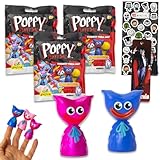
- Poppy Play Time Blind Bag Party Favors - Bundle with 3 Horror Video Game Blind Bag Mini Finger Puppet Mystery Toys Plus Stickers, More | Poppy Playtime Finger Puppets for Kids, Boys, Girls.
- This Poppy Playtime mystery mini toys bundle includes three blind bags, each containing a mystery mini finger puppet of characters like Huggy Wuggy, Kissy Missy, or Mommy Long Legs.
- This Poppy Play Time blind bag set also comes with Universal Monsters stickers, suitable for handing out for Poppy Play Time-themed parties or celebrations!
- Ideal as Poppy Play Time party favors, Poppy Play Time party supplies, or Poppy Play Time party goodie bag fillers! Sure to please any Poppy Play Time fan!
- Officially licensed Poppy Play Time mini finger puppets set for kids, boys, and girls alike, also includes a Dracula bookmark. WARNING: CHOKING HAZARD—Small parts. Not for children under 6 years.
Hollywood’s appetite for contained, concept-driven horror also aligns perfectly with Poppy Playtime’s scale. A creepy factory, limited locations, and creature-focused storytelling keep budgets manageable while maximizing atmosphere. It’s the kind of project studios are actively prioritizing in today’s market.
What Fans Should Realistically Expect Going Forward
In the near term, fans should expect a slow rollout of information rather than rapid-fire announcements. Early development projects often spend months securing creative leadership and refining direction before revealing details publicly. Silence, in this case, doesn’t signal trouble but standard industry pacing.
Creatively, expectations should remain grounded. The film is likely designed to welcome newcomers first, with lore depth layered in rather than front-loaded. If recent trends hold, the Poppy Playtime movie will aim to expand the universe, not define it, leaving the games as the primary storytelling engine while the film capitalizes on the franchise’s growing cinematic potential.
How the Film Could Translate Poppy Playtime’s Tone, Monsters, and Viral Horror to the Big Screen
Adapting Poppy Playtime isn’t simply about recreating familiar scares; it’s about preserving a very specific tone that blends childlike imagery with industrial dread. The games thrive on contrast, using bright colors, smiling mascots, and toy-commercial nostalgia to lull players into a false sense of safety before weaponizing it. A successful film will need to lean into that tonal whiplash rather than smoothing it out for mass appeal.
Recent horror adaptations suggest that audiences are more receptive than ever to stylized, slightly off-kilter worlds, especially when they feel distinct from traditional haunted house or slasher formulas. Poppy Playtime’s abandoned factory setting already functions like a character in its own right, offering cinematic opportunities for long corridors, mechanical noise, and oppressive scale. Translating that environment faithfully could give the movie an immediate visual identity.
Preserving the Franchise’s Unsettling Visual Language
One of Poppy Playtime’s greatest strengths is its instantly recognizable monster design. Characters like Huggy Wuggy are memorable not because they’re constantly in motion, but because of how long the game allows players to sit with their presence. The film adaptation will need restraint, using framing, shadows, and sound design to let these creatures feel threatening before they ever attack.
This is an area where practical effects and hybrid creature work could outperform overreliance on digital spectacle. Horror audiences have shown a preference for tactile, physically grounded monsters, particularly in lower-to-mid-budget films. If the production leans into texture and physicality, the mascots could feel more disturbing than any purely CGI interpretation.
From Gameplay Tension to Cinematic Pacing
Poppy Playtime’s scares are built around anticipation, isolation, and delayed payoff, all elements that can translate well to film if handled carefully. The challenge lies in replacing interactive tension with cinematic rhythm without losing the slow-burn unease that defines the experience. Thoughtful pacing, limited exposition, and controlled reveals will be essential.
The film doesn’t need to replicate puzzle mechanics or first-person perspective to feel authentic. Instead, it can echo the games by focusing on vulnerability, limited information, and the constant suggestion that something is watching from just off-screen. This approach aligns with recent horror hits that favor mood over nonstop action.
Adapting Viral Horror for a Broader Audience
Poppy Playtime’s rise is inseparable from its viral success on YouTube and streaming platforms, where reaction culture amplified its scares. The movie will need to acknowledge that DNA without feeling like it’s chasing internet trends. That means crafting moments that are visually striking and meme-ready, but grounded in story rather than jump-scare compilation.
Importantly, the film must balance accessibility with restraint. While the franchise has a younger fanbase, the cinematic version will likely skew toward a PG-13 or restrained R rating to maintain tension without diluting its edge. If handled carefully, the movie could function as an entry point for newcomers while still rewarding longtime fans who understand how unsettling Poppy Playtime can be when it fully commits to its horror instincts.
Fan Reactions and Community Speculation: Hype, Concerns, and Creative Hopes
The announcement of a Poppy Playtime movie triggered an immediate and polarized response across social media, Discord servers, and horror-focused forums. Longtime fans expressed excitement at seeing Huggy Wuggy and the Playtime Co. factory realized on the big screen, while others approached the news with cautious optimism. That split reaction reflects both the franchise’s popularity and the uneven history of video game adaptations, especially within the horror space.
At the center of the discussion is a desire for clarity. Mob Games has confirmed that a feature film is in development, but details beyond that remain limited, leaving room for speculation to fill the gaps. In the absence of concrete casting, directors, or release windows, the community has been parsing every word of the announcement for hints about tone and intent.
Rank #4
![Poppy Playtime - Huggy Wuggy Jumbo Plush (20'' Tall Plush, Series 1) [Officially Licensed]](https://m.media-amazon.com/images/I/51LdIwDkq6L._SL160_.jpg)
- JUMBO PLUSH: One jumbo, high-quality squishable plush; featuring an extra-spooky edition of Huggy Wuggy.
- SPECS: Plush measures 20'' tall, covered in furry material.
- ATTACHABLE HANDS: Huggy Wuggy's hands stick together when joined. Perfect for hanging Huggy as decoration, or even hanging from yourself (if you're brave enough)!
- Poppy Playtime GAME: From the hit horror game, Poppy Playtime.
- OFFICIALLY LICENSED: Genuine Poppy Playtime merchandise by PhatMojo.
Excitement Over Expansion, Not Imitation
One consistent thread among fans is the hope that the movie expands the Poppy Playtime universe rather than simply recreating the games’ most recognizable moments. Many players want the film to explore untold corners of Playtime Co., deeper lore surrounding the experiments, or entirely new characters caught inside the factory’s nightmare. The idea of a parallel story, rather than a beat-for-beat retelling, has gained significant traction.
Do these 3 things before closing this tab:
1Repair Windows errors before they cause bigger problems2Fix the driver behind crashes, sound loss and screen glitches3Clear out junk files and repair common Windows errorsThis aligns with Mob Games’ own comments about treating the film as an extension of the brand rather than a replacement for the games. While nothing official has been confirmed about the plot, fans seem most receptive to an approach that respects established canon while taking creative risks unique to film.
Concerns About Tone, Audience, and Overexposure
Alongside the hype, there is real concern about how the movie will handle its tone. Poppy Playtime occupies an unusual space between kid-friendly aesthetics and deeply unsettling horror, and fans worry that a studio-driven adaptation could soften its edge. The fear is that the film could lean too heavily into marketable mascots at the expense of genuine dread.
There is also anxiety around audience targeting. While the games attracted a younger fanbase through YouTube, many in the community are hoping the movie resists becoming overly sanitized. A restrained but serious horror approach, rather than a self-aware or comedic one, is often cited as the ideal path forward.
Speculation Fueled by Horror Game Film Trends
The recent wave of horror game adaptations has shaped expectations in a major way. Films like Five Nights at Freddy’s demonstrated that faithful aesthetics can draw crowds, but also sparked debate about whether fan service outweighs storytelling. As a result, Poppy Playtime fans are watching closely to see which lessons Mob Games takes from those successes and missteps.
The Tool Desk
Outbyte Driver Updater FREEFix the driver behind crashes, sound loss and screen glitchesFind Drivers →Outbyte PC Repair FREERepair Windows errors before they cause bigger problemsFix Now →Some speculate the studio may pursue a tighter, more atmospheric film rather than a lore-heavy franchise starter. Others believe the movie could act as a launching point for a larger cinematic universe if successful. For now, these ideas remain firmly in the realm of fan theory, underscoring how little is officially locked in.
What Fans Realistically Expect Right Now
Despite the speculation, there is a growing sense of measured patience within the community. Most fans understand that the project is early in development and that meaningful updates will take time. What they are asking for, above all, is transparency as the film takes shape.
If Mob Games can clearly communicate what the movie is and what it is not, expectations may stabilize. Until then, the conversation around the Poppy Playtime movie remains a mix of excitement, anxiety, and creative hope, mirroring the uneasy anticipation that made the games resonate in the first place.
Independent reader supportYour contribution helps us test, update, and keep practical guides available for everyone.Industry Implications: What This Adaptation Signals for Mob Games and Indie Developers
Mob Games officially confirming that a Poppy Playtime movie is in development is more than a franchise expansion. It marks a pivotal moment for a studio that rose from indie horror roots into mainstream visibility with remarkable speed. By taking an active role in shepherding the adaptation, Mob Games is signaling an intent to treat its IP as a long-term entertainment brand rather than a one-off licensing opportunity.
PC Slower Than It Used to Be?
A free scan shows the junk files, broken settings and background clutter dragging Windows down - then fixes them in one click.Free scan · Windows 10 & 11Outdated Drivers Are Slowing You Down
One free scan finds every outdated or missing driver and matches the right update for your exact hardware.Free scan · exact hardware matchWhat has been confirmed so far is relatively contained. Mob Games has acknowledged the film’s existence and its involvement, but has not announced casting, a director, a release window, or a distributor. That restraint matters, because it suggests a deliberate, development-first approach rather than a rush to capitalize on hype.
A Shift in How Indie Studios Control Their IP
For indie developers watching closely, this move represents a notable shift in leverage. Historically, game-to-film adaptations often sidelined original creators once rights were sold, resulting in projects that felt disconnected from their source. Mob Games maintaining visibility and creative oversight hints at a more protective model, where indie studios retain influence as their properties cross into Hollywood.
This approach aligns with broader industry lessons learned from mixed adaptation outcomes. Faithful aesthetics alone are no longer enough; audiences increasingly expect thematic consistency and tonal integrity. Mob Games appears aware that mishandling Poppy Playtime’s identity could damage not just the movie, but the core brand itself.
Positioning Within the Horror Game Film Boom
The announcement also places Poppy Playtime squarely within the ongoing resurgence of horror game adaptations. Recent successes have proven that mid-budget horror films with strong fanbases can perform well theatrically without massive star power. That reality makes properties like Poppy Playtime especially attractive, as they come with built-in recognition and viral appeal.
Best Value

- Dimensions: 8.25” x 4”
- Officially licensed sticker sheets
- Four sheets with two unique designs
- Top sheet features cast and cure treatment for added sparkle and shine
- Intended for ages 3+
However, Mob Games faces a different challenge than legacy franchises. Unlike decades-old IPs, Poppy Playtime is still actively evolving as a game series. The film must coexist with ongoing chapters and lore updates, raising questions about whether it will adapt existing material or tell a parallel story. At present, any assumptions beyond that remain speculative.
What This Means for Expectations Going Forward
For fans and industry observers alike, the key takeaway is patience. The lack of concrete details suggests the project is still in early development, where tone, scope, and creative leadership are being defined behind the scenes. That timeline mirrors how more successful adaptations have been built, rather than announced prematurely.
If the Poppy Playtime movie succeeds, it could reinforce a new blueprint for indie developers: grow your audience organically, protect your creative voice, and expand cautiously into film when the timing is right. Whether Mob Games ultimately delivers on that promise remains to be seen, but the announcement alone has already shifted the conversation around what indie horror studios can realistically aim for next.
What Happens Next: Production Milestones, Marketing Clues, and When Fans Should Expect Real Updates
With the announcement now public, the Poppy Playtime movie enters the least visible but most important phase of its lifecycle. This is where studios quietly determine whether a concept can translate into a viable screenplay, sustainable budget, and cohesive creative vision. For fans eager for concrete news, understanding these early milestones helps separate meaningful signals from noise.
Recommended Free Tools
Early Development Comes First
At this stage, Mob Games has only confirmed that a feature film adaptation is in development, not that cameras are close to rolling. That distinction matters. Early development typically involves locking in a screenwriter, outlining the narrative approach, and deciding how closely the film will align with existing game lore.
Casting, directors, and release windows usually come much later. If those announcements begin surfacing, it will signal that the project has successfully moved beyond concept and into active production planning.
How Marketing Will Likely Unfold
If recent horror game adaptations offer any clues, the first official marketing beats will be subtle. Fans should expect initial updates to arrive via controlled channels such as developer statements, trade publication reports, or brief teaser imagery rather than full trailers. A logo reveal, tone piece, or cryptic teaser poster is often the first public-facing step.
Mob Games’ existing relationship with its fanbase suggests a measured rollout rather than aggressive hype. That restraint may frustrate some fans, but it often indicates a studio focused on long-term credibility rather than short-term attention.
Separating Confirmed Information From Speculation
Right now, almost everything beyond the movie’s existence remains unconfirmed. There is no official word on whether the film will adapt a specific chapter, follow Huggy Wuggy as a central figure, or tell an original story set within the Poppy Playtime universe. Any claims suggesting otherwise should be treated cautiously until verified by Mob Games or its production partners.
This ambiguity is not unusual. In fact, many successful adaptations intentionally avoid early plot reveals to preserve creative flexibility while gauging audience expectations and market conditions.
When Fans Should Expect Meaningful Updates
Real updates typically arrive in waves. The next major checkpoint will likely be confirmation of a creative team, followed by casting announcements or a production start date. For a project at this stage, that could realistically take several months or longer.
Fans should temper expectations of a near-term release. If development proceeds smoothly, a theatrical or streaming debut would more likely fall well after the next major chapter of the game, allowing both mediums to complement rather than compete with each other.
Quick wins for a faster PC:
Repair Windows errors before they cause bigger problemsFix Now →Fix the driver behind crashes, sound loss and screen glitchesFind Drivers →Clear out junk files and repair common Windows errorsFree Scan →Ultimately, the most encouraging sign is not how quickly information arrives, but how deliberately it is released. Mob Games appears intent on building a film that respects Poppy Playtime’s tone, audience, and evolving identity. If that careful approach holds, the wait may prove to be exactly what the adaptation needs to succeed.
Quick Recap
Product prices and availability are accurate as of the date/time indicated and are subject to change. Any price and availability information displayed on Amazon at the time of purchase will apply.




ok