The trailer wastes no time establishing that this is not a slow-burn exercise in regret or reflection. It opens in motion and stays there, sketching a story where the stakes are brutally simple: a child in danger and a father who refuses to stand down. Gibson’s presence is immediate and weathered, the kind of screen energy that suggests every punch thrown comes with years of lived-in rage and resolve.
Tonally, the footage leans hard into grim urgency rather than nostalgic heroics. The color palette is cold and unforgiving, the pacing clipped, and the silences between bursts of violence feel just as threatening as the action itself. This is firmly in the lineage of Taken and Man on Fire, but with less polish and more abrasion, positioning Gibson as a man pushed past reason rather than a strategist executing a plan.
| # | Preview | Product | Price | |
|---|---|---|---|---|
| 1 |
![Hunting Season [DVD]](https://m.media-amazon.com/images/I/41QbNFqkuVL._SL160_.jpg)
|
Hunting Season [DVD] | $14.24 | Buy on Amazon |
| 2 |

|
Maverick (DVD) | $6.98 | Buy on Amazon |
| 3 |
|
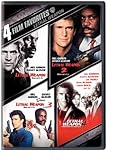
Lethal Weapon 1 / Lethal Weapon 2 / Lethal Weapon 3 / Lethal Weapon 4 | $17.09 | Buy on Amazon |
| 4 |

|
Ransom (Special Edition) | $6.78 | Buy on Amazon |
| 5 |

|
Forever Young (DVD) | $8.13 | Buy on Amazon |
What truly stands out is how blunt the violence appears to be. The trailer favors close-quarters confrontations, sudden impacts, and consequences that linger just long enough to make them uncomfortable. It’s a reminder that Gibson’s action-hero parent persona has always thrived on physical and emotional punishment, and this film seems intent on testing how much damage he, and the audience, can absorb before the final reckoning.
Mel Gibson as the Desperate Protector: Reclaiming the Action-Hero Parent Archetype
Gibson’s latest role feels like a deliberate return to familiar territory, but stripped of any lingering sentimentality. This is not the charismatic father-figure offering moral lessons between gunfights. The trailer frames him as a man operating on raw instinct, where love is indistinguishable from fury and every decision carries the weight of irreversible consequences.
Windows Errors? Fix Them Before They Spread
Repair common Windows errors and clear accumulated junk for a smoother, more stable PC - no reinstall needed.Free scan · no reinstallOutdated Drivers Are Slowing You Down
One free scan finds every outdated or missing driver and matches the right update for your exact hardware.Free scan · exact hardware match#1 Best Overall
- Father daughter relationship, 13 year old daughter, tough old man, mystery woman, father protecting daughter, corrupt world
A Prototype Forged in Pain and Urgency
Long before Taken turned parental vengeance into a subgenre, Gibson helped define the template in films like Ransom and the Lethal Weapon series. Those performances thrived on contradiction: warmth colliding with volatility, humor bleeding into trauma. The new film appears to double down on that legacy, presenting a protector who doesn’t outthink his enemies so much as outlast them through sheer endurance.
What’s striking is how little the trailer asks the audience to admire him. Gibson’s character isn’t portrayed as righteous or even particularly likable, only relentless. The emphasis is on survival, not justice, aligning the film with a more modern strain of action thrillers that favor desperation over dominance.
Age as an Asset, Not a Limitation
Rather than disguising Gibson’s age, the trailer weaponizes it. Every labored breath, every wince after impact, reinforces the idea that this father is fighting on borrowed time. In a genre often obsessed with ageless efficiency, the film finds tension in physical decline and emotional exhaustion.
This approach places the movie closer to Man on Fire than to glossy franchise entries, where the hero’s mortality is always part of the equation. Gibson’s weathered presence becomes the point, grounding the action in something harsher and more intimate than spectacle alone.
What’s actually slowing this PC down?
Pick the symptom - the matching free tool is one click away.
Where This Fits in Gibson’s Ongoing Action Legacy
As an actor navigating a complicated career resurgence, Gibson has increasingly leaned into roles that foreground damage over dominance. This film appears to continue that trajectory, offering him a part that acknowledges his history while refusing to romanticize it. The desperate protector here feels less like a victory lap and more like a reckoning.
In the broader action-thriller landscape, that choice gives the movie a sharp edge. It positions Gibson not as a relic trying to reclaim former glory, but as a defining figure reminding audiences why the action-hero parent archetype still resonates when handled without compromise.
A Familiar Threat, Sharpened: Kidnapping, Conspiracy, and the Modern Parental Thriller
If the emotional framing feels stripped-down, the threat itself is anything but. The trailer leans into one of the most reliable engines in action cinema: a child taken, the clock ticking, and a father forced into confrontation with forces far larger than himself. It’s a setup audiences know by heart, but the footage suggests a sharper, meaner execution designed to punish complacency.
What distinguishes this iteration is how quickly the situation escalates beyond a simple abduction. The trailer hints at shadowy intermediaries, institutional rot, and an enemy that thrives on anonymity. This isn’t a single villain to outfight; it’s a system that absorbs violence and dares the protagonist to keep coming.
The Tool Desk
Outbyte PC Repair FREERepair Windows errors before they cause bigger problemsFix Now →Outbyte Driver Updater FREEScan for outdated or missing drivers - takes under a minuteDriver Scan →From Personal Grief to Systemic Menace
The modern parental thriller often pivots from intimate loss to sprawling conspiracy, and this film appears to embrace that evolution. The kidnapping functions less as the endgame and more as the entry point, pulling Gibson’s character into a maze of corrupt power brokers and disposable enforcers. Each confrontation feels like a symptom of something deeper, and far more dangerous.
That scale shift gives the action a persistent sense of futility. Even when Gibson’s character wins a fight, the trailer frames it as temporary relief rather than triumph. The threat keeps mutating, reinforcing the idea that brute force alone won’t close this wound.
The Genre’s Enduring Appeal, Recalibrated
Action-hero parent stories endure because they turn abstract danger into something brutally personal. This trailer understands that instinct but updates it for an era defined by distrust and surveillance. The danger doesn’t announce itself; it lurks behind clean offices, burner phones, and polite threats.
Rank #2
By placing Gibson at the center of that paranoia, the film taps into both nostalgia and unease. It acknowledges the comforting simplicity of the trope while stripping away its guarantees. Rescue isn’t promised, redemption isn’t assured, and survival itself feels like a hard-earned maybe rather than a foregone conclusion.
Recommended Free Tools
Gen X DNA, Millennial Anxiety: Why This Story Still Hits Hard Right Now
This trailer feels engineered to hit two generations in the gut at once. For Gen X, it taps into the muscle memory of the ‘90s action era, when movie fathers like Gibson’s were blunt instruments of justice, operating on instinct and righteous fury. Back then, the world was dangerous but legible, and if you hit hard enough, the problem eventually broke.
The Gen X Action Blueprint, Weathered and Scarred
Gibson’s presence alone carries the DNA of that earlier era. He’s not playing a sleek operator or a tactical savant; he’s a man shaped by loss, experience, and the understanding that violence leaves residue. The trailer leans into that weariness, framing his physicality as something finite, something that costs him every time he unleashes it.
That vulnerability is key. This isn’t about reclaiming past glory so much as confronting its limits. The action suggests a man who knows how these stories are supposed to end, and fears that this time, they might not.
Millennial Fear: Systems You Can’t Punch
For Millennial viewers, the anxiety comes from a different place. The antagonist here isn’t a single criminal mastermind but a faceless network, insulated by bureaucracy, money, and plausible deniability. It’s the kind of threat that reflects modern dread: the sense that accountability has been replaced by endless deflection.
Do these 3 things before closing this tab:
1Repair Windows errors before they cause bigger problems2Fix the driver behind crashes, sound loss and screen glitches3Clear out junk files and repair common Windows errorsThe trailer’s emphasis on intermediaries, clean environments, and unseen decision-makers mirrors a generation raised amid corporate scandals, digital surveillance, and institutional failure. Violence becomes less about dominance and more about desperation, a last-resort language spoken when every official channel is compromised.
Why Gibson Still Fits This Moment
This intersection of generational fear is where Gibson’s casting becomes unexpectedly effective. He embodies the old-school belief that action has consequences, even as the film tests whether that belief still holds any power. Watching him navigate a world that refuses simple resolutions turns the familiar trope into something uneasy and contemporary.
The result is a parental thriller that doesn’t just recycle a formula but interrogates it. The trailer suggests a story that understands why audiences once believed in these heroes, and why today, that belief feels harder to sustain. That tension is precisely what gives the film its edge, and why this particular brand of action storytelling still resonates right now.
How the Film Uses Brutality and Restraint to Signal a Grittier Late-Career Gibson
The most striking thing about the trailer isn’t how often Gibson turns to violence, but how deliberately the film withholds it. Long stretches linger on anticipation, moral hesitation, and the weight of consequence, making every eruption feel earned rather than indulgent. When brutality finally arrives, it lands with a thud instead of a cheer.
This is action staged as punctuation, not spectacle. The trailer seems acutely aware that audiences have seen Gibson unleash righteous fury before, and it refuses to let that familiarity dull the impact. Violence here is messy, close, and often uncomfortable, signaling a tonal shift from crowd-pleasing catharsis to grim necessity.
When Violence Finally Breaks the Silence
When Gibson does act, the trailer frames it as something ugly but unavoidable. Fights are quick, chaotic, and stripped of stylistic flourish, emphasizing damage over dominance. The camera rarely glorifies the hits, instead staying grounded in the physical toll on both attacker and victim.
This approach aligns Gibson with a modern strain of action filmmaking that prioritizes credibility over choreography. The message is clear: this isn’t a hero enjoying the fight, but a parent burning through his last reserves because there’s no other option left. Each blow feels less like victory and more like survival.
Restraint as Character Development
Equally important is what Gibson doesn’t do. The trailer repeatedly shows him choosing restraint, walking away, or trying to navigate systems before crossing the point of no return. That hesitation becomes a form of character development, reinforcing the sense that he understands exactly what violence costs.
Free tools Windows power users keep installed
One-click scans. No signup required.
In the context of his career, this restraint feels intentional and reflective. The film isn’t asking viewers to forget Gibson’s past action personas, but to watch him wrestle with them. It’s a late-career performance built on self-awareness, where the refusal to act can be as telling as the act itself.
Redefining the Action-Hero Parent
Within the well-worn trope of the action-hero parent, this brutality-and-restraint balance gives the film its identity. Gibson isn’t protecting his child through sheer physical superiority, but through hard choices and moral compromise. The trailer suggests that love doesn’t make him unstoppable; it makes him desperate.
That desperation is what ultimately distinguishes this role from his earlier work. The film positions Gibson not as an icon reliving old glory, but as a man confronting the cost of every violent solution he once embraced. It’s a grittier, more introspective take on the parental protector, and one that feels sharply attuned to both his age and the current action-thriller landscape.
From Mad Max to Dad Max: Where This Role Fits in Gibson’s Complicated Action Legacy
Mel Gibson’s screen persona has always been defined by extremes. From the feral chaos of Mad Max to the wisecracking volatility of Lethal Weapon, his action heroes were once engines of momentum, men who moved faster than consequences. The new trailer reframes that history, presenting a figure who carries those consequences in his posture, his pauses, and every measured decision before violence erupts.
This isn’t Gibson trying to reclaim youthful invincibility. It’s a performance built on the awareness that time, damage, and regret have already won, and the only thing left to fight for is family.
The Evolution From Chaos to Consequence
Early Gibson roles thrived on recklessness. Max Rockatansky and Martin Riggs were defined by their willingness to step off the edge, daring the world to follow. In this new thriller, the edge is still there, but Gibson’s character studies it carefully, fully aware of what happens when he crosses it.
The trailer leans into that shift. Each violent act feels less like instinct and more like a failure of containment, as if the character has exhausted every other option. That evolution mirrors Gibson’s own journey through the genre, moving from explosive abandon to controlled implosion.
A Familiar Trope, Sharpened by Age
Gibson has circled the action-hero parent before, most notably in Ransom and Blood Father, but this role feels like the culmination of that lineage. Those films balanced ferocity with desperation; this one appears to strip away even the catharsis. The trailer emphasizes exhaustion, hesitation, and the physical cost of every confrontation.
In a genre crowded with near-superhuman dads, Gibson’s version feels brutally human. He’s not faster or stronger than his enemies; he’s simply more willing to endure damage if it means his child survives. That vulnerability gives the familiar trope a rawer, more unsettling edge.
Rank #4
Reckoning With an Unavoidable Legacy
Any discussion of Gibson’s career carries weight beyond the screen, and the film seems aware of that reality without leaning on it. The character’s internal struggle reads as a reckoning with past violence, not a celebration of it. The trailer positions him as a man trying, and often failing, to outrun who he used to be.
In that sense, the role feels deliberately placed within Gibson’s late-career arc. Like Edge of Darkness or even his work behind the camera on Hacksaw Ridge, it frames violence as corrosive rather than thrilling. The action still hits hard, but it’s framed as necessity, not identity.
Why This Role Feels Timely
The modern action-thriller landscape has shifted toward bruised realism and moral ambiguity, and Gibson’s casting taps directly into that trend. His history brings instant credibility, while his age brings stakes that younger stars can’t replicate. The trailer understands that audiences don’t want to see him pretend nothing has changed.
Quick wins for a faster PC:
Repair Windows errors before they cause bigger problemsFix Now →Scan for outdated or missing drivers - takes under a minuteDriver Scan →Instead, it offers a version of the action hero shaped by survival, regret, and parental fear. From Mad Max to what might as well be Dad Max, this role doesn’t rewrite Gibson’s legacy. It confronts it head-on, and that tension is where the film finds its power.
Independent reader supportYour contribution helps us test, update, and keep practical guides available for everyone.The Competition for the Crown: Gibson vs. Neeson, Washington, and the Aging Action Elite
Mel Gibson isn’t entering this arena uncontested. The action-hero parent has become a defining lane for aging icons, and the trailer positions Gibson squarely against a generation of stars who’ve turned late-career vulnerability into box-office currency. This isn’t just about survival anymore; it’s about who can make that survival feel earned.
Liam Neeson: The Relentless Prototype
Liam Neeson remains the modern benchmark, having weaponized paternal rage into an entire subgenre. From Taken onward, his characters operate with mechanical efficiency, grief transformed into unstoppable momentum. Even as the years pile on, Neeson’s screen persona rarely slows down.
Gibson’s approach, at least in this trailer, feels deliberately different. Where Neeson’s fathers become deadlier with age, Gibson’s looks closer to collapse with every hit he takes. The threat isn’t that he’ll lose control; it’s that his body may finally give out before his mission is finished.
Denzel Washington: Controlled Fury and Moral Authority
Denzel Washington occupies another corner of the aging action spectrum, particularly through The Equalizer films. His characters are calm, precise, and governed by an unshakable moral code. Violence is swift, surgical, and often followed by quiet reflection.
Gibson’s character lacks that composure. The trailer suggests chaos rather than control, decisions made under panic instead of principle. It’s less about righteous judgment and more about raw instinct, a father reacting rather than calculating.
The Rest of the Aging Action Pack
From Bruce Willis’ later straight-to-streaming years to Stallone’s reflective turns in Creed and Rambo: Last Blood, the genre has leaned heavily into legacy reckoning. These films often ask what’s left when the myth fades and the body starts to betray the legend. Some embrace nostalgia; others chase relevance through escalation.
Gibson’s new thriller appears uninterested in either comfort zone. It doesn’t mythologize his past roles or soften the consequences of violence. Instead, it drops him into the same brutal equation as his peers and strips away the safety net.
Quick wins for a faster PC:
Fix the driver behind crashes, sound loss and screen glitchesFind Drivers →Repair Windows errors before they cause bigger problemsFix Now →Best Value
Why Gibson’s Entry Feels Distinct
What gives Gibson a legitimate shot at the “best action hero parent” crown is the discomfort baked into his performance. The trailer sells fear, fatigue, and moral erosion as much as physical danger. He doesn’t look like a man reclaiming former glory; he looks like someone paying for it.
In a field crowded with professionals who make survival look routine, Gibson’s edge is how close he seems to failure. That tension is what separates this film from the pack, and why his late-career action pivot still feels volatile.
What the Trailer Leaves Unsaid: Clues, Misdirection, and Expectations Heading Into Release
The first trailer sells urgency and punishment, but it’s careful about what it withholds. We’re shown the chase, the bruises, and the ticking clock, yet the emotional mechanics remain mostly obscured. That restraint feels intentional, hinting that the film’s true weight may land in its reversals rather than its reveals.
The Villain Problem, or Lack Thereof
Notably absent is a clearly defined antagonist. Faces flash by, threats loom, but no single villain is positioned as the embodiment of evil. That suggests the danger may be systemic rather than personal, a maze of forces closing in rather than a lone heavy waiting for a showdown.
It also reframes Gibson’s mission. This may not be about defeating someone, but surviving something, a scenario where endurance matters more than dominance. That aligns with the trailer’s emphasis on exhaustion over triumph.
How Much Is the Trailer Lying?
Action trailers love misdirection, and this one feels especially curated. Moments that seem like climactic confrontations may be early setbacks, while quieter beats are likely carrying the emotional punch. The edit leans on physical chaos, possibly to disguise a more intimate, character-driven spine.
There’s also a sense that the parent-child dynamic is being downplayed to avoid sentimentality. If history is any guide, the film may hit harder precisely because it waits to weaponize that relationship until the final act.
Expectations for a Late-Career Gibson Performance
What audiences will be watching closely is not just the action, but the degree of self-awareness. The trailer hints at a performance built on attrition, where every decision costs something irreversible. That’s a risky lane, especially for an actor whose action legacy is defined by defiance rather than depletion.
If the film commits to that honesty, it could stand alongside the best modern parental thrillers by refusing easy catharsis. The expectation isn’t that Gibson’s character wins cleanly, but that he survives changed, diminished, and possibly undone.
In that sense, what the trailer leaves unsaid may be its greatest promise. This doesn’t look like a victory lap or a nostalgic flex. It looks like a film betting that audiences are ready to see an action hero parent pushed past heroism altogether, and that Mel Gibson, for better or worse, is still willing to go there.
Quick Recap
Product prices and availability are accurate as of the date/time indicated and are subject to change. Any price and availability information displayed on Amazon at the time of purchase will apply.




