Martin Scorsese’s The Wolf of Wall Street landing on Paramount+ feels less like a routine streaming update and more like the return of a defining modern classic to the cultural conversation. Released in 2013, the film remains one of Scorsese’s most provocative, divisive, and crowd-pleasing works, a three-hour adrenaline rush that still sparks debate about excess, morality, and the American dream gone feral. Its arrival on a major platform makes it newly accessible at a moment when audiences are once again reassessing the legacy of unchecked wealth and the personalities who thrive within it.
More than a decade on, The Wolf of Wall Street hasn’t dulled with age. If anything, its satire feels sharper, its cynicism more pointed, and its comedic bravado more audacious in the wake of ongoing financial scandals and the rise of influencer-driven capitalism. Leonardo DiCaprio’s ferocious performance as Jordan Belfort remains a masterclass in controlled chaos, while Scorsese’s restless camera and propulsive editing turn moral decay into a darkly exhilarating spectacle that still feels daring compared to today’s safer prestige dramas.
| # | Preview | Product | Price | |
|---|---|---|---|---|
| 1 |
![The Wolf of Wall Street [Blu-ray] [2013] [Region Free]](https://m.media-amazon.com/images/I/51J05mn-B7L._SL160_.jpg)
|
The Wolf of Wall Street [Blu-ray] [2013] [Region Free] | $17.64 | Buy on Amazon |
| 2 |
|
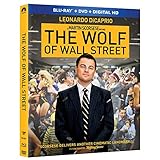
The Wolf of Wall Street (Blu-ray + DVD + Digital HD) | $6.37 | Buy on Amazon |
| 3 |
![The Wolf Of Wall Street [Blu-ray]](https://m.media-amazon.com/images/I/51JUy2mkbVL._SL160_.jpg)
|
The Wolf Of Wall Street [Blu-ray] | $22.49 | Buy on Amazon |
| 4 |
![The Wolf of Wall Street UHD [Blu-ray] [Region Free] [4K UHD]](https://m.media-amazon.com/images/I/51Va8nYgptL._SL160_.jpg)
|
The Wolf of Wall Street UHD [Blu-ray] [Region Free] [4K UHD] | $31.31 | Buy on Amazon |
| 5 |

|
The Wolf Of Wall Street | $24.19 | Buy on Amazon |
For Paramount+ subscribers, this is a chance to experience one of Scorsese’s most accessible yet uncompromising films without compromise. New viewers should expect an unapologetically adult, profane, and frequently hilarious epic that demands attention, while returning fans can revisit a film that plays differently with time and perspective. In a streaming landscape crowded with content, The Wolf of Wall Street stands out as a reminder of what happens when a master filmmaker is given the freedom to push style, performance, and provocation to their limits.
From Infamy to Icon: A Brief Overview of Scorsese’s Most Provocative Modern Epic
When The Wolf of Wall Street premiered in 2013, it arrived trailing controversy as loudly as acclaim. Critics sparred over whether Scorsese was indicting Jordan Belfort’s excesses or reveling in them, while audiences packed theaters for what quickly became the director’s most riotous, profane, and commercially successful film in decades. That tension between moral outrage and manic entertainment was never a flaw; it was the point.
#1 Best Overall
- The Wolf of Wall Street [2013] [Region Free] Leonardo DiCaprio,In Great Condition
A True Story Told at Full Volume
Based on Belfort’s memoir, the film chronicles the meteoric rise and inevitable collapse of a Long Island stockbroker who built an empire on fraud, bravado, and pure appetite. Scorsese frames the story as a breathless confession, powered by Leonardo DiCaprio’s fourth-wall-breaking performance and a script that weaponizes humor to expose the seductive nature of corruption. The result is less a cautionary tale than a psychological immersion into how excess becomes normalized when money insulates consequence.
Why the Film Still Provokes
What makes The Wolf of Wall Street endure is how uncomfortably current it feels. In an era shaped by meme stocks, crypto scandals, and influencer millionaires, Belfort’s playbook no longer feels like a relic of the ’90s but a prototype for modern grift culture. Scorsese’s refusal to moralize cleanly forces viewers to grapple with their own complicity as spectators, laughing even as the film lays bare the rot beneath the spectacle.
A Key Chapter in Scorsese’s Late-Career Evolution
Positioned between the austere spiritual reckoning of Silence and the mournful elegy of The Irishman, The Wolf of Wall Street stands as Scorsese’s last truly anarchic explosion of energy. It distills decades of themes the director has explored since Goodfellas and Casino, filtered through a more aggressive comedic lens and an almost experimental commitment to momentum. Now streaming on Paramount+, the film plays not just as notorious entertainment, but as a vital, clarifying chapter in Scorsese’s ongoing interrogation of power, masculinity, and American excess.
Leonardo DiCaprio’s Jordan Belfort and the Performances That Define the Film
Leonardo DiCaprio’s turn as Jordan Belfort is the engine that makes The Wolf of Wall Street not just memorable, but combustible. This is a performance built on velocity: rapid-fire narration, manic physicality, and a comedian’s instinct for escalation, all fused with a frightening lack of self-awareness. DiCaprio doesn’t soften Belfort or search for easy redemption; instead, he commits fully to the character’s appetites, allowing the audience to feel both the intoxicating rush of power and the emptiness beneath it.
Do these 3 things before closing this tab:
1Scan for outdated or missing drivers - takes under a minute2Repair Windows errors before they cause bigger problems3Fix the driver behind crashes, sound loss and screen glitchesIt remains one of the most daring star performances of DiCaprio’s career, precisely because it risks alienation. Belfort is obscene, delusional, and frequently pathetic, yet DiCaprio’s charisma keeps pulling viewers along for the ride. Now that the film is streaming on Paramount+, that performance feels even more potent in a binge-era context, where excess is normalized and self-mythologizing has become a cultural currency.
Jonah Hill and the Art of Weaponized Absurdity
If DiCaprio is the film’s kinetic force, Jonah Hill is its most unsettling surprise. As Donnie Azoff, Hill strips away his comedic safety net and replaces it with something feral and grotesque. His performance is deliberately abrasive, leaning into awkward rhythms, physical tics, and moments of shocking cruelty that push the film beyond satire into something closer to social horror.
Hill’s Azoff isn’t just comic relief; he’s a mirror that reflects Belfort’s worst impulses back at him in exaggerated form. The infamous drug-fueled sequences, particularly the extended Quaalude meltdown, work not simply because they are outrageous, but because Hill grounds them in character rather than gag. It’s a performance that redefined Hill’s career and cemented the film’s reputation for fearless acting choices.
Margot Robbie and the Myth of the Untouchable Fantasy
Margot Robbie’s breakout role as Naomi Lapaglia is often remembered for its surface-level impact, but her performance carries a sharp intelligence beneath the glamour. Robbie understands Naomi as both an object of Belfort’s fantasy and a figure who learns to weaponize that fantasy to her advantage. Her accent, posture, and control of silence give the character authority in a film dominated by male bravado.
Crucially, Robbie never allows Naomi to become merely decorative. As the marriage fractures, her performance exposes the limits of Belfort’s world, revealing how quickly desire curdles into entitlement and resentment. For new viewers discovering the film on Paramount+, it’s striking to see an early performance that already signals Robbie’s future as one of Hollywood’s most commanding screen presences.
An Ensemble That Sustains the Frenzy
The Wolf of Wall Street’s supporting cast ensures that Scorsese’s three-hour odyssey never loses momentum. Kyle Chandler brings coiled menace and moral rigidity as the FBI agent circling Belfort, while Matthew McConaughey’s brief but unforgettable appearance sets the film’s philosophical tone with hypnotic absurdity. Even minor characters are etched with specificity, creating a world that feels chaotic yet meticulously observed.
Rank #2
- The Wolf Of Wall Street - Blu-ray + DVD + Digital Brand New
Taken together, these performances transform the film from a singular star vehicle into a full-blown ecosystem of excess. Streaming on Paramount+ now, The Wolf of Wall Street plays as a masterclass in ensemble energy, anchored by DiCaprio but elevated by a cast that understands exactly how far Scorsese is willing to push the envelope, and meets him there without flinching.
Excess as Spectacle: Scorsese’s Direction, Style, and Darkly Comic Tone
Martin Scorsese approaches The Wolf of Wall Street with the restless energy of a filmmaker refusing to moralize from a distance. Instead, he plunges the audience directly into Jordan Belfort’s world, using velocity, volume, and visual overload to mirror the intoxicating pull of unchecked capitalism. Watching it now on Paramount+, the film’s aggressive style feels less like indulgence and more like a deliberate strategy to make viewers feel the same rush, and eventual nausea, as its characters.
Quick wins for a faster PC:
Repair Windows errors before they cause bigger problemsFix Now →Fix the driver behind crashes, sound loss and screen glitchesFind Drivers →Clear out junk files and repair common Windows errorsFree Scan →Scorsese’s direction turns excess into spectacle, but never into abstraction. Every tracking shot through Stratton Oakmont, every whip-pan across screaming brokers, reinforces the idea that this is a system designed to overwhelm both participants and observers. The film’s infamous length becomes part of the experience, daring viewers to keep up as the momentum barrels forward without apology.
Breakneck Editing and Controlled Chaos
The film’s relentless pace is driven by razor-sharp editing that rarely allows a moment of stillness. Scenes bleed into one another through voiceover, freeze-frames, and direct address, collapsing traditional narrative distance. Scorsese and editor Thelma Schoonmaker transform what could have been a cautionary tale into a high-speed ride that implicates the audience in its pleasures.
For returning viewers, this kinetic structure reveals just how carefully calibrated the chaos is. Every outrageous beat is positioned to escalate the fantasy before subtly exposing its emptiness. Streaming the film at home on Paramount+ makes it easier to appreciate how meticulously the madness is assembled, even as it feels completely unhinged.
Dark Comedy as Moral Weapon
The Wolf of Wall Street is frequently described as hilarious, but its humor is pointed and corrosive. Scorsese leans hard into dark comedy, using laughter as a way to disarm viewers before confronting them with the consequences of Belfort’s actions. The jokes land because they are rooted in character and behavior, not punchlines.
Crashes, No Sound, or Screen Glitches?
Random freezes, missing sound and display glitches usually trace back to one bad driver. Find and replace yours safely.Free scan · under a minutePC Slower Than It Used to Be?
A free scan shows the junk files, broken settings and background clutter dragging Windows down - then fixes them in one click.Free scan · Windows 10 & 11Crucially, the film never lets comedy become absolution. The excess is funny until it isn’t, and that shift is where Scorsese’s moral clarity emerges. For contemporary audiences discovering or revisiting the film on Paramount+, its satire feels sharper than ever, reflecting an era still grappling with wealth worship, corporate amorality, and the seductive myth that success excuses everything.
A Modern Scorsese Statement
Within Scorsese’s filmography, The Wolf of Wall Street stands as both a culmination and a provocation. It echoes the rise-and-fall structures of Goodfellas and Casino, but pushes their stylistic bravado into explicitly comic, confrontational territory. The film doesn’t ask to be admired for its craft alone; it demands engagement, discomfort, and reflection.
Its arrival on Paramount+ solidifies its status as essential viewing for anyone exploring Scorsese’s modern work. Whether experienced for the first time or revisited with fresh eyes, The Wolf of Wall Street remains a bold, divisive, and undeniably vital entry in American cinema, one that refuses to age quietly or politely.
Power, Greed, and Moral Collapse: The Film’s Enduring Themes Explained
At its core, The Wolf of Wall Street is not simply about excess, but about the systems that reward it. Scorsese frames Jordan Belfort’s rise as a case study in how power is accumulated, normalized, and ultimately insulated from consequence. Watching the film now, especially on a mainstream platform like Paramount+, underscores how disturbingly familiar that dynamic still feels.
The film’s endurance comes from its refusal to offer easy moral binaries. Belfort is not portrayed as a singular villain so much as the logical outcome of a culture that equates wealth with worth. Scorsese implicates institutions, peers, and even audiences who are seduced by the same fantasies his protagonist sells.
Capitalism as Spectacle
One of the film’s sharpest insights is how capitalism becomes performance. Belfort isn’t just making money; he’s selling confidence, aspiration, and the illusion of insider access. Scorsese stages these moments like rallies or revivals, revealing how financial power thrives on belief as much as numbers.
Streaming the film today, viewers can’t miss how prescient this depiction feels. The language of hustle, disruption, and self-mythologizing has only grown louder since the film’s release. The Wolf of Wall Street captures that mentality at its most unfiltered, exposing how easily spectacle replaces substance.
Masculinity, Entitlement, and the Illusion of Control
The film also interrogates a particularly American strain of masculinity tied to dominance, appetite, and excess. Belfort’s world rewards aggression and punishes restraint, creating an environment where moral erosion is framed as ambition. Scorsese doesn’t romanticize this behavior, but he shows how it perpetuates itself through peer validation and unchecked privilege.
Recommended Free Tools
What makes these themes resonate now is how openly the film connects entitlement to immunity. Consequences arrive late and land softly, reinforcing the idea that power protects its own. For viewers revisiting the film on Paramount+, this imbalance may feel less shocking than it once did, which is precisely Scorsese’s point.
The Cost of Moral Emptiness
Despite its energy and humor, The Wolf of Wall Street is ultimately about emptiness. Belfort achieves everything he claims to want, only to find that satisfaction is fleeting and hollow. Scorsese visualizes this collapse not through tragedy, but through repetition, showing how excess loses meaning once it becomes routine.
This is where the film’s lasting relevance lies. It doesn’t argue that greed is bad; it shows what happens when greed becomes the only value left. As the film finds new life on Paramount+, its portrait of moral collapse feels less like a period piece and more like an ongoing diagnosis of American ambition.
Controversy, Cultural Impact, and How the Film Has Aged in the Post-MeToo Era
Upon release, The Wolf of Wall Street ignited immediate controversy, with critics and audiences split over whether Scorsese was condemning or celebrating Jordan Belfort’s excess. The film’s refusal to moralize overtly, paired with its intoxicating energy, led some viewers to mistake depiction for endorsement. That tension has followed the film ever since, becoming central to how it’s discussed and re-evaluated.
Free tools Windows power users keep installed
One-click scans. No signup required.
Streaming on Paramount+ now, the controversy feels less like a flaw and more like a feature. Scorsese trusts the audience to sit with discomfort, to recognize how easily charisma and momentum can blur ethical lines. The film’s provocation lies in that ambiguity, forcing viewers to interrogate their own responses rather than offering easy condemnation.
Glorification vs. Exposure
One of the most persistent criticisms is that The Wolf of Wall Street glamorizes financial crime and toxic behavior. Belfort is funny, confident, and endlessly watchable, and the film rarely pauses to underline the damage he causes. Yet Scorsese has long argued that excess, when shown honestly, becomes self-indicting.
Rank #4
What the film exposes is not just Belfort’s corruption, but the audience’s susceptibility to spectacle. The laughter, the shock, and even the admiration mirror the culture that allowed figures like Belfort to thrive. Watching the film today, especially in a streaming context where its scenes have been endlessly clipped and meme-ified, that complicity feels uncomfortably clear.
Reckoning With Gender and Power After MeToo
Viewed through a post-MeToo lens, the film’s portrayal of women and workplace dynamics lands with sharper impact. The casual misogyny, transactional relationships, and normalization of exploitation are no longer just background details of a wild lifestyle. They register as structural features of Belfort’s empire, inseparable from how power operates in his world.
What’s actually slowing this PC down?
Pick the symptom - the matching free tool is one click away.
Importantly, Scorsese doesn’t frame these behaviors as relics of a bygone era. The lack of meaningful consequences underscores how systems protect abusers when profit is involved. For modern audiences discovering or revisiting the film on Paramount+, these moments may be harder to laugh off, and that discomfort is part of the film’s evolving relevance.
A Film That Refuses to Be Neutralized
Culturally, The Wolf of Wall Street has taken on a strange double life. It’s been embraced by the very “finance bro” culture it critiques, quoted and circulated as motivation rather than warning. That misreading speaks to the film’s potency and to the enduring appeal of power fantasies in American culture.
Yet the film has not been neutralized by time. If anything, its contradictions have made it more durable, inviting ongoing debate about art, responsibility, and audience interpretation. As it streams on Paramount+, The Wolf of Wall Street remains a provocative, essential entry in Scorsese’s filmography, one that continues to challenge viewers not just to watch, but to reflect on why it still hits so close to home.
Independent reader supportYour contribution helps us test, update, and keep practical guides available for everyone.Where ‘The Wolf of Wall Street’ Fits in Scorsese’s Legendary Filmography
The Evolution of Scorsese’s American Obsessions
By the time The Wolf of Wall Street arrived in 2013, Martin Scorsese had already spent decades dissecting American ambition, masculinity, and moral decay. From Mean Streets to Goodfellas and Casino, his films repeatedly explore how charisma and violence intertwine within systems that reward excess. The Wolf of Wall Street feels like a late-period escalation of those ideas, swapping mob hierarchies for corporate ones without softening the consequences.
What changes here is tone rather than intent. The film is brighter, louder, and more relentlessly comic than many of Scorsese’s crime epics, yet the underlying mechanics remain familiar. Belfort’s brokerage firm operates with the same codes of loyalty, intimidation, and ritualized indulgence that once defined Scorsese’s gangsters.
A Companion Piece to Goodfellas, Not a Remake
It’s tempting to label The Wolf of Wall Street as a financial-sector remix of Goodfellas, and structurally the comparison holds. Voiceover confessionals, fourth-wall breaks, and rapid-fire montages create a seductive rhythm that pulls viewers directly into Belfort’s mindset. On Paramount+, that velocity remains intoxicating, even for audiences who know exactly where the story ends.
Yet the film’s excess is more confrontational than nostalgic. Where Goodfellas mourns the collapse of a criminal brotherhood, The Wolf of Wall Street never offers that romantic aftertaste. The emptiness is the point, and the punishment, such as it is, feels almost beside the point.
Leonardo DiCaprio and Scorsese at Full Throttle
Within Scorsese’s long-running collaboration with Leonardo DiCaprio, this may be their most unrestrained pairing. DiCaprio’s performance is a physical, manic spectacle, pushing beyond the controlled intensity of The Departed or the wounded gravitas of Shutter Island. It’s a role that demands endurance as much as range, and the film dares viewers to keep up.
The Tool Desk
Outbyte Driver Updater FREEFix the driver behind crashes, sound loss and screen glitchesFind Drivers →Outbyte PC Repair FREEClear out junk files and repair common Windows errorsFree Scan →Best Value
For returning viewers streaming the film now, the performance stands out as a turning point. It bridges DiCaprio’s movie-star persona with Scorsese’s fascination with self-destruction, creating a character who is simultaneously magnetic and repellent.
A Late-Career Statement That Still Provokes
As Scorsese’s filmography has expanded into meditations on mortality, faith, and legacy, The Wolf of Wall Street occupies a crucial middle ground. It represents the director refusing to tame his style even as his perspective sharpens. The film’s arrival on Paramount+ places it alongside his earlier classics, inviting comparison rather than isolation.
For new viewers, it plays like a dare: three hours of maximalist filmmaking that refuses to moralize cleanly. For longtime fans, it’s a reminder that Scorsese’s most enduring works don’t comfort or instruct. They expose, provoke, and linger, demanding engagement long after the credits roll.
Why It’s a Must-Watch (or Rewatch) on Paramount+ for Adult-Oriented Cinema Fans
A Rare Modern Epic That Respects Adult Audiences
The Wolf of Wall Street is increasingly rare in today’s streaming landscape: a big-budget, studio-backed film that unapologetically targets adults. Its length, explicit content, and moral ambiguity are features, not obstacles, designed for viewers who want cinema that challenges rather than reassures. Streaming on Paramount+ gives it room to breathe again, free from the compromises of cable edits or fragmented viewing.
For audiences seeking something denser and more confrontational than algorithm-friendly fare, this is a reminder of what prestige filmmaking once demanded. It trusts viewers to sit with discomfort, excess, and contradiction without hand-holding.
Even More Revealing on Rewatch
Returning to the film now, its craftsmanship becomes impossible to ignore. Scorsese’s control of rhythm, editorial pacing, and comic escalation feels almost surgical, even when the film is at its most chaotic. What once played as outrageous spectacle reveals itself as carefully calibrated satire, with each escalation exposing the emptiness beneath Belfort’s supposed triumph.
Streaming on Paramount+ encourages that second or third viewing, where the laughs curdle and the repetition becomes the point. The film doesn’t just depict excess; it exhausts it, daring viewers to notice how quickly pleasure turns mechanical.
Culturally Relevant in an Age of Unchecked Wealth
More than a decade after its release, The Wolf of Wall Street feels less like a period piece than a warning that went largely unheeded. Its portrait of consequence-free affluence, performative motivation, and self-mythologizing masculinity remains unsettlingly familiar. Watching it now, in an era still grappling with financial inequality and influencer-driven greed, gives the film renewed bite.
Do these 3 things before closing this tab:
1Repair Windows errors before they cause bigger problems2Fix the driver behind crashes, sound loss and screen glitches3Clear out junk files and repair common Windows errorsParamount+ positioning the film within its streaming library underscores its ongoing relevance. This isn’t nostalgia programming; it’s a work that continues to reflect uncomfortable truths about American ambition and the stories we tell ourselves about success.
A Defining Entry in Scorsese’s Filmography
For viewers exploring Scorsese’s work chronologically or thematically, The Wolf of Wall Street stands as a crucial chapter. It distills many of his long-standing obsessions into their most aggressive form, while pushing his style to its limits. Few filmmakers at this stage in their career would attempt something so unruly, let alone succeed.
As it lands on Paramount+, the film feels newly accessible without being diminished. It remains provocative, exhausting, and darkly hilarious, the kind of movie that reminds adult-oriented cinema fans why challenging films are worth seeking out. Whether experienced for the first time or revisited with sharper eyes, The Wolf of Wall Street endures as a modern classic that refuses to go quietly.
Quick Recap
Product prices and availability are accurate as of the date/time indicated and are subject to change. Any price and availability information displayed on Amazon at the time of purchase will apply.
The Tool Desk
Outbyte PC Repair FREERepair Windows errors before they cause bigger problemsFix Now →Outbyte Driver Updater FREEFix the driver behind crashes, sound loss and screen glitchesFind Drivers →



