The Super Bowl has become Hollywood’s most expensive red carpet, but nobody expected Stitch to come crashing through it—literally. Disney’s live-action Lilo & Stitch made its first major splash with a Super Bowl commercial that staged Stitch as an uncontainable force, tearing across the football field mid-game in full chaotic glory. In the spot, the blue alien breaks free, barrels through players, hijacks the broadcast, and turns America’s most controlled sporting event into a cartoon-grade disaster zone.
What made the ad instantly viral wasn’t just the spectacle, but the audacity. Stitch wasn’t politely introduced or teased in cinematic fragments; he invaded. The commercial leaned hard into the character’s anarchic roots, recreating the same gleeful mayhem that made the 2002 animated film a cult favorite, while using cutting-edge live-action VFX to convincingly insert him into the real-world Super Bowl environment. Viewers weren’t just watching a movie ad—they were watching Stitch disrupt the biggest media moment of the year.
That disruption is exactly the point. By weaponizing nostalgia and marrying it to a jaw-dropping, can’t-look-away stunt, Disney signaled that this isn’t a safe, background-noise remake. The Super Bowl commercial framed Lilo & Stitch as a live-action event with personality, humor, and chaos baked in, reassuring longtime fans while instantly intriguing casual viewers. It was marketing as mischief, and in a night built on spectacle, Stitch somehow stole the field.
Breaking Down the Commercial Beat by Beat: Chaos on the Field, Comedy in the Details
The Setup: A Normal Game, Until It Isn’t
The commercial opens with intentional normalcy. A pristine Super Bowl broadcast, packed stadium, commentators mid-analysis, players lining up like nothing is out of the ordinary. Disney lets the audience settle into the familiar rhythm of football before quietly planting unease through subtle audio glitches and a flicker of movement near the sidelines.
Do these 3 things before closing this tab:
1Scan for outdated or missing drivers - takes under a minute2Clear out junk files and repair common Windows errors3Fix the driver behind crashes, sound loss and screen glitches#1 Best Overall

- STITCH STUFFED PLUSH: Kids Preferred presents this super soft, cute, charmingly detailed stuffed animal. Babies, toddlers, and kids love this classic and collectible comfy friend.
- CARING FRIEND: This plush toy is a comforting pal and perfect for get well wishes, birthdays and more! It is a huggable travel friend for kids on road trips & airplanes, or a cute bedroom decoration.
- COLLECTIBLE FUN: Plush animals are fun to collect and trade and make great keepsakes for children, teens & adults. Favorite stuffed toys are soothing for toddlers & make carefree pets! Machine wash.
- PLAYTIME PLUSH: This loveable plush stuffed toy from Lilo and Stitch is sure to become a playtime and bedtime favorite. It’s easy for little ones to hold, making it appropriate for kids of all ages.
- COZY COMPANION: The perfect size for little hands and big cuddles, this ultra soft stuffed toy is as cute as they are soft and warm. For years to come it’ll be the perfect friend for boys and girls.
That restraint is crucial. By mimicking a real broadcast down to the camera angles and sound mix, the ad primes viewers to accept what comes next as part of the game—if only for a split second.
Stitch Enters Like a Living Disruption
Then Stitch explodes into frame, and the illusion shatters. He sprints across the field with feral glee, weaving between players, leaping over yard lines, and leaving chaos in his wake. The animation sells weight and speed, grounding Stitch as a physical presence rather than a floating CGI gag.
The humor lands because Stitch isn’t mugging for the camera. He’s behaving exactly like Stitch would—curious, destructive, and thrilled by the confusion he’s causing. It’s character-first comedy disguised as spectacle.
Fourth Wall? Obliterated
The ad escalates by letting Stitch interfere with the broadcast itself. He hijacks camera rigs, snarls into the lens, and momentarily replaces the live feed with his own mischievous close-up. For viewers, it feels less like an ad and more like a genuine technical malfunction hijacked by a cartoon alien.
Free tools Windows power users keep installed
One-click scans. No signup required.
That choice turns passive viewers into participants. The audience isn’t just watching chaos—they’re experiencing it as something happening to their screen, their game, their Super Bowl moment.
Nostalgia in the Micro-Moments
Amid the mayhem, the commercial sneaks in precise callbacks that longtime fans immediately clocked. Stitch’s body language mirrors poses from the 2002 animated film, from the hunched sprint to the wide-eyed grin before disaster strikes. Even his vocalizations echo the original performance without leaning on direct quotes.
These details reward fans without alienating newcomers. You don’t need to know Stitch’s history to laugh, but if you do, the ad feels handcrafted specifically for you.
The Button: Chaos Contained, Energy Unleashed
Just as abruptly as it begins, the chaos is cut off. Stitch is yanked out of frame, the field snaps back to order, and the logo lands with a wink rather than a thud. There’s no plot explanation, no apology—just the implication that Stitch escaped, caused havoc, and will absolutely do it again.
That final beat leaves viewers buzzing instead of informed, which is exactly why it worked. The commercial isn’t selling story or sentiment yet; it’s selling attitude, confidence, and the promise that this live-action Lilo & Stitch understands the assignment.
Why the Crowd (and the Internet) Lost It: Spectacle, Surprise, and Meme-Ready Mayhem
What truly detonated the reaction wasn’t just Stitch’s destruction—it was where and when it happened. The Super Bowl remains the last monoculture moment, a night when even casual viewers are hyper-attentive to commercials. Dropping an unannounced, fourth-wall-breaking alien into that sacred broadcast space instantly reframed the ad as an event rather than marketing.
The crowd response in the stadium mirrored what happened online seconds later. Confusion flipped into laughter, then into collective disbelief as viewers realized this wasn’t a glitch or prank, but a fully sanctioned Disney stunt. That moment of “Wait, is this real?” is marketing gold, and the ad milks it perfectly.
Spectacle With a Sense of Humor
The commercial understands that Super Bowl spectacle doesn’t mean scale alone—it means commitment. Stitch doesn’t politely cameo or wave to the crowd; he barrels through equipment, knocks over personnel, and treats the field like his personal playground. The destruction feels excessive in a way that’s gleefully self-aware.
That excess is the joke. Disney lets Stitch be disruptive, loud, and slightly uncomfortable, trusting audiences to embrace the chaos rather than recoil from it. It’s a calculated risk that pays off because the character’s anarchic energy is the point.
Rank #2
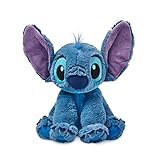
- Out of This World Comfort: Cuddle up with the beloved Experiment 626 with our medium-sized Stitch plush from Disney's Lilo & Stitch, designed for supreme softness and huggability.
- Quality Craftsmanship: This Stitch plush features detailed plush sculpting, embroidered features for added character authenticity, pieced spots, and a furry tuft, ensuring a high-quality Stitch teddy bear.
- Unique Textural Details: Equipped with soft, flexible ears, felt claws, and a distinctive tail, this medium Stitch stuffed animal provides a variety of textures for tactile exploration.
- Collectible Companion: Pair this Stitch plush with our matching Angel Plush, sold separately, to complete your Lilo & Stitch collection and bring the animated story to life in your home.
- Inspired by the Classic Film: Perfect for fans of Disney’s Lilo & Stitch, this plush toy captures the adventurous spirit of Stitch, making it one of the ideal Lilo and Stitch gifts for girls and boys.
Surprise as the Secret Weapon
Unlike many Super Bowl spots that tease themselves into exhaustion beforehand, this ad arrived with minimal warning. There was no extended countdown, no pre-release online version to blunt the impact. Viewers experienced it together, in real time, which made the moment feel communal instead of curated.
That surprise also shields the film from early skepticism. Rather than inviting months of nitpicking over realism or design, Disney introduces Stitch in motion, in character, and in control. First impressions matter, and this one lands as confident and fearless.
Built for the Internet, Engineered to Travel
Every beat of the commercial is designed to be clipped, looped, and memed. Stitch screaming into the camera, the fake broadcast interruption, the split-second reactions from stunned players—all of it translates instantly into GIFs and reaction posts. The ad doesn’t just anticipate social media; it feeds it.
What’s actually slowing this PC down?
Pick the symptom - the matching free tool is one click away.
Within minutes, timelines were flooded with freeze-frames and jokes, many from users who hadn’t thought about Lilo & Stitch in years. That’s the real win: the commercial doesn’t just sell tickets, it reactivates cultural relevance. Stitch isn’t back because of nostalgia alone—he’s back because he still breaks the internet.
What It Signals About Disney’s Live-Action Playbook
More than anything, the reaction proves Disney knows this remake can’t coast on sentimentality. By leading with chaos instead of heartstrings, the studio signals that this Lilo & Stitch won’t be a museum piece. It’s positioning the film as playful, disruptive, and slightly dangerous in a way recent live-action adaptations often weren’t.
Audience expectations shift instantly. If this is the energy Disney is willing to unleash during a Super Bowl, viewers are primed to expect a movie that embraces Stitch’s weirdness rather than sanding it down. The mayhem isn’t accidental—it’s a mission statement delivered at full volume.
Weaponized Nostalgia: How Disney Tapped Millennial Memory Without Feeling Stale
The commercial’s biggest magic trick isn’t Stitch crashing the field—it’s how instantly he feels familiar without feeling frozen in time. Disney doesn’t ask viewers to remember who Stitch was in 2002. It assumes they already know, and then lets him behave exactly like the chaotic gremlin etched into millennial memory.
Recommended Free Tools
That confidence is key. The ad treats nostalgia as a launchpad, not a crutch, using recognition to accelerate momentum rather than slowing things down for reverence.
Stitch Is the Same, the World Is Bigger
From the first second he appears, Stitch isn’t reintroduced or explained. He’s loud, destructive, mischievous, and completely uninterested in playing nice for the camera. That’s the Stitch audiences remember—an agent of chaos dropped into environments that cannot contain him.
What’s different is the scale. Placing him in the hyper-masculine, hyper-controlled spectacle of the Super Bowl amplifies his personality. The joke lands because viewers already know how Stitch behaves; the novelty comes from watching the world scramble to deal with it.
Millennial Memory Without the Winking Irony
Disney avoids the trap that sinks so many nostalgia plays: over-explaining the reference. There’s no remix of “Hawaiian Roller Coaster Ride,” no slowed-down emotional cue, no knowing nod to the audience about their childhood. The commercial trusts the emotional shorthand to do the work.
That restraint keeps the ad from feeling pandering. Instead of saying, “Remember this?” it says, “Watch this,” letting recognition happen organically and quickly—perfect for a Super Bowl audience with zero patience for sentimentality.
Chaos Over Comfort as a Strategic Choice
Most nostalgia-driven ads lean warm and safe. This one leans disruptive. Stitch doesn’t inspire awe or sweetness; he causes panic, confusion, and delight in equal measure. That choice reframes nostalgia as something alive and unpredictable rather than cozy and contained.
Rank #3

- - Official Disney Authenticity - 100% officially licensed Disney product, faithfully recreating the beloved Experiment 626 from Lilo & Stitch, perfect for collectors and fans of all ages.
- Comfortable Touch: Made of high-quality soft plush fabric, the touch is delicate and smooth, skin friendly without getting stuck. Whether held in the arms or pressed on the face, you can feel a full sense of comfort, bringing warm companionship to children and adults.
- Creative Ornament: This Stitch toy is not only a cute plush toy, but can also be used as a creative ornament to decorate homes. Whether placed on the sofa in the living room, at the bedside of the bedroom, or in the corner of the desk, they can add a touch of lively color to the room, creating a warm and interesting atmosphere.
- Exquisite Craftsmanship: Every Stitch doll is meticulously crafted, from facial features to body stitching, striving for perfection in every detail. Eyes are bright and lively, as if they can see through everything; The limbs are flexible and movable, demonstrating the lively and active characteristics, showcasing Disney's high-quality craftsmanship.
- Accompanying Growth: Stitch, as a classic cartoon character of Disney, is deeply loved by people of all ages. It symbolizes bravery, kindness, and adventurous spirit, accompanying generation after generation as they grow up, becoming an indispensable companion in their childhood, and carrying countless beautiful memories.Note: This product is vacuum-packed. Upon receipt, please gently tap it or place it in a dryer on a low heat setting to restore its fluffiness and fullness.
It also subtly resets expectations for the film. Disney isn’t promising a gentle reenactment of beloved moments. It’s promising that Stitch will still be a problem—and that the movie will let him be one.
A Memory Trigger That Scales Across Generations
While millennials are the emotional bullseye, the ad smartly plays on multiple levels. Older viewers recognize the character through cultural osmosis, while younger audiences meet him as a viral menace rather than a legacy IP. Nostalgia becomes a bridge, not a barrier.
That’s the weaponization at work. Disney isn’t selling the past—it’s using it to make Stitch feel inevitable in the present, and dangerous enough to matter in the future.
Selling the Tone, Not the Plot: What the Ad Reveals About the Live-Action ‘Lilo & Stitch’
If the Super Bowl spot had one guiding principle, it was clarity through chaos. The commercial doesn’t bother explaining who Stitch is, where he comes from, or why he’s suddenly loose on the field. It drops him into the biggest televised event of the year and lets instinct take over.
That choice tells audiences exactly what kind of movie this is aiming to be. Not a careful, reverent recreation of the animated classic, but a high-energy collision between a beloved troublemaker and a world that keeps underestimating him.
Spectacle First, Story Later
The ad’s structure is deliberately thin: Stitch escapes, Stitch runs wild, security panics, the broadcast spirals. That’s it. There’s no setup, no emotional framing, and no tease of Lilo or the film’s deeper themes of family and belonging.
Quick wins for a faster PC:
Clear out junk files and repair common Windows errorsFree Scan →Fix the driver behind crashes, sound loss and screen glitchesFind Drivers →Repair Windows errors before they cause bigger problemsFix Now →For a Super Bowl audience, that restraint is strategic. Disney understands this isn’t the place to sell heart; it’s the place to sell confidence. The spectacle reassures viewers that the live-action Stitch can hold the screen, command attention, and disrupt a massive environment without losing his identity.
Proof of Life for a CGI Icon
More than anything, the commercial functions as a screen test in public. Stitch’s animation is fluid, expressive, and tactile enough to feel physically present among real players, real turf, and real chaos. His movement isn’t overly polished or softened, preserving the feral edge that made him memorable in the first place.
That’s why the reaction was so immediate. Social media didn’t debate plot fidelity or casting choices; it latched onto how alive Stitch felt. For a character-driven remake, that’s the most important box Disney needed to check this early.
Nostalgia as Instinct, Not Instruction
The ad assumes you already know how to feel about Stitch and builds from there. It doesn’t cue nostalgia with music stings or emotional callbacks; it relies on muscle memory. The moment he appears, audiences understand the rules: he’s cute, he’s dangerous, and he’s about to make things worse.
The Tool Desk
Outbyte Driver Updater FREEFix the driver behind crashes, sound loss and screen glitchesFind Drivers →Outbyte PC Repair FREEClear out junk files and repair common Windows errorsFree Scan →That instinctive recognition fuels the mayhem. The laughter comes not just from what Stitch does, but from the anticipation of it. Disney leverages nostalgia as a reflex, not a lesson, which keeps the spot fast, modern, and widely accessible.
A Clear Signal of Disney’s Live-Action Playbook
By selling tone over plot, Disney is managing expectations early. This isn’t being positioned as a prestige reinvention or a solemn update; it’s being marketed as an event built on energy, humor, and disruption. The Super Bowl setting reinforces that ambition, framing Stitch as a pop culture force rather than a delicate childhood memory.
In one loud, unruly minute, the commercial makes its promise. The live-action Lilo & Stitch won’t ask audiences to quietly revisit the past—it’s going to crash into the present and see who’s still standing.
Rank #4

- Cute And Playful Design: Stitch's unique alien creature image, with big eyes, a round head, and a small body, presents a cute sitting posture, as if she is acting cute towards you, making people love her at first glance.
- Comfortable Touch: Made of high-quality soft plush fabric, the touch is delicate and smooth, skin friendly without getting stuck. Whether held in the arms or pressed on the face, you can feel a full sense of comfort, bringing warm companionship to children and adults.
- Creative Ornament: This Stitch toy is not only a cute plush toy, but can also be used as a creative ornament to decorate homes. Whether placed on the sofa in the living room, at the bedside of the bedroom, or in the corner of the desk, they can add a touch of lively color to the room, creating a warm and interesting atmosphere.
- Exquisite Craftsmanship: Every Stitch doll is meticulously crafted, from facial features to body stitching, striving for perfection in every detail. Eyes are bright and lively, as if they can see through everything; The limbs are flexible and movable, demonstrating the lively and active characteristics, showcasing Disney's high-quality craftsmanship.
- Accompanying Growth: Stitch, as a classic cartoon character of Disney, is deeply loved by people of all ages. It symbolizes bravery, kindness, and adventurous spirit, accompanying generation after generation as they grow up, becoming an indispensable companion in their childhood, and carrying countless beautiful memories.Note: This product is vacuum-packed. Upon receipt, please gently tap it or place it in a dryer on a low heat setting to restore its fluffiness and fullness.
Disney’s Super Bowl Playbook: Event Marketing, Cross-Generational Appeal, and Brand Confidence
Disney didn’t just buy a Super Bowl slot; it staged a cultural interruption. The commercial is designed to feel like it’s hijacking the broadcast itself, blurring the line between game and ad in a way that makes Stitch’s chaos feel spontaneous. That illusion of unpredictability is the point, transforming a familiar marketing beat into something that feels uncontainable.
Windows Errors? Fix Them Before They Spread
Repair common Windows errors and clear accumulated junk for a smoother, more stable PC - no reinstall needed.Free scan · no reinstallOutdated Drivers Are Slowing You Down
One free scan finds every outdated or missing driver and matches the right update for your exact hardware.Free scan · exact hardware matchThis is event marketing in its purest form. Disney understands that the Super Bowl isn’t about information delivery; it’s about dominance of attention. By letting Stitch physically invade the field, the brand signals that this movie is meant to be loud, communal, and talked about immediately.
Selling to Everyone Watching the Same Screen
The brilliance of the spot lies in how little it asks of the audience. For longtime fans, Stitch is instantly recognizable, a walking bundle of nostalgia with sharp teeth and bad intentions. For younger viewers or casual fans, he registers as pure spectacle: a mischievous creature tearing through a hyper-controlled sports environment.
That dual readability is essential. Disney isn’t marketing this film only to people who grew up with Lilo & Stitch; it’s positioning the character as evergreen, capable of landing the same joke across generations. The Super Bowl, one of the last true all-ages, all-demographics TV events, becomes the perfect testing ground for that universality.
Confidence Over Explanation
What’s striking is what the commercial doesn’t do. There’s no story setup, no emotional framing, no attempt to explain who Stitch is or why he matters. Disney assumes the character can carry the moment on instinct alone, and that confidence is loud.
That kind of restraint suggests a studio comfortable with its IP. Instead of over-selling the live-action angle or reassuring audiences about changes, Disney lets the character’s presence do the work. The message is clear: Stitch doesn’t need defending or reintroducing; he just needs space to cause trouble.
A Signal to the Industry and the Audience
Dropping this kind of ad during the Super Bowl also sends a message beyond fans. It tells exhibitors, partners, and competitors that Disney sees Lilo & Stitch as a major theatrical player, not a cautious remake testing the waters. You don’t spend this kind of marketing capital unless you believe in what’s coming next.
For audiences, the takeaway is simpler but just as powerful. This live-action Lilo & Stitch is being framed as a must-see moment, not a nostalgia exercise. Disney isn’t whispering about it; it’s letting Stitch sprint onto the field and daring everyone to look away.
Independent reader supportYour contribution helps us test, update, and keep practical guides available for everyone.Fan Reaction vs. Franchise Anxiety: What the Commercial Did to Expectations
The immediate reaction online was chaos in the best way. Social feeds filled with frame-by-frame breakdowns, memes of Stitch interrupting the game, and genuine surprise that Disney let the character be this feral on football’s biggest stage. For many viewers, the commercial didn’t just land; it detonated, cutting through Super Bowl ad clutter with anarchic energy.
Do these 3 things before closing this tab:
1Repair Windows errors before they cause bigger problems2Fix the driver behind crashes, sound loss and screen glitches3Clear out junk files and repair common Windows errorsBut underneath the excitement, a familiar tension quickly surfaced. This is still a live-action Disney remake, a category that now comes with built-in skepticism. The ad didn’t erase that anxiety, but it did redirect it.
The Crowd-Pleasing Version of Stitch Won the Night
Fans responded most strongly to how unapologetically “classic” Stitch felt. The movement, the chaos, the lack of polish all echoed the character’s original appeal as a lovable problem, not a sanitized mascot. The fact that the commercial prioritized mayhem over sentimentality reassured viewers that Disney understands what made Stitch work in the first place.
That reassurance matters. Many live-action remakes struggle because they overcorrect, sanding down edges in pursuit of broader appeal. This ad did the opposite, leaning into Stitch’s disruptive personality as the selling point rather than something to soften.
Anxiety Didn’t Disappear, It Just Shifted
Still, the commercial’s confidence sparked a different kind of concern. By avoiding Lilo entirely and sidestepping any emotional context, Disney invited questions about balance. Fans began wondering whether the full film would preserve the heart of Lilo & Stitch, or if spectacle would dominate the conversation.
Free tools Windows power users keep installed
One-click scans. No signup required.
Best Value

- This product has polybag packaging that may reveal what's inside and cannot be hidden.
- Official Disney Lilo & Stitch Plush Toy – Authentic, officially licensed Stitch plushie from the beloved Disney’s Lilo & Stitch universe, perfect for fans and collectors alike.
- Huggably Soft Plush Fabric – Made with premium, soft deluxe materials that are gentle to touch and ideal for cuddles, nap time, or playtime adventures.
- Charming Tropical Design – Features Stitch in colorful tropical shorts, capturing his mischievous personality and island vibes.
- Perfect Size for Kids & Travel – At approximately 7.5 inches tall, this lovable stuffed animal fits easily in backpacks, car seats, and bedrooms — great for on-the-go fun (also available in other looks, each sold separately).
That tension is part of the remake discourse now. Audiences want proof that Disney can deliver both chaos and sincerity, and the Super Bowl spot only showed one side of that equation. It thrilled viewers, but it also raised expectations for what still needs to be shown.
Reframing the Conversation Before It Could Turn Sour
Strategically, the commercial did something crucial: it shifted the narrative away from fear and toward curiosity. Instead of asking, “Will this ruin my childhood?” audiences are now asking, “How far are they willing to go with this?” That’s a much healthier place for Disney to be.
By letting Stitch loose without explanation, Disney effectively reset the baseline. The live-action Lilo & Stitch is no longer being discussed as a cautious reinterpretation, but as a potential crowd-pleaser with teeth. The pressure is still there, but now it’s fueled by anticipation rather than dread.
What This Moment Signals for Disney’s Live-Action Strategy—and the Movie’s Box Office Future
The Super Bowl spot didn’t just sell a movie. It quietly signaled a course correction for Disney’s live-action playbook, one that prioritizes energy, personality, and cultural impact over reverent recreations. Letting Stitch hijack the field felt less like a remake announcement and more like a brand flex.
A Shift From Faithful Recreation to Event-Driven Marketing
In recent years, Disney’s live-action campaigns have leaned heavily on nostalgia as reassurance. This time, nostalgia was the weapon, not the safety net. Stitch’s chaotic sprint across the Super Bowl turf wasn’t about recreating a scene from the animated film; it was about reminding audiences why this character became a phenomenon in the first place.
That distinction matters. Instead of asking viewers to compare versions, Disney invited them to experience Stitch as a disruptive force again. It reframed the movie as an event rather than an obligation, which is exactly what live-action remakes have struggled to achieve lately.
Why the Commercial Translated to Immediate Buzz
The ad worked because it understood spectacle in a modern context. Dropping Stitch into one of the most watched broadcasts of the year, without explanation or emotional setup, turned him into a meme-ready agent of chaos. Viewers didn’t need context; the visual language did the work.
Social media reactions followed instantly, not with debates about accuracy, but with laughter, surprise, and genuine delight. That kind of response is gold in a landscape where attention is fragmented and hype is often manufactured rather than earned.
Box Office Implications: A Strong Opening, If Disney Sticks the Landing
From a box office perspective, this was a savvy early move. The commercial didn’t sell tickets directly, but it planted a clear message: this version of Lilo & Stitch aims to be fun first. That positioning is likely to drive strong opening-weekend curiosity, especially among millennials who grew up with the original and younger audiences meeting Stitch for the first time.
The challenge now is follow-through. Future marketing will need to reveal Lilo, the emotional core, and the film’s heart without undercutting the anarchic tone that just won over viewers. If Disney can balance those elements, the film could escape the diminishing-returns narrative that has followed some recent remakes.
A Canary in the Coal Mine for Disney’s Larger Strategy
More broadly, this moment may signal how Disney plans to recalibrate its approach across the live-action slate. Rather than promising fidelity, the studio appears willing to promise feeling: humor, unpredictability, and personality. Stitch crashing the Super Bowl wasn’t subtle, but subtlety wasn’t the point.
If Lilo & Stitch succeeds, it could become a template for future remakes that lean into character-driven spectacle instead of cautious homage. In that sense, this wasn’t just a commercial that caused mayhem on the field. It was Disney testing how much chaos audiences are willing to cheer for—and discovering that, at least for Stitch, the answer is quite a lot.
Quick Recap
Product prices and availability are accurate as of the date/time indicated and are subject to change. Any price and availability information displayed on Amazon at the time of purchase will apply.

