Quick wins for a faster PC:
Scan for outdated or missing drivers - takes under a minuteDriver Scan →Repair Windows errors before they cause bigger problemsFix Now →Fix the driver behind crashes, sound loss and screen glitchesFind Drivers →Both may be true: Kolkata’s Durga Puja has a long history of changing public forms, while the way any one person experiences it changes with time. The festival remains a religious observance and a community celebration; its public face includes elaborate pandals, art, music, crowds and increasingly explicit attention to accessibility. The official record documents those forms, but it cannot tell us whether a particular person’s revelry feels different because Puja changed, because they did, or because memory and circumstance have shifted.
What has stayed at the heart of Durga Puja?
Durga Puja commemorates the goddess Durga’s victory over Mahishasura. In Kolkata, worship and public celebration coexist: families and puja committees organize observances, while priests, drummers, artists and craftspeople help carry the living tradition forward. West Bengal Tourism describes ritual, community gatherings, cultural programming and immersion as parts of the festival, not as alternatives to its religious meaning. West Bengal Tourism and Incredible India both present the festival through that combination of devotion and public culture.
UNESCO inscribed Durga Puja in Kolkata on its Representative List of the Intangible Cultural Heritage of Humanity in December 2021. Its decision describes a historical movement from family pujas toward public community pujas and calls the festival a meeting ground for religion, art, artists and designers. That account establishes that the way Puja is organized and seen in public has evolved; it does not establish that every neighborhood, family or worshipper has experienced the change in the same way. UNESCO’s inscription decision is a record of living heritage, not a measurement of how the festival’s atmosphere has changed over recent decades.
Why can the public celebration feel larger or different?
Public pujas make the festival visible well beyond the place of worship. West Bengal Tourism describes months of preparation for elaborate, often themed pandals and lighting, alongside cultural programs, shared food, gatherings and immersion processions. That scale offers one explanation for why someone returning to Kolkata—or recalling childhood Puja—may notice a different balance between ritual, art, social life and spectacle.
#1 Best Overall

- Beautiful wall frame featuring Nav Durga Maa, symbolizing strength, protection, and divine blessings in Hindu tradition.
- Perfect for placing in mandir, prayer room, meditation space, or living room for spiritual decoration.
- High-quality multicolor artwork enhances the sacred atmosphere of your home temple or altar.
- Large 12 x 18 inch frame ideal for wall decoration in puja rooms, temples, and spiritual spaces.
- Great for Navratri, Durga Puja, Diwali, housewarming ceremonies, weddings, and religious celebrations.
The festival’s duration can also be described in more than one way. West Bengal Tourism frames it as a ten-day observance, including the homecoming symbolism and preparation that lead into the central celebration; the Government of India’s tourism page focuses on the principal days, Shashthi through Dashami. These accounts refer to different spans rather than necessarily contradicting each other. West Bengal Tourism and Incredible India provide those respective framings.
Crowd movement is part of the contemporary experience, but a single transport figure should not be mistaken for a count of festivalgoers or evidence of a trend. A 2025 accessibility standard operating procedure from UNESCO, UN in India and IIT Kharagpur reports that Kolkata Metro carried over 4.1 million passengers during the six-day Mahapanchami-to-Vijayadashami period in 2023, attributing the figure to a Times of India report. This is metro ridership over a specified period, not unique visitors to pandals and not a comparison with earlier years. The SOP uses the figure to situate the challenge of access amid heavy movement.
Rank #2

- Premium Durga Maa Idol: Beautifully crafted idol with an elegant metal finish, perfect for home mandir, office décor, and daily puja.
- Ideal for Home & Temple: Suitable for temple rooms, living rooms, shelves, study tables, meditation corners, and festive decoration.
- Elegant Decorative Piece: Detailed craftsmanship makes this Durga Maa statue a great addition to Navratri décor, gifting, and spiritual décor themes.
- Perfect Gift Choice: Thoughtful gift for housewarming, festive occasions, birthdays, anniversaries, and special celebrations.
- Durable & Easy to Place: Lightweight, sturdy, and designed to fit seamlessly into any spiritual or decorative setup.
What does “different” mean for the person experiencing it?
There is no longitudinal evidence here that can settle whether an individual’s feeling of revelry has changed because of the festival or because of changes in their own life. The comparison is still worth making, provided it stays personal rather than becoming a claim about everyone or every generation.
- Devotion and ritual: What did worship, family observance or the story of Durga’s victory mean to you then, and what draws your attention now?
- Public art and spectacle: Do you remember pandals chiefly as places to visit, as works of art, as gathering places, or in some other way? What stands out today?
- Movement and comfort: How do crowds, noise, lighting, distance and the effort of getting from one place to another shape the experience?
- Your own circumstances: Consider the people accompanying you, your time and energy, and what you expect the festival to feel like.
Memory is not a neutral recording of a past festival, and present experience is not just a verdict on the festival. A changed sense of joy, fatigue, wonder or belonging may come from several things at once. It is reasonable to hold both possibilities open without diagnosing your response as mere nostalgia or treating it as proof of a universal cultural shift.
Free tools Windows power users keep installed
One-click scans. No signup required.
Rank #3
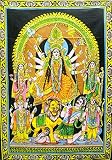
- Majestic Depiction of Goddess Durga: Features the fierce and divine Goddess Durga slaying Mahishasura, symbolizing the victory of good over evil. A powerful addition to any sacred or decorative space.
- Handcrafted Cotton Batik Design: Made using traditional batik techniques on high-quality cotton, showcasing vibrant colors and intricate patterns.
- Decorative Sequins Sitara Embellishment: Accentuated with sparkling sequins sitara work, adding a festive and elegant touch to the artwork.
- Large Size for Versatile Use: Measuring 30"x40" inches, perfect for wall decor in living rooms, puja rooms, offices, or as a centerpiece for festivals and celebrations.
- Cultural and Spiritual Significance: An inspiring representation of Goddess Durga’s power and grace, ideal for Navratri, Durga Puja, or as a spiritual gift for loved ones.
Is access changing alongside the spectacle?
More attention to accessibility is one documented development in how public Puja is being discussed and organized. The 2025 SOP identifies barriers that some visitors encounter, including uneven ground, steps, crowds, low lighting and loud sound. In 2025, UNESCO and UN in India, working with the Government of West Bengal and IIT Kharagpur, introduced guidance for organizers. It covers physical infrastructure, accessible communication, inclusive programming, emergency preparedness, volunteer training and attitudes. The guidance was developed with disability organizations and piloted at select pandals in Delhi and Kolkata in 2025.
UNESCO reported on 5 October 2026 that the initiative had entered its second year and that organizers in Kolkata and the New Delhi area received training. This is an initiative, not evidence that every pandal has adopted the guidance or that access barriers have disappeared. Its significance is that the public celebration’s design and participation are being addressed more explicitly. UNESCO’s 2026 update describes the work.
Rank #4
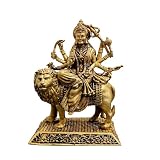
- Handcrafted Brass Durga Statue – Beautifully detailed 3-inch idol weighing 130g, capturing the divine form of Maa Durga.
- In places of worship and temples.
- For Vastu Dosh Nivaran in home and office.
- During festivals like Navratri and Durga Puja.
- As a gift on auspicious occasions.
So, did the festival change—or did you?
The evidence supports a both-and answer. Durga Puja’s public form has evolved from family observances to community celebrations that bring religion, art and public gathering together; today’s themed installations, crowd movement and accessibility work are part of that visible life. The sources do not measure how those changes have altered the feeling of revelry for any one person, nor do they establish a single direction of change across the city.
Your own answer may be found in the contrast between what you remember and what you notice now: the ritual, the pandals, the crowds, the people beside you, or the ease—or difficulty—of taking part. The feeling can belong to both the festival and the person experiencing it.
Quick Recap
Best Value

- PACKAGE CONTENT: It contains 40 stickers, 2 inches in diameter with 4 unique designs.
- RICH DESIGNS: The sticker set has 4 different designs.
- EASY TO PEEL AND STICK: The stickers are die-cut and are very easy to peel and stick on any smooth surface.
- MATERIAL USED: High resolution, multicolored print on matte finish self-adhesive paper.
- USAGE: Perfect to jazz up your party favors, gift wrapping, party decor, arts and crafts, making greeting cards, scrapbooking, sealing envelopes, and practicing gratitude.
Product prices and availability are accurate as of the date/time indicated and are subject to change. Any price and availability information displayed on Amazon at the time of purchase will apply.




