The Tool Desk
Outbyte PC Repair FREERepair Windows errors before they cause bigger problemsFix Now →Outbyte Driver Updater FREEScan for outdated or missing drivers - takes under a minuteDriver Scan →From the moment Jumanji: Welcome to the Jungle hit theaters in 2017, Karen Gillan’s Ruby Roundhouse stood out — and not just because she quickly became one of the film’s breakout characters. Her costume, a cropped top paired with short shorts and combat boots, became an instant talking point, sparking debates that followed the film well beyond its opening weekend. What was framed onscreen as a playful video game trope landed more awkwardly in a real-world cultural moment increasingly attentive to representation, gaze, and who blockbuster spectacle is really for.
The controversy wasn’t about Gillan’s performance, which was widely praised for balancing physical comedy, action credibility, and character growth. Instead, it centered on how Ruby was visually presented compared to her male counterparts, whose avatars skewed practical, bulky, and traditionally heroic. As new sequel set photos circulate online showing Ruby Roundhouse in a familiar outfit once again, those early conversations have resurfaced, inviting a fresh look at how franchises carry visual DNA forward — and whether they should.
What makes the discussion endure is that Jumanji itself positioned the costume as self-aware satire, a joke baked directly into the script. But intent and impact are rarely the same thing, especially as audience expectations evolve faster than long-running franchises can recalibrate.
A Video Game Joke That Didn’t Fully Translate
Within the logic of the film, Ruby’s outfit is explicitly explained as a result of outdated, male-centric video game design. The characters themselves comment on its impracticality, and Gillan’s Ruby spends much of the movie learning to weaponize that discomfort into confidence and control. In theory, the costume critique was already built in.
Recommended Free Tools
#1 Best Overall
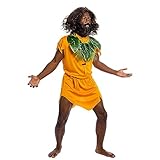
- Detailed Ensemble: Comes with a green leaf collar, a meticulously crafted wig and beard, and the iconic orange suit.
- Jungle Game Nostalgia: Alan "The Jungle Game Man" Parrish complete set, capturing the essence of the beloved character.
- Stepping into Adventure: Perfect for Halloween, cosplay events, or any gathering where a touch of jungle magic is desired.
- High-Quality Craftsmanship: Each element of the set, from the collar to the suit, promises durability and comfort.
- Transportive Experience: Don the ensemble and feel the thrilling allure of the wild, mysterious game world.
In practice, however, the self-awareness didn’t fully shield the design from criticism. For many viewers, the visual contrast remained stark: Ruby’s exposed skin read less like satire and more like a familiar Hollywood compromise, where commentary still arrives wrapped in spectacle. That tension — between narrative justification and marketing imagery — is exactly why the costume has never stopped being part of the Jumanji conversation, and why its return now feels less like nostalgia and more like a litmus test for how much the franchise is willing to evolve.
A Brief History of the Backlash: Fan Criticism, Gender Politics, and Studio Responses
From Opening Weekend Discourse to Ongoing Debate
The backlash around Ruby Roundhouse’s costume ignited almost immediately after Jumanji: Welcome to the Jungle hit theaters in 2017. Social media and fan forums zeroed in on the disparity between Ruby’s cropped top and short shorts and the male avatars’ utilitarian gear, framing it as another example of blockbuster design lagging behind cultural conversations about the male gaze. What might once have passed as harmless genre shorthand now landed in a climate far more attuned to how women’s bodies are framed onscreen.
Importantly, much of the criticism came from viewers who otherwise enjoyed the film. The Jumanji reboot was widely praised for its humor, ensemble chemistry, and clever updating of the original concept, which made the costume debate feel less like outrage bait and more like a genuine point of friction. Fans weren’t rejecting the movie; they were interrogating one of its most visible creative choices.
Karen Gillan’s Perspective and the Limits of Intent
Karen Gillan herself addressed the controversy early and often, emphasizing that Ruby’s arc was about reclaiming agency within a deliberately absurd system. She pointed out that the film explicitly calls attention to the outfit’s impracticality and that Ruby ultimately becomes one of the most capable fighters in the game. For Gillan, the costume was part of a larger joke about how female characters are often designed in video games.
That explanation resonated with some audiences, but not all. The recurring critique was that acknowledging the problem doesn’t necessarily neutralize it, especially when marketing materials and set photos isolate the imagery from its narrative context. Intent, as many critics noted, doesn’t always outweigh impact, particularly in a franchise with global reach and a wide age demographic.
Studio Silence, Subtle Tweaks, and Marketing Reality
Sony never issued a formal statement addressing the backlash, opting instead for a quieter approach. In 2019’s Jumanji: The Next Level, Ruby’s look was largely unchanged, reinforcing the idea that the studio viewed the costume as settled canon rather than an evolving design. While some fans hoped for a visual update that reflected shifting expectations, the sequel doubled down on continuity.
Marketing played a key role in keeping the conversation alive. Posters, trailers, and promotional stills often highlighted Ruby’s outfit without the self-aware dialogue that contextualized it onscreen. That disconnect fueled the perception that, satire or not, the costume was still being used as a familiar selling tool.
Why the Set Photos Matter Now
The newly surfaced sequel set photos have reignited the debate precisely because they suggest a conscious choice to maintain Ruby’s original look. In an era when franchises regularly recalibrate character designs in response to audience feedback, that decision reads as both a commitment to visual continuity and a reluctance to revisit an unresolved criticism. For some fans, it signals confidence; for others, complacency.
What’s different now is the cultural backdrop. Conversations about representation, function-driven costume design, and who blockbuster imagery serves have only intensified since 2017. The return of Ruby Roundhouse’s controversial outfit isn’t just a callback; it’s a reminder that franchise history carries baggage, and every sequel inherits not just characters, but the debates attached to them.
The New Sequel Set Photos: What’s the Same, What’s Changed, and Why It Matters
The first wave of set photos tells a familiar story before fans even zoom in. Karen Gillan’s Ruby Roundhouse appears, once again, in the cropped top, short shorts, fingerless gloves, and combat boots that defined her avatar in the previous films. At a glance, it’s a near-identical visual beat, one that immediately confirms Sony’s commitment to continuity over reinvention.
That familiarity is precisely what reignited the conversation. In isolation, the images echo the same promotional snapshots that circulated in 2017, detached from the satirical framing that justified the costume within the film’s logic. For longtime critics, the question resurfaced instantly: if the franchise understands the issue, why does it keep presenting the same imagery?
What Hasn’t Changed: Ruby as a Fixed Visual Icon
The most striking takeaway is how little Ruby’s design has evolved. The silhouette, exposed midriff, and overtly sexualized proportions remain intact, reinforcing the idea that the character has been locked into a specific visual identity. In an industry where even subtle redesigns often signal growth or responsiveness, the lack of adjustment feels deliberate.
Outdated Drivers Are Slowing You Down
One free scan finds every outdated or missing driver and matches the right update for your exact hardware.Free scan · exact hardware matchWindows Errors? Fix Them Before They Spread
Repair common Windows errors and clear accumulated junk for a smoother, more stable PC - no reinstall needed.Free scan · no reinstallRank #2

- Safari Themed Style: this woman's safari costume set wonderfully combines iconic hunting parts with modern style to create a safari inspired atmosphere; With its khaki color and leopard print theme, wearing these accessories will definitely make your costume the most eye catching costume at the Halloween party, allowing you to stand out from the crowd
- Women's Safari Costume Set: the safari costume clothes for women includes 1 bucket hat, 1 leopard print square scarf and 1 pair of binoculars; This safari costume allows you to prepare for role playing for Halloween or zookeeper themed events, transforming into a fashionable and special character to shock everyone at the party
- Stylish Hunting Hat: The safari hat has a circumference of approximately 23.6 inches/60 cm. Made from a cotton-polyester blend, it is breathable, lightweight, and comfortable, providing better protection for your face and neck from the sun. It features an adjustable chin drawstring to ensure a snug fit. Rust-resistant buttons on both sides allow it to be easily transformed into a cowboy hat or a hunting hat
- Exquisite Square Headband: this leopard neck scarf measures about 27.5 x 27.5 inches/ 70 x 70 cm, made of polyester and satin material, smooth touch and shiny; Leopard pattern, exquisite and fashionable, not only suitable for hunting dress, but also suitable for daily life, parties, weddings, travel, ceremonies and any important events, a wonderful gift for women, family and friends; Note: hand wash only
- Various Applications: this safari outfit is suitable for women to attend Halloween parties, role playing activities, stage performances, costume parties, dances, retro parties, festivals, theme birthday parties and other occasions, allowing you to stand out from the crowd; At the same time, you can also share it with your friends as a gift set
From a franchise perspective, this consistency has value. Ruby Roundhouse has become one of Jumanji’s most recognizable visual elements, and altering her look too drastically risks disrupting brand cohesion. The problem, critics argue, is that what reads as iconography to marketers can still read as stagnation to audiences expecting progress.
What Has Changed: Subtle Tweaks and Contextual Clues
That said, the set photos aren’t a perfect carbon copy. Observant fans have pointed out slightly more practical tailoring, marginally sturdier fabric choices, and a less stylized finish to the overall outfit. These are not headline-grabbing changes, but they suggest an attempt, however modest, to ground the costume in function rather than pure spectacle.
There’s also a noticeable shift in how Gillan carries the character. Ruby’s posture, physicality, and action-oriented framing in the photos lean more toward capability than caricature. While the outfit remains the same, the emphasis appears to be on what Ruby does, not just how she looks.
Why These Photos Hit Differently in 2026
The timing is what gives these images added weight. Since The Next Level, Hollywood has become more vocal about costume design as storytelling rather than default eye candy, especially in PG-13 franchise filmmaking. Audiences are more attuned to how characters are framed outside the narrative, particularly when marketing materials circulate without context.
Set photos live in that gray area between production reality and promotional messaging. They are unofficial, but they shape perception, and the return of Ruby’s look in this raw, unfiltered form underscores how easily old debates resurface. The images don’t introduce a new controversy so much as remind fans that the original one was never fully resolved.
Continuity vs. Course Correction
Ultimately, the new photos spotlight a familiar Hollywood tension. Franchises thrive on recognizability, but they also operate in a cultural landscape that expects evolution. By keeping Ruby Roundhouse visually consistent, the Jumanji sequels prioritize internal logic and brand stability, even as external expectations continue to shift.
Whether that choice reads as confidence or inertia depends on the viewer. What’s undeniable is that these set photos confirm the conversation isn’t going away, and that in modern blockbuster culture, what happens between films can matter just as much as what happens onscreen.
Karen Gillan’s Own Perspective on the Costume and Character Evolution
For all the debate surrounding Ruby Roundhouse’s look, Karen Gillan has never positioned herself as a passive participant in the conversation. Since the release of Welcome to the Jungle, she has consistently framed the costume as an extension of the film’s central joke: an ordinary teenage girl trapped in the hyper-sexualized body of a video game avatar. In Gillan’s view, the discomfort many viewers feel is not accidental but baked into the satire.
That perspective becomes especially relevant now, as unfiltered set photos strip away the narrative context that originally justified the design. Gillan has previously acknowledged that still images, removed from story and tone, can flatten intention and amplify surface-level readings. What plays as commentary in motion can read as contradiction in a single frame.
Leaning Into the Joke Without Letting It Define the Character
Gillan has often emphasized that Ruby Roundhouse is not meant to be aspirational in the traditional action-hero sense. Instead, the character exists as a critique of how female avatars are built in gaming culture, exaggerated to the point of absurdity. The costume, by design, clashes with Martha’s internal discomfort, and that tension is where Gillan has said much of Ruby’s humor and humanity come from.
At the same time, Gillan has been candid about how performance choices became her way of reclaiming agency. As the films progressed, she focused on altering Ruby’s physicality, combat style, and emotional presence, subtly shifting attention away from the outfit and toward competence. The costume stayed static, but the character inside it did not.
Why Gillan Hasn’t Publicly Pushed for a Redesign
Notably, Gillan has never led a public campaign to change Ruby’s look, even as discourse around representation has evolved. That restraint appears intentional. She has suggested in interviews that rewriting the costume entirely could undermine the original premise and dilute the satire the films were built on.
Rank #3

- 【3D Camouflage for Hunting】Layered ghillie yarn helps break up your outline in woods, grass, and brush for hunting, wildlife photography, airsoft, paintball, and outdoor concealment.
- 【Complete 5-Piece Camo Set】Includes ghillie jacket, pants, hood, gun wrap, and storage bag for full-body concealment, gear blending, and easy carrying in the field.
- 【Lightweight Breathable Mesh】Polyester lining and polypropylene yarn create a breathable camouflage suit that can be worn over regular clothes or hunting layers.
- 【Adjustable Fit for Adults & Youth】Button-front jacket and drawstring waist make the ghillie suit easy to put on, remove, and adjust over base layers for different body types.
- 【Field Care & Storage Tips】Shake and fluff before first use, gently remove leaves and debris after outdoor use, hand wash only, and store in the included bag.
From an industry standpoint, Gillan’s stance reflects a broader understanding of franchise storytelling. In long-running IP, actors often navigate a delicate balance between personal perspective, narrative consistency, and audience expectation. Pushing too hard against a recognizable visual can feel less like progress and more like revisionism.
A Performance-Based Evolution, Not a Visual One
If the new set photos reignite debate, they also highlight how Gillan’s evolution with the character has largely happened off the mannequin. Ruby Roundhouse in later installments is more assertive, more emotionally grounded, and less defined by the joke that introduced her. That evolution is subtle, but it’s there for viewers willing to look past the hemline.
Gillan’s approach suggests a belief that representation isn’t always solved through redesign alone. Sometimes it’s addressed through intention, framing, and the cumulative weight of performance. In that sense, the return of the costume doesn’t erase progress; it challenges audiences to consider where that progress is actually happening.
Franchise Continuity vs. Cultural Shifts: Why Jumanji Is Reopening This Debate Now
The reappearance of Ruby Roundhouse’s outfit in new Jumanji sequel set photos isn’t just a wardrobe callback; it’s a reminder of how long this franchise has existed across shifting cultural expectations. What played as a pointed joke in 2017 now lands in a different media climate, one shaped by louder conversations around gaze, agency, and how blockbuster films frame female characters.
Do these 3 things before closing this tab:
1Fix the driver behind crashes, sound loss and screen glitches2Repair Windows errors before they cause bigger problems3Scan for outdated or missing drivers - takes under a minuteJumanji is uniquely positioned in this debate because its humor relies on exaggeration and self-awareness. The costume was always meant to be absurd, but satire ages differently than spectacle. As audiences become more attuned to intent versus impact, the visual language of older jokes inevitably comes under new scrutiny.
The Weight of Visual Consistency in Long-Running IP
From a production standpoint, maintaining Ruby’s look isn’t accidental. Franchise films thrive on recognizability, and costume continuity is a powerful shorthand for character identity, especially in sequels released years apart. Changing the outfit too drastically risks breaking that visual contract with audiences who associate Ruby Roundhouse with a specific, instantly readable image.
Hollywood has learned, sometimes the hard way, that redesigns can provoke backlash just as quickly as they can invite praise. In an era where fans dissect every frame of set photos, continuity can feel like the safer option, even when it reopens unresolved conversations.
Why the Conversation Feels Louder This Time
What’s different now is context. Since The Next Level, industry standards around representation have continued to evolve, and viewers are less willing to separate intention from execution. The return of the costume arrives after years of discourse about how female action heroes are framed, making the visual impossible to view in isolation.
What’s actually slowing this PC down?
Pick the symptom - the matching free tool is one click away.
Social media also accelerates these debates. A single paparazzi photo can trigger a larger cultural reckoning, especially when it taps into a preexisting point of contention. The outfit hasn’t changed, but the audience interpreting it has.
Satire, Legacy, and the Limits of Reinterpretation
Jumanji’s creative team appears to be betting on legacy context to carry the joke forward. The assumption is that audiences understand Ruby’s look as part of a larger comedic framework, one that critiques avatar logic rather than endorsing it. But satire depends on shared understanding, and that understanding can erode over time.
This tension underscores a broader industry challenge: how to honor the DNA of a franchise without freezing it in the cultural moment that created it. Jumanji reopening this debate isn’t a misstep so much as an inevitability. When long-running IP collides with evolving values, even familiar costumes can become flashpoints again.
Fan Reactions in 2026: Nostalgia, Frustration, and the Split Online Discourse
The reaction to Karen Gillan’s Ruby Roundhouse costume returning has been immediate and predictably polarized. Within hours of the set photos surfacing, timelines filled with side-by-side comparisons, memes, and think pieces revisiting a debate many assumed the franchise had already settled. What’s striking isn’t just the disagreement, but how generational and values-driven the split feels in 2026.
Quick wins for a faster PC:
Fix the driver behind crashes, sound loss and screen glitchesFind Drivers →Repair Windows errors before they cause bigger problemsFix Now →Rank #4

- Package: you will receive a set of safari themed costume women, including a khaki overalls, a leopard print scarf, a compass with a black rope, a black toy telescope with a black lanyard, and a mountaineering hat; This outfit instantly outlines the image of a handsome and elegant female explorer
- Adjustable Hat: the durable cotton hunting hat features an adjustable chin strap and metal ventilation grommets, making it an essential accessory for adventurers and providing comfort in warm weather
- Design: the complements the khaki overalls, adding a layered look; The leopard print scarf adds a touch to the rugged hunting look; Every accessory has been meticulously designed, showcasing refined taste in every detail
- Practicality: safari themed accessories is classic "huntress/explorer" character is always a party favorite; This outfit ideally captures the character's characteristics, making you the center of attention that night; It's time saving and effortless, yet incredibly effective
- Wide Range of Uses: this is not just a set of zookeeper costume adult but also a styling toolbox; From weekend outings and music festivals, to theme parties, it can easily cope with a variety of occasions, realizing the efficient wardrobe concept of one piece of clothing for multiple wears
For some fans, the costume’s return reads as comfort food. It signals that Jumanji still knows what it is, and that the sequel isn’t interested in reinventing itself at the expense of familiarity. Others see that same choice as a refusal to evolve, particularly when the industry around it has clearly moved on.
The Nostalgia Defense
Supporters of the costume often frame their argument around tone and intent. Ruby Roundhouse, they argue, was always designed as a satirical exaggeration, a visual punchline about video game logic rather than a serious attempt at sexualization. In that reading, changing the outfit would undercut the joke and flatten a character whose humor depends on contrast.
There’s also a franchise loyalty at play. Jumanji’s modern success has been built on chemistry, repetition, and recognizable beats, and fans invested in that formula are wary of changes that feel reactive. To them, the return of the costume isn’t tone-deaf; it’s consistent.
Why the Frustration Hasn’t Gone Away
On the other side, critics argue that intent doesn’t erase impact. Even if the costume began as satire, its visual language still participates in familiar tropes about female avatars, especially when compared to the more practical designs worn by male characters. In 2026, audiences are more attuned to how often irony becomes indistinguishable from endorsement on screen.
Free tools Windows power users keep installed
One-click scans. No signup required.
This group also points to missed opportunities. With years between sequels, expectations naturally shift toward growth, not just narrative but visual evolution. For these viewers, seeing the costume unchanged feels less like continuity and more like creative inertia.
Algorithm Amplification and the Modern Fandom Cycle
The intensity of the debate has been magnified by how discourse functions now. Clips, screenshots, and hot takes circulate faster than full context, turning a single image into a referendum on Hollywood’s priorities. What might once have been a niche fandom argument now plays out across platforms with vastly different expectations and sensitivities.
That amplification creates a feedback loop. Studios observe the noise, fans interpret silence as intention, and the conversation escalates before the film itself has a chance to speak. In that sense, the Ruby Roundhouse costume isn’t just a design choice anymore; it’s a case study in how legacy franchises navigate an audience that’s louder, sharper, and less unified than ever.
Independent reader supportYour contribution helps us test, update, and keep practical guides available for everyone.Hollywood’s Broader Struggle With Character Design and Representation in Blockbusters
The renewed focus on Karen Gillan’s Ruby Roundhouse costume doesn’t exist in a vacuum. It taps into a long-running tension in blockbuster filmmaking, where character design is expected to satisfy nostalgia, marketability, and evolving social expectations all at once. When those priorities collide, wardrobe becomes more than fabric; it becomes a statement, intentional or not.
Free tools Windows power users keep installed
One-click scans. No signup required.
For studios, the challenge is compounded by scale. Tentpole franchises like Jumanji aren’t just telling stories; they’re maintaining brands built across films, merchandise, theme park attractions, and global audiences with vastly different cultural norms. A costume tweak that reads as progress to one segment can feel like betrayal to another.
When Iconography Becomes Inertia
Hollywood has long relied on visual shorthand to establish characters quickly, especially in ensemble-driven spectacles. Once a look becomes iconic, changing it risks disrupting audience recognition, even if the original design was shaped by outdated assumptions. The result is a kind of aesthetic inertia, where familiar imagery is preserved less because it’s ideal and more because it’s safe.
Ruby Roundhouse sits squarely in that tradition. Her outfit is instantly recognizable, visually distinct, and tied to the character’s introduction. But its persistence also highlights how rarely female character designs are allowed to evolve on the same terms as their male counterparts, whose costumes often gain layers of practicality or narrative justification over time.
Representation in the Age of Franchise Longevity
Modern franchises don’t just span years; they span cultural eras. What played as satire or harmless exaggeration in the late 2010s can feel misaligned in the mid-2020s, especially as conversations around representation have become more nuanced and mainstream. Audiences now expect long-running series to reflect that growth, not just in dialogue or plot, but in visual language.
Windows Errors? Fix Them Before They Spread
Repair common Windows errors and clear accumulated junk for a smoother, more stable PC - no reinstall needed.Free scan · no reinstallOutdated Drivers Are Slowing You Down
One free scan finds every outdated or missing driver and matches the right update for your exact hardware.Free scan · exact hardware matchBest Value

- SAFARI ADVENTURE ESSENTIAL KIT: All-in-one explorer set includes a khaki packable safari hat, realistic green plastic binoculars, tactical fingerless gloves,and red scarf—everything needed to embrace the adventure spirit, whether for play or outdoor outings.
- ADJUSTABLE & COMFORT-FOCUSED HAT: Made of durable cotton, the safari hat features an adjustable chin strap (suitable for most head sizes) and metal ventilation grommets, ensuring a secure fit and breathability to stay comfortable in warm weather.
- TACTICAL HALF-FINGER GLOVES: Complete your safari costume. The tactical look brings authentic adventurer vibes for ranger and explorer dress-up. Khaki color matches your hat and outfit for fantastic photos and role play.
- AUTHENTIC THEMATIC ACCESSORIES: The lifelike green plastic binoculars and scarf add a genuine explorer flair, perfectly complementing the safari theme for costumes, role-play, or enhancing outdoor looks.
- VERSATILE USAGE SCENARIOS: Perfect for costume parties, backyard safari games, family hikes, camping trips, or daily sun protection—this set combines authentic ranger/explorer styling with practicality, adapting to various outdoor and recreational needs.
This puts filmmakers in a difficult position. Adjusting a costume risks accusations of performative correction or capitulating to online pressure. Leaving it untouched invites criticism that the studio is ignoring how its imagery lands in a changed cultural climate. Either choice becomes symbolic, whether intended or not.
The Uneven Progress of Gendered Design
Blockbusters have made visible strides in representation, but those gains are uneven. Female characters are more central, more complex, and more narratively essential than in previous decades, yet their visual framing often lags behind. Costumes still carry the residue of genre traditions shaped by male-dominated creative pipelines and marketing assumptions.
The reaction to Gillan’s costume underscores that disconnect. Many viewers praise the character’s agency and humor while simultaneously questioning why her design remains rooted in a visual logic the franchise otherwise mocks. That friction is precisely why the debate persists.
What the Jumanji Debate Reveals About Hollywood Now
Ultimately, the return of the costume in new sequel set photos isn’t just about one character or one film. It reflects an industry still negotiating how to honor its past without being constrained by it. Franchise continuity, once a purely narrative concern, now extends to visual ethics and audience perception.
As studios push forward with legacy sequels and soft reboots, these conversations will only become more frequent. Character design has become a frontline issue, where creative intent, audience interpretation, and cultural momentum intersect in ways Hollywood is still learning to navigate.
What the Costume’s Return Signals for the Future of Jumanji—and Big-Franchise Storytelling
The reappearance of Karen Gillan’s Ruby Roundhouse outfit in new set photos is less a creative accident than a deliberate signal. It suggests that Jumanji’s filmmakers are prioritizing continuity and brand recognition at a moment when audiences are hyper-aware of visual choices. In a franchise built on familiar avatars and recurring gameplay logic, the costume functions as shorthand for stability in an increasingly volatile blockbuster landscape.
At the same time, its return reopens a conversation the series never fully resolved. The outfit was always framed as part of the joke, a satirical exaggeration that contrasted with the characters’ real-world identities. But satire ages quickly, and without clear textual reinforcement, visual irony can be lost, especially when divorced from the original context.
Continuity Versus Evolution
Franchises like Jumanji live and die by recognizability. Studios are keenly aware that audiences want to feel oriented when they return to a fictional world, and costumes are among the fastest ways to achieve that. Changing Ruby’s look too dramatically could risk fracturing that sense of continuity, particularly for casual viewers who read design shifts as tonal shifts.
Recommended Free Tools
Yet evolution is no longer optional. As sequels stretch further from their origins, audiences expect growth to be visible, not just implied. The challenge for Jumanji is whether it can recontextualize the costume through performance, framing, or narrative commentary, rather than simply presenting it as an unchanged artifact from a previous era.
The Power of Fan Discourse in the Franchise Era
The speed with which the set photos reignited debate underscores how closely fans now monitor franchise symbolism. Online discourse doesn’t just react to finished films; it shapes the conversation long before release, influencing expectations and, at times, studio messaging. In that environment, even a single costume becomes a referendum on a franchise’s values.
For better or worse, Hollywood has learned that ignoring these conversations carries its own risks. The return of the costume may be a calculated gamble that familiarity will outweigh criticism, or that the film itself will provide enough contextual nuance to soften backlash. Either way, it reflects a studio betting on engagement rather than avoidance.
What This Means Beyond Jumanji
More broadly, the moment speaks to how big franchises are navigating cultural recalibration. Character design is no longer a static choice locked at a franchise’s inception; it’s an evolving language that audiences expect to mature alongside them. When it doesn’t, the dissonance becomes part of the story, whether filmmakers intend it or not.
Jumanji now sits at a crossroads familiar to many legacy series. It can treat the controversy as background noise, or it can fold that awareness into how it presents its characters moving forward. The costume’s return doesn’t just revive an old look; it tests whether blockbuster storytelling can honor its past while meaningfully responding to the present.
Quick Recap
Product prices and availability are accurate as of the date/time indicated and are subject to change. Any price and availability information displayed on Amazon at the time of purchase will apply.




