Free tools Windows power users keep installed
One-click scans. No signup required.
For a show that has weathered political barbs, culture‑war flashpoints, and decades of late‑night volatility, the idea of Jimmy Kimmel Live being pulled “for the foreseeable future” landed with unusual force. The claim spread quickly across social media and political commentary channels, fueled by clips, partial transcripts, and the familiar velocity of outrage culture. What followed was less a single explosive moment than a rapid cascade of reactions that caught the industry’s attention.
At the center of the controversy were comments Kimmel made about conservative activist Charlie Kirk during a monologue segment that critics labeled “unacceptable,” while supporters framed it as pointed satire consistent with the show’s long‑standing tone. Within hours, the debate had shifted from the substance of the joke to questions of network tolerance, advertiser pressure, and whether ABC had reached a breaking point with risk exposure in late‑night comedy. This section traces how that escalation unfolded, separating what is verifiable from what remains contested.
| # | Preview | Product | Price | |
|---|---|---|---|---|
| 1 |
|
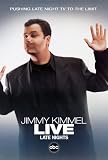
Jimmy Kimmel Live Poster 27x40 Jimmy Kimmel Dicky Barrett Frank Potenza | $21.99 | Buy on Amazon |
| 2 |

|
Third Eye Blind - Live at Red Rocks | $12.99 | Buy on Amazon |
| 3 |

|
Martin Lawrence: You So Crazy | Buy on Amazon |
The On‑Air Moment That Sparked the Backlash
The controversy traces back to a monologue segment in which Kimmel addressed Charlie Kirk amid a broader critique of right‑wing political organizing. Clips circulating online highlighted language that detractors argued crossed from satire into personal attack, prompting accusations that the remarks violated network standards. While the full context showed a familiar late‑night cadence, the clipped excerpts became the dominant reference point in subsequent coverage.
Kirk responded publicly within hours, condemning the comments and calling on ABC to take action. Conservative media outlets amplified the response, framing the segment as evidence of ideological double standards in broadcast television. By the next news cycle, the issue had moved beyond comedy criticism into a network accountability debate.
The Tool Desk
Outbyte PC Repair FREERepair Windows errors before they cause bigger problemsFix Now →Outbyte Driver Updater FREEScan for outdated or missing drivers - takes under a minuteDriver Scan →#1 Best Overall
- Approx. Size: 27 x 40 Inches - 69cm x 102cm
- Size is provided by the manufacturer and may not be exact
- The Amazon image in this listing is a digital scan of the poster that you will receive
- Jimmy Kimmel Live Style A 27 x 40 Inches Poster
- Packaged with care and shipped in sturdy reinforced packing material
Network Silence, Then Strategic Ambiguity
ABC did not immediately announce any formal suspension of Jimmy Kimmel Live, which became a crucial detail as speculation intensified. Instead, the network released a brief statement acknowledging the controversy and reiterating its commitment to “editorial responsibility,” without confirming disciplinary measures. That vacuum allowed third‑party reports to characterize a temporary production pause or scheduling adjustment as a full shutdown.
Industry sources later suggested that taping schedules were reassessed amid heightened security and advertiser sensitivity, a common behind‑the‑scenes response during flash controversies. The phrase “foreseeable future,” widely attributed to unnamed insiders, appeared in online reporting before any official confirmation, raising questions about how literal the claim actually was.
How ‘Foreseeable Future’ Became the Headline
The notion that Jimmy Kimmel Live had been “scrapped” gained traction largely through aggregation, with headlines outrunning substantiated facts. In reality, network‑level pauses, holiday breaks, or strategic reruns are often misread as punitive suspensions when controversies erupt. ABC’s reluctance to offer granular detail only deepened the perception of severity.
What is clear is that the episode exposed how fragile the margin has become for late‑night programming operating at the intersection of politics and entertainment. Whether or not the show was ever formally halted, the speed at which the narrative took hold signaled a broader recalibration in how networks manage reputational risk, and how quickly a single monologue can place a decades‑old franchise under existential scrutiny.
The Charlie Kirk Remarks: Context, Content, and Why They Were Deemed “Unacceptable”
The flashpoint for the controversy centered on a monologue segment in which Jimmy Kimmel addressed conservative activist and Turning Point USA founder Charlie Kirk amid ongoing culture‑war debates dominating cable news and social media. Framed as political satire, the segment followed a familiar late‑night structure: setup, escalation, and punchline, delivered against the backdrop of Kirk’s recent media appearances and campus activism. What distinguished this moment was not the presence of political critique, but how far the language appeared to push beyond parody.
Within hours of broadcast, clips circulated online detached from the surrounding context, accelerating the backlash. Critics argued that the segment crossed from ideological criticism into personal vilification, a line broadcast standards departments monitor closely. The network’s internal concern, according to multiple industry sources, was less about political alignment and more about tone, escalation, and potential exposure.
What Was Said, and How It Was Interpreted
Accounts of the remarks vary depending on the source, but multiple reports describe Kimmel using unusually caustic phrasing while addressing Kirk’s influence and rhetoric. The language, while not unprecedented in political comedy, was interpreted by some viewers as invoking harm or endorsing hostility rather than mocking ideas. That perception proved decisive in how the segment was evaluated internally.
In late‑night television, intent often matters less than impact once a clip enters the algorithmic bloodstream. Executives are acutely aware that satire loses its guardrails when consumed outside a studio audience’s shared understanding. In this case, the concern was that the joke’s framing could be reasonably interpreted as endorsing aggression, even if that was not the host’s intention.
Do these 3 things before closing this tab:
1Scan for outdated or missing drivers - takes under a minute2Clear out junk files and repair common Windows errors3Fix the driver behind crashes, sound loss and screen glitchesWhy the Network Viewed the Segment as a Liability
ABC’s discomfort reportedly stemmed from standards and practices thresholds rather than partisan pressure. Broadcast networks operate under stricter advertiser and affiliate expectations than cable or streaming platforms, where sharper political commentary is more common. A segment that risks being construed as encouraging harm, however obliquely, triggers a different level of scrutiny.
The designation of the remarks as “unacceptable” reflected a risk‑management assessment, not a moral judgment. With heightened sensitivity around political violence and public figures, even rhetorical excess can raise red flags. From a network perspective, the potential downstream consequences outweighed the benefits of defending the segment as comedy.
The Broader Implications for Late‑Night Commentary
The reaction to the Charlie Kirk segment underscores how narrow the margin has become for late‑night hosts navigating political satire on broadcast television. What once might have passed as pointed commentary now carries amplified risk in a fragmented media environment primed for outrage cycles. The episode illustrates how quickly a single monologue can shift from cultural commentary to corporate concern.
It also highlights the evolving calculus networks apply when controversy erupts. The issue was not simply what was said, but how rapidly it could be reframed, weaponized, and monetized by opposing media ecosystems. In that sense, the remarks became less about Charlie Kirk specifically and more about the structural limits of late‑night television in an era where every joke is potentially a liability.
Network Response and Damage Control: Why ABC Chose a “Foreseeable Future” Pause
For ABC, the decision to put Jimmy Kimmel Live on pause was less about immediate punishment and more about strategic containment. In moments like this, broadcast networks tend to move cautiously, prioritizing stability across affiliates, advertisers, and corporate stakeholders. A temporary halt creates breathing room, allowing executives to assess fallout without the pressure of nightly live programming potentially compounding the issue.
The phrase “foreseeable future” is particularly telling. It signals an open‑ended pause rather than a fixed suspension, giving the network flexibility to recalibrate its response as public reaction, advertiser sentiment, and internal reviews evolve. In broadcast terms, it is a buffer against escalation, not a declaration of cancellation.
Why an Indefinite Pause Is a Preferred Network Tool
An indefinite pause allows ABC to demonstrate accountability without committing to a drastic or irreversible outcome. Canceling a long‑running franchise like Jimmy Kimmel Live would be a seismic move with broader brand implications, while an immediate return could be read as dismissive of legitimate concerns. The middle ground communicates seriousness while preserving options.
This approach also limits exposure during a volatile news cycle. Every new episode would invite renewed scrutiny of Kimmel’s monologues, guest choices, and tone, even if unrelated to the controversy. By stepping back, the network avoids turning the show itself into a daily referendum on the incident.
Quick wins for a faster PC:
Clear out junk files and repair common Windows errorsFree Scan →Scan for outdated or missing drivers - takes under a minuteDriver Scan →Repair Windows errors before they cause bigger problemsFix Now →Advertisers, Affiliates, and the Business Reality
Behind the scenes, advertiser sensitivity is often the decisive factor in moments like this. Broadcast television remains heavily dependent on national ad buys, many of which are risk‑averse by design. Even the perception of endorsing violence or extreme rhetoric can trigger pullbacks, something networks are keen to avoid.
Local affiliates also factor into the equation. ABC stations operate in diverse political and cultural markets, and a controversy that polarizes nationally can create friction at the local level. A pause reduces the burden on affiliates forced to defend or contextualize a segment they did not control.
What the Language Signals About Kimmel’s Standing
Notably, ABC has stopped short of publicly condemning Kimmel himself. The focus has remained on the remarks, not the host’s intent or overall body of work. That distinction suggests the network still views Kimmel as a valuable asset, even as it acknowledges the severity of the misstep.
At the same time, the lack of a clear return date underscores how much has changed in late‑night television’s margin for error. Trust must be reestablished not just internally, but with external partners who expect broadcast comedy to stay within increasingly narrow guardrails. The pause reflects a network recalibrating those boundaries in real time.
A Case Study in Modern Network Risk Management
Ultimately, ABC’s response illustrates how contemporary media companies manage controversy less through declarations and more through controlled silence. The pause functions as both damage control and diagnostic period, allowing executives to measure whether the issue cools or calcifies.
For late‑night television, the move is instructive. It reinforces that on broadcast networks, even veteran hosts with deep institutional goodwill are subject to swift operational consequences when satire collides with heightened political sensitivity. The decision to pause Jimmy Kimmel Live is not just about one comment, but about how networks now mitigate risk in an environment where every joke lives far beyond the studio walls.
Is ‘Scrapped’ the Right Word? Parsing Industry Language vs. Public Perception
In entertainment headlines, “scrapped” carries a finality that rarely reflects how broadcast networks actually operate. To the public, the word implies cancellation, exile, or a decisive severing of ties. Inside the industry, however, it often functions as shorthand for something far more provisional: a strategic pause without a timetable.
The distinction matters because ABC has not used the term itself. What has been communicated, both formally and through carefully calibrated leaks, is a suspension for the “foreseeable future,” a phrase that sounds ominous but remains intentionally elastic. In network parlance, it leaves room for reassessment without committing to an outcome.
Why “Foreseeable Future” Is a Loaded Phrase
“Foreseeable future” is less a clock than a buffer. It signals that no return date is being actively planned, while stopping short of declaring one impossible. For a show with Jimmy Kimmel Live’s legacy and infrastructure, that language suggests caution rather than abandonment.
This phrasing allows ABC to observe how the controversy around Kimmel’s Charlie Kirk remarks evolves. Does it dissipate as the news cycle moves on, or does it calcify into a reputational issue that advertisers and affiliates refuse to move past? The answer to that question will determine whether the pause quietly ends or quietly becomes permanent.
How Public Interpretation Skews Toward Finality
Outside the industry, audiences tend to read silence as verdict. In an era where streaming cancellations are often abrupt and irreversible, viewers are conditioned to assume that an absence equals an ending. Social media accelerates that assumption, transforming “on hiatus” into “done” within hours.
But broadcast late night operates on a different logic than streaming originals. The daily format, the reliance on topical humor, and the ongoing relationships with advertisers all favor flexibility over final decisions. Declaring a show “scrapped” prematurely misrepresents how these machines are designed to stop and start.
What This Semantic Gap Reveals About Network Strategy
The tension between “scrapped” and “paused” exposes a broader truth about modern television risk management. Networks now communicate in language meant to stabilize partners rather than satisfy public curiosity. Precision is prioritized over reassurance, even if that precision sounds evasive.
For Jimmy Kimmel Live, that means existing in a liminal state that feels harsher than cancellation but is structurally less severe. The show is neither condemned nor cleared, neither renewed nor ended. In that gray zone, words do much of the work, shaping perception while executives wait to see whether the temperature drops enough to turn the lights back on.
Jimmy Kimmel’s History With Political Satire—and Why This Moment Is Different
For most of its 20-plus-year run, Jimmy Kimmel Live has treated political satire as a feature rather than a liability. Kimmel’s evolution from broad pop culture humor to pointed political commentary mirrored a broader shift across late-night television, where monologues became vehicles for critique as much as comedy. That transition was gradual, deliberate, and largely rewarded with audience loyalty.
Kimmel’s willingness to engage directly with political figures and movements intensified during the Trump era, when late night became an informal counterweight to cable news. His jokes routinely targeted conservative media personalities, Republican lawmakers, and ideological talking points. While those segments generated backlash, they rarely produced lasting consequences beyond predictable outrage cycles.
What’s actually slowing this PC down?
Pick the symptom - the matching free tool is one click away.
Satire That Previously Fit the Late-Night Contract
Historically, Kimmel’s political humor operated within an understood framework. Late-night hosts exaggerate, provoke, and editorialize, but the intent is clearly comedic and the venue provides contextual insulation. Advertisers, networks, and viewers have long accepted that friction as part of the format’s appeal.
Even when Kimmel addressed sensitive subjects like healthcare, gun violence, or election denial, ABC stood by him. The network framed those moments as opinion-driven commentary rather than violations of broadcast standards. The implicit agreement was that controversy, while uncomfortable, was manageable.
The Charlie Kirk Comments and the Breakdown of Context
The current situation suggests that agreement fractured. According to internal and external reporting, Kimmel’s remarks about conservative activist Charlie Kirk crossed a line that ABC deemed “unacceptable,” not merely provocative. While the exact phrasing matters, the network’s response indicates that intent and interpretation diverged in a way they could not easily reconcile.
What differentiates this episode is not that Kimmel criticized a political figure, but that the comments were perceived as incompatible with the network’s tolerance threshold. In an era of heightened sensitivity around incitement, harassment, and platform responsibility, context alone is no longer a sufficient defense. The question shifts from “Is this satire?” to “Is this a risk?”
Recommended Free Tools
Why ABC’s Reaction Signals a Structural Shift
ABC’s decision to halt the show rather than weather the backlash reflects a recalibrated risk model. Late-night once thrived on being a pressure valve for cultural tension. Now, that same tension carries reputational and financial consequences that networks are less willing to absorb.
By labeling the remarks unacceptable and stepping back from the show, ABC effectively separated Kimmel’s legacy from the immediate controversy. That move protects the brand while leaving the host in a holding pattern, neither defended nor dismissed. It is a marked departure from past incidents where networks rode out criticism alongside their talent.
What This Means for Political Comedy Going Forward
This moment underscores how narrow the margin for error has become in broadcast satire. Late-night hosts are no longer just entertainers; they are brand extensions whose words can trigger advertiser flight or affiliate unrest. The latitude once afforded by humor is shrinking.
For Kimmel, the pause raises questions about how, or if, his voice can return unchanged. For the industry, it suggests that political satire on broadcast television is entering a more cautious phase, where even established figures are subject to sudden stops when the calculus shifts.
Crashes, No Sound, or Screen Glitches?
Random freezes, missing sound and display glitches usually trace back to one bad driver. Find and replace yours safely.Free scan · under a minutePC Slower Than It Used to Be?
A free scan shows the junk files, broken settings and background clutter dragging Windows down - then fixes them in one click.Free scan · Windows 10 & 11Late‑Night Television at a Crossroads: Risk, Polarization, and Advertiser Pressure
The pause placed on Jimmy Kimmel Live does not exist in isolation. It reflects a late‑night ecosystem increasingly shaped by political polarization, real‑time outrage cycles, and advertiser sensitivity that now rivals ratings as a determining factor. The suspension is as much about external economics as it is about editorial judgment.
Where late‑night once operated with a delayed feedback loop, today’s response cycle is immediate and unforgiving. Social media amplification can escalate a single monologue into a national controversy within hours, forcing networks to act before advertisers, affiliates, or advocacy groups do it for them. In that environment, even a temporary pause can function as damage control.
Advertisers as the Silent Stakeholders
Advertiser pressure rarely announces itself publicly, but it is often decisive behind the scenes. Brands tied to broadcast television prioritize stability and broad appeal, and political controversy introduces uncertainty that media buyers increasingly avoid. A show perceived as volatile, even briefly, can become a liability during upfront negotiations.
For ABC, halting Jimmy Kimmel Live signals to advertisers that the network is proactive, not permissive. It reassures partners that boundaries are enforced, even when the talent involved is one of the network’s most recognizable faces. That calculation matters more now than loyalty optics or short‑term audience backlash.
The Meaning of “Foreseeable Future”
The phrase “foreseeable future” is deliberately elastic, and in television parlance, it often signals a review period rather than a permanent decision. Networks use such language to buy time, allowing public sentiment, advertiser response, and internal assessments to stabilize. It keeps options open without committing to a timeline.
However, the longer the pause extends, the harder it becomes to frame the return as routine. Late‑night thrives on habit and immediacy, and prolonged absence risks eroding audience connection. What begins as a precaution can quietly transform into a structural reset.
Polarization and the Shrinking Middle Ground
Kimmel’s comments about Charlie Kirk landed in a media climate where nuance is frequently lost and intent is secondary to impact. Conservative figures have become flashpoints not just for criticism, but for broader cultural battles over speech, power, and platform responsibility. Networks now assess not only what was said, but how it will be weaponized.
This narrowing middle ground places late‑night hosts in a precarious position. Political comedy once relied on shared assumptions; now it navigates fractured audiences with incompatible expectations. The result is a genre that feels simultaneously more cautious and more combustible.
What Networks Are Protecting Now
At its core, ABC’s response reflects a shift in what networks are willing to defend. The priority is no longer the provocative voice, but the resilience of the corporate brand. Talent is valuable, but replaceable; advertiser trust and affiliate stability are not.
Jimmy Kimmel Live being shelved, even temporarily, illustrates how risk management now shapes creative decisions. Late‑night television is still influential, but its margins for miscalculation have narrowed. The format is no longer just about laughs or commentary, but about navigating an industry where every joke carries institutional weight.
Independent reader supportYour contribution helps us test, update, and keep practical guides available for everyone.What This Means for Kimmel’s Career and the Future of ‘Jimmy Kimmel Live’
For Jimmy Kimmel, the current pause represents the most precarious moment of his late‑night tenure. Unlike past controversies that flared and faded within news cycles, this one has triggered a tangible network response, shifting the issue from reputational noise to operational consequence. The distinction matters, because Hollywood measures power not by headlines, but by leverage and trust.
Kimmel remains one of ABC’s most recognizable personalities, but recognition does not guarantee immunity. The suspension reframes him not as a lightning rod the network tolerates, but as a variable it must now manage. That subtle recalibration alters the balance of influence between host and broadcaster.
A Career Built on Adaptation, Now Facing Its Hardest Test
Kimmel’s longevity has largely been fueled by his ability to evolve with the cultural moment. He has moved from irreverent prank segments to emotional monologues, from celebrity-driven comedy to overt political engagement. Each reinvention strengthened his relevance, but also tied his brand more closely to personal conviction.
The Charlie Kirk controversy challenges whether that model still works in a climate where political commentary carries corporate consequences. Kimmel’s strength has always been his willingness to speak plainly, but the current landscape increasingly penalizes clarity when it crosses ideological fault lines. Adaptation, this time, may require restraint rather than reinvention.
Rank #3
The Fragility of a Legacy Show
Jimmy Kimmel Live is no longer just a talk show; it is a legacy franchise that anchors ABC’s late‑night identity. That status cuts both ways. While it provides institutional value, it also raises the stakes when controversy emerges, because disruption to a legacy brand reverberates across affiliates, advertisers, and international partners.
A prolonged hiatus risks recalibrating audience habits, particularly as younger viewers drift further toward digital-first formats. Late‑night thrives on ritual, and interruption weakens that bond. Even a successful return would likely face a recalibration period rather than an immediate restoration of dominance.
Free tools Windows power users keep installed
One-click scans. No signup required.
The Network’s Quiet Calculus
ABC’s handling of the situation suggests the decision is less about punishment than positioning. By framing the pause as open‑ended, the network preserves flexibility while signaling to stakeholders that boundaries exist. It also allows executives to assess whether the show’s value outweighs its volatility in a tightening advertising market.
This calculus reflects a broader industry shift where personality-driven programming is increasingly weighed against brand safety metrics. Networks are no longer betting solely on star power; they are betting on predictability. In that equation, even established hosts are subject to review.
What Comes Next, and What It Signals
If Jimmy Kimmel Live returns, it will likely do so under recalibrated expectations, both editorially and institutionally. The show may soften its political edges, or it may return unchanged but more closely monitored. Either path signals a future where creative autonomy is negotiated, not assumed.
More broadly, this moment underscores how late‑night television is being reshaped by risk management rather than ratings alone. Hosts are no longer just entertainers; they are corporate liabilities or assets, depending on the day’s headlines. Kimmel’s next move will not just define his career, but offer a case study in how much latitude late‑night still has in an era that increasingly rewards caution over candor.
The Tool Desk
Outbyte PC Repair FREERepair Windows errors before they cause bigger problemsFix Now →Outbyte Driver Updater FREEFix the driver behind crashes, sound loss and screen glitchesFind Drivers →The Broader Industry Signal: How Networks Are Reassessing Hosts, Humor, and Liability
What makes the Jimmy Kimmel Live pause especially resonant is that it arrives at a moment when broadcast networks are already recalibrating their tolerance for risk. The controversy surrounding Kimmel’s comments about Charlie Kirk did not emerge in a vacuum; it collided with an industry increasingly governed by brand safety frameworks, advertiser sensitivities, and instantaneous social media blowback.
The reaction underscores how late-night comedy, once insulated by its satirical tradition, is now evaluated through a corporate lens more akin to news or live sports. Jokes are no longer ephemeral. In the digital afterlife of clips, screenshots, and algorithmic amplification, a single monologue can carry weeks of reputational exposure.
From Edgy Satire to Quantifiable Risk
For decades, late-night hosts were encouraged to push boundaries as a way to distinguish themselves in a crowded field. That creative latitude helped define voices like Kimmel’s, whose political commentary became a signature rather than a detour. But in 2026, that same edge is increasingly categorized as measurable liability.
Networks now model potential fallout before it happens, weighing not just audience approval but advertiser reaction, affiliate discomfort, and international licensing concerns. The Kirk comments, deemed “unacceptable” internally, appear to have crossed a threshold where humor was no longer defensible as commentary, at least from a corporate perspective.
What’s actually slowing this PC down?
Pick the symptom - the matching free tool is one click away.
The Meaning Behind “Foreseeable Future”
The phrasing used to describe the show’s hiatus is itself revealing. “Foreseeable future” is deliberately noncommittal, a term that allows executives to avoid locking into either a cancellation or a firm return. In industry terms, it buys time for cooling public discourse while internal assessments play out.
Such language also reflects uncertainty about how resilient late-night brands truly are in the current environment. If audience trust fractures or advertisers hesitate, the cost of revival can outweigh the benefit of continuity. In that sense, the open-ended pause is less about Kimmel alone and more about testing how replaceable even legacy institutions have become.
A Template Other Networks Are Watching Closely
Rival networks are paying attention, not just to ABC’s decision but to the public reaction that follows. The outcome will influence how aggressively executives intervene when future controversies arise, especially as politically charged humor remains a reliable ratings draw but a volatile corporate asset.
If Jimmy Kimmel Live ultimately returns in a modified form, it will reinforce the idea that hosts must adapt to survive. If it does not, the message is starker: no tenure, however long, exempts a show from reassessment. Either way, the situation marks a pivotal moment where late-night television’s creative freedom is being renegotiated against the realities of modern broadcast economics.
Do these 3 things before closing this tab:
1Fix the driver behind crashes, sound loss and screen glitches2Clear out junk files and repair common Windows errors3Scan for outdated or missing drivers - takes under a minuteWhat Comes Next: Possible Outcomes, Precedents, and the Road Back to Air
The suspension places ABC at a crossroads familiar to modern broadcast executives but still fraught with consequence. The network must now balance reputational repair with contractual realities, audience expectations, and the economic value of a long-running franchise. What happens next will likely unfold quietly, through internal reviews and behind-the-scenes negotiations rather than public statements.
Scenario One: A Reworked Return
The most likely path forward is a recalibrated revival rather than a full-scale cancellation. Historically, networks have favored this option when a host remains commercially valuable but politically exposed. That could mean a delayed return with clearer editorial guardrails, expanded oversight, or a recalibrated monologue tone that deemphasizes direct political provocation.
In this scenario, Kimmel’s on-air voice would not disappear, but it would be reshaped. The network would frame the return as a reset, signaling accountability without conceding creative defeat. For ABC, it preserves brand equity while demonstrating responsiveness to advertiser and affiliate concerns.
Scenario Two: An Extended Hiatus That Becomes Permanent
There is also precedent for pauses that quietly turn into endings. When a show’s absence becomes normalized, the urgency to restore it diminishes, especially if interim programming performs adequately or carries less risk. In such cases, the “foreseeable future” phrasing becomes a soft landing rather than a bridge back.
Quick wins for a faster PC:
Scan for outdated or missing drivers - takes under a minuteDriver Scan →Clear out junk files and repair common Windows errorsFree Scan →If that happens, the narrative shifts from controversy management to succession planning. ABC would likely explore lower-profile formats or rotating hosts that diffuse individual liability. The result would not just mark the end of Jimmy Kimmel Live, but a broader retreat from personality-driven late-night television.
Scenario Three: A Platform Shift for Jimmy Kimmel
Should broadcast constraints prove too limiting, Kimmel could follow a path increasingly common among veteran hosts. Streaming platforms and podcast networks offer greater editorial freedom with fewer advertiser sensitivities and less affiliate pressure. While such a move would lack the reach of network television, it would restore creative autonomy.
This option would also reframe the controversy as a catalyst rather than a conclusion. In that sense, the suspension could accelerate an industry trend already underway, where late-night voices migrate away from traditional schedules toward direct-to-audience models.
Precedents That Inform the Road Back
Late-night history is filled with examples of hosts weathering backlash, though the conditions have changed dramatically. In earlier eras, controversy often boosted ratings and solidified brand identity. Today, the calculus is inverted, with risk mitigation often outweighing cultural impact.
Crashes, No Sound, or Screen Glitches?
Random freezes, missing sound and display glitches usually trace back to one bad driver. Find and replace yours safely.Free scan · under a minutePC Slower Than It Used to Be?
A free scan shows the junk files, broken settings and background clutter dragging Windows down - then fixes them in one click.Free scan · Windows 10 & 11What distinguishes the Kimmel situation is not just the content of the comments, but the speed and scale of corporate response. That sets a precedent where networks intervene earlier and more decisively, prioritizing stability over endurance. Any return would therefore require not just public acceptance, but internal consensus that the risk is once again manageable.
What This Signals for Late-Night Television
The pause underscores a broader shift in how late-night is valued within network portfolios. These shows are no longer protected cultural fixtures; they are assets continually assessed against financial exposure and brand alignment. Political humor remains potent, but it now operates under stricter constraints.
For viewers, this marks a subtle but meaningful change in the genre’s contract with its audience. The expectation of boundary-pushing commentary is being renegotiated in real time, shaped less by comedic ambition than by corporate tolerance.
Whether Jimmy Kimmel Live returns, evolves, or quietly exits, its suspension will be remembered as a defining moment. It illustrates how swiftly the balance can tip from creative freedom to corporate liability, and how even the most established voices must navigate a media landscape that is increasingly cautious, calculated, and unforgiving.
Quick Recap
Product prices and availability are accurate as of the date/time indicated and are subject to change. Any price and availability information displayed on Amazon at the time of purchase will apply.




