Crashes, No Sound, or Screen Glitches?
Random freezes, missing sound and display glitches usually trace back to one bad driver. Find and replace yours safely.Free scan · under a minuteWindows Errors? Fix Them Before They Spread
Repair common Windows errors and clear accumulated junk for a smoother, more stable PC - no reinstall needed.Free scan · no reinstallForty years after it first invited audiences into its twisting corridors of goblins, riddles, and forgotten childhood dreams, Labyrinth is stepping back onto the big screen in 2026, and its magic feels anything but faded. Jim Henson’s 1986 fantasy arrived at a strange crossroads of ’80s cinema, blending practical effects wizardry, dark fairy-tale storytelling, and pop star bravado in a way that baffled critics at the time but quietly captivated a generation. What once seemed like an oddity has become a rite of passage, passed down through midnight screenings, VHS tapes, DVDs, and now a full-fledged theatrical revival.
Part of Labyrinth’s enduring power lies in how personal and handmade it feels. Henson’s fingerprints are everywhere, from the expressive puppetry that gives even background creatures a sense of inner life to the tactile, storybook environments that reward big-screen immersion. This is fantasy built with foam, fabric, and imagination rather than pixels, and that craftsmanship gives the film a warmth and physicality modern audiences increasingly crave. Watching it in a theater again restores the sense of scale and wonder that home viewing can only approximate.

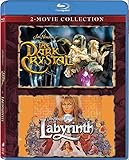
![Labyrinth (1986) - Limited Edition Collector's Set 4K Ultra HD + Blu-ray [4K UHD]](https://m.media-amazon.com/images/I/41nhFgtqAaL._SL160_.jpg)
![Labyrinth [Blu-ray] by Sony Pictures](https://m.media-amazon.com/images/I/51MYMviufTL._SL160_.jpg)
Then there is David Bowie’s Goblin King, a performance that has transcended the film itself to become pop-cultural mythology. Equal parts rock opera, fairy-tale villain, and glam icon, Bowie anchors Labyrinth with a charisma that still feels daring and strange. As the film returns to cinemas for its 40th anniversary, it does so not just as a nostalgic artifact, but as a living piece of fantasy cinema, one that continues to speak to growing up, holding on, and choosing when to let go.
From Box Office Misfire to Midnight Movie Legend: The Film’s Unlikely Cult Journey
When Labyrinth opened in the summer of 1986, expectations were high and the results were sobering. Despite Jim Henson’s pedigree and David Bowie’s star power, the film struggled to find its audience amid a crowded blockbuster season dominated by Top Gun, Aliens, and The Karate Kid Part II. Critics were divided, and families unsure whether the film skewed too dark or too strange largely stayed away.
#1 Best Overall
A Film Ahead of Its Moment
Part of Labyrinth’s early trouble was that it refused to fit neatly into a single box. It wasn’t a traditional children’s film, nor was it quite adult fantasy, instead occupying a liminal space that mirrored its own narrative themes. The film’s exploration of adolescence, desire, and independence resonated deeply with younger viewers, even if marketers struggled to articulate that appeal in 1986.
Time, however, proved kinder than opening weekend receipts. As the film made its way to VHS and cable rotation, Labyrinth found its people, often at exactly the right age. Repeated viewings revealed layers of emotional complexity, visual ingenuity, and subversive humor that first-time audiences had missed.
The Rise of a Midnight Movie Phenomenon
By the 1990s, Labyrinth had firmly embedded itself in cult cinema culture. Midnight screenings transformed the film into a communal experience, complete with call-and-response moments, elaborate costumes, and a shared fluency in Bowie’s musical numbers. Like The Rocky Horror Picture Show before it, Labyrinth became less about passive viewing and more about ritual.
These screenings also reframed the film’s identity. No longer judged by box office metrics, Labyrinth was celebrated for its individuality, its unapologetic strangeness, and its emotional sincerity. The Goblin King’s ball became an icon of fantasy cinema excess, while lines of dialogue entered the collective memory of a generation.
Free tools Windows power users keep installed
One-click scans. No signup required.
Fandom, Identity, and Enduring Influence
Labyrinth’s cult status has only deepened as new audiences reinterpret it through contemporary lenses. The film has been embraced by cosplay communities, queer fandoms, and artists inspired by its handmade aesthetic and thematic openness. Its refusal to spell everything out has allowed viewers to project their own meanings onto the story, a hallmark of lasting cult art.
Jim Henson’s influence looms large over this legacy. Labyrinth represents a creative risk taken at a time when practical effects and emotional storytelling were allowed to coexist without irony. In an era increasingly dominated by digital spectacle, the film’s tactile world feels not dated, but defiantly timeless.
Why the 2026 Re-Release Matters
The 40th anniversary theatrical re-release arrives as the culmination of this long cultural reappraisal. Seeing Labyrinth on the big screen restores the scale of its sets, the intricacy of its puppetry, and the theatricality of Bowie’s performance in a way home formats never fully could. For longtime fans, it’s a return to a beloved ritual; for newcomers, it’s an invitation into a fantasy that has earned its place in cinema history not through numbers, but through devotion.
Jim Henson’s Dark Fairytale Vision: Puppetry, Practical Effects, and Creative Risk
Labyrinth stands as one of Jim Henson’s most daring creative statements, a film that refused to soften its edges for comfort or commercial safety. Drawing from European fairytales, Maurice Sendak-like menace, and classic fantasy archetypes, Henson crafted a world that felt genuinely strange, occasionally unsettling, and emotionally sincere. It was a children’s fantasy that trusted young audiences to navigate fear, ambiguity, and moral complexity.
Quick wins for a faster PC:
Repair Windows errors before they cause bigger problemsFix Now →Fix the driver behind crashes, sound loss and screen glitchesFind Drivers →Clear out junk files and repair common Windows errorsFree Scan →Rather than aiming for broad accessibility, Henson leaned into atmosphere and texture. The Labyrinth itself functions as a psychological space, reflecting confusion, temptation, and emotional growth as much as physical obstacles. That willingness to let mood and symbolism drive the experience is a major reason the film continues to resonate decades later.
Puppetry as Performance, Not Gimmick
At the heart of Labyrinth’s enduring power is its puppetry, which remains among the most expressive ever put on screen. Each creature, from Hoggle’s weathered vulnerability to Ludo’s gentle innocence, was designed to convey emotion through movement, posture, and timing rather than dialogue alone. The performers inside and behind the puppets treated them as full characters, not special effects.
Henson’s team, including longtime collaborators from the Creature Shop, approached puppetry as acting. Facial mechanisms allowed for subtle expressions, while physical interaction with human actors grounded the fantasy in tactile reality. On a big screen, these details come alive again, reminding audiences how much nuance practical effects can convey.
Practical Effects in a Pre-Digital Fantasy World
Released at a transitional moment in effects-driven cinema, Labyrinth doubled down on handmade spectacle. Escher-inspired staircases, in-camera illusions, and elaborately constructed sets gave the film a dream logic that feels cohesive rather than synthetic. Even moments that verge on the uncanny contribute to its identity, reinforcing the sense that this is a place governed by strange, internal rules.
The absence of digital polish is not a limitation but a strength. Every texture, shadow, and imperfection reinforces the physicality of the world, allowing viewers to feel immersed rather than impressed. In 2026, that craftsmanship plays as a quiet rebuke to over-rendered modern fantasy.
Creative Risk and Emotional Honesty
Perhaps Labyrinth’s boldest move was its tonal confidence. The film allows humor and menace to coexist, never undercutting its darker moments with irony or self-awareness. Henson trusted that audiences could handle fear, loss, and moral consequence within a fantasy framework, an approach that feels increasingly rare.
That creative risk initially confounded critics and audiences expecting a lighter family film. With time, it became the foundation of Labyrinth’s cult status. The 40th anniversary re-release invites viewers to see that risk clearly, not as a miscalculation, but as the defining choice that made the film last.
David Bowie as the Goblin King: Rock Stardom, Sexual Awakening, and Iconic Camp
If Jim Henson’s creatures gave Labyrinth its beating heart, David Bowie gave it its dangerous pulse. Casting a global rock icon as the film’s central antagonist was a gamble that could have collapsed under its own audacity. Instead, Bowie’s Goblin King became the film’s most indelible creation, a figure who blends fantasy villainy with pop-star magnetism.
A Rock God in a Fairy Tale
By 1986, Bowie was already a master of self-mythology, and Labyrinth smartly folded that persona into its narrative. Jareth isn’t merely a ruler of goblins; he’s a performer, constantly aware of his audience and the power of spectacle. Bowie’s theatricality turns every entrance into a kind of concert moment, making the Labyrinth feel like a stage built entirely for him.
His musical numbers are integral rather than ornamental. Songs like Magic Dance and As the World Falls Down function as emotional confrontations, advancing character and theme rather than pausing the story. Seen in a cinema again, Bowie’s voice and presence fill the room, restoring the operatic scale the film was designed to have.
Fantasy as Sexual Awakening
Labyrinth occupies a rare space as a family fantasy that openly acknowledges adolescence as a confusing, liminal state. Bowie’s Jareth embodies temptation, control, and the allure of adulthood, positioned deliberately as both threat and fascination. For many viewers, especially those encountering the film at a formative age, the Goblin King represented a first brush with complicated attraction in a supposedly safe genre.
Henson and Bowie never soften that tension. The film allows Jareth to be charismatic without being trustworthy, seductive without being redeemable. That emotional honesty is part of why Labyrinth lingers in memory long after its plot details fade.
The Tool Desk
Outbyte Driver Updater FREEScan for outdated or missing drivers - takes under a minuteDriver Scan →Outbyte PC Repair FREEClear out junk files and repair common Windows errorsFree Scan →Camp, Costumes, and Cultural Immortality
From the teased hair and riding boots to the now-legendary codpiece, Bowie’s Goblin King is an exercise in fearless camp. The look was divisive on release and instantly iconic in retrospect, predating the modern embrace of gender-fluid costuming in mainstream fantasy. What once seemed excessive now reads as prophetic, aligning Labyrinth with contemporary conversations about identity and performance.
Decades later, Jareth remains a fixture of cosplay, fan art, and midnight movie culture. The 40th anniversary theatrical run restores that iconography to its proper scale, where the absurdity and confidence of the performance can be fully appreciated. On the big screen, Bowie’s Goblin King isn’t just a character; he’s a statement about fantasy’s capacity to be weird, sensual, and unforgettable all at once.
Inside the Labyrinth: Themes of Growing Up, Choice, and the Power of Imagination
Beneath the spectacle, the music, and the Goblin King’s indelible image, Labyrinth endures because it understands something fundamental about growing up. Jim Henson’s fantasy isn’t built around defeating a villain so much as navigating a mindset, one shaped by impulse, fear, and the desire to escape responsibility. The maze Sarah enters is less a place than a psychological landscape, rendered tangible through puppets, sets, and shifting rules.
Adolescence as a Puzzle Without a Map
Sarah’s journey is defined by wrong turns, emotional shortcuts, and moments of stubborn pride. Unlike many fantasy heroes, she doesn’t grow through combat or destiny but through self-awareness, learning when to ask for help and when to trust her own judgment. The Labyrinth constantly tempts her with easy answers, mirroring the adolescent urge to avoid accountability while still craving independence.
Do these 3 things before closing this tab:
1Clear out junk files and repair common Windows errors2Fix the driver behind crashes, sound loss and screen glitches3Repair Windows errors before they cause bigger problemsHenson refuses to simplify that process. Growth here is uneven, frustrating, and occasionally humiliating, which is precisely why it resonates. Watching the film decades later, those early choices feel less like plot mechanics and more like recognizable emotional traps.
The Weight and Freedom of Choice
Every major obstacle in Labyrinth revolves around decision-making. Doors offer riddles that punish assumptions, characters present advice that may or may not be sincere, and Jareth himself frames his seduction as a series of choices Sarah willingly makes. The film quietly insists that agency matters, even in a world where rules shift and authority figures manipulate outcomes.
That emphasis gives the climax its lasting power. Sarah’s final rejection of Jareth isn’t a triumph of strength but of clarity, a realization that she has always held the power to define herself. It’s a message that feels especially potent on the big screen, where the emotional stakes are allowed to breathe.
Imagination as Both Refuge and Responsibility
Labyrinth treats imagination as a double-edged gift. It creates worlds, comforts loneliness, and fuels creativity, but it can also trap its owner in escapism. Sarah’s fantasy is populated by creatures born from her books, toys, and frustrations, suggesting that imagination reflects who we are, not just what we wish to avoid.
Jim Henson’s practical effects are essential to this idea. The tactile reality of the puppets grounds the fantasy, reminding viewers that imagination is something you engage with, not disappear into. Seeing those textures, movements, and handmade illusions in theaters again reinforces the film’s core truth: imagination has power precisely because it’s something we choose to use, shape, and eventually outgrow without ever fully leaving behind.
A Practical Effects Time Capsule: Why Henson’s Craft Still Outshines Modern CGI
Where Labyrinth truly separates itself from modern fantasy is in how physically present its world feels. Every corridor of the Goblin City, every crooked staircase, and every creature Sarah encounters occupies real space, casts real shadows, and interacts with performers in ways no digital composite can fully replicate. On a theater screen, that tangibility becomes impossible to ignore.
Henson didn’t just build a fantasy world; he engineered an ecosystem of textures, weight, and motion. The film feels handmade because it is, and that quality has only grown more precious in an era dominated by endlessly malleable pixels.
Puppetry as Performance, Not Illusion
The creatures of Labyrinth aren’t visual effects layered onto performances; they are the performances. Hoggle’s nervous fidgeting, Ludo’s shy physicality, and Sir Didymus’s exaggerated heroics come from teams of puppeteers and performers working in perfect synchronization. You can sense intention behind every blink, stumble, and reaction.
Recommended Free Tools
That craftsmanship gives the characters emotional credibility. They aren’t spectacles designed to impress for a moment; they’re personalities built to endure. Forty years later, audiences still read their emotions instantly, a testament to how deeply human Henson’s approach to non-human characters remains.
In-Camera Magic That Demands Attention
Labyrinth is filled with effects that reward close viewing, especially on a large screen. The Escher-inspired staircase sequence relies on forced perspective and clever blocking rather than digital manipulation, making its spatial confusion feel genuinely disorienting. The Fireys’ detachable limbs are both playful and unsettling because they exist as physical objects moving through real space.
These techniques slow the viewer down in the best way. You watch more carefully, noticing how scenes are constructed rather than passively absorbing spectacle. In theaters, that craftsmanship becomes part of the experience, inviting admiration instead of visual overload.
Design That Refuses to Age
Brian Froud’s creature designs, paired with Henson’s tactile execution, give Labyrinth a visual identity untouched by trends. The Goblin King’s court feels mythic rather than futuristic, rooted in fairy tales, storybooks, and theatrical traditions that predate cinema itself. As a result, the film hasn’t dated so much as it has settled into its own timeless category.
That’s why the 2026 re-release feels less like a revival and more like a return. In an age where CGI can create anything, Labyrinth reminds us that limitation can be an artistic strength. Henson’s world endures not because it looks perfect, but because it feels real enough to believe in, even decades later.
Independent reader supportYour contribution helps us test, update, and keep practical guides available for everyone.Generations of Fans, Endless Influence: ‘Labyrinth’ in Pop Culture and Fandom
What ultimately keeps Labyrinth alive isn’t just its craftsmanship, but the way audiences continue to claim it as their own. Released in 1986 to mixed box office results, the film found its true life later through VHS, cable television, and midnight movie discovery. Each new generation seems to stumble into it at the perfect age, when fantasy still feels dangerous, funny, and emotionally sincere.
That slow-burn relationship has transformed Labyrinth from a misunderstood release into a defining cult classic. Its endurance is rooted in personal connection rather than hype, passed down like a secret between siblings, friends, and now parents introducing it to their children.
A Fandom Built on Participation
Labyrinth fandom thrives on interaction rather than passive admiration. Cosplay culture has embraced the film for decades, from Goblin King ball gowns to hand-built Sir Didymus armor, often showcased at conventions alongside lovingly recreated puppets. Unlike many fandoms driven by constant new content, this one grows through reinterpretation and devotion.
What’s actually slowing this PC down?
Pick the symptom - the matching free tool is one click away.
Fan art, fan fiction, and stage adaptations continue to reimagine Sarah’s journey, often exploring its emotional subtext through adult eyes. The film’s ambiguity invites that engagement, offering symbolic space for viewers to project their own fears, desires, and coming-of-age experiences onto the story.
David Bowie’s Goblin King as Cultural Icon
David Bowie’s Jareth has evolved into one of the most discussed fantasy figures of the 1980s, particularly in retrospect. At the time, his presence felt unconventional, even risky, blending rock stardom with fairy-tale villainy and theatrical sensuality. Decades later, that boldness reads as ahead of its time.
Jareth’s influence can be felt in later fantasy antagonists who blur the line between menace and magnetism. Bowie’s performance, equal parts sincerity and playful self-awareness, gave the film a pop-cultural gravity that continues to resonate across music, fashion, and internet culture.
Shaping Fantasy Cinema Beyond the ’80s
Labyrinth’s DNA appears throughout modern fantasy storytelling, especially in films and series that favor tactile worlds over digital perfection. Its blend of emotional realism, practical effects, and mythic structure helped pave the way for later cult favorites that prioritize atmosphere and character over spectacle.
You can see its influence in contemporary filmmakers who openly cite Henson as a formative inspiration. The idea that fantasy should feel handcrafted, strange, and slightly dangerous remains one of Labyrinth’s most lasting contributions to the genre.
Why the 2026 Re-Release Matters
Seeing Labyrinth in theaters again isn’t just about nostalgia; it’s about restoring the film to its intended communal scale. The music cues land differently, the physical sets feel more imposing, and the puppets reclaim their full dimensionality on a large screen. The experience becomes shared, echoing the way the film has always survived through collective memory.
For longtime fans, the anniversary screenings offer a chance to reconnect with a story that shaped their imagination. For first-time viewers, it’s an invitation to discover why this strange, heartfelt fantasy never truly left the cultural conversation.
Why the 2026 Theatrical Re-Release Is Essential Viewing—for Devoted Fans and First-Timers Alike
Restoring Labyrinth to Its Proper Scale
Labyrinth was designed for the theatrical experience, where its sprawling sets, towering puppets, and carefully controlled lighting could fully envelop an audience. On the big screen, the Goblin City feels less like a whimsical backdrop and more like a living maze, dense with detail and intention. The tactile craftsmanship that defines Jim Henson’s work simply reads differently when given room to breathe.
Quick wins for a faster PC:
Scan for outdated or missing drivers - takes under a minuteDriver Scan →Clear out junk files and repair common Windows errorsFree Scan →Fix the driver behind crashes, sound loss and screen glitchesFind Drivers →Jerry Goldsmith’s score, often understated in home viewing, also gains renewed emotional power in a theater. Its swelling themes and eerie textures reinforce the film’s dreamlike logic, reminding viewers that Labyrinth operates as much on feeling as narrative structure.
A Rare Showcase for Practical Effects Mastery
In an era dominated by digital spectacle, the 2026 re-release serves as a masterclass in analog fantasy filmmaking. Every creature, from Hoggle’s expressive face to Ludo’s hulking gentleness, is the result of human performance and mechanical ingenuity. Seeing these effects at theatrical resolution highlights how much personality and physical presence they bring to the screen.
For younger audiences raised on CGI, Labyrinth offers a striking alternative vision of fantasy. Its imperfections are part of its magic, reinforcing the idea that imagination thrives on texture, shadow, and the visible hand of the artist.
Recontextualizing David Bowie’s Jareth for Modern Audiences
Time has only sharpened David Bowie’s performance as the Goblin King, transforming it into something closer to myth. In a theatrical setting, his charisma becomes unavoidable, his musical numbers playing like surreal interludes rather than novelty diversions. The re-release allows viewers to experience Jareth not as a pop culture meme, but as a fully realized figure within the film’s emotional ecosystem.
Recommended Free Tools
For first-time viewers, Bowie’s presence often becomes the gateway into the film’s deeper themes. For longtime fans, it’s a chance to reassess a performance that continues to evolve with each generation’s perspective.
A Communal Experience for a Cult Phenomenon
Labyrinth has endured because it invites shared interpretation, discussion, and emotional projection. Watching it in a packed theater restores that communal energy, turning private nostalgia into a collective event. Laughter, surprise, and recognition ripple through the audience, reinforcing why the film has survived largely through word of mouth and passionate fandom.
The anniversary screenings also underscore how rare it is for a cult film to feel this alive decades later. Labyrinth doesn’t play like a relic; it plays like a story still in conversation with its viewers.
As Labyrinth returns to cinemas for its 40th anniversary, the re-release becomes more than a celebration of the past. It’s a reaffirmation of Jim Henson’s belief that fantasy could be strange, emotional, and deeply human. Whether rediscovered or experienced for the first time, Labyrinth in 2026 stands as a reminder that true imagination never ages—it simply waits for the lights to go down again.
Quick Recap
Product prices and availability are accurate as of the date/time indicated and are subject to change. Any price and availability information displayed on Amazon at the time of purchase will apply.