What’s actually slowing this PC down?
Pick the symptom - the matching free tool is one click away.
James Van Der Beek said a change in his bowel habits led him to have a colonoscopy in August 2023, where he was told he had cancer. An interview account reported that he initially thought the change might be related to coffee. The available reporting does not establish that his symptoms were missed by a clinician or that an earlier diagnosis was possible.
What symptom did James Van Der Beek report?
A syndicated account of Van Der Beek’s November 2024 interview with People described his symptom as “a change in bowel habits” that began the previous year. The account said he initially thought he might need to stop drinking coffee. This is interview reporting, not a complete medical history; the public accounts do not detail the full course of his symptoms.
When was he diagnosed with colon cancer?
August 2023: colonoscopy and diagnosis
In an interview reported by ABC News on November 8, 2024, Van Der Beek recalled having a colonoscopy after experiencing symptoms. He said the gastroenterologist told him, “It is cancer.” He also recalled that later scans confirmed stage 3 disease that was still localized and had not spread.
November 2024: public disclosure
On November 3, 2024, Van Der Beek publicly disclosed his diagnosis. In a statement reported by CBS News, he said, “I have colorectal cancer. I’ve been privately dealing with this diagnosis and have been taking steps to resolve it, with the support of my incredible family.” He spoke about raising awareness and encouraging screening in a December 3, 2024, ABC/GMA interview.
#1 Best Overall
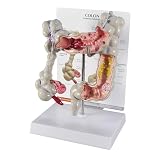
- Anatomy Model: The different pathologies shown in the model include adhesions, appendicitis, bacterial infection, cancer, Crohn’s disease, diverticulitis, diverticulosis, polyps, spastic colon, and ulcerative colitis.
- Model Specifications: This human anatomy model comes with an information card and a display base. The model measures 6" x 2-1/2" x 7-3/4", while the base measures 6-1/2" x 5". The dimensions of the information card are 6-1/4" x 8-1/4".
- Anatomy and Physiology Study Tools: This anatomy model is perfect for display in a doctor's office or a healthcare facility for effective patient education. It can also be used as a teacher's accessory for classroom demonstrations.
- GPI Anatomicals: We are a family-owned American company operating for over 40 years, offering different interactive models of the human body with utmost accuracy. Our models are designed in America and are one of the best gifts for medical students, owing to their informative nature
Van Der Beek died at age 48 on February 11, 2026, the Associated Press reported. His 2024 remarks about his diagnosis and health are historical, not an account of his current condition.
Does a change in bowel habits mean cancer?
No. A bowel-habit change can have causes other than cancer, and one symptom alone does not establish a diagnosis. The CDC says polyps and colorectal cancer do not always cause symptoms. When symptoms occur, possible signs include:
Rank #2

- Human Colon/Stomach Disease Model: This digestive system anatomy model is an educational and teaching tool that provides a detailed 3D representation of the human digestive system. It is ideal for students studying anatomy and physiology, as well as professionals in the medical field.
- 3D View of Anatomy: This model accurately depicts the various organs and structures of the digestive system, including this model is a cross-section model of the stomach, small intestine, and large intestine, showing common pathological morphology, and comes with an English instruction card.
- Fine Workmanship: The PVC material does not have to worry about being damaged by students, so it is a great addition to your laboratory supplies. Perfect for school courses, learning displays, and collections.
- Human Colon Disease Model: The model clearly shows different rectal and colonic lesions, showing important details required for educational purposes. The model is approximately 25 cm (9.8 inches) tall and is an excellent resource for learning displays and collections.
- Wide range of uses: Our models can not only be used as intuitive teaching tools in teaching, but also as a communication tool between doctors and patients in large hospitals and clinics, making it easier for patients to understand.
- A change in bowel habits, including diarrhea or constipation
- Blood in or on the stool
- Persistent abdominal pain or cramps
- Unexplained weight loss
- Anemia
The CDC advises talking with a doctor to determine what is causing symptoms. Its colorectal cancer symptoms guidance, updated June 17, 2026, explains that diagnostic tests are used to investigate symptoms. If you have a persistent or concerning change, contact a clinician rather than waiting until you reach the routine screening age.
Screening and diagnostic testing are different
Routine screening is intended for people without symptoms. Diagnostic testing is used to investigate symptoms or an abnormal screening result. A screening test is not a substitute for seeking medical advice about a symptom.
Windows Errors? Fix Them Before They Spread
Repair common Windows errors and clear accumulated junk for a smoother, more stable PC - no reinstall needed.Free scan · no reinstallOutdated Drivers Are Slowing You Down
One free scan finds every outdated or missing driver and matches the right update for your exact hardware.Free scan · exact hardware matchRank #3
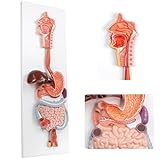
- Detailed Life-Size Digestive System Model - This anatomically accurate, life-size model features a comprehensive view of the human digestive system, offering an in-depth look at the digestive tract and colon. Perfect for medical students, educators, and healthcare professionals for teaching and learning.
- 2-Piece Removable Design for Easy Study - The model can be easily separated into two parts: the digestive tract and the colon. This feature allows for detailed examination of individual organs, making it ideal for hands-on learning and teaching.
- Vivid and Clear Anatomical Details - Featuring clear, color-coded representations of the mouth, esophagus, stomach, intestines, liver, gallbladder, and other critical digestive organs, this model provides a realistic and detailed view of the human digestive system.
- Durable and High-Quality Material - Crafted from premium PVC material, this model is built to withstand repeated use in classrooms, clinics, or laboratories. Its sturdy construction ensures it remains in excellent condition for long-term use.
- Comprehensive Educational Tool - This digestive system model is an essential educational tool for anatomy students, healthcare professionals, and biology enthusiasts. It enhances understanding of human physiology, helping users to visualize and study the intricate functions of the digestive system.
For U.S. adults at average risk, the CDC recommends starting colorectal cancer screening at age 45 and continuing through age 75. For adults ages 76–85, the decision is individual. Family history and some health conditions may mean starting earlier or screening more often; discuss which approach fits your circumstances with a clinician.
CDC-listed screening options
| Test | Type | Recommended interval | Polyps and follow-up |
|---|---|---|---|
| Guaiac-based fecal occult blood test (gFOBT) | Stool-based | Every year | Does not remove polyps; an abnormal result requires colonoscopy. |
| Fecal immunochemical test (FIT) | Stool-based | Every year | Does not remove polyps; an abnormal result requires colonoscopy. |
| FIT-DNA | Stool-based | Every 3 years | Does not remove polyps; an abnormal result requires colonoscopy. |
| Colonoscopy | Visual examination | Every 10 years for people without increased risk | Can find and remove polyps during the procedure. |
| Flexible sigmoidoscopy | Visual examination | Every 5 years, or every 10 years with annual FIT | An abnormal result requires colonoscopy to complete screening. |
| CT colonography | Imaging examination | Every 5 years | An abnormal result requires colonoscopy to complete screening. |
These intervals are from the CDC’s U.S. colorectal cancer screening guidance, updated June 17, 2026. The options are not interchangeable for everyone; a clinician can help assess risk and suitability.
Rank #4

- Anatomy Model: Diseases shown in the model include polyps, cancer, diverticulitis, and colitis. The normal anatomy illustrates structures like the serosa, muscle, mucosa, semilunar folds, taenia, and epiploic appendices.
- Model Specifications: A great substitute for anatomy posters, the human anatomy model comes with an information card. The model measures 3-5/8" x 1-1/2" x 1-7/8", while the information card measures 6-1/2" x 5-1/4". All stages rotate on a hinge pin.
- Anatomy and Physiology Study Tools: The anatomy model is perfect for display in a doctor's office or a healthcare facility for effective patient education. It can also be used as a teacher's accessory for classroom demonstrations.
- GPI Anatomicals: We are a family-owned American company operating for over 40 years, offering different interactive models of the human body with utmost accuracy. Our models are designed in America and are one of the best gifts for medical students, owing to their informative nature
What the public accounts do—and do not—show
The reported sequence is that Van Der Beek noticed a bowel-habit change, had a colonoscopy in August 2023 after experiencing symptoms, and later disclosed his diagnosis publicly in November 2024. It does not establish a detailed clinical timeline, show that a clinician overlooked symptoms, or prove that a different response would have changed the outcome. Calling these “missed symptoms” goes beyond what the public reporting supports.
Quick Recap
Best Value

- Great for Schools, hospitals, visual aids in physical health teaching. Can be used in therapy practices or college anatomy class.
- Material:It made of food-grade PVC environmentally friendly materials, High quality prototype,Handmade in a solid, non-broken.Almost true display of human digestive system structure
- Lab supplies:It is a rare tool for students to carry out relevant practical training.The material will last for years to pass down to future students so as to deepen the understanding of the structure of the human large intestine .
- A variety of scope: it can be used not only as a learning tool for medical students, a teaching tool.It is also as a communication tool for doctors and patients.Enough to satisfy anyone interested in the human large intestine
- The large intestine lesion model is 1/2 in size, showing various typical lesions of the large intestine and appendix inflammation.so you can Lively explain the relevant knowledge to the students by the model,let students to quickly understand and master
Product prices and availability are accurate as of the date/time indicated and are subject to change. Any price and availability information displayed on Amazon at the time of purchase will apply.




