Daniel Craig’s bruising, final turn in No Time to Die didn’t just close a chapter; it detonated the status quo of modern James Bond. For the first time since the franchise’s 2006 reboot, 007 is truly up for reinvention rather than recalibration, with Eon Productions and now Amazon MGM Studios facing a generational decision about what Bond should represent next. That vacuum has reignited fan speculation at a fever pitch, fueled by a broader cultural appetite for darker, riskier leading men.
Casting rumors have flourished partly because Craig’s era proved that Bond can evolve without losing his mythic pull. His version leaned into emotional damage, physical brutality, and moral ambiguity, expanding the archetype beyond tuxedos and quips. As audiences reassess what made Craig’s Bond resonate, they’re increasingly drawn to actors who feel dangerous, grounded, and unpredictable rather than traditionally suave.
| # | Preview | Product | Price | |
|---|---|---|---|---|
| 1 |
![The James Bond Collection [Blu-ray]](https://m.media-amazon.com/images/I/41CY4u-8neL._SL160_.jpg)
|
The James Bond Collection [Blu-ray] | $129.99 | Buy on Amazon |
| 2 |
|
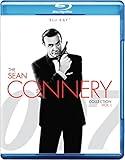
007: The Sean Connery Collection, Vol. 1 | $11.40 | Buy on Amazon |
| 3 |

|
Spectre 007 (Blu-ray) | $7.99 | Buy on Amazon |
That’s where Jack O’Connell enters the conversation, especially after the raw intensity of his performance in Sinners. Fans see in him the same combustible mix that once made Craig an unlikely but inspired choice: a working-class edge, coiled physicality, and a face that suggests history rather than polish. In a franchise standing at a crossroads between legacy and reinvention, O’Connell’s rise has become a shorthand for the kind of bold, character-driven Bond many believe should come next.
The ‘Sinners’ Effect: How Jack O’Connell’s Latest Performance Sparked Bond Buzz
Jack O’Connell has been circling the edges of stardom for years, but Sinners feels like the moment where perception finally shifted. The film’s release didn’t just generate strong reviews; it reframed O’Connell as a leading man capable of carrying weighty myth and moral complexity. Almost overnight, his name began appearing in Bond wish lists, fan forums, and casting think pieces with surprising consistency.
The Tool Desk
Outbyte PC Repair FREERepair Windows errors before they cause bigger problemsFix Now →Outbyte Driver Updater FREEFix the driver behind crashes, sound loss and screen glitchesFind Drivers →#1 Best Overall
A Performance Built on Control, Not Flash
What struck audiences most about O’Connell in Sinners was how restrained the performance was. Rather than leaning into theatrical menace or showy intensity, he played the role with an unnerving stillness, letting silence and physical presence do the heavy lifting. It’s a quality longtime Bond fans recognize as essential, especially in the post-Craig era where threat often comes from what Bond doesn’t say.
That kind of control aligns closely with how modern 007 operates on screen. Craig’s Bond was never the loudest man in the room, and O’Connell’s work in Sinners suggests he understands the power of internalized tension. Fans see a Bond who can project danger without explanation, a trait that feels increasingly valuable as the franchise matures.
Physicality That Feels Lived-In, Not Choreographed
Sinners also highlights O’Connell’s physical credibility, something Bond audiences are acutely sensitive to after Craig reset expectations. His movements are efficient and sometimes brutal, but never stylized for applause. When violence erupts, it feels reactive and costly rather than cool, reinforcing the sense of a man shaped by experience rather than fantasy.
That approach mirrors the grounded action language Bond has adopted since Casino Royale. O’Connell doesn’t look like an invincible super-spy; he looks like someone who survives encounters by instinct and grit. For fans wary of a return to glossy invulnerability, that realism is a major selling point.
Echoes of Past Roles, Sharpened by Age
While Sinners may be the catalyst, it’s O’Connell’s broader body of work that gives the Bond buzz staying power. From Starred Up to ’71 and Unbroken, he’s consistently played men under pressure, often navigating violence, loyalty, and fractured identities. What’s different now is the refinement; Sinners shows an actor who has learned when to pull back as much as when to explode.
At 34, O’Connell also lands in a sweet spot for the franchise’s future. He’s young enough to anchor multiple films but seasoned enough to project emotional history. Fans point out that this balance mirrors where Craig was when he first took on Bond, suggesting a familiar but not repetitive trajectory.
Challenging the Bond Archetype Without Breaking It
Perhaps the most compelling aspect of the Sinners effect is how it positions O’Connell as both a continuation and a challenge to Bond tradition. He lacks the old-school polish associated with earlier eras, but he compensates with authenticity and psychological depth. In a franchise grappling with how to evolve without alienating its core, that tension feels productive rather than risky.
O’Connell’s Bond, as fans imagine it, wouldn’t redefine 007 through gimmicks or shock casting. Instead, it would push the character further into moral ambiguity, where heroism is situational and survival is never guaranteed. Sinners didn’t just showcase a strong performance; it gave audiences a clear template for what the next James Bond could look like.
A Career Built on Intensity: From ‘Skins’ to Prestige Drama and Action Roles
Long before Sinners put him back in the center of the conversation, Jack O’Connell had already built a career defined by volatility and edge. His breakout as the volatile Cook in Skins announced an actor unafraid of discomfort, someone who leaned into recklessness rather than smoothing it over. Even then, there was a sense that his screen presence came from internal pressure, not showy theatrics.
That rawness has followed him ever since, evolving into something more controlled but no less potent. Where many actors sand down their rough edges as their careers progress, O’Connell has learned how to weaponize them.
From Youthful Chaos to Controlled Ferocity
After Skins, O’Connell made a sharp pivot into darker, more punishing material. Starred Up remains a defining performance, trapping him in a brutal father-son power struggle inside a prison system that feels designed to break people. The role demanded physicality, psychological tension, and emotional volatility, all qualities that now fuel Bond speculation.
Unbroken and ’71 further established his credibility as an actor capable of carrying historical weight and moral complexity. These weren’t glossy star vehicles; they were endurance tests, requiring him to project resilience, fear, and resolve under extreme conditions. That ability to suffer convincingly has long been central to modern Bond’s appeal.
Quick wins for a faster PC:
Clear out junk files and repair common Windows errorsFree Scan →Scan for outdated or missing drivers - takes under a minuteDriver Scan →Repair Windows errors before they cause bigger problemsFix Now →Action Without Invincibility
O’Connell’s forays into action have rarely painted him as untouchable. In 300: Rise of an Empire, he brought menace rather than swagger, while projects like Eden Lake showed how quickly charm can curdle into threat. Even when wielding power, his characters tend to feel unstable, as if violence is a last resort rather than a fantasy.
That distinction matters for Bond fans wary of spectacle without consequence. O’Connell’s action roles suggest a version of 007 who wins fights but pays for them, physically and psychologically. It’s a sensibility that aligns neatly with the franchise’s post-Craig identity crisis.
Prestige Television and the Case for Longevity
Television has quietly strengthened O’Connell’s Bond case as well. His work in Godless showcased restraint, patience, and a simmering menace that played out over long arcs rather than single scenes. It demonstrated that he can sustain character complexity across extended storytelling, a necessity for a franchise thinking in terms of multi-film arcs.
Taken together, his career reads like a gradual calibration toward something bigger. Not a sudden leap into iconic territory, but a steady accumulation of the exact tools a modern Bond requires. For fans, that trajectory feels earned, not engineered.
Does O’Connell Fit the Bond Archetype — Or Redefine It for a New Era?
At a glance, Jack O’Connell doesn’t scream traditional Bond. He lacks the patrician polish and effortless debonair ease associated with Connery or Moore, and even Craig’s ice-cold confidence often gave way to controlled precision. What O’Connell offers instead is something more combustible: intensity that feels earned rather than performed, and a screen presence that suggests danger long before a punch is thrown.
That quality is precisely why fans have zeroed in on his performance in Sinners as a potential turning point. The role leans heavily on moral ambiguity, placing O’Connell in situations where charm and brutality exist in uncomfortable proximity. It’s the kind of performance that mirrors Bond at his most modern: a man operating in shadows, guided by instinct as much as ideology.
The Bond Archetype, Stripped of Myth
Classic Bond has always been aspirational, a fantasy of control and competence in a chaotic world. But the Craig era deliberately dismantled that illusion, exposing the cost beneath the tuxedo. O’Connell feels like a natural extension of that deconstruction, an actor whose face carries history even when the script stays quiet.
In Sinners, his physicality isn’t glamorous; it’s functional and often punishing. He moves like someone who expects consequences, not applause. For a franchise recalibrating after No Time to Die, that grounded presence could make Bond feel less like a symbol and more like a man shaped by damage.
Rank #2
Charm, But on His Own Terms
One of the biggest questions surrounding O’Connell as Bond is whether he can deliver the necessary charm. The answer, based on his past roles, is yes — but it’s an unpredictable, slightly dangerous charm. His characters often draw people in without fully reassuring them, creating tension rather than comfort.
That dynamic could refresh Bond’s interactions across the board, from allies to adversaries to romantic interests. Instead of effortless seduction, O’Connell’s Bond might persuade through intensity and authenticity. It’s a subtle shift, but one that reflects changing audience expectations around masculinity and power.
A Bond for a Franchise in Transition
The Bond series now finds itself at a crossroads, balancing legacy with reinvention. Casting O’Connell wouldn’t be a rejection of the archetype so much as an evolution of it. He fits the franchise’s recent emphasis on emotional realism while still possessing the physical credibility required of the role.
Fans sense that O’Connell wouldn’t play Bond as an icon, but as a role you grow into and struggle to survive. In a post-Craig landscape where invincibility feels outdated, that struggle may be exactly what keeps 007 relevant for a new generation.
Do these 3 things before closing this tab:
1Repair Windows errors before they cause bigger problems2Scan for outdated or missing drivers - takes under a minute3Clear out junk files and repair common Windows errorsFan Reaction and Online Momentum: Why Audiences Are Rallying Behind O’Connell
The push for Jack O’Connell as the next James Bond didn’t originate in a press release or an industry whisper. It started, as these things increasingly do, with audiences reacting in real time to Sinners. Viewers walked away from the film struck by how effortlessly O’Connell commanded the screen without leaning on spectacle, and the Bond comparisons followed almost immediately.
Across social platforms, the conversation has been less about novelty and more about inevitability. Fans aren’t pitching O’Connell as a left-field stunt; they’re framing him as the logical next step. In a franchise redefining itself, that distinction matters.
From Performance to Proposal
Clips from Sinners have circulated widely, often accompanied by commentary pointing out how little tweaking would be needed to imagine O’Connell in a tailored suit and an MI6 briefing room. His stillness, his watchful eyes, and the sense that violence is always a last resort resonate strongly with audiences raised on Craig’s Bond. For many fans, Sinners didn’t just showcase his talent; it clarified his suitability.
What stands out is how often viewers cite restraint as the key factor. O’Connell doesn’t overplay menace or charisma, which aligns with a modern Bond who earns authority rather than assuming it. That controlled intensity feels purpose-built for a character who lives in the margins between duty and self-destruction.
Outdated Drivers Are Slowing You Down
One free scan finds every outdated or missing driver and matches the right update for your exact hardware.Free scan · exact hardware matchPC Slower Than It Used to Be?
A free scan shows the junk files, broken settings and background clutter dragging Windows down - then fixes them in one click.Free scan · Windows 10 & 11A Social Media Favorite Without Feeling Manufactured
Unlike some fan-casting trends that feel algorithmically inflated, the O’Connell momentum has a grassroots quality. There’s no flashy campaign or viral gimmick, just steady accumulation of clips, essays, and comparisons shared by film fans rather than brand accounts. That organic build gives the conversation credibility.
Reddit threads and film Twitter discussions frequently highlight his past roles, from the brutal vulnerability of Starred Up to the simmering rage of ’71. Fans argue that Bond has always reflected its era’s anxieties, and O’Connell’s body of work speaks directly to a world less interested in escapism for its own sake.
Challenging Bond Without Breaking Him
Part of the appeal is that O’Connell doesn’t neatly fit the traditional Bond template, and fans see that as a feature rather than a flaw. He lacks the polished, aristocratic sheen associated with earlier iterations, but that roughness feels earned. For a character increasingly defined by psychological scars, that authenticity reads as evolution, not deviation.
Audiences seem excited by the idea of a Bond who feels like he could plausibly exist outside the fantasy. O’Connell’s screen presence suggests a man shaped by systems larger than himself, which aligns with a franchise grappling with relevance in a more cynical age.
What’s actually slowing this PC down?
Pick the symptom - the matching free tool is one click away.
The Right Actor for an Uncertain Future
The ongoing speculation around Bond’s future has left fans hungry for a clear creative direction. O’Connell has become a focal point because he represents coherence rather than compromise. He embodies continuity with Craig’s emotional realism while still leaving room for tonal shifts in future installments.
In many ways, the rally behind O’Connell reflects a broader desire for intentional casting. Fans aren’t just picking an actor they like; they’re responding to what his presence would say about where Bond is headed next.
How He Compares to Other Rumored Bond Contenders
When stacked against the usual shortlist of Bond hopefuls, Jack O’Connell occupies a notably different lane. Where many contenders feel like variations on a familiar ideal, O’Connell represents a sharper pivot in tone. That contrast is precisely why fans see him as more than just another name in the rumor mill.
Against the Polished Front-Runners
Actors like Aaron Taylor-Johnson and James Norton are often cited for their classic leading-man appeal, and it’s easy to see why. They project control, elegance, and a kind of ready-made Bond silhouette that aligns neatly with the franchise’s visual history. O’Connell, by comparison, feels less composed and more combustible, which some fans argue better reflects a post-Craig emotional landscape.
Free tools Windows power users keep installed
One-click scans. No signup required.
In Sinners, that volatility becomes a feature rather than a liability. His performance hinges on restraint barely holding chaos at bay, a quality that recalls early Craig but strips away the mythic confidence. For viewers craving a Bond who looks like the job costs him something every day, that difference matters.
The Cavill Question: Icon vs. Instinct
Henry Cavill remains the most divisive comparison point. He has the physicality, the suave confidence, and the unmistakable star power that many still associate with Bond. But fans increasingly question whether that version of 007 feels like a step forward or a nostalgic reset.
O’Connell offers the inverse appeal. He doesn’t embody the icon so much as interrogate it, bringing a sense of lived-in damage that aligns with the franchise’s recent emphasis on consequence. Where Cavill feels like Bond as symbol, O’Connell feels like Bond as man.
Age, Edge, and the Long Game
Other frequently mentioned names like Regé-Jean Page or Tom Hardy each bring distinct strengths, but also clear tonal expectations. Page suggests a smoother, more romantic Bond, while Hardy implies eccentricity and brute force. O’Connell sits in a narrower, more unsettling space between those extremes.
Recommended Free Tools
Rank #3
- Runtime: 148 minutes
At 30-something, he also fits the long-term calculus facing Eon Productions. Fans see someone young enough to grow into the role over multiple films, yet seasoned enough to avoid a soft reboot. That balance, combined with the raw intensity showcased in Sinners, makes him feel less like a safe bet and more like a deliberate statement.
Not the Obvious Choice, and That’s the Point
What ultimately separates O’Connell from his peers is the absence of obviousness. He isn’t the most glamorous option, nor the most traditionally handsome, and that friction fuels the enthusiasm around him. Bond has always evolved by reacting against its immediate past, and fans sense that choosing O’Connell would continue that tradition.
In a field crowded with actors who look right in a tuxedo, O’Connell stands out for how convincingly he wears the weight underneath it. For a franchise searching for relevance rather than reassurance, that distinction may be the most compelling argument of all.
Independent reader supportYour contribution helps us test, update, and keep practical guides available for everyone.What O’Connell’s Casting Would Signal About the Franchise’s Future
If Eon Productions were to cast Jack O’Connell as the next James Bond, it would read less like a gamble and more like a thesis statement. It would suggest a franchise interested in deepening its psychological terrain rather than broadening its spectacle. After the emotional finality of Daniel Craig’s era, that choice would acknowledge that Bond can’t simply reset to glamour without reckoning with what came before.
A Bond Defined by Consequence, Not Cool
O’Connell’s performance in Sinners is key to why fans see this as a logical evolution. He plays men who are capable, dangerous, and charismatic, but never untouched by their choices. That quality aligns with a version of Bond who feels consequences in his body and behavior, not just in plot mechanics.
Casting him would signal that the franchise plans to keep leaning into emotional continuity rather than episodic escapism. Missions would still be global and high-stakes, but the internal cost of violence and loyalty would remain front and center. Bond, in this model, isn’t just solving problems; he’s being shaped by them.
Moving Away from Invincibility
O’Connell has never projected invulnerability, and that may be his most radical qualification. In past roles, from Starred Up to ’71, he bleeds, breaks, and recalibrates in real time. Fans read that as a corrective to the pre-Craig era’s near-mythic Bond, where charm often replaced consequence.
Choosing him would suggest a franchise less interested in power fantasy and more invested in tension. The danger wouldn’t just come from villains, but from Bond’s own volatility and moral uncertainty. That shift keeps the character human, even as the scale remains operatic.
A Franchise Betting on Performance Over Persona
O’Connell isn’t a brand in the way some contenders are, and that’s part of the appeal. His casting would indicate that Eon values screen presence and dramatic credibility over global recognition. It’s a reminder that Bond actors are often made by the role, not the other way around.
That philosophy has precedent. Sean Connery, Timothy Dalton, and Daniel Craig were all, to varying degrees, defined by Bond rather than imported as finished icons. Fans see O’Connell fitting that lineage, someone who could disappear into 007 rather than arrive with a prepackaged image.
Reframing Masculinity in the Bond Universe
Perhaps most importantly, O’Connell’s Bond would reflect a changing idea of masculinity within the franchise. His screen persona is intense but not polished, emotionally guarded but not emotionally absent. That complexity resonates with audiences who want depth without irony.
Casting him would suggest Bond’s future isn’t about reclaiming old swagger, but interrogating it. The tuxedo still matters, the martini still matters, but they’re no longer armor. In O’Connell, fans see a Bond who wears those symbols uneasily, and that discomfort could be exactly what keeps the franchise alive.
The Risks, Rewards, and Realistic Odds of Jack O’Connell Becoming 007
Every bold Bond choice carries equal parts promise and peril, and Jack O’Connell is no exception. His appeal to fans is rooted in credibility and intensity, but those same qualities raise questions about scale, longevity, and mass appeal. The conversation isn’t just about whether he could play Bond, but whether the franchise is ready for what he represents.
The Creative Upside: A Bond Built on Tension
The rewards of casting O’Connell are immediately apparent to anyone who’s seen Sinners. In that film, he commands the screen through coiled restraint, letting silences and micro-expressions do the work of exposition. It’s a performance built on moral pressure rather than charisma, suggesting a Bond who feels watched even when he’s in control.
That sensibility aligns with where many fans believe the franchise should head next. After Craig’s emotionally exhaustive arc, a Bond who internalizes damage rather than narrating it could feel like evolution, not repetition. O’Connell offers a version of 007 whose danger comes from unpredictability, not polish.
The Commercial Risk: Can He Carry the Machine?
The counterargument is pragmatic. Bond is not an indie character study; it’s a global brand that must open huge, sell internationally, and anchor a multi-film strategy. O’Connell, while respected, has yet to prove he can carry a blockbuster on his name alone.
The Tool Desk
Outbyte PC Repair FREEClear out junk files and repair common Windows errorsFree Scan →Outbyte Driver Updater FREEScan for outdated or missing drivers - takes under a minuteDriver Scan →There’s also the matter of tone. His screen presence leans abrasive, even confrontational, which could alienate audiences hoping for escapism over intensity. Bond films have always walked that line, and choosing O’Connell would mean committing fully to the sharper edge.
Age, Timing, and Franchise Strategy
At 35, O’Connell sits in a viable but narrowing window. He’s old enough to project experience, young enough to sustain a decade-long run, but the clock matters. Eon’s next move will signal whether they want a long-term reinvention or a shorter, more focused chapter.
Competition is fierce, with names ranging from established stars to fresher faces circulating in the same conversations. O’Connell’s advantage is thematic fit rather than buzz. His candidacy depends less on internet consensus and more on whether producers prioritize dramatic integrity over immediate marketability.
The Most Honest Answer: Unlikely, but Not Impossible
Realistically, O’Connell remains a long shot, but not a fantasy. Bond history is filled with choices that once seemed improbable until they weren’t. If the franchise truly wants to double down on character, consequence, and performance-first storytelling, his name belongs in the room.
What’s actually slowing this PC down?
Pick the symptom - the matching free tool is one click away.
Even if he never wears the tuxedo, the enthusiasm around him says something important. Fans aren’t just casting an actor; they’re voting for a version of Bond that feels dangerous again, not because he’s untouchable, but because he isn’t. In that sense, Jack O’Connell already represents the future many want 007 to become.
Quick Recap
Product prices and availability are accurate as of the date/time indicated and are subject to change. Any price and availability information displayed on Amazon at the time of purchase will apply.




