Quick wins for a faster PC:
Repair Windows errors before they cause bigger problemsFix Now →Scan for outdated or missing drivers - takes under a minuteDriver Scan →Clear out junk files and repair common Windows errorsFree Scan →Short answer: Apple’s lawsuit did not decide that Musi infringed copyright or that every person who listened through it broke the law. It decided that Apple’s Developer Program agreement allowed Apple to remove Musi from the App Store after notice. Musi was delisted on September 24, 2024, and the U.S. District Court for the Northern District of California dismissed Musi’s amended case on March 16, 2026.
The ruling leaves Musi’s copyright status unresolved. However, the app’s reported use of YouTube content, background playback, advertising and other features appears difficult to reconcile with several published YouTube developer rules.
What Musi was
Musi was an iPhone music-listening app that presented music sourced from YouTube through a separate interface. The important legal question was not simply whether it offered “free music.” It was how Musi obtained access to YouTube-hosted material, displayed and controlled playback, placed advertising, and monetized the listening experience.
The available court record does not establish a public music-licensing agreement that authorized Musi to operate a conventional streaming catalog. Musi disputed parts of the allegations against it, including claims about its use of YouTube’s public API.
What’s actually slowing this PC down?
Pick the symptom - the matching free tool is one click away.
#1 Best Overall
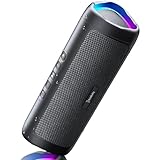
- [Immersive Sound Experience & Dual Connectivity] Experience unparalleled sound quality with this wireless Bluetooth speaker's 2 drivers and advanced technology that delivers powerful, well-balanced sound with minimal distortion. Connect two speakers together to create an immersive stereo sound experience and fill any room with powerful sound. Perfect for gaming, music, and movie playback
- [Tough & Weather-Resistant] Engineered to handle rough use and adverse weather conditions, this speaker features a durable design and an IPX5 rating for protection against water splashes and spills. It's an ideal choice for outdoor events, and is perfect for use at parties, at the pool, on the beach, while camping or hiking, and more
- [Long-lasting Playtime & Extended Bluetooth Connectivity] Experience extended playtime with up to 24 hours(50% Vol and light off) per charge and extended wireless range with Bluetooth 5.3, reaching up to 100 feet from your device. The multicolor lights on the speaker can also be turned off with a simple button press to save the battery and adapt to your needs. Keep in mind that the actual playtime can vary depending on volume level, audio content, and usage
- [Vibrant Light Effects] Bring a new level of excitement to your party with the dynamic multi-color light show that syncs to the beat of the music, you can easily customize the light effects to suit your preference by simply pressing the Light button. Make any gathering more memorable with these visually stunning light effects that will elevate the atmosphere
- [Everything You Need] The package includes 1 waterproof Bluetooth speaker (Item Dimensions D x W x H: 7.87"D x 2.76"W x 2.81"H, Weight: 1.28lb), 1 Type-C charging cable, and a quick start guide, all backed by lifetime technical support. The built-in microphone allows for hands-free phone calls and you can also play music from other devices using the AUX jack (not included). It's a perfect gift for men and women. It is also suitable as white elephant gifts for adult, stocking stuffers for men and women, Christmas gifts,birthday gifts, mothers day gifts,fathers day gifts,Valentine's Day,mens gifts,and various anniversary gifts for him.
Why Apple removed Musi
The dispute developed over several years rather than beginning with the 2024 delisting. The court’s March 16, 2026 opinion describes this sequence:
| Date | Event |
|---|---|
| April 2021 | YouTube complained to Apple and Musi, alleging use of nonpublic YouTube interfaces, commercial use, and advertising on pages where YouTube content was the primary basis for the advertising. |
| March 2023 | YouTube renewed its complaint to Apple. |
| April 2024 | Music-industry participants escalated complaints to Apple. |
| July 29, 2024 | YouTube made another complaint alleging intellectual-property and terms-of-service violations. |
| August 8, 2024 | Apple notified Musi that the complaint could lead to removal. |
| September 6, 2024 | YouTube asked Apple to remove Musi, saying the app still violated YouTube’s Terms of Service. |
| September 18, 2024 | Apple warned Musi that it might remove the app if the dispute was not resolved. |
| September 24, 2024 | Apple removed Musi from the App Store, citing intellectual-property infringement. |
| October 2, 2024 | Musi sued Apple. |
| January 9, 2025 | The court denied Musi’s request for a preliminary injunction that would have required Apple to restore the app. |
| March 16, 2026 | The court dismissed Musi’s amended claims against Apple. |
Read the court’s opinion and procedural history.
What Musi claimed
As summarized in the court record, Musi argued that it did not rely on YouTube’s public API in the way alleged, that its servers did not store, process or transmit YouTube videos, and that playback or display occurred based on the user’s interaction with YouTube. Musi characterized YouTube’s allegations as unsubstantiated. Those are Musi’s litigation positions, not findings that the court adopted as fact.
The relevant filing is available through the January 2025 court materials.
What YouTube and music-industry groups alleged
The court record describes complaints from YouTube, Sony Music Entertainment, the National Music Publishers’ Association and other industry participants. They alleged that Musi:
Recommended Free Tools
- used nonpublic interfaces or other access methods;
- made music available without appropriate authorization;
- circumvented technical protection measures;
- placed Musi-controlled advertising over or around YouTube content;
- interfered with YouTube’s advertising and licensing arrangements; and
- did not pay creators or rightsholders whose music it made available.
These statements remain allegations and advocacy positions in the Apple dispute. The March 2026 order did not adjudicate each one on a copyright trial.
Rank #2

- Outdoor-Proof Speaker: Portable design with IPX7 waterproof protection to safeguard against splashes, waves, and water vapor. Get incredible sounds at home, on camping trips, or for outdoor adventures.
- 24H Non-Stop Music: With Anker's world-renowned power management technology and a 5,200mAh Li-ion battery, the soundcore 2 speaker delivers a full day of great sound.
- Powerful Sound: The speaker features 12W power with enhanced bass from dual neodymium drivers. An advanced digital signal processor ensures pounding bass and zero distortion at any volume.
- Intense Bass: Our exclusive BassUp technology and a patented spiral bass port boost low-end frequencies to make the beats hit even harder. The soundcore 2 speaker delivers vibrant audio for home theater nights, beach parties, and sitting around a campfire.
- Grab, Go, Listen: A classic design refined with simple controls and effortless portability. Easy to use and take anywhere, and supports wireless stereo pairing.
What the court actually decided
The court held that Apple’s Developer Program License Agreement gave Apple broad discretion to stop marketing, offering or permitting downloads of an app “at any time, with or without cause,” provided Apple gave notice. The court found that Apple gave the required notice and therefore did not breach its contract by delisting Musi.
The court also rejected Musi’s argument that Apple’s references to a reasonable belief, intellectual-property complaints or an informal dispute process restricted Apple’s broader contractual removal power. Apple’s victory was therefore a ruling about the Apple–Musi contract and App Store distribution.
See the March 16, 2026 dismissal order.
What the lawsuit did not decide
- It did not determine whether Musi infringed a particular musical composition or sound recording.
- It did not decide whether Musi qualified for fair use.
- It did not determine whether YouTube had granted Musi a license.
- It did not decide that every user who listened through Musi was personally liable.
- It did not create a general rule that every third-party YouTube player is illegal.
In legal terms, the available decision did not reach the copyright merits. Saying that Apple could remove the app is not the same as saying a court proved that Musi’s entire service was copyright-infringing.
Why YouTube’s policies still matter
Copyright and platform-contract questions overlap here, but they are not identical. YouTube’s published developer policies prohibit API clients from:
- blocking, modifying or replacing YouTube advertisements;
- enabling background play;
- separating audio tracks from video;
- enabling downloads or offline playback outside YouTube Premium;
- modifying or diminishing the standard YouTube playback experience; and
- recreating YouTube without sufficient independent value.
YouTube says it may suspend or terminate API access for noncompliance. The reported features and business model associated with Musi appear inconsistent with several of those provisions, but that conclusion is not a substitute for a copyright judgment.
Rank #3

- Wireless Bluetooth streaming
- 12 hours of playtime
- IPX7 waterproof
- Pair multiple speakers with party boost
- Premium JBL sound quality
Read the current YouTube developer-policy guide, API Services Developer Policies and API Services Terms of Service. YouTube’s policy revision history is relevant because platform rules can change.
Streaming is not the same as downloading
Different technical actions raise different legal and contractual questions:
Windows Errors? Fix Them Before They Spread
Repair common Windows errors and clear accumulated junk for a smoother, more stable PC - no reinstall needed.Free scan · no reinstallCrashes, No Sound, or Screen Glitches?
Random freezes, missing sound and display glitches usually trace back to one bad driver. Find and replace yours safely.Free scan · under a minute| Activity | What it means | Why the distinction matters |
|---|---|---|
| Streaming or listening | Receiving content through the app while it plays. | Does not answer whether the service had permission to provide the stream. |
| Downloading or caching | Making a copy for later use. | YouTube’s policies specifically address downloads and offline playback outside YouTube Premium. |
| Separating audio | Extracting an audio track from video. | YouTube’s developer rules specifically prohibit audio separation in covered API use. |
| Background play | Continuing playback outside the ordinary YouTube player experience. | Also expressly addressed by YouTube’s developer policies. |
| Redistribution | Making the content available to other people. | Creates a different and potentially more serious set of copying and distribution issues. |
YouTube’s rules do not, by themselves, answer every question under U.S. copyright law about an individual listener’s liability.
Independent reader supportYour contribution helps us test, update, and keep practical guides available for everyone.Could ordinary Musi users be sued?
The Apple case concerned the developer-platform relationship, not lawsuits against individual listeners. The principal conflict was among Musi, YouTube, Apple and music-industry rightsholders.
A platform’s terms violation generally gives the platform an enforcement basis against the service or developer. A user’s position depends on facts such as what the user did, whether anything was copied or redistributed, what the user knew, and which country’s law applies. The fact that Musi once appeared in Apple’s App Store was not a legal certification of every feature. Conversely, the delisting does not prove that every listener committed copyright infringement.
Rank #4

- Ultra-portable JBL Pro Sound with punchier bass: Don't let its little size fool you. The JBL Go 4 packs a serious musical punch. Your friends won't believe how much great JBL Pro Sound comes out of such a small speaker.
- Up to 7 hours of playtime plus 2 hours with Playtime Boost: Don't sweat the small stuff like charging your battery. JBL Go 4 gives you up to 7 hours of playtime on a single charge. Tap Playtime Boost to add up to 2 more hours to your battery life.
- Waterproof and dustproof: The JBL Go 4's IP67 waterproof and dustproof rating ensures this portable speaker can handle almost any environment, from a poolside party to a seaside picnic.
- Multi-speaker connection by Auracast: Want even bigger JBL Pro Sound? Pair two Go4s for stereo sound, or wirelessly connect multiple JBL Auracast-enabled speakers using Auracast for even bigger sound.
- Made in part with recycled materials: The JBL Go 4 incorporates post-consumer recycled plastic and fabric for the speaker grille. It's also packaged in FSC-certified paper printed with soy ink.
For advice about a specific dispute, downloading activity or business use, consult a qualified lawyer in your jurisdiction.
Free tools Windows power users keep installed
One-click scans. No signup required.
What this means for sideloading and Musi clones
- Sideloading does not cure a licensing, copyright or YouTube-terms problem.
- An unofficial clone may expose you to account theft, malware or unnecessary access to Google credentials.
- Do not assume that a service is authorized merely because it resembles Musi or promises ad-free background playback.
- A service that only links to YouTube is not automatically equivalent to one that alters playback, suppresses ads, extracts audio or sells its own ads around the content.
- Country matters: copyright exceptions, consumer rules, platform contracts and app-distribution rules differ outside the United States.
Musi’s current App Store status
Apple removed Musi from its App Store on September 24, 2024. The March 16, 2026 dismissal did not order Apple to restore it. The decision does not establish that the app is permanently unavailable in every country or on every device; it establishes that Musi could not force Apple to continue distributing it under the contract at issue.
Lawful alternatives
Readers looking for background listening, offline playback or organized music should use services that provide those features through their own published terms and licensing arrangements. Current official options include:
| Service | Best fit | Official link |
|---|---|---|
| YouTube Premium and YouTube Music | Closest official option for YouTube-based listening, including background play and offline features offered by YouTube. | YouTube Premium and YouTube Music |
| Spotify | On-demand playlists, recommendations, social sharing and broad device support. | Spotify Premium |
| Apple Music | iPhone users who want Apple-device integration and a mainstream licensed catalog. | Apple Music |
| Pandora | Radio-style stations and discovery rather than complete on-demand control. | Pandora |
Plan prices, trials and regional availability change, so check each provider’s official page before subscribing. Do not treat payment to an unofficial “Musi replacement” as proof that YouTube-based streaming is authorized.
Bottom line
Apple’s victory means Musi could not require Apple to keep distributing the app. It does not amount to a final judicial declaration that every aspect of Musi violated copyright, nor does it establish that every listener broke the law. But YouTube’s published developer rules and the allegations preserved in the court record explain why Musi was a legally risky way to obtain free music and why sideloaded imitations deserve caution.
Quick Recap
Product prices and availability are accurate as of the date/time indicated and are subject to change. Any price and availability information displayed on Amazon at the time of purchase will apply.