What’s actually slowing this PC down?
Pick the symptom - the matching free tool is one click away.
Yes. Music can be media: it can carry meaning and be communicated through live performance, radio, recordings, music video and digital platforms. The clearest answer separates the music itself from the formats and systems that carry it. A song is content; a record, broadcast or stream is a way of storing or delivering it. In everyday use, “music media” can refer to both.
What does “media” mean when we talk about music?
The word media has more than one useful meaning. It can mean a channel or format used to communicate, such as radio or a recording. It can also mean a cultural form through which people express ideas and experience art. Music fits both senses: it is artistic content, and it reaches listeners through media.


It helps to distinguish a musical composition from a particular recording of it, and both from the means by which that recording reaches an audience. A song can be performed in a room, captured on a CD, broadcast over radio, or made available as a digital stream. The music may be recognizably the same, but the listener’s encounter—and the context around it—changes.
How music travels through different media
Music is not tied to a single format. Each way of encountering it differs in how it is delivered, presented and experienced.
#1 Best Overall
| Form | How it reaches the listener | What it can add to the experience |
|---|---|---|
| Live performance | In person, as sound performed in a shared place and time | The setting and performance are part of the encounter |
| Physical recording, such as vinyl or CD | As a recording on a physical object | The recording persists beyond the performance and can be played again |
| Radio or broadcast | Through a transmitted signal | Music is presented within a broadcast context |
| Downloaded file | As a digital copy stored on a device | The listener can access the stored file without receiving it as a live performance |
| Streaming platform | Through a network-connected service | The service may combine playback with discovery, recommendations or social features |
| Music video | As audiovisual presentation | Images and sound shape the presentation together |
These examples show why it is useful to ask what “media” means in a particular discussion: the format that stores music, the channel that distributes it, the presentation surrounding it, or the broader cultural system.
How digital music platforms mediate more than playback
A digital music service is not just a pipe carrying sound. It can be understood as a layered system: compositions and recordings are the content; networks and technical infrastructure help deliver it; and platform features can affect how people find, share and discuss it. Recommendation systems influence discovery, while social features can connect audiences and artists.
Rank #2
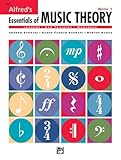
- An all-in-one music theory course designed for students of any age — whether listeners or performers — who want a solid understanding of the language of music
- Covers foundational concepts including staff, notes, pitches, clefs, time signatures, note values, dynamics, flats, sharps, and whole and half steps across 25 concise lessons
- Combines reading and writing exercises with ear-training support (CDs sold separately) and unit reviews to reinforce learning and test knowledge retention
- Compatible with optional computer software featuring randomized drilling and scorekeeping for interactive, self-paced study
- Part of a complete product line including Teacher's Answer Keys, Flash Cards, Double Bingo games, and Reproducible Teacher's Activity Kits for studio and classroom use
That mediation is distinct from the music itself. Listening to a recording is one activity; discovering it through a recommendation, sharing it, or discussing it with other listeners are related activities that take place around the recording. Platforms can bring these together, but access to a work and conversation about that work are not the same thing.
Music media can include images and discussion
Music-related media may carry more than sound. A music video pairs audio with images; editorial coverage can place a song or artist in a wider story; and online platforms can host discussion by artists and audiences. In this broader view, the media around music help frame how it is encountered without becoming identical to the musical work.
This distinction is useful for documentary viewing, too. A documentary may use music as part of its content, while also relying on a soundtrack, recorded performance, broadcast clip or music video as a particular media form. The images, narration and surrounding context can change how the audience understands the music.
Is music itself a medium, or is it content?
It can be either, depending on how precisely the term is being used. If “medium” means the channel or format that carries a message, a song is more often the content and radio, a record or a digital platform is the medium. If “media” is being used broadly for cultural forms of communication, music can itself be described as a medium: it conveys ideas, emotions and cultural meanings.
Rank #4

- Format: Book & 2 CDs
- Category: Textbook - General
- Contributors: By Andrew Surmani, Karen Farnum Surmani, and Morton Manus
- Pub Date: 8/2004
- Series: Essentials of Music Theory
So the most precise short formulation is that music is both something communicated and something communicated through media. The distinction does not require choosing one label for all situations; it clarifies which part of the experience is under discussion.
Independent reader supportYour contribution helps us test, update, and keep practical guides available for everyone.A practical way to describe any music experience
When describing how music reaches an audience, separate the experience into a few questions:
- What is the content? A composition, a performance, or a particular recording?
- How is it delivered? In person, by broadcast, on a physical recording, or over a network?
- How is it presented? As audio alone, alongside images, or within editorial or social context?
- What does the audience do? Listen, share, discuss, curate or create material in response?
- What kind of access is involved? Is the listener hearing a live performance, using a copy, or accessing music through a platform?
These questions describe different parts of the encounter rather than imposing a single definition of “media.” They make it easier to explain why a performance, a vinyl record, a radio broadcast and a streaming service are all relevant to music media, even though they do different things.
Quick Recap
Product prices and availability are accurate as of the date/time indicated and are subject to change. Any price and availability information displayed on Amazon at the time of purchase will apply.




