What’s actually slowing this PC down?
Pick the symptom - the matching free tool is one click away.
Usually, yes: in the United States, ripping a CD you own for private, noncommercial listening is generally a low-risk practice. The key support is 17 U.S.C. § 1008, which limits infringement actions based on a consumer’s noncommercial use of recording devices or media to make musical recordings. That is not an unlimited license: sharing files, making them publicly accessible, selling copies, or bypassing copy protection can raise separate legal issues.
What does ripping a CD mean under copyright law?
Ripping, also called digital audio extraction, copies the audio from a physical disc into files such as FLAC, WAV, ALAC, AAC, or MP3. The act creates a reproduction of copyrighted material. A commercial song can involve two copyrights: one in the sound recording—the recorded performance—and another in the underlying musical composition, such as the melody and lyrics.
Buying a CD ordinarily gives you ownership of that particular disc, not ownership of those copyrights. The U.S. Copyright Office explains the difference between owning a copy and owning copyright, while the Copyright Act generally gives copyright holders exclusive rights that include reproduction and distribution. See the Copyright Office’s copyright overview and 17 U.S.C. §§ 106–107.
Why private ripping of an owned CD is generally low-risk
What § 1008 says—and what it does not
The Audio Home Recording Act’s 17 U.S.C. § 1008 says that no copyright-infringement action may be brought based on a consumer’s noncommercial use of a digital or analog recording device or medium to make digital or analog musical recordings. That is the strongest statutory support for the ordinary scenario: a consumer makes a copy for personal, noncommercial listening. Read the provision at 17 U.S.C. § 1008.
#1 Best Overall
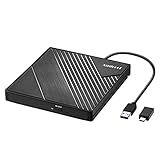
- 【PLUG & PLAY – EASY CONNECTION】 Simply connect the Amicool External DVD Drive to your computer’s USB or Type-C port, and it will usually be detected right away without the need for extra drivers. For stable operation and sufficient power, we recommend connecting it directly to a USB port on your computer (for desktops, use a rear motherboard port) and avoiding USB hubs or extension cables. This user-friendly design ensures quick setup for both beginners and professionals.
- 【FAST & STABLE DATA TRANSMISSION】 Featuring dual interfaces (USB 3.0 and Type-C), this optical drive supports data transfer speeds up to 5Gbps. To ensure a reliable connection, please connect it directly to your computer. The drive supports multiple disc formats such as DVD+R, DVD-R, CD-R, and CD-RW. Please note: It does NOT support DVD-RAM, Blu-ray (BD) discs, or certain proprietary formats. Maximum DVD read speed is 8x, and maximum CD read/write speed is 24x.
- 【UNIVERSAL COMPATIBILITY】 Compatible with Windows 11 / 10 / 8.1 / 7, Linux, and all macOS (Intel & Apple Silicon) for MacBook Air/Pro, iMac, Mac mini; NOT for iPad/iPhone/Apple TV/ChromeOS; for Mac, insert disc FIRST, connect directly to USB port (use a POWERED USB‑C hub for M1/M2/M3 to avoid insufficient power), and open media with VLC Player (Apple DVD Player not supported). Works with most computers from brands like Apple, Dell, HP, Lenovo, ASUS, Acer, and Samsung. 👉 Important: Designed specifically for computers. It is NOT compatible with TVs, tablets, game consoles (e.g., PlayStation, Xbox), car stereos, or standalone Blu-ray players.
- 【SLIM & PORTABLE DESIGN – BUILT-IN CABLE, READY TO GO】With an integrated cable design, slim body, and stylish matte finish, this lightweight CD/DVD drive is both durable and portable. Easily slip it into your laptop bag or backpack and use it anytime, anywhere—perfect for business, travel, or home use
- 【MULTIFUNCTIONAL & RELIABLE OPERATION】 Equipped with intelligent error correction and anti-shock technology, this drive supports reading, writing, and burning discs. If the drive is not recognized or a disc cannot be read, try restarting your computer or testing with a different, standard CD-R or DVD-R disc. The pop-up button and built-in cable design offer convenience and portability. For desktop PCs, connecting to a rear USB port is recommended for optimal power and performance.
Section 1008 is a limitation on certain infringement actions, not a broad declaration that every personal copy is lawful. Its language does not give a consumer permission to distribute music, operate a service for others, or make commercial duplicates. It also does not necessarily settle every question about computers, network storage, cloud services, or anti-circumvention rules. A cautious practical conclusion is that copying a legitimately owned CD for private, noncommercial use is on much stronger ground than copying from an unauthorized source or making files available to other people.
Fair use is relevant, but not a magic phrase
Fair use under 17 U.S.C. § 107 is assessed case by case using four factors: the purpose and character of the use; the nature of the copyrighted work; the amount and substantiality used; and the effect on the work’s potential market. Noncommercial personal listening may favor the first factor, but copying an entire recording weighs differently under the amount factor. There is no fixed number of songs, percentage, or number of notes that automatically qualifies as fair use. The Copyright Office explains the factors and their fact-specific application in its fair-use FAQ and Fair Use Index.
Fair use may support arguments about some personal copying, but ordinary CD ripping should not be described as automatically lawful just because it is called fair use. Section 1008 and the noncommercial personal-use context also matter.
Rank #2
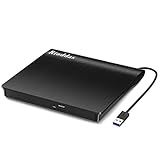
- Plug & Play. Easy to use, powered by USB port. No external driver or power adapter needed. Simply plug it into your USB port for automatic detection. For optimal performance on desktop computers, connect directly to a high-power USB port on the back of the motherboard. This hassle-free solution requires no technical setup, and if the drive isn't immediately recognized, trying a different USB port typically resolves most connection issues
- High Speed & Reliable Performance. Compatible with USB 3.0 (backwards compatible with USB 2.0), this drive delivers fast data transfer speeds up to 5Gbps. Engineered with strong fault tolerance, it minimizes freezing, skipping, and errors during disc playback or burning. The stable performance ensures smooth, reliable operation and reduces the risk of defective performance
- Intelligent Tech & Stable Connection. Features a physical eject button that safely releases discs even when your computer fails to recognize the drive—eliminating the common frustration of stuck media. Enhanced with copper mesh technology, this external component ensures consistently stable data transmission during all your reading and writing tasks
- Trendy & Practical Design. Features a brushed texture shell for modern visual and tactile appeal. The innovative embedded cable design keeps your USB cable securely stored and always accessible, eliminating worries about misplacement. This compact, all-in-one solution is perfectly suited for easy transport and organized storage
- Wide Compatibility. This external USB CD/DVD drive works with Windows 11/10/8.1/7/Vista/XP, Linux, and macOS 10.16+ (MacBook Pro/Air, iMac, Mac mini). Compatible with most laptops/desktops (HP, Dell, Lenovo, ASUS, Samsung). For optimal performance on desktops, connect to rear USB ports. Supported formats include CD-ROM/R/RW, DVD-ROM/R±RW/R±DL, and VCD. IMPORTANT: Not compatible with ChromeOS, smartphones, tablets, TVs, projectors, vehicles, or Blu-ray/4K discs. Please verify your device type before purchasing
Which CD-ripping situations are different?
| Situation | Practical assessment | Prudent approach |
|---|---|---|
| Rip a CD you own for private listening | Generally low-risk in the U.S. | Keep the files private and noncommercial. |
| Rip a used CD you bought | Generally similar to ripping another lawfully owned disc. | Remember that ownership of the disc is not ownership of the copyright. |
| Rip a borrowed, library, or rented CD and retain the files | Less secure; temporary possession is not the same as owning the disc. | Do not retain a rip unless permission or applicable terms clearly allow it. |
| Transfer files to your phone, car, or personal player | Typically fits private personal playback. | Do not expose the files to unauthorized users. |
| Store files on a private home server | Different from public sharing, but access and service terms can matter. | Use authentication and limit access to yourself. |
| Post a public or shared link, or use a torrent or file-sharing network | High risk; this is not merely private listening. | Do not distribute or make the files available to others. |
| Give a friend a digital copy | Raises reproduction and distribution issues, even if no money changes hands. | Do not treat a free transfer as personal use. |
| Sell the original CD but keep the rip | Less secure and fact-dependent; the file may substitute for the transferred copy. | For risk reduction, delete the rip when transferring the disc. |
| Bypass protection on a CD | Fact-dependent; anti-circumvention law is a separate issue. | Do not assume personal use makes circumvention lawful. |
Borrowed, library, rented, and secondhand discs
The strongest case is a disc you own. A borrowed, library, or rented CD presents a weaker basis because you do not own the physical copy, the file may outlast the loan, and the copying can function as a way to obtain music without retaining an authorized copy. Library and rental terms may also impose contractual restrictions. The legal answer can depend on the facts and applicable terms, so it would be too broad to say every such copy is definitively unlawful; as practical advice, do not keep a rip from a temporary loan unless permission clearly allows it.
The Tool Desk
Outbyte Driver Updater FREEFix the driver behind crashes, sound loss and screen glitchesFind Drivers →Outbyte PC Repair FREERepair Windows errors before they cause bigger problemsFix Now →A lawfully purchased used CD is different from a borrowed one: you own the physical copy. First-sale principles generally concern disposition of that particular copy, not a general right to reproduce the music. The Copyright Office’s overview describes copyright limitations, and the Department of Justice explains that first sale does not apply in the same way to copies merely rented, leased, or loaned rather than owned: DOJ explanation of the first-sale doctrine.
Selling or giving away the original
Selling the physical CD is generally a first-sale question. Retaining a digital rip after transferring the only physical copy is a different and less secure situation: the file can become a substitute for the copy you no longer own. There is no simple deletion command stated as a universal statutory rule in the sources cited here, so deleting the rip is conservative risk-reduction advice, not a claim that a specific statute expressly requires it.
Rank #3

- Experience High-Speed Read/Write: This Type-C & USB 3.0 external CD/DVD drive delivers blazing-fast performance with up to 8x DVD rewrite/read speed and 24x CD write/read speed. Leveraging dual Type-C and USB 3.0 connectivity, it achieves maximum 5Gbps data transfer rates – ensuring seamless playback of music and movies, smooth software/system installation, and error-free disc burning
- Plug and play, no driver required: Our product design is simple, providing a worry free experience - just plug it in, no need to install complex drivers. This design ensures efficient user use and provides users with a direct digital experience. Our product comes with USB-A and USB-C interfaces, and we believe these interfaces can adapt to your device and bring portable CD burning functionality to your laptop
- Broad Compatibility:Our product is engineered for extensive compatibility, adapting to various formats and devices. Whether you're working on a PC, Mac, or other platforms(except for Chromebook, car platforms, tablets, and televisions), it effortlessly integrates into your digital ecosystem. With wide-ranging support for different file types and operating systems,you can trust our products to provide you with excellent experiences in CD burning, DVD burning, CD reading, and other aspects
- Portable and Lightweight:Our optical drive stands out with its exceptional portability and lightweight design, measuring just 0.79 inches thick and weighing only 0.55 pounds. It easily fits into your handbag or backpack, making it perfect for use at the office, home, or on the go. Made from high-quality materials and featuring a sleek, minimalist design, this external cd/dvd drive is not only stylish and durable but also incredibly convenient . It supports multiple disc formats, offering you a seamless digital experience. Choose our optical drive and let portability and lightness become your trusted companions
- Thoughtful service, thoughtful product: Our external DVD/CD burner uses a built-in cable, eliminating the hassle of cable storage. In addition, for your suggestions on after-sales issues with the product, you can also contact us through the methods provided in the user manual, and we will be happy to serve you.
Where you store and share the files matters
Personal devices and private storage
Moving a private rip from a computer to your phone, personal music player, or car USB drive does not by itself make the use commercial. A private home media server is also different from a public service, but keep it authenticated and limited to your own use. A private backup is lower-risk than public sharing, though it is not automatically free of contractual or other restrictions. The Copyright Office’s digital-files FAQ discusses backup-copy questions and cautions that software licenses may impose conditions.
Cloud lockers, Plex, and access for others
Uploading files to a cloud account is not a single legal category. Private backup storage differs from a public link, account sharing, or a service that creates server copies and provides playback access. If you use cloud storage or Plex, keep access private and review the service’s terms; owning the CD does not automatically authorize a service to make copies or provide remote access for others.
PC Slower Than It Used to Be?
A free scan shows the junk files, broken settings and background clutter dragging Windows down - then fixes them in one click.Free scan · Windows 10 & 11Outdated Drivers Are Slowing You Down
One free scan finds every outdated or missing driver and matches the right update for your exact hardware.Free scan · exact hardware matchUMG Recordings v. MP3.com is a useful warning, but not a ruling that private household ripping is always unlawful. MP3.com copied recordings onto its servers and made them remotely available through a commercial service, even when users demonstrated CD ownership. The court rejected the service’s fair-use position in that fact pattern: appellate decision and district-court ruling. A person keeping files on a private computer is not the same as a commercial server service giving users remote access.
Rank #4

- 【External Optical Drive – GODBPNYMU】 Choose the technologically advanced GODBPNYMU external optical drive. This DVD-ROM rewritable disc player delivers dependable performance. Through durable construction, it helps extend the lifespan of the drive. Plug-and-play functionality paired with high-speed read/write capabilities provides convenient and reliable performance
- 【Universal Compatibility with Systems and Devices】Compatible with Windows 7/8.1/10/11/XP/Vista , 2000, ME, Linux, and all versions of macOS. Seamlessly compatible with mainstream computer brands including Apple, Dell, Sony, Toshiba, NEC, IBM, HP, Lenovo, ASUS, Samsung, Acer, and more. Note: Only compatible with laptops, desktop computers, all-in-one PCs, and mini PCs. Desktop users are advised to connect the optical drive to a USB port on the rear panel of the computer case for optimal reading performance. Not compatible with TVs, tablets, or in-car entertainment systems
- 【5-in-1 Multifunctional Hub 】This external optical drive not only burns and reads CD/DVD but also functions as an external USB hub for laptops. It features 2 USB 2.0 ports and 1 TF & SD card slot, compatible with USB hard drives, wired/wireless mouse and keyboard sets, computer coolers, and other USB peripherals. The card slot design enables convenient transfer of data, photos, and videos from camera memory cards or mobile phone cards to your computer
- 【Integrated Cable Design Dual 】 USB-A and USB-C 3.0 ports for convenient use. This slim, portable CD/DVD player fits easily into your laptop bag, making it the perfect companion for home use, data backup, movie playback, software installation, office work, or travel—enjoying your favorite CD and DVD collections anytime! The built-in cable neatly tucks away at the bottom. Includes a USB power cable for external drives experiencing insufficient power—connect to a computer's USB port or a 5V/2A device for optimal disc reading. Note: The included power cable does not support data transfer
- 【Complete Kit – External Optical Drive】 Includes the 5-in-1 drive, dual cables, and manual. Backed by a reliable 24-month warranty.
Torrents and file-sharing
Uploading a rip to a torrent or file-sharing network is not private personal use. A copyright owner’s distribution right can be implicated when a file is made available to other users, even if you own the original CD or no one is known to have downloaded it. In A&M Records v. Napster, the court addressed the difference between personal use and making music available to other users; owning a source copy does not authorize public distribution. See the Napster decision.
Independent reader supportYour contribution helps us test, update, and keep practical guides available for everyone.Copy-protected CDs raise a separate question
Separate two issues: whether making the resulting copy infringes copyright, and whether bypassing a technological access control violates the Digital Millennium Copyright Act’s anti-circumvention rules. Personal-use reasoning does not automatically answer the second question. Whether a particular system is a protected access control, or a specific circumvention falls within a current exemption, can depend on the technology, work, device, and applicable exemption. Do not casually defeat protection on the assumption that a personal copy is always permitted.
If a disc fails to rip, first consider whether it is scratched, dirty, or incompatible with the drive; a different drive or lawful replacement may be the safer next step. For an unusual circumvention situation, the answer requires current, fact-specific legal advice rather than a general CD-ripping rule.
Best Value

- 【Plug & Play】This ORIGBELIE external CD DVD drive is powered by USB port, no additional drivers and power supply required! Just plug the USB type-A or type-C connector on the data cable to your computer and the CD burner will be detected by computer automatically, you can then use the corresponding software to read and write the discs with no complex settings. As for Mac system, please note that the computer will not display the device icon until the disc is placed and read successfully.
- 【High-Speed】The external DVD drive supports USB 3.0 high speed data transmission and is backward compatible with USB 2.0 / 1.1. It delivers max 8x DVD read/write speeds and max 24x CD read/write speeds, provides faster data transfer rates of up to 5 Gbps (625MB/S) without lag or distortion, get more done in less time! It also boasts strong error correction capability, noise reduction, shock resistance and low power consumption.
- 【Wide Compatibility】- This external cd drive supports various devices. It's compatible with Windows 11/ 10 / 8 / 7 / XP / 98 / SE / ME / 2000, Vista 7 / 8, Linux, Mac OS 10.6 or above such as Apple MacBook Air, iMac, Mac Mini and MacBook Pro. For desktops, please connect the DVD burner to the back USB port of the motherboard to avoid power shortage. (Not support for Cars, TV, Tablet, Phones, iPads, PS4/5, Xbox, Switch, Projectors, Chromebook, Surface (some models), Ubuntu system and blu ray disk)
- 【All Kinds of Disc】This CD player for laptop support read and write various formats discs, e.g. CD±R/RW, CD-ROM, DVD±R/RW, DVD-ROM, DVD-RAM, DVD+R DL, DVD-R DL, VCD e SVCD. The CD drive also can be used to listen to music, watch movies, data backup, burn files, install software, operating systems or games. If the CDs or DVDs can't be read by computer, use the charging cable included in the packge to connect to 5V charger or power bank to get extra power, that's because some computer doesn't have enough power to support the operation of the USB DVD drive external.
- 【Ultra Slim and Portable】Measuring just 13mm in thickness and weighing only 0.2 kg, the ORIGBELIE external optical drive is extremely slim and portable, taking up minimal space in travelling bag while on-the-go. Integrated data cable design, no need to worry about cable missing. What's more, its durable construction and anti-skid bottom ensure stable operation.
Choose a format and workflow for accuracy
Format choice is practical, not legal
FLAC, WAV, and ALAC are lossless formats; MP3, AAC, and Opus use lossy compression to reduce file size. The format does not determine whether the copy is lawful. For an archival library, a lossless master lets you make smaller device copies later without rereading the disc; use a lossy format when storage or device compatibility matters more. WAV is widely recognized but can be larger and less convenient for metadata; FLAC is a common lossless library choice, while ALAC suits Apple-oriented workflows.
A careful ripping checklist
- Connect a built-in or compatible external optical drive and confirm that the computer recognizes it.
- Choose ripping software that supports your operating system and desired formats, and offers secure or error-checked extraction, verification, and useful logs if accuracy matters.
- Insert the disc and check the album, artist, edition, disc number, and track titles. Correct metadata before ripping, especially for classical, live, deluxe, or international editions.
- Select a lossless format for an archival master, or a smaller format for a device copy. Enable secure ripping or error checks when available.
- Start the rip, then review the software’s log or verification result. A completed file is not proof of an error-free extraction.
- Store master files in a private folder and keep private backups. Do not put them in public folders, peer-to-peer software, or an unauthenticated server.
- If a device needs smaller files, transcode from the lossless master rather than repeatedly re-encoding an already lossy copy.
One documented software option
dBpoweramp’s official CD Ripper materials describe metadata and artwork retrieval, choosing a save path, and starting a rip with a Rip control. The vendor advertises secure ripping, AccurateRip verification, and support for FLAC, MP3, AAC, WAV, AIFF, ALAC, Opus, and Ogg Vorbis. See its CD Ripper page, Windows help, and macOS help. The product page reviewed August 18, 2026, showed fully functional 21-day Windows and macOS trials; no current purchase price is stated here.
When a rip fails or looks wrong
Scratched or damaged discs
- Clean the disc carefully and retry; a different optical drive may handle errors differently.
- Use secure ripping with repeated reads and inspect the error log or verification result.
- If verification fails, note the affected tracks rather than assuming the file is accurate because the software created it.
dBpoweramp’s support materials discuss scratched-disc behavior and drive-related ripping problems, including slowdowns and operating-system transfer issues: dBpoweramp support.
Incorrect metadata or no optical drive
Compare metadata results and correct the edition, disc number, and track names before ripping; inaccurate tags do not normally change the copyright analysis, but can make a library hard to search or deduplicate. If the computer has no optical drive, use a compatible external USB optical drive and confirm that the operating system recognizes it before choosing specialist software.
Keep the practical rule simple
For a U.S. consumer, privately ripping an owned CD for noncommercial listening is generally a low-risk use, with § 1008 providing important support. Keep the files under your control. Ownership of a disc is not permission to distribute its music, create access for others, or bypass technological protection without considering separate rules. This is a U.S.-focused general explanation, not individualized legal advice; other countries may apply different private-copying rules.
Quick Recap
Product prices and availability are accurate as of the date/time indicated and are subject to change. Any price and availability information displayed on Amazon at the time of purchase will apply.




