Quick wins for a faster PC:
Clear out junk files and repair common Windows errorsFree Scan →Scan for outdated or missing drivers - takes under a minuteDriver Scan →Repair Windows errors before they cause bigger problemsFix Now →For years, Independence Day 3 lived in the kind of Hollywood purgatory that usually signals the end of a blockbuster franchise. The 2016 sequel Independence Day: Resurgence failed to ignite the box office the way Fox hoped, delivering a global gross that looked respectable on paper but fell well short of justifying another effects-heavy, star-driven follow-up. In an era where tentpoles are expected to dominate, “good enough” quietly became not enough.
Behind the scenes, the warning signs kept stacking up. Fox’s merger into Disney reshuffled priorities almost overnight, and a legacy sci‑fi brand without a clear creative roadmap was never going to outrank Avatar, Marvel, or Star Wars. Roland Emmerich continued to publicly pitch ambitious sequel ideas, but years passed without a script announcement, a director’s deal, or meaningful movement toward production.
| # | Preview | Product | Price | |
|---|---|---|---|---|
| 1 |

|
Independence Day | $9.99 | Buy on Amazon |
| 2 |

|
Independence Day | $21.40 | Buy on Amazon |
| 3 |
|
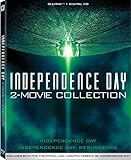
Independence Day/Independence Day Resurgence | $15.99 | Buy on Amazon |
| 4 |
![Independence Day (I&II) Bundle [Blu-ray]](https://m.media-amazon.com/images/I/51hrMKgSe5L._SL160_.jpg)
|
Independence Day (I&II) Bundle [Blu-ray] | $19.99 | Buy on Amazon |
| 5 |
![Independence Day: Resurgence (Bilingual) [Blu-ray + Digital Copy]](https://m.media-amazon.com/images/I/61aA5k25YfL._SL160_.jpg)
|
Independence Day: Resurgence (Bilingual) [Blu-ray + Digital Copy] | $12.69 | Buy on Amazon |
The silence grew louder after Emmerich’s Moonfall stumbled in 2022, further complicating his leverage with studios already wary of costly original sci‑fi. Add in Will Smith’s long‑standing absence from the sequel plans and the lack of any official greenlight, and Independence Day 3 came to be viewed less as an upcoming event and more as a relic of an earlier blockbuster era. By the time Comic‑Con rolled around, most fans had quietly accepted that Earth’s next invasion might never make it to theaters.
The SDCC Moment: What Was Actually Said (and What Wasn’t)
Comic‑Con didn’t deliver a surprise trailer or a bombshell casting announcement, but Independence Day 3 unexpectedly re‑entered the conversation in a way it hasn’t for years. During a broader SDCC discussion about legacy sci‑fi franchises and long‑gestating sequels, the film was name‑checked in a context that immediately raised eyebrows. Not because it was confirmed, but because it was no longer being treated as a dead title.
Do these 3 things before closing this tab:
1Fix the driver behind crashes, sound loss and screen glitches2Repair Windows errors before they cause bigger problems3Scan for outdated or missing drivers - takes under a minute#1 Best Overall
- It is an ordinary summer day. But then, without warning, something very extraordinary happens. Enormous shadows fall across the land. Strange atmospheric phenomena, ominous and mesmerizing, surface around the globe. All eyes turn upward. The question of whether we're alone in the universe has finally been answered. And, in a matter of minutes, the lives of every person across the globe are forever
The Comment That Sparked the Buzz
The moment came when a studio representative, speaking broadly about dormant Fox-era properties now under Disney’s umbrella, acknowledged that Independence Day remains “a universe with unfinished stories.” The wording was careful, even conservative, but deliberate. For a franchise that has been conspicuously absent from official development slates, simply being framed as narratively open rather than commercially closed was a notable shift.
Importantly, the comment was made on a main SDCC stage, not in a hallway interview or off-the-record aside. That alone gave it weight. Studios don’t casually reference legacy tentpoles in public forums unless there’s at least internal discussion happening behind the scenes.
What Wasn’t Announced
There was no mention of a script being written, no director attached, and no production timeline hinted at. Roland Emmerich’s name never came up, nor did any returning cast members. Will Smith’s absence from the conversation was especially telling, underscoring that this wasn’t a star-driven revival pitch.
Equally absent was any language around a theatrical release. The conversation stayed carefully neutral on format, leaving open the possibility of a streaming pivot, a rebooted approach, or a scaled-down continuation rather than the globe-spanning spectacle fans might expect.
Why This Still Matters
In Comic‑Con terms, this was less an announcement and more a signal flare. Independence Day 3 wasn’t declared imminent, but it was repositioned from forgotten sequel to potential asset. That distinction matters in a studio ecosystem where silence usually equals cancellation.
The update suggests that Disney is at least reassessing the brand’s value, likely in the context of IP mining rather than director-driven ambition. Whether that leads to an actual greenlight is another question entirely, but for the first time in years, Independence Day is back on the board instead of buried beneath it.
Who Delivered the Update and Why Their Involvement Matters
A Studio-Level Voice, Not a Creative Tease
The update didn’t come from a filmmaker, actor, or nostalgic cast reunion panel. Instead, it was delivered by a senior studio representative speaking on behalf of Disney’s 20th Century banner, the division now responsible for managing Fox’s legacy franchises. That distinction immediately set the comment apart from the kind of speculative chatter that often swirls around Comic‑Con.
When studio executives speak publicly, especially on a main SDCC stage, their words are typically vetted and intentional. This wasn’t an offhand tease meant to energize fans in the room; it was a controlled acknowledgment of IP status. In other words, it reflected internal conversations rather than external wishful thinking.
Recommended Free Tools
Why Studio Oversight Changes the Equation
Disney’s stewardship of the Independence Day franchise places it in a very different development ecosystem than the one that produced the original films. Decisions are now driven less by individual creative ambition and more by portfolio strategy, brand scalability, and cross‑platform viability. Hearing from someone tasked with evaluating that broader landscape lends the update a degree of credibility that fan speculation or filmmaker enthusiasm simply can’t match.
It also signals that Independence Day is being considered alongside other revived Fox-era properties, not treated as an outlier. That matters because Disney has shown a willingness to quietly incubate projects for years before making a decisive move, especially when the path forward isn’t an obvious theatrical play.
The Absence of Familiar Names Is Part of the Message
Notably, the update wasn’t tied to Roland Emmerich, Jeff Goldblum, or any legacy talent. While that may disappoint fans hoping for a classic-style continuation, it reinforces that this conversation is happening at the corporate development level, not the creative pitching stage. The franchise is being evaluated as an asset first, story second.
That doesn’t mean returning voices are off the table, but it does suggest that Independence Day 3, if it happens, will be shaped by studio priorities rather than nostalgia alone. For better or worse, that context helps explain why the update felt cautious, measured, and surprisingly honest about where the franchise currently stands.
Rank #2
- It is an ordinary summer day. But then, without warning, something very extraordinary happens. Enormous shadows fall across the land. Strange atmospheric phenomena, ominous and mesmerizing, surface around the globe. All eyes turn upward. The question of whether we're alone in the universe has finally been answered. And, in a matter of minutes, the lives of every person across the globe are forever
Reading Between the Lines: Development Signals vs. Marketing Noise
At Comic‑Con, the difference between a real development update and a crowd‑pleasing tease often comes down to language. Studios are careful with phrases like “active development,” “early conversations,” or “exploring options,” because each one carries a specific internal meaning. The SDCC mention of Independence Day 3 landed firmly in that gray space, not a greenlight, but not empty air either.
This is where fans have to recalibrate expectations. The update wasn’t designed to sell tickets or generate immediate hype; it functioned more like a temperature check. That alone separates it from the kind of viral SDCC moments that exist purely to dominate headlines for 48 hours.
What the Studio Actually Confirmed
The most telling element wasn’t what was promised, but what was acknowledged. Independence Day was described as a property still under evaluation, not a closed book, and that distinction matters. Studios rarely reference dormant IP at Comic‑Con unless there is at least some internal mandate to reassess its viability.
Equally important, there was no attempt to position the film as imminent. No release window, no casting talk, no creative direction was floated. That restraint suggests the franchise is somewhere between development tracking and strategic holding pattern, a space where projects live before a decision is made to either move forward or quietly sunset them.
What’s actually slowing this PC down?
Pick the symptom - the matching free tool is one click away.
Why This Doesn’t Feel Like Empty Fan Service
Marketing noise usually comes with hooks: a logo reveal, concept art, or a filmmaker stepping out to ignite applause. None of that happened here. Instead, the update functioned more like a corporate signal, letting audiences know that Independence Day still exists on Disney’s internal radar.
That kind of acknowledgment is subtle, but it’s rarely accidental. Studios don’t invite questions about aging franchises unless they’re prepared to own the conversation. In this case, the honesty of the response made it feel less like hype management and more like expectation management.
The Limbo Zone: Progress Without Momentum
For Independence Day 3, the current status appears to be real but unresolved. There’s awareness of the brand’s value, paired with uncertainty about scale, format, and audience appetite in a post‑Resurgence landscape. That tension explains why the update felt both encouraging and frustrating.
The franchise isn’t racing toward production, but it’s also not trapped in nostalgia purgatory. What SDCC revealed is a project hovering in the industry’s most familiar holding space: alive enough to be discussed, not yet strong enough to be committed to.
How This Update Fits Into Fox/Disney’s Current Franchise Strategy
Disney’s handling of Independence Day now sits squarely within its broader, carefully calibrated approach to inherited Fox properties. Since the acquisition, the studio has been methodical about which legacy brands get revived, which get retooled, and which are kept warm while market conditions shift. The SDCC acknowledgment signals that Independence Day hasn’t been written off, but it also hasn’t earned an automatic greenlight in today’s risk-conscious environment.
This is a company that has learned, sometimes painfully, that brand recognition alone doesn’t guarantee box office stability. Every revival now has to justify its existence not just creatively, but strategically.
Selective Revival Over Automatic Sequels
Disney’s recent franchise playbook favors selective reactivation rather than blanket continuation. Projects like Alien: Romulus, Kingdom of the Planet of the Apes, and even the careful repositioning of Predator show a willingness to reengage with Fox-era IP, but only when a clear creative hook and audience lane are identified.
Rank #3
Independence Day 3 doesn’t yet appear to have crossed that threshold. The SDCC update fits a familiar pattern: keep the IP visible, gauge fan response, and quietly assess whether there’s a version of the franchise that aligns with modern blockbuster expectations.
Budget Discipline in a Post-Resurgence Reality
One of the biggest variables working against an immediate greenlight is scale. Independence Day has always been synonymous with massive spectacle, and Resurgence proved that spectacle alone isn’t enough to guarantee long-term franchise health. In a climate where Disney is actively reigning in oversized budgets, a third film would need a compelling argument for why it deserves tentpole-level investment.
The SDCC language suggests the studio is aware of that challenge. Before committing to another globe-spanning invasion story, Disney appears to be weighing whether the brand can be recalibrated, either tonally, narratively, or structurally, to fit a more sustainable model.
Theatrical Event or Something Else?
Another layer of uncertainty is format. Disney now evaluates franchise potential across theatrical, streaming, and hybrid possibilities, and not every legacy IP is automatically destined for the big screen. While Independence Day feels inherently theatrical, the studio has shown increasing openness to alternative paths if the numbers don’t support a traditional rollout.
The fact that SDCC produced acknowledgment without positioning hints that these conversations are still fluid. The franchise’s future could hinge on whether a pitch emerges that justifies a true event release rather than a scaled-back reinvention.
Free tools Windows power users keep installed
One-click scans. No signup required.
Why Disney Is Keeping the Door Open
What ultimately makes the SDCC update meaningful is that Disney didn’t let Independence Day fade into silence. Within its current franchise strategy, silence is often the loudest signal of abandonment. Instead, the studio chose to publicly classify the property as active but undecided, a status reserved for IP with lingering value and unresolved potential.
That places Independence Day 3 in a strategic middle ground. It’s not being rushed, not being ignored, and not being promised. In Disney terms, that’s a sign the franchise still has leverage, even if it hasn’t yet proven it knows how to use it.
Creative Direction Questions: Story Continuation, Reboot, or Hybrid?
Perhaps the most intriguing part of the SDCC update isn’t that Independence Day 3 was mentioned, but how carefully Disney avoided defining what that movie would actually be. That ambiguity immediately raises a core question the franchise has wrestled with since Resurgence: does the next chapter move forward, start over, or split the difference?
The answer matters, because each path carries very different creative and financial implications. Disney’s current development philosophy suggests the studio is actively weighing all three rather than defaulting to a traditional sequel.
The Tool Desk
Outbyte Driver Updater FREEFix the driver behind crashes, sound loss and screen glitchesFind Drivers →Outbyte PC Repair FREERepair Windows errors before they cause bigger problemsFix Now →A Direct Sequel to Resurgence?
On paper, Independence Day: Resurgence already laid the groundwork for a continuation, teasing a larger alien mythology and an interstellar counterattack. Characters like Jake Morrison and Patricia Whitmore were positioned as the next generation, ready to take the fight beyond Earth.
The problem is that Resurgence underperformed both critically and commercially relative to its budget. Committing to a full continuation means accepting that film’s creative baggage, while also convincing audiences to reinvest emotionally in a storyline many felt never fully landed.
Rank #4
- Scene Specific Commentary by Roland Emmerich and Dean Devlin
- Commentary by Oscar Winning Special Effects Supervisors Volker Engel and Doug Smith
- Theatrical Teaser and Trailers
- Another Day: The Making of Independence Day: Resurgence (4-Part Documentary)
- Deleted Scenes
A Full Reboot Isn’t Off the Table
A clean reboot would give Disney the most flexibility. It would allow the studio to reintroduce the premise to younger audiences, reset the scale, and potentially reframe the invasion story through a more modern sci-fi lens without being bound to 1996 or 2016 continuity.
However, rebooting Independence Day comes with its own risks. The original film’s cultural impact is so specific, tied to its characters, tone, and era, that starting over could strip the brand of the very nostalgia that still makes it valuable.
Crashes, No Sound, or Screen Glitches?
Random freezes, missing sound and display glitches usually trace back to one bad driver. Find and replace yours safely.Free scan · under a minuteWindows Errors? Fix Them Before They Spread
Repair common Windows errors and clear accumulated junk for a smoother, more stable PC - no reinstall needed.Free scan · no reinstallThe Hybrid Approach Disney Likely Prefers
The SDCC language most strongly points toward a hybrid model, one that selectively honors the original while quietly distancing itself from Resurgence. This could mean a legacy sequel that treats the first film as foundational canon, minimizes the second, and introduces a new cast anchored by familiar touchstones.
Disney has successfully used this approach elsewhere, and it offers a pragmatic compromise. It keeps Independence Day recognizable, reduces narrative clutter, and opens the door to fresh storytelling without officially declaring a reboot.
For now, the lack of specifics suggests no final creative mandate has been chosen. What SDCC revealed is that the question isn’t whether there’s interest in Independence Day 3, but which version of Independence Day Disney believes can actually survive in today’s blockbuster ecosystem.
Independent reader supportYour contribution helps us test, update, and keep practical guides available for everyone.Fan Expectations, Franchise Baggage, and the Shadow of Resurgence
If Independence Day 3 is going to happen, it won’t just be judged on spectacle. It will be measured against nearly three decades of fan expectations shaped by one of the most iconic disaster movies ever made. That reality makes the SDCC update intriguing, but also fraught with complications the franchise has never fully resolved.
The Weight of a Beloved Original
The 1996 Independence Day isn’t just a hit film; it’s a generational touchstone. Audiences still associate the brand with grand speeches, practical-scale destruction, and a balance of earnest patriotism and B-movie fun that feels almost impossible to replicate today. Any sequel, reboot, or hybrid has to grapple with that emotional imprint before it even rolls cameras.
That’s why fan reaction to SDCC’s vague update has been cautiously optimistic rather than euphoric. Viewers want the feeling of Independence Day back, not just the IP, and that’s a much harder promise to keep than announcing another installment.
Resurgence as a Creative Hurdle
Independence Day: Resurgence looms large over every conversation about a third film. For many fans, it wasn’t just disappointing; it fundamentally misunderstood what made the original work, leaning too heavily on scale and lore while losing character-driven momentum. That perception has turned Resurgence into a creative liability rather than a launchpad.
The SDCC update’s careful wording suggests Disney is acutely aware of this. By avoiding explicit references to Resurgence while still acknowledging future potential, the studio appears to be threading a needle, neither disowning the sequel nor fully embracing its direction.
Recommended Free Tools
Why Fans Are Divided Right Now
Some longtime fans want closure, a proper follow-up that redeems unfinished ideas and finally pays off the teased interstellar war. Others would rather see the franchise quietly reset, preserving the original film’s legacy rather than extending a storyline they’ve already checked out of. That divide explains why the SDCC news landed as “surprising” rather than reassuring.
The update doesn’t confirm momentum, but it does confirm awareness. Disney knows Independence Day still has name recognition, but also understands that blind continuation is unlikely to win back skeptical audiences.
Is the Franchise Actually Moving Forward?
At this stage, Independence Day 3 exists in a liminal space between possibility and planning. The SDCC acknowledgment signals that the franchise hasn’t been shelved, yet the absence of talent attachments, story specifics, or a timeline indicates it’s still being evaluated rather than fast-tracked.
For fans, that means cautious patience is warranted. The door is open, but the shadow of Resurgence ensures that whatever steps come next will be deliberate, and potentially very different from what earlier sequels promised.
What’s actually slowing this PC down?
Pick the symptom - the matching free tool is one click away.
So Is Independence Day 3 Really Happening? A Clear Reality Check
The honest answer is yes, but not in the way Comic-Con speculation tends to inflate. The SDCC update confirms that Independence Day 3 is being discussed at the studio level, not that it’s actively moving toward production. That distinction matters, especially for a franchise carrying as much creative and commercial baggage as this one.
Disney’s language suggests evaluation, not execution. In modern franchise development, that’s the phase where ideas are weighed against audience sentiment, market conditions, and whether the brand can justify its blockbuster-scale budget again.
What the SDCC Update Actually Confirms
The most important takeaway from SDCC is that Independence Day has not been abandoned. The franchise still exists on Disney’s internal radar, which is more than many legacy IPs can claim years after a lukewarm sequel.
However, acknowledgment is not commitment. There is no greenlight, no script announcement, and no indication that production timelines are being assembled. This is a franchise being kept warm, not fired back up.
Why Disney Is Moving Carefully
From a business perspective, caution is logical. Independence Day is a global-scale spectacle franchise that demands massive investment, and Resurgence proved that brand recognition alone isn’t enough to guarantee audience enthusiasm.
Disney is also operating in a post-franchise-fatigue era. Studios are increasingly selective about which legacy properties deserve continuation versus reinvention, and Independence Day sits right on that fault line.
What Would Actually Signal Real Momentum
If Independence Day 3 were truly moving forward, the signs would be unmistakable. A director attachment, a tonal pitch, or even early casting conversations would shift this from theoretical to tangible.
Just as crucial would be clarity about approach. Whether Disney chooses a direct continuation, a soft reboot, or a generational reset will define whether this franchise can escape Resurgence’s shadow or remain trapped by it.
The Tool Desk
Outbyte PC Repair FREEClear out junk files and repair common Windows errorsFree Scan →Outbyte Driver Updater FREEFix the driver behind crashes, sound loss and screen glitchesFind Drivers →The Real State of Independence Day 3
Right now, Independence Day 3 lives in development purgatory. It’s not dead, but it’s also not reborn, hovering in that familiar space where studios test nostalgia against modern expectations.
For fans, the SDCC update is neither a promise nor a tease, but a temperature check. Independence Day still matters enough to be discussed, and in today’s industry, that alone keeps hope alive. Whether that hope turns into a return worth cheering depends entirely on what Disney decides the franchise should be, not what it used to be.
Quick Recap
Product prices and availability are accurate as of the date/time indicated and are subject to change. Any price and availability information displayed on Amazon at the time of purchase will apply.




