The Tool Desk
Outbyte Driver Updater FREEScan for outdated or missing drivers - takes under a minuteDriver Scan →Outbyte PC Repair FREEClear out junk files and repair common Windows errorsFree Scan →When Hugh Jackman signed on to Song Sung Blue, it immediately landed in a cultural gray area that Hollywood keeps returning to: the space between biography and inspiration. The film, developed by Focus Features and directed by Craig Brewer, is not a traditional cradle‑to‑grave biopic, but a dramatized, music‑driven story inspired by real-life performers whose lives orbit the legacy of Neil Diamond. That distinction, subtle on paper, has proven far more complicated in practice.
Jackman plays a working‑class musician who finds purpose and recognition through performing Diamond’s music, with the film leaning heavily on the emotional weight and cultural familiarity of songs like “Sweet Caroline” and the titular “Song Sung Blue.” While Diamond himself is not portrayed directly, the narrative trades on the iconography of his career, using tribute culture as a lens to explore fandom, artistic longing, and the blurred line between homage and ownership. It is precisely that proximity to a living musical legacy that has made the project feel, to some, uncomfortably close to a portrait without permission.
![Song Sung Blue (2025) - Collector's Edition [DVD]](https://m.media-amazon.com/images/I/51IYx-ef-7L._SL160_.jpg)


The criticism from the musician’s son taps into that unease, questioning whether the film benefits from Diamond’s identity while sidestepping the responsibilities that come with a true biographical portrayal. His comments have reframed Song Sung Blue as more than a feel‑good crowd‑pleaser, placing it within a broader debate about authenticity, consent, and who gets to shape a legend’s narrative. In an era crowded with music biopics that bend fact for emotional effect, the film has become a case study in how even indirect portrayals can provoke very direct reactions.
Hugh Jackman’s Portrayal: Performance Choices, Accent, and Persona
Hugh Jackman approaches Song Sung Blue with a familiar blend of earnestness and theatrical precision, shaping his character as an everyman conduit for Neil Diamond’s music rather than a direct stand-in for the singer himself. The performance leans into emotional accessibility, framing the character’s journey around longing, validation, and the communal power of performance. For audiences, that choice makes the film immediately legible and emotionally legato, even as it invites closer scrutiny from those protective of Diamond’s legacy.
#1 Best Overall
Where the portrayal has drawn the most pointed criticism is in how closely Jackman’s persona brushes against Diamond’s public image without fully committing to impersonation. The musician’s son has reportedly taken issue with the way the character’s mannerisms, vocal inflections, and stage presence echo Diamond’s signature style while maintaining enough distance to avoid biographical accountability. To him, that balancing act feels less like inspiration and more like selective borrowing.
Accent and Vocal Interpretation
Jackman’s accent work has also become a flashpoint in the discussion, particularly among viewers attuned to Diamond’s unmistakable vocal identity. Rather than attempting a full vocal mimicry, Jackman opts for a softened American cadence that prioritizes clarity and emotional resonance over exact replication. That decision aligns with the film’s “inspired by” framing, but it has fueled claims that the performance benefits from Diamond’s sonic familiarity without engaging its specificity.
The criticism here is not that Jackman lacks vocal ability—his musical credentials are well established—but that the accent and phrasing hover in an in-between space. For fans and family members alike, that liminality can feel unsatisfying, as though the film wants the emotional shorthand of Diamond’s voice without the risk of getting it wrong. In a genre where vocal authenticity often functions as a badge of respect, that choice carries symbolic weight.
Persona, Tribute, and the Limits of Plausible Distance
At the heart of the controversy is Jackman’s carefully calibrated persona, which blends blue-collar humility with arena-sized emotion. The character’s onstage confidence, romantic earnestness, and relationship to his audience all mirror qualities long associated with Diamond, even if the script avoids direct parallels. For the musician’s son, this overlap reportedly underscores a larger concern: that the film wants the benefits of Diamond’s mythos without engaging his lived experience.
Crashes, No Sound, or Screen Glitches?
Random freezes, missing sound and display glitches usually trace back to one bad driver. Find and replace yours safely.Free scan · under a minuteWindows Errors? Fix Them Before They Spread
Repair common Windows errors and clear accumulated junk for a smoother, more stable PC - no reinstall needed.Free scan · no reinstallFrom an industry perspective, Jackman’s performance reflects a common biopic-era strategy, prioritizing emotional truth over factual precision. Yet Song Sung Blue demonstrates how thin that line can be when the real-life figure is both culturally dominant and still actively represented by family. Jackman’s choices, intentional or not, have become central to a debate about whether emotional homage is enough—or whether proximity to a legend demands a deeper level of permission and precision.
The Real Musician Behind the Story: Legacy, Image, and Cultural Significance
Any debate about Song Sung Blue ultimately circles back to the outsized legacy of Neil Diamond himself, a figure whose career straddled pop accessibility and deeply personal songwriting. Emerging in the 1960s Brill Building era before becoming a stadium-filling performer, Diamond cultivated an image that was both everyman and icon. His music thrived on emotional directness, built around a voice that was instantly recognizable and inseparable from his public persona. That fusion of sound, image, and sincerity is precisely what makes any fictionalized echo feel consequential.
A Voice as Identity, Not Just Instrument
For Diamond, vocal delivery was never merely technical; it was the carrier of his emotional worldview. The gravel, the phrasing, and the slightly conversational rhythm of his singing became part of how audiences understood his authenticity. From his son’s perspective, criticism of Jackman’s portrayal is less about imitation and more about omission, a sense that the performance borrows the emotional credibility associated with that voice without fully inhabiting its character. When a musician’s identity is so tightly bound to sound, even respectful abstraction can register as dilution.
Family Stewardship and Cultural Memory
The musician’s son has positioned his critique as one of guardianship rather than obstruction, emphasizing that Diamond’s story is not a generic blueprint for artistic struggle. Families of cultural icons often see themselves as stewards of nuance, tasked with protecting the distinctions that history tends to smooth over. In this case, the concern is that a broadly sketched protagonist risks collapsing Diamond’s specific journey into a composite of familiar biopic beats. That flattening, however unintentional, can feel like a misalignment between lived experience and cinematic shorthand.
Recommended Free Tools
Why Diamond Still Matters in the Biopic Era
Neil Diamond occupies a singular place in American pop culture, bridging generational divides without the benefit of constant reinvention or irony. His endurance came from consistency and emotional transparency, qualities that resist easy dramatization. Song Sung Blue enters a crowded field of music biopics that often prioritize universality over specificity, raising questions about what is gained and lost in the process. In invoking Diamond’s cultural gravity without naming it outright, the film highlights how powerful his legacy remains—and why proximity to it invites such scrutiny.
Rank #2
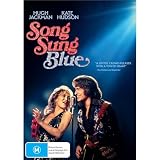
- Hugh Jackman, Kate Hudson, Craig Brewer
A Son Speaks Out: Specific Criticisms and Emotional Stakes Behind the Backlash
The pushback surrounding Hugh Jackman’s performance did not emerge as a blanket rejection of the film, but as a targeted response to what Neil Diamond’s son views as a fundamental miscalculation. His comments have focused less on Jackman’s talent and more on how the portrayal frames Diamond’s inner life. In his view, the film reaches for emotional resonance without fully grounding it in the traits that defined his father’s presence.
Voice, Physicality, and the Problem of Substitution
One of the most pointed critiques centers on vocal authenticity, not in terms of pitch-perfect mimicry, but emotional ownership. Diamond’s son has suggested that the performance leans on the audience’s preexisting affection for Diamond’s music rather than building a believable psychological throughline. The concern is that Jackman’s polished musical theater instincts, while impressive, project a different emotional frequency than Diamond’s grounded, almost unguarded delivery.
That difference extends beyond sound into physicality. Diamond’s stage persona was famously restrained, conveying intensity through stillness rather than theatricality. For his son, moments where the performance amplifies emotion through gesture or dramatic emphasis feel like an import from a different performance tradition, subtly reshaping who Diamond was in the public imagination.
Free tools Windows power users keep installed
One-click scans. No signup required.
Narrative Compression and Emotional Reframing
Another point of tension lies in how the film condenses Diamond’s life into familiar biopic rhythms. The son has noted that certain struggles are heightened while others are softened or bypassed, creating an arc that feels emotionally legible but historically selective. This is not framed as a factual dispute so much as an issue of emphasis, where complexity gives way to clarity.
For families, these choices carry weight beyond cinematic efficiency. When a story becomes the dominant version through which new audiences encounter an artist, omissions can feel as defining as inaccuracies. The emotional stakes stem from the fear that nuance, once lost to narrative momentum, rarely finds its way back.
Critique as Protection, Not Rejection
Importantly, the son’s criticism has been articulated without personal animus toward Jackman himself. He has acknowledged the difficulty of stepping into a role so closely tied to a living cultural memory and has stopped short of calling the portrayal disrespectful. Instead, his stance reads as protective, rooted in a desire to preserve the emotional truth behind the public figure.
This distinction matters in the broader conversation about artistic license. Biopics routinely ask audiences to accept interpretation as truth, but when those interpretations intersect with family memory, the margin for abstraction narrows. In speaking out, Diamond’s son is not attempting to halt that process, but to remind viewers that behind every cinematic symbol is a person whose identity was more specific, and more fragile, than the screen can easily contain.
Quick wins for a faster PC:
Scan for outdated or missing drivers - takes under a minuteDriver Scan →Clear out junk files and repair common Windows errorsFree Scan →Authenticity vs. Artistic License: Where Biopics Often Draw the Line
Music biopics have long operated on a delicate trade-off between emotional resonance and documentary precision. Filmmakers are tasked with translating an internal creative life into a visual language that plays to contemporary audiences, often leaning on performance conventions that feel cinematic even when they depart from reality. In that space, authenticity becomes less about replication and more about persuasion.
The Performance Problem
Jackman’s approach in Song Sung Blue reflects this long-standing tension. Known for his expressive physicality and musical theater background, Jackman brings an outward emotionality that contrasts sharply with Neil Diamond’s famously controlled presence. For Diamond’s son, that contrast is not a matter of acting skill, but of representational drift, where a recognizable star persona subtly overtakes the subject being portrayed.
Rank #3
This is a recurring issue in musician biopics, particularly when performers come from traditions outside the artist’s own. A restrained singer rendered through demonstrative performance risks reframing introversion as repression, or stillness as something to be overcome. What reads as dramatic truth on screen can, to those who knew the artist, feel like a fundamental misreading of character.
Whose Truth Gets Centered?
Biopics often prioritize accessibility over specificity, shaping real lives into arcs audiences instinctively understand. That usually means amplifying conflict, externalizing emotion, and giving internal struggles a visible form. While these choices are rarely malicious, they can sideline quieter truths that defined the artist for those closest to them.
In the case of Song Sung Blue, the son’s criticism underscores how family members often experience these portrayals differently than general audiences. Where viewers see a compelling interpretation, families see a version that may gradually eclipse lived memory. Once a performance becomes canonized through awards buzz or cultural repetition, it can redefine an artist’s legacy in ways that are difficult to recalibrate.
The Industry’s Unspoken Compromise
Hollywood has largely accepted that biopics are interpretive by design, even when marketed as intimate portraits. That implicit agreement works smoothly until it intersects with living stakeholders who feel the balance has tipped too far toward invention. The resulting friction is not about denying filmmakers their creative freedom, but about questioning where responsibility enters the equation.
Diamond’s son is effectively challenging that compromise, not by rejecting the film outright, but by asking audiences to recognize the gap between cinematic clarity and personal truth. In doing so, he highlights a broader question facing the genre: when storytelling demands simplification, who gets to decide which parts of a life are essential, and which are negotiable?
Hollywood’s History with Musician Families: Similar Past Controversies
Hugh Jackman’s Song Sung Blue controversy sits within a long tradition of musician families pushing back against how Hollywood reshapes legacies. Biopics frequently promise reverence, but their interpretive liberties often surface most sharply when relatives compare the screen version to the person they knew. In those moments, the debate shifts from performance quality to questions of authorship over memory.
When Families Feel Sidelined by Narrative Choices
One of the most cited examples remains Walk the Line, where members of Johnny Cash’s family took issue with the film’s compression of timelines and its heightened emphasis on addiction and romantic turmoil. While the film was widely praised and Oscar-winning, some relatives argued it simplified Cash’s later life and spiritual evolution to fit a familiar rise-fall-redemption arc. For audiences, the version felt definitive; for family, it felt incomplete.
A similar tension emerged around Bohemian Rhapsody, where Freddie Mercury’s bandmates were heavily involved but other voices close to Mercury questioned how his personal relationships and health struggles were framed. Critics noted that the film’s careful balancing act, designed to protect a global brand, still left behind nuances that didn’t neatly align with its triumphant structure. Even with insider participation, authenticity remained contested.
Posthumous Portraits and the Ethics of Interpretation
Controversies tend to intensify when artists are no longer alive to offer correction. Elvis sparked debate not only for Austin Butler’s immersive performance, but for how the film filtered Elvis Presley’s inner life almost entirely through spectacle and manipulation. Some family members defended the approach, while others questioned whether emotional truth had been replaced by operatic excess.
Amy Winehouse’s legacy has been similarly fraught. The 2015 documentary Amy drew praise for its intimacy, yet faced backlash from Winehouse’s family, who felt it unfairly emphasized her decline without fully contextualizing the support systems and pressures surrounding her. The response highlighted how even well-intentioned projects can fracture consensus when grief and legacy intersect.
Why These Disputes Keep Repeating
What unites these cases is not simple disagreement, but a structural imbalance. Filmmakers operate under commercial and narrative constraints, while families carry emotional stewardship of a real person’s memory. Once a portrayal gains cultural traction, it often becomes the dominant version, regardless of dissenting voices.
In that sense, the criticism surrounding Song Sung Blue feels less like an outlier and more like a continuation of an unresolved industry pattern. Music biopics remain powerful tools for preservation and reinterpretation, but they also carry the risk of replacing lived complexity with cinematic shorthand. For families watching from the sidelines, the concern is not whether the film works, but whether the person survives intact beneath the performance.
Independent reader supportYour contribution helps us test, update, and keep practical guides available for everyone.Audience and Industry Reaction: Fans, Critics, and Awards Buzz
The reaction to Song Sung Blue has been notably bifurcated, reflecting the broader tensions that often follow high-profile music biopics. Early audience responses have largely centered on Hugh Jackman’s performance, with many praising his vocal commitment and emotional restraint. For casual viewers, the film plays as a polished, respectful tribute rather than a radical reinterpretation.
That reception has not been universal. Among devoted fans of the original artist, discussion has gravitated toward what was omitted as much as what was portrayed. The musician’s son, whose criticism helped ignite the debate, has found an attentive audience online, particularly among longtime listeners who feel the film sanded down aspects of his father’s personality and creative restlessness.
Do these 3 things before closing this tab:
1Scan for outdated or missing drivers - takes under a minute2Clear out junk files and repair common Windows errors3Fix the driver behind crashes, sound loss and screen glitchesCritical Appraisal and the Performance Debate
Professional critics have approached Song Sung Blue with measured appreciation. Reviews frequently highlight Jackman’s technical proficiency and screen presence, noting how his star persona lends the film a sense of gravitas and accessibility. At the same time, several critiques point out that the performance occasionally feels constrained by a script intent on reverence rather than interrogation.
This tension has shaped how critics assess the film’s emotional authenticity. While Jackman is widely seen as convincing in the physical and musical dimensions of the role, some argue that the portrayal stops short of capturing the contradictions that defined the real-life figure. In that gap, the son’s criticism has been cited not as an outlier, but as a perspective that mirrors lingering critical unease.
Social Media, Fan Discourse, and Cultural Memory
On social platforms, the conversation has unfolded less around scandal and more around authorship of memory. Fans have debated whether a biopic owes more fidelity to historical record or to emotional tone, especially when the subject’s family challenges the framing. Clips of Jackman’s musical numbers circulate widely, often accompanied by side-by-side comparisons that underscore both his skill and the liberties taken.
The musician’s son has become an inadvertent spokesperson for a quieter resistance, emphasizing context and interiority over spectacle. His comments have resonated with audiences who view biopics not just as entertainment, but as cultural documents that shape how artists are remembered by future generations.
Awards Prospects and Industry Calculus
Despite the controversy, Song Sung Blue has already entered early awards-season conversations. Jackman’s performance is considered a potential contender, particularly in categories that historically reward musical transformation and physical immersion. Industry observers note that such recognition often coexists with debate, and in some cases is amplified by it.
Studios and voters alike appear accustomed to this dynamic. Films like Song Sung Blue benefit from prestige narratives that foreground dedication and craft, even as questions of authenticity linger at the margins. Whether the criticism from the musician’s son ultimately tempers enthusiasm or simply adds another layer to the film’s legacy remains an open question within an industry long practiced at separating performance from portrait.
What This Means for Music Biopics Going Forward: Lessons from the ‘Song Sung Blue’ Dispute
The dispute surrounding Hugh Jackman’s portrayal in Song Sung Blue lands at a moment when music biopics are both commercially powerful and creatively scrutinized. Audiences have grown fluent in the language of these films, recognizing their familiar arcs while increasingly questioning whose version of history is being privileged. The musician’s son’s criticism doesn’t derail the film, but it sharpens the ongoing debate about responsibility, authority, and memory.
Family Perspectives as a Check on Narrative Control
One clear takeaway is that families of real-life artists are no longer passive observers of Hollywood retellings. When relatives speak out, especially with specificity about emotional truth rather than factual errors, their voices complicate the studio-approved narrative. In the case of Song Sung Blue, the son’s critique reframes the discussion from performance quality to interpretive depth.
What’s actually slowing this PC down?
Pick the symptom - the matching free tool is one click away.
This shift matters because biopics often rely on estates or family cooperation as a stamp of legitimacy. Even without formal opposition, public dissent introduces friction that audiences now factor into their viewing. It becomes harder for films to claim definitive authority over a legacy when those closest to the subject articulate what they feel has been left out.
The Limits of Transformation as a Creative Shield
Jackman’s performance underscores a long-standing assumption in awards culture: that physical transformation and musical competence can stand in for holistic authenticity. Song Sung Blue demonstrates how that logic is increasingly contested. Viewers and critics alike are asking whether embodiment without psychological contradiction is enough.
The son’s comments highlight a growing skepticism toward portrayals that smooth out complexity in favor of coherence. As biopics aim for broad appeal, they risk flattening the very tensions that made these artists compelling. The backlash suggests that technical excellence alone may no longer insulate films from deeper questions about interpretation.
Artistic License in an Age of Cultural Accountability
The broader implication for the genre is a recalibration of artistic license. Music biopics have always condensed timelines and dramatized relationships, but contemporary audiences are more attuned to what those choices imply. Song Sung Blue becomes a case study in how omissions can speak as loudly as inventions.
Free tools Windows power users keep installed
One-click scans. No signup required.
Rather than discouraging bold creative choices, the controversy may push filmmakers toward greater transparency about perspective. Framing a biopic as one interpretation among many, rather than a definitive portrait, could become a more honest and sustainable approach. That openness allows room for disagreement without positioning dissent as antagonistic.
In the end, the Song Sung Blue dispute reinforces that music biopics are no longer just celebrations of talent; they are negotiations with history. Jackman’s performance may endure for its craft, but the conversation surrounding it signals a genre in evolution. How future films balance spectacle, intimacy, and accountability will shape not only awards trajectories, but how cultural memory itself is constructed.
Quick Recap
Product prices and availability are accurate as of the date/time indicated and are subject to change. Any price and availability information displayed on Amazon at the time of purchase will apply.