Yes—VLC can play many local 360° videos. On a compatible file, VLC lets you change the viewpoint inside a normal desktop or Android player window. However, VLC’s 360° playback should not be confused with complete headset VR: it does not automatically turn every video into stereoscopic, head-tracked output for Meta Quest, SteamVR, OpenXR, or another headset.
This guide explains how to open and navigate 360° files in VLC, what to do when a panorama looks flat or distorted, and when a dedicated VR player is a better choice.
What VLC can—and cannot—do for VR video
VideoLAN added 360° video navigation to VLC 3.0. The desktop player’s documented capabilities include 360° video playback, viewpoint changes, hardware decoding, HDR support, and playback of high-resolution media. VLC for Android separately lists 360° video, 3D audio, touch gestures, Android TV, secondary displays, and Chromebook support among its features.
In practical terms, VLC is a good first choice when you have a local 360° file and want to inspect or play it on a regular monitor or Android device. You can look around the spherical scene instead of watching the entire panorama as a flat strip.
Do these 3 things before closing this tab:
1Scan for outdated or missing drivers - takes under a minute2Clear out junk files and repair common Windows errors3Fix the driver behind crashes, sound loss and screen glitches#1 Best Overall

- CARDBOARD MONKENAUT — Get our best Gorilla Tag bundle yet with this Amazon exclusive deal. Purchase Meta Quest 3S to get exclusive items, including the Gorilla Space Program Suit and Helmet, plus 2,000 SHINY ROCKS.
- NO WIRES, MORE FUN — Break free from cords. Game, play and explore immersive worlds — untethered and without limits.
- 2X GRAPHICAL PROCESSING POWER — Enjoy lightning-fast load times and next-gen graphics for smooth gaming powered by the Snapdragon XR2 Gen 2 processor.
- EXPERIENCE VIRTUAL REALITY — Take gaming to a new level and blend virtual objects with your physical space to experience two worlds at once in your VR headset.
- 2+ HOURS OF BATTERY LIFE — Charge less, play longer and stay in the action with an improved battery that keeps up. *Based on the graphic performance of the Qualcomm Snapdragon XR2 Gen 2 platform vs the Meta Quest 2 platform.
That does not establish that VLC is a native player for every VR headset. Headset VR normally involves a stereoscopic presentation, a headset-specific display path, and often head tracking. VLC’s documented 360° support is not a universal compatibility promise for Meta/Oculus headsets, SteamVR, OpenXR, or other headset platforms.
For the official desktop download and the currently supported platform builds, use VideoLAN’s VLC download page. Version numbers change; at the time of the research for this guide, the official Windows download page listed VLC 3.0.23, while VideoLAN listed VLC for Android 3.7.0. Check the site rather than relying on those numbers indefinitely.
360°, 180°, stereoscopic, and headset VR: the terminology
| Term | What it usually means | What VLC must handle |
|---|---|---|
| 360° video | A panoramic recording mapped around a spherical environment. You choose which direction to see. | The correct spherical projection and viewpoint controls. |
| 180° video | A hemispherical recording covering the front half of the environment. | A correct hemispherical projection. Treating it as generic 360° can make it look wrong. |
| Stereoscopic 3D video | Separate left-eye and right-eye views, often arranged side by side or one above the other. | Recognition of the stereo layout and a display path that presents each eye correctly. |
| Headset VR | A headset-based experience commonly using stereoscopic output and head tracking. | A compatible headset presentation system in addition to video playback. |
A file labelled “VR” may therefore be 360°, 180°, stereoscopic, or a combination of these. The label alone does not tell VLC which projection or eye layout to use.
Step 1: Install VLC from VideoLAN
- Open the official VideoLAN VLC page.
- Choose the download for your platform: Windows, Windows ARM64, macOS, Linux, Android, or another listed system.
- Install VLC and launch it.
- On desktop, open Help > About VLC and note the installed version.
Compare that version with the current official download page if you are troubleshooting a projection or mouse-control problem. Avoid third-party download sites, which can provide an outdated or modified installer.
Crashes, No Sound, or Screen Glitches?
Random freezes, missing sound and display glitches usually trace back to one bad driver. Find and replace yours safely.Free scan · under a minutePC Slower Than It Used to Be?
A free scan shows the junk files, broken settings and background clutter dragging Windows down - then fixes them in one click.Free scan · Windows 10 & 11VLC is free and open source, but a particular camera file can still fail because of its codec, container, projection, metadata, stereo arrangement, or the limitations of the installed build.
Rank #2
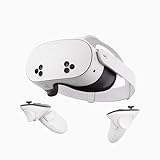
- NO WIRES, MORE FUN — Break free from cords. Game, play, exercise and explore immersive worlds — untethered and without limits.
- 2X GRAPHICAL PROCESSING POWER — Enjoy lightning-fast load times and next-gen graphics for smooth gaming powered by the SnapdragonTM XR2 Gen 2 processor.
- EXPERIENCE VIRTUAL REALITY — Take gaming to a new level and blend virtual objects with your physical space to experience two worlds at once.
- 2+ HOURS OF BATTERY LIFE — Charge less, play longer and stay in the action with an improved battery that keeps up.
- 33% MORE MEMORY — Elevate your play with 8GB of RAM. Upgraded memory delivers a next-level experience fueled by sharper graphics and more responsive performance.
Step 2: Open the 360° file
On Windows, macOS, or Linux
- Start VLC.
- Select Media > Open File.
- Browse to the video and select Open or Choose.
You can also open a file using the operating system’s “Open with” command if VLC is associated with that video type. VLC can browse some network locations, but use a local copy while troubleshooting. Local playback removes network speed, share permissions, Wi-Fi congestion, and server-performance variables from the diagnosis.
On Android
Install VLC for Android from the official app store listing or VideoLAN’s Android information page, then use the app’s file or media browser to select the video. VLC for Android explicitly includes 360° video support and touch gestures, although button placement and gestures can change between releases.
Step 3: Check whether VLC recognized the projection
A correctly tagged equirectangular 360° file may open directly in an interactive spherical view. You should be able to see a normal perspective of the scene and change the direction you are looking.
If the entire video appears as a long, flat, heavily distorted panorama, one of several things may be happening:
- The file is an equirectangular panorama but VLC did not identify it as 360° media.
- The projection metadata is missing or incorrect.
- The recording uses 180°, fisheye, cubemap, or another projection.
- The file uses a stereo layout that VLC is not interpreting as intended.
- Your VLC build has a limitation or version-specific bug.
Do not assume that a manually chosen menu item can correct every untagged file. Requests in VideoLAN’s development and issue discussions have included a reliable menu or API method for forcing 360° or 3D projection on media without usable metadata. Automatic detection is therefore not a complete solution for every camera-generated file.
Rank #3

- CARDBOARD MONKENAUT — Get our best Gorilla Tag bundle yet with this Amazon exclusive deal. Purchase Meta Quest 3 to get exclusive items, including the Gorilla Space Program Suit and Helmet, plus 2,000 SHINY ROCKS.
- NEARLY 30% LEAP IN RESOLUTION — Experience every thrill in breathtaking detail with sharp graphics and stunning 4K+ Infinite Display.
- NO WIRES, MORE FUN — Break free from cords. Game, play and explore in immersive worlds — untethered and without limits.
- 2X GRAPHICAL PROCESSING POWER — Enjoy lightning-fast load times and next-gen graphics for smooth gaming powered by the Snapdragon XR2 Gen 2 processor.
- EXPERIENCE VIRTUAL REALITY — Blend virtual objects with your physical space and experience two worlds at once in your VR headset.
Step 4: Change the viewpoint
Desktop
When VLC has recognized the video as 360° media, interact with the video view to look around. On desktop builds, click-and-drag or mouse interaction is the expected general model, but the exact behavior can vary with the VLC version, operating system, and build. If dragging does nothing, first click the video area, move the pointer over the picture, and try again.
Some VLC releases have had interaction problems in which dragging the 360° view could pause playback. Update VLC and retest before changing unrelated settings.
Android
On Android, drag across the video with your finger to change the viewing direction. VLC’s Android feature list explicitly includes touch gestures. If the gesture is not responding, tap the video to reveal controls, confirm that VLC recognized the file as 360° media, and test the same file after updating the app.
Step 5: Use full-screen mode only after confirming the view
Once the projection and viewpoint controls work in the normal window, switch to full screen using VLC’s full-screen control or the platform’s full-screen command. A larger view can make panning easier and reduce distractions.
Full screen only enlarges VLC’s presentation. It does not convert a normal monitor into stereoscopic headset output and does not add head tracking. If the controls disappear, move the mouse or tap the display to reveal them again.
Rank #4

- Your purchase of this item includes a new Meta Quest Pro 256 GB VR headset and a 12-month subscription to Optima Academy Online (OAO) field trips.
- Optima Academy Online (OAO) harnesses the power of virtual reality to make previously impossible learning opportunities just a few clicks away. Our VR Field Trips provide powerful ways of engaging users on a whole new level while providing learning experiences. With our VR Field Trips, we deliver users directly into an immersive educational experience that engages them like never before. We offer a one-month subscription to our VR Field Trips. During your subscription, you can spend as much time in our uniquely created Metaverse environments as you like. Each environment has its own theme, learning experiences, and adventures.
- High resolution mixed reality passthrough uses full-color sensors to let you see and engage with the physical world around you, even as you connect, work and play in virtual spaces.
- Share your true emotions and reactions with real time natural avatar expressions. Meta Avatars translate your natural facial expressions into VR so you can bring your true personality to meetings and gatherings with friends.
- Meta Quest Touch Pro Controllers translate instinctive hand gestures and detailed finger actions directly into VR with self-tracking cameras and precision controls. Multi-point, advanced haptics make virtual interactions feel entirely real
Audio and high-resolution playback
Some 360° recordings include spatial or 3D audio. VLC documents 3D audio playback in connection with its 360° features, but the result depends on the file, audio format, operating system, output device, and VLC build. Ordinary headphones or speakers will not necessarily reproduce a recording as a fully tracked headset sound field.
Free tools Windows power users keep installed
One-click scans. No signup required.
High-resolution 360° video can be demanding. A player may decode the complete 4K or 8K panorama even though you are looking at only one portion of it. VideoLAN documents hardware decoding and improvements aimed at 4K/8K playback, but smooth performance is not guaranteed on unspecified hardware. Codec, frame rate, graphics hardware, drivers, operating system, storage, and VLC build all matter.
If Windows identifies an outdated or incompatible graphics driver, Outbyte Driver Updater is an optional way to check for driver updates; it will not correct codec, projection, or metadata problems.
Troubleshooting VLC 360° playback
| Problem | What to try | What the result may mean |
|---|---|---|
| Flat or severely distorted panorama | Confirm that the file is really 360° equirectangular media. Check its projection and metadata, update VLC, and test a known-good 360° sample. | VLC may not have identified the projection, or the file may be 180°, stereo, fisheye, or another format. |
| Playback stutters | Test a local copy, close competing CPU/GPU applications, update graphics drivers, and try hardware decoding where available. | The file may exceed the system’s decoding capacity, especially at high resolution or frame rate. |
| 8K playback is poor | Use hardware decoding, reduce background load, test a lower-resolution version, and compare another player or build. | 8K decoding is substantially more demanding than ordinary 1080p playback. Hardware support is a capability, not a performance guarantee. |
| Playback pauses while dragging | Update VLC, restart it, and retest the file. Check whether the problem occurs with another 360° file. | This may be a build-specific mouse-interaction issue rather than a problem with the video itself. |
| A 180° video looks like the wrong format | Identify the intended projection and try a newer VLC build or a player designed for that format. | Some environments have treated 180° content as 360°, producing an incorrect view. |
| Snapshots look wrong | Do not rely on VLC snapshots for a viewpoint-cropped still image; use a tool designed to capture the current perspective. | A VLC snapshot may save the entire panoramic frame rather than only the direction currently visible. |
A sensible order for stutter troubleshooting
- Play the same file from local storage rather than a network share.
- Close browsers, games, recording software, and other CPU/GPU-heavy applications.
- Check whether VLC and the graphics driver are current.
- Try VLC’s hardware-decoding option, then compare the result with hardware decoding disabled if playback becomes less stable.
- Test a lower-resolution or lower-bitrate copy to determine whether the system is simply reaching its decoding limit.
- Test another known-good file. If only one recording fails, its codec, metadata, or projection is a likely factor.
For Windows users who have already checked VLC settings, drivers, hardware decoding, and the file itself, it may be reasonable to check Windows performance for excessive background activity or low free disk space. A system-cleanup utility such as Outbyte PC Repair may help diagnose or manage general Windows performance issues, but it is not a guaranteed VLC fix and cannot repair incorrect 360° metadata or unsupported video formats.
When a Windows performance tool is relevant
Use ordinary Windows and VLC diagnostics first. A performance utility is only a secondary option when the whole PC is slow, background processes are consuming resources, or disk-space and system-maintenance issues are contributing to playback problems. Its usefulness depends on the cause of the slowdown; it should not replace checking the codec, GPU capability, driver, file projection, or VLC version.
Recommended Free Tools
Can VLC play VR videos in a VR headset?
The careful answer is: sometimes as part of a larger setup, but VLC alone should not be treated as a universal headset VR player.
Separate these cases:
- Interactive 360° viewing on a monitor: This is VLC’s clearest use case. You open the file and change the viewpoint with a mouse or touch.
- Phone-based viewing: VLC for Android can play 360° video. A physical smartphone VR viewer may provide a phone-based viewing path, but compatibility, phone fit, lens quality, stereo support, and VLC integration vary.
- Dedicated headset viewing: You need a headset-compatible presentation system and a player that supports the headset’s display and tracking technology. A standard VLC full-screen window does not automatically provide those features.
If your priority is head tracking, separate left- and right-eye output, OpenXR, SteamVR, or a headset-native interface, use VLC to test the file first and then move to a dedicated VR video player when necessary. VideoLAN’s development discussions distinguish spherical or hemispherical rendering from the separate application layer needed for a complete headset experience.
Best Value

- NEARLY 30% LEAP IN RESOLUTION — Experience every thrill in breathtaking detail with sharp graphics and stunning 4K Infinite Display.
- NO WIRES, MORE FUN — Break free from cords. Play, explore and exercise in immersive worlds — untethered and without limits.
- 2X GRAPHICAL PROCESSING POWER — Enjoy lightning-fast load times and next-gen graphics for smooth gaming powered by the Snapdragon XR2 Gen 2 processor.
- EXPERIENCE VIRTUAL REALITY — Blend virtual objects with your physical space and experience two worlds at once.
- 2+ HOURS OF BATTERY LIFE — Charge less, play longer and stay in the action with an improved battery that keeps up.
A VR headset for watching 360° videos can be a reasonable optional purchase for readers who specifically want immersive viewing, but verify that the headset works with your phone, computer, or chosen VR player. Buying a headset does not by itself make desktop VLC head-tracked or guarantee correct stereoscopic output.
When VLC is the right tool
Choose VLC when you want to:
- Play a local 360° file on Windows, macOS, Linux, or Android.
- Inspect whether a camera file’s projection is recognized.
- Pan around a 360° scene with a mouse or touch gesture.
- Test a high-resolution file before moving it into a headset workflow.
- Use one familiar, free player across multiple desktop platforms.
Choose a dedicated VR or headset-native player instead when you need reliable 180° handling, stereoscopic eye separation, head tracking, OpenXR or SteamVR integration, headset-specific controls, or a guaranteed cinema-style VR interface.
Quick checklist
- Download VLC from VideoLAN, not an unofficial installer site.
- Check Help > About VLC and update when troubleshooting.
- Open the file with Media > Open File on desktop.
- Prefer a local copy while diagnosing stutter or permissions problems.
- Confirm that VLC recognized the projection before switching to full screen.
- Use mouse dragging on desktop or touch dragging on Android to change viewpoint.
- Do not confuse a 360° panorama with stereoscopic headset VR.
- Do not expect VLC to repair missing projection metadata or guarantee smooth 8K playback.
- Use a dedicated VR player when head tracking or headset-native presentation is the actual requirement.
Frequently Asked Questions
Does VLC support 360° video?
Yes. VLC supports interactive 360° playback on supported desktop builds, and VLC for Android explicitly lists 360° video support. The file still needs a compatible codec, projection, and usable metadata.
Can VLC play VR videos on a Meta Quest or other VR headset?
Not universally. VLC’s confirmed 360° feature lets you change the viewpoint in the player, but that does not prove native Meta Quest, SteamVR, OpenXR, or head-tracking support. Use a headset-compatible VR player when those features are required.
Why does my 360° video look like a flat, distorted strip?
VLC may not have identified the projection, the file may lack correct metadata, or it may actually be 180°, stereoscopic, fisheye, or another format. Update VLC and verify the recording’s intended projection.
Why does my 8K 360° video stutter in VLC?
The complete high-resolution panorama must be decoded even though you see only one direction. Test a local copy, reduce competing system load, try hardware decoding, update graphics drivers, and compare a lower-resolution file.
Quick wins for a faster PC:
Repair Windows errors before they cause bigger problemsFix Now →Scan for outdated or missing drivers - takes under a minuteDriver Scan →Clear out junk files and repair common Windows errorsFree Scan →Can I take a screenshot of only the direction I am viewing?
Do not assume so. VLC snapshots of 360° panoramas may save the entire panoramic frame rather than the current viewpoint. Use a perspective-capture tool if you need a cropped view.
The Bottom Line
VLC is a legitimate and useful way to play local 360° videos, especially for interactive viewing on a desktop or Android device. Start with an official, current build, verify that VLC recognizes the projection, and troubleshoot the file and decoding path before blaming the player. For stereoscopic output, head tracking, or OpenXR/SteamVR integration, move to a dedicated headset-compatible VR player rather than assuming full-screen VLC is enough.
Quick Recap
Product prices and availability are accurate as of the date/time indicated and are subject to change. Any price and availability information displayed on Amazon at the time of purchase will apply.