What’s actually slowing this PC down?
Pick the symptom - the matching free tool is one click away.
Screen time alone cannot tell you whether a digital habit is harming your mental health. Pay closer attention to whether you can choose when to use a device, whether use repeatedly crowds out sleep or responsibilities, and whether your mood, relationships, or day-to-day functioning are getting worse. These are signs to take seriously, not a way to diagnose yourself.
Look for loss of control and real-life consequences
A habit deserves a closer look when you repeatedly use a service longer than you intended, have trouble stopping despite wanting to, or keep using it even as it interferes with responsibilities or relationships. The important question is not simply “How many hours?” but “What is happening around those hours, and what is the pattern costing me?”
For adolescents, the American Psychological Association (APA) recommends routine screening for problematic social media use that can impair daily roles and routines. Its examples include using social media when wanting to stop or when it interferes with necessary tasks, repeatedly spending more time than intended, strong cravings or disruption when access is unavailable, and putting substantial effort into maintaining access. Deception to preserve access and disruption or loss of important relationships or educational opportunities are also warning signs. These examples are adolescent-focused guidance, not a validated checklist for adults or a diagnosis to apply to yourself. APA’s adolescent social media advisory
The APA’s wording is important: “Adolescents should be routinely screened for signs of ‘problematic social media use’ that can impair their ability to engage in daily roles and routines.” That focuses attention on functioning, not just how often a young person opens an app. A teen may use a platform regularly without it disrupting daily life; concern rises when use repeatedly takes priority over necessary tasks or important opportunities.
#1 Best Overall

- Super Loud Alarm Clock for Heavy Sleepers: This Peakeep Loud Alarm Clock is specifically designed for heavy sleepers. With an extra loud alarm clock striking sounds that lasts for 50 minutes of alarm sounds, it will wake you up in the morning. With such powerful hammering sound, it is suitable for heavy sleepers, hard of hearing, hearing impaired, or those who have trouble waking up
- Vintage Alarm Clock with Old Fashioned Style: Peakeep has added classic and vintage elements to the design of this wind up alarm clock, the iconic twin bell, vintage avocado green, coupled with the white clock face with black hands. With the simple but special design of this old fashioned alarm clock, this aesthetic alarm clock can be used not only as a daily alarm clock, but also as a decorative piece of the room
- Retro Alarm Clock Battery Powered: Considering durability, aesthetics and energy efficiency, this old school alarm clock is designed at 4 inches in size, metal housing and only uses one AA battery to activate the clock, which ensures the quality, saves battery and allows customers to use it for a very long time without having to buy batteries over and over again
- Analog Alarm Clock Easy to Set: Peakeep as a cutting-edge brand of alarm clocks, has always been committed to developing simpler but functional alarm clock models, and this new twin bell alarm clock is no different. It is easy to set the clock time and alarm time with the User Manual, even without the User Manual
- Silent Alarm Clock without Ticking: This simple alarm clock is easy to read and there is no ticking, which keeps your sleeping environment quiet and not disruptive. It is very suitable for kids, teens, seniors and elders
A 2026 screen-use advisory from the U.S. Surgeon General describes additional warning signs in children and adolescents: thinking constantly about screens, becoming very upset when use ends, hiding or lying about use, trying unsuccessfully to cut back, neglecting responsibilities, avoiding in-person activities, or continuing despite negative consequences. One or a few signs do not by themselves establish addiction. Look for a persistent pattern of reduced control and impairment. U.S. Surgeon General’s screen-use advisory
Readers often ask, “Am I addicted to my phone?” That wording can express a real concern, but it is not a diagnosis. A phone is a gateway to many different activities, and a checklist or a high-use day cannot establish a disorder. Instead, consider whether the behavior is repeatedly difficult to control and whether it is harming parts of life that matter to you. If you are worried, take that concern to a trusted adult or qualified health professional rather than trying to label yourself.
Check the parts of life the habit may be displacing
For a week or two, notice what tends to happen before, during, and after the digital activity. Separate social media from gaming, messaging, work, learning, and passive entertainment: they serve different purposes, and a total screen-time figure can hide the pattern that matters. A work call, a supportive conversation with a friend, and scrolling through upsetting posts may all register as screen use, but they are not interchangeable experiences.
It can help to note the activity and context, rather than trying to keep a perfect minute-by-minute log. For example, ask what you were doing, what prompted you to start, whether you intended to stop at a certain point, and what happened afterward. Notice whether the activity helped you connect, learn, or get something done, or whether it left you distressed or pushed aside something you needed to do. The aim is to see a pattern, not to judge every session as good or bad.
- Sleep: Are you regularly staying up later than planned, waking to check a device, or feeling tired because use has pushed bedtime back? Notice whether the pattern is tied to a particular activity or simply having the device nearby.
- Responsibilities: Are school, work, chores, appointments, or necessary tasks being delayed or missed? The question is whether use is repeatedly getting in the way, not whether you sometimes take a break online.
- Mood: Do you often feel more anxious, low, irritable, or overwhelmed after a particular activity or interaction? Also notice whether you tend to reach for it when already distressed. The sequence matters: feeling upset before use is different from feeling upset afterward, and either can be part of a larger pattern.
- Relationships and offline activities: Is use interfering with time with other people, in-person activities, or things you used to enjoy? Also consider whether online contact is helping you maintain supportive relationships or find connection that is valuable to you.
- Physical activity: Has device use displaced movement or time outdoors that you want or need? APA guidance says adolescent social media use should not interfere with physical activity or sleep.
- Choice and flexibility: Can you pause or stop when you decide to, or do you repeatedly keep going despite intending to do something else? Have attempts to cut back been unsuccessful, or do you feel strong cravings or disruption when access is unavailable?
These are practical reflection prompts, not a scored screening tool. A brief change in routine or a difficult day is different from a repeated pattern that is upsetting or impairs daily life. Look at what happens across time and in different circumstances. If a habit is sometimes useful and sometimes difficult, that mixed picture is worth understanding rather than reducing to a yes-or-no verdict.
Rank #2

- Compact and Portable Design: Small square alarm clock measures 3 1/4 * 3 1/4 * 1 5/8 inches, light weight at 3.5 oz, 1 AA battery operated, fits on your compact nightstand, table desk and shelf in bedrooms to wake you up, also portable for travel and convenient for bedside use
- Ascending Alarm with Gentle Wake: Classic beep alarm sounds designed to ascend in four stages for gentle wake at first, then increases in volume with more and more hurried sounds, which last for nearly 1 hour or stop when alarm is turned off or snooze bar is depressed
- Snooze and Backlight Function: Press the top easy-access large snooze and light button to illuminate the entire dial for few seconds for night time viewing. This also suspends the alarm for 5 minutes which offers you an extra light sleep
- Silent Non-Ticking Movement: Non-ticking analog alarm clock with silent high quality quartz movement ensures no tick-tick noise as well as clock time accuracy. Separate alarm switch, simple clock time and alarm set tuning knob, easy set and use
- Battery Operated Backup: 1 AA battery operated and backup (battery not provided), no more worried about power outages, clock runs up to a year at a time on one AA battery
Why hours alone are not a reliable verdict
High use is not, by itself, proof of harm or a diagnosis. Context matters: what you are doing, what the content and interactions are like, your age and circumstances, whether use replaces sleep or responsibilities, and how your functioning changes over time. Someone may spend substantial time studying, working, maintaining supportive relationships, or creating; another person’s shorter use may involve distressing interactions or repeated loss of control.
There is no universal safe number of hours that can determine whether an individual’s use is affecting mental health. The same duration can mean different things depending on whether it is chosen or feels hard to stop, whether it displaces sleep or school, and whether it involves support, conflict, social comparison, or harassment. Time can be a useful clue, especially if it is rising or going beyond what you intended, but it does not answer the whole question.
When comparing two activities or platforms, use the same questions for each: Do you stay in control and stop when you intend to? What does the activity displace, if anything—sleep, physical activity, work or school, or relationships? What content and interaction are involved, including social comparison, harassment, or supportive connection? How do age and personal circumstances shape the experience? And does the pattern seem to improve or worsen mood and functioning over time? These are practical comparison axes drawn from APA and WHO guidance, not a validated score or ranking system.
Evidence about young people’s technology use and well-being is mixed. The World Health Organization Regional Office for Europe’s 2025 policy brief describes both positive and negative associations, sometimes within the same activity. It also notes that the relationship can run in both directions: distress may contribute to increased use, while some forms or contexts of use may worsen distress. As the brief puts it, “The relationship between technology use and mental health is bidirectional: increased screen time potentially exacerbates mental health issues, which in turn may drive further technology use.” That is a reason to examine the pattern without assuming a single cause. WHO Europe’s 2025 policy brief
For example, someone who feels lonely or distressed may turn to online activity more often. That increased use might offer connection or support, but it could also become part of a cycle if it repeatedly displaces sleep or in-person activities and the person feels worse. The observation that two things occur together does not by itself show which came first or prove that one caused the other. Looking at what was happening before and after use can make a conversation with a professional more informative.
Rank #3
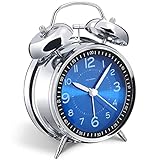
- Loud alarm clock for heavy sleepers: The classic twin bell design with a robust hammer between enables a loud annoying alarm to ring for 50 minutes, till you wake up and turn it off. Heavy sleeps adults teenagers kids will jump out of bed, never sleep through
- Well-made metallic clock for bedrooms decoration: The exterior clock casing and interior reading face were both finely crafted of metal (apart from the back board for easy setting), which specializes in metallic luster and shine, making PEAKEEP alarm clocks distinctive. They will be tempting and captivating decors in your bedrooms
- Silent non-ticking analog alarm clock: High quality quartz sweep quartz movement ensures no tick-tick noise and accuracy timekeeping, delivering a good working and learning environment as well as a restful night's sleep. Separate alarm switch, simple setting dials, easy to set and use
- Light on demand: There is a simple access light button at the backside to make it easy for you to know the time at night, based on your demand, no extra glow to ruin the night environment for bedtime
- Battery operated alarm clock: PEAKEEP battery operated alarm clock works far longer and is less likely to run out of time than the wind-up alarm clocks of the 1980s that frequent winding essential. Just one brand new AA battery (not provided in the box) is required to run the clock for 8 months even longer
The APA notes that causal findings are rare and long-term research is often unavailable, so long-run effects remain uncertain. Evidence also has limitations for marginalized populations. At the same time, social media can offer connection, peer support, information, and support for marginalized young people. Treating all digital activity as harmful would overlook those benefits. The goal is not to eliminate helpful online experiences, but to recognize when a particular pattern seems to be causing distress or getting in the way of daily life.
Put youth statistics in context
In figures published by the U.S. Department of Health and Human Services in 2023, up to 95% of U.S. young people aged 13–17 reported using a social-media platform, and nearly one third of U.S. teenagers reported using social media “almost constantly.” These figures describe reported prevalence in that population and year; they do not show that those young people were harmed, and they are not 2026 measurements. HHS’s 2023 social media and youth mental health advisory
Those numbers help explain why families and professionals pay attention to young people’s online experiences, but they should not be used as a benchmark for an individual teenager. Use that is common is not automatically harmless, and frequent use alone is not proof of harm. The practical concern is still whether there is a sustained loss of control or a meaningful disruption to sleep, activity, relationships, education, or other daily roles.
For adolescents, consider developmental stage and personal circumstances as well as the type of content and interaction. Compare habits by asking whether they are under the young person’s control, what they displace, whether interactions involve support or harm, and how mood and functioning change—not by ranking activities solely by hours. Their own account matters: ask what they value about being online as well as what feels difficult, and avoid assuming that every online interaction is either beneficial or harmful.
Try a small, specific change and observe what happens
A practical experiment can help clarify whether a routine is part of the problem. Choose one pattern you noticed, change it for a defined period, and observe whether sleep, mood, or responsibilities change. For example, if late-night scrolling regularly delays sleep, try a screen-free period before bed and keep the device away from the bed. HHS’s 2026 toolkit recommends screen-free time before bed and avoiding sleeping next to devices. Those steps are routine suggestions, not proof that a particular screen habit caused a mental-health symptom. HHS’s “Live Real Life” toolkit
Rank #4

- 【Alarm clock aesthetic】The 4.5-inch retro alarm clock offers a sleek and decorative addition to your living room decor or bedroom. Its European retro style and metal frame antique design will complement any room's aesthetic.
- 【Silent non-ticking】Choose Ayrely's alarm clocks for bedroom,say goodbye to distracting ticking sounds.This bedside clock features a super slient quartz movement that won't disturb your sleep. You can rest easy knowing that the clock will keep accurate time without disrupting your peace and quiet.
- 【Easy to set】This analog alarm clock comes with light function,and gentle wake increasing volume to ensure you wake up on time every morning. Setting the alarm is simple and hassle-free, making it perfect for anyone who wants a clock that does the job without unnecessary bells and whistles.
- 【Battery operated】 This table clock runs on 1 AA battery (not included), making it an energy-efficient and low-maintenance addition to your life. It's perfect for anyone who wants an alarm clock that's easy to use, dependable, and won't add to their electricity bill.
- 【Dimensions】Measuring at 4.3*1.5*4.7 inches, this small cute desk clock can fit on any table,shelf or nightstand without taking up too much space.
- Name the behavior: Identify the app or activity, the situation in which you use it, and what you intended to do instead. Be specific enough to test a change: for instance, the late-night activity that delays bedtime, rather than “all screens.”
- Choose one boundary: Make it concrete, such as stopping at a set time or keeping a device out of the bedroom. Avoid changing everything at once if you want to learn which adjustment helps. A boundary should fit the activity and its purpose; necessary work or school use may need a different plan from leisure use.
- Plan for the device’s purpose: If you rely on your phone for an alarm, arrange another way to wake up before leaving it outside the bedroom. An optional analog alarm clock is one practical inference from the advice to avoid sleeping next to devices; it is not a treatment or a product tested by HHS.
- Notice the result: Track whether the change is manageable and whether the relevant outcome—such as getting to bed on time—improves. If it is repeatedly impossible to follow or the problem persists, treat that difficulty as useful information rather than a reason for self-blame.
Try to assess the outcome you set out to change, rather than expecting one adjustment to answer every question about your mental health. If sleep improves, that is useful to know, but it does not establish that all digital use was harmful. If the change does not help, it may mean that this boundary was not the main factor or that other circumstances deserve attention. A small experiment is a way to learn about your routine, not a substitute for help when distress or impairment persists.
Quick wins for a faster PC:
Clear out junk files and repair common Windows errorsFree Scan →Fix the driver behind crashes, sound loss and screen glitchesFind Drivers →When to talk with someone
Consider discussing the pattern with a trusted adult or qualified health professional if use is persistently upsetting, feels difficult to control, or is interfering with sleep, relationships, school, work, or other responsibilities. For a young person, a parent or caregiver can help look at the pattern without turning the conversation into punishment or a label. A health professional can consider the broader context, including distress that may be contributing to increased use.
Bring concrete observations rather than a self-diagnosis: what activity is involved, when it tends to happen, what you have tried, and which parts of daily life are affected. If the concern involves a child or adolescent, include their perspective and the benefits they get from being online as well as the difficulties. It can also help to describe whether the concern is about social media, gaming, messaging, school or work, or another activity; a broad statement such as “too much screen time” may conceal different patterns.
You do not need to wait for a particular number of hours or prove that a device caused a symptom before asking for advice. Persistent distress, repeated failed attempts to change a pattern, or noticeable disruption to daily roles are reasonable reasons to raise the concern. A conversation can help distinguish what is known about the person’s circumstances from assumptions based on screen time alone.
Frequently Asked Questions
How do I know if my screen time is affecting my mental health?
Look for repeated loss of control or consequences: use regularly goes beyond what you intended, is difficult to stop, or interferes with sleep, responsibilities, relationships, activity, or mood. Consider what you are doing online and how you feel before and after. Hours alone do not prove harm.
Best Value
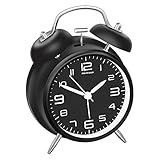
- Premium Dial Construction: Neat dial with stereoscopic numbers instead of printed cardboard found in common market, plus white hour and minute hands with accuracy offer an awesome clearly legible look
- Loud Alarm for Heavy Sleepers: Loud alarm clock designed for people who are heavy sleepers or have mild hearing loss, with no snooze button to ensure you wake up on time
- Silent Non-Ticking Operation: Silent with non-ticking hands, nice for a good working and learning environment, also for a soothing sleep. This simple alarm clock is easy to read and keeps your sleeping environment quiet and not disruptive, suitable for kids, teens, seniors and elders
- Vintage Twin Bell Design: Retro style twin bell alarm clock that takes you back to the 1980s with classic aesthetic appeal
- Backlight Function: Hold the light button to activate backlight, making the time clearly visible at night for convenient nighttime viewing
How do I know if I’m addicted to my phone?
“Addicted” is a concern people may have, but high use or a checklist does not diagnose an addiction. Focus on whether use feels persistently hard to control and is impairing daily life. If it is upsetting or disrupting important responsibilities, discuss the pattern with a trusted adult or qualified health professional.
Is there a safe number of hours of screen time?
The evidence summarized here does not establish one universal number that determines whether an individual is harmed. Purpose, content, age, personal circumstances, control, and displacement of sleep or responsibilities all matter.
Can digital habits cause mental-health problems, or can distress lead to more screen use?
The relationship can go both ways. WHO Europe’s 2025 policy brief says increased screen time may exacerbate mental-health issues, which in turn may drive further technology use. Research findings are mixed, and causal findings are rare, so a pattern of use should not automatically be treated as proof of cause.
What can I try if phone use is keeping me up at night?
Try a specific routine change, such as a screen-free period before bed and keeping the device away from the bed, then notice whether getting to bed on time improves. HHS’s 2026 toolkit recommends those steps, but they do not prove that a screen habit caused a mental-health symptom. If you use your phone as an alarm, plan another way to wake up first.
The Tool Desk
Outbyte Driver Updater FREEFix the driver behind crashes, sound loss and screen glitchesFind Drivers →Outbyte PC Repair FREEClear out junk files and repair common Windows errorsFree Scan →Are these warning signs a diagnosis for adults?
No. The APA’s examples concern adolescents, and the Surgeon General’s listed screen-use warning signs are for children and adolescents. They can prompt reflection, but they are not a validated adult screening tool or a self-diagnosis checklist.
The Bottom Line
Judge digital habits by control, context, and consequences—not hours alone. Notice whether use repeatedly displaces sleep, responsibilities, relationships, or activities, while recognizing that online experiences can also provide connection and support. If the pattern is persistently upsetting or impairing, discuss it with someone qualified rather than diagnosing yourself from a checklist.
Quick Recap
Product prices and availability are accurate as of the date/time indicated and are subject to change. Any price and availability information displayed on Amazon at the time of purchase will apply.

