Quick wins for a faster PC:
Repair Windows errors before they cause bigger problemsFix Now →Fix the driver behind crashes, sound loss and screen glitchesFind Drivers →Use FFmpeg’s scale video filter to create a 1920×1080 output, preserve the source’s aspect ratio rather than stretching it, and pace the input in real time for YouTube Live. For a complete-file loop, use FFmpeg’s input-loop option; a video-frame loop filter is a different technique. Set the encoder to YouTube’s current requirements for your chosen codec and frame rate, then test and monitor the stream.
Choose how the source should fit a 1080p frame
A 1080p frame is 1920×1080, with a 16:9 aspect ratio. If your video is also 16:9, scale it to those dimensions. If it has a different shape, decide whether to preserve the full image with bars or crop the edges to fill the frame. You cannot fill a 16:9 frame and retain every pixel of a mismatched source without changing its shape; do not stretch the picture.

Preserve the whole image with bars
This approach keeps the complete picture visible. For a source that fits within 1920×1080, scale it proportionally and pad the remaining space to make a 1920×1080 canvas. For example:
scale=1920:1080:force_original_aspect_ratio=decrease,pad=1920:1080:(ow-iw)/2:(oh-ih)/2
Free tools Windows power users keep installed
One-click scans. No signup required.
#1 Best Overall
The scale filter’s force_original_aspect_ratio option constrains the output dimensions while preserving the source display aspect ratio. Padding adds the bars where needed. Check the resulting image for your intended bar color and framing.
Fill the frame by cropping
If edge cropping is acceptable, scale the source proportionally until both output dimensions cover 1920×1080, then crop the excess. Keep titles, faces, and other important content away from the edges before choosing this option. The FFmpeg filter documentation describes scale behavior and aspect-ratio constraints; crop the resulting image deliberately rather than stretching it. See the FFmpeg filters documentation.
Loop the complete video and stream it in real time
For a repeat of an entire file, loop the input so FFmpeg starts that file again after it reaches the end. Use -re on the input to read it at its native rate, which is useful for real-time output such as live streaming. A command pattern is:
ffmpeg -re -stream_loop -1 -i input.mp4 -vf "scale=1920:1080:force_original_aspect_ratio=decrease,pad=1920:1080:(ow-iw)/2:(oh-ih)/2" -c:v libx264 -preset veryfast -r 30 -b:v 14M -maxrate 14M -bufsize 28M -g 60 -keyint_min 60 -sc_threshold 0 -pix_fmt yuv420p -c:a aac -b:a 128k -ar 44100 -f flv "rtmps://YOUR_INGEST_URL/YOUR_STREAM_KEY"
Rank #2

- Superior RGB Video Quality — Specifically designed to be compatible with NTSC Nintendo N64, SNES, and GameCube consoles. Delivers pure RGB signals for significantly sharper pixels and more vibrant colors than standard AV leads.
- Engineered for NTSC Hardware — Wired specifically for North American region consoles (US/Canada). Ensures stable sync and correct voltage, avoiding the flickering and偏色 issues caused by using PAL-wired SCART cables.
- High-Shielded interference Protection — Features multi-layered shielding to minimize electromagnetic interference (EMI). Enjoy a clean, buzz-free audio experience and a rock-solid video signal on CRT monitors and upscalers.
- Durable 6FT (1.8M) Length — Provides an ample 6-foot reach for flexible setup in your gaming room. The high-quality PVC jacket and robust connectors are built for frequent plugging and long-term durability.
- Essential for Upscalers — The professional choice for gamers using OSSC, Retrotink, or Framemeister. Provides the high-bandwidth analog signal required for high-definition upscaling on modern 4K/OLED TVs.
This is a template, not a universal command: replace the input file, ingest URL, and stream key with your own values, and match frame rate, codec, bitrate, and keyframe interval to your source and YouTube’s current settings. Confirm the input-loop option syntax supported by your installed FFmpeg build with ffmpeg -h full or its local manual before relying on it. Protect the stream key as a password; anyone who obtains it may be able to broadcast to your channel.
Do not confuse a frame loop with a file loop
The FFmpeg loop video filter repeats buffered video frames; it is not the same as replaying an entire file from its beginning. Its size parameter sets the maximum number of buffered frames, while start specifies the first frame. The documented example loop=loop=-1:size=1:start=0 loops one frame, not a whole video. Use the input-loop approach for a complete-file repeat. See the FFmpeg filters documentation and FFmpeg command documentation.
Set the live encoder for YouTube
YouTube Help recommends RTMPS, a secure extension to RTMP. It accepts H.264, H.265, and AV1 video over RTMP/RTMPS; the bitrate must match the codec and frame rate you actually send. YouTube recommends constant bitrate (CBR), up to 60 fps, and a two-second keyframe interval, not exceeding four seconds. These figures are YouTube’s guidance as accessed on October 3, 2026; check its encoder settings, bitrates, and resolutions page for the row matching your codec.
| H.264 output | YouTube-listed minimum | YouTube-recommended bitrate | Two-second GOP at this frame rate |
|---|---|---|---|
| 1080p at 30 fps | 5 Mbps | 14 Mbps | 60 frames |
| 1080p at 60 fps | 6 Mbps | 17 Mbps | 120 frames |
The table’s bitrate values are YouTube’s H.264 guidance accessed October 3, 2026; they are not interchangeable with H.265 or AV1 values. In the example command, -r 30 sets a 30 fps output, -b:v and -maxrate set the video rate targets, and -g 60 requests a 60-frame GOP, or two seconds at 30 fps. If you use 60 fps, adjust the GOP to 120 frames for the same interval and use the matching YouTube bitrate row. Configure CBR behavior as appropriate for your encoder and build; test the actual output rather than assuming a command flag alone proves compliance.
Do these 3 things before closing this tab:
1Scan for outdated or missing drivers - takes under a minute2Repair Windows errors before they cause bigger problems3Fix the driver behind crashes, sound loss and screen glitchesRank #3
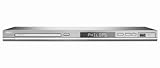
- DivX Ultra 6, Mpeg 4 video
- HDMI, 1080i Upsampling
- USB Connect, plays flash drive files
- Ultra Slim Design. Compatible with both NTSC and PAL.
- Composite and component inputs cables supplied are only for composite no optical out just digital coax
Choose 30 or 60 fps based on the source
Use 30 fps for source material that is 30 fps or lower-motion content when your upload capacity or encoding budget is limited. Use 60 fps when the source contains motion that benefits from it and the system and connection can sustain the higher data rate. Upscaling a lower-resolution or lower-frame-rate video changes its output dimensions or frame timing; it does not create source detail or motion that was not recorded.
Independent reader supportYour contribution helps us test, update, and keep practical guides available for everyone.Test the stream and diagnose common failures
- Check the input first. Confirm the file opens and has the expected video and audio streams before starting a public broadcast.
- Inspect the 1080p result. Verify the output is 1920×1080 and that the image is not stretched, unintentionally cropped, or padded in a way that hides important content.
- Test with representative material. Include the audio and motion you expect in the actual stream. YouTube recommends an upload-speed test and testing under similar conditions.
- Check YouTube’s stream health. Read the health messages in YouTube Live Control Room during the test and adjust the bitrate or output settings if YouTube reports a problem.
If the picture is stretched
Check that the filter preserves the source aspect ratio and that padding or cropping is applied intentionally. A plain scale to 1920×1080 can distort sources whose shape is not 16:9.
If the output is not 1080p
Check that the video filter is applied to the video stream and inspect the resulting output dimensions. FFmpeg’s -vf option is an alias for a simple video filter; stream specifiers can target options to video or audio streams. See the FFmpeg command documentation.
If YouTube reports poor stream health
Compare the actual codec, resolution, frame rate, bitrate, and keyframe interval with the corresponding YouTube table row. Lower the output rate if the connection cannot sustain it, and test again with similar motion and audio. YouTube advises choosing a quality the connection can reliably support.
Rank #4

- This retro game stick supports plug-and-play operation, simply connect to your TV and enjoy gaming instantly. With large 64G/128G storage capacity and 2.4G wireless rechargeable controllers, it provides a comfortable home entertainment experience for daily use and family gatherings.
- 【4K Upscaling & HD Output for Stunning Visuals】 Enjoy crisp, smooth gameplay on any modern TV, monitor, or projector. Supports up to 4K upscaling with native 1080P/720P output via HDMI—bringing retro graphics to life with vibrant clarity and zero lag.
- 【Powerful S905L Chip + Optimized Emuelec OS】 Built with a high-performance S905L quad-core processor and the latest Emuelec 4.3 system for lightning-fast loading, stable emulation, and seamless multitasking. Easily add your own ROMs via USB or microSD for endless game expansion.
- 【2 Wireless 2.4G Controllers – Ergonomic & Eye-Friendly】 Includes two full-size wireless controllers with dual analog sticks, responsive buttons, and ergonomic grips for hours of comfortable play. With an 8-meter range, you can sit farther from the screen—reducing eye strain during long gaming sessions.
- 【Perfect Gift & Hassle-Free Setup in Seconds】 Simply plug the stick into your TV’s HDMI port, connect power, and switch to the correct input—no console, PC, or internet needed! An ideal gift for birthdays, Christmas, or retro gaming fans of all ages. Quick-return shortcuts (e.g., SELECT+START) let you navigate menus effortlessly.
If audio is missing or out of sync
Confirm the input contains an audio stream and that the output maps and encodes it as intended. Check audio during the test rather than assuming a successful video connection means the program audio is present.
If the loop does not repeat
Verify that the input-loop option is supported and positioned as an input option before -i. Check your installed FFmpeg help or manual for the exact syntax. Do not substitute the frame loop filter expecting it to restart the complete file.
Or let it run in the cloud
If the goal is to keep uploaded documentaries or other recorded videos live on YouTube without leaving a computer running, StreamNeo runs the loop from the cloud. Upload a recording or build a playlist, add your YouTube stream key once, and go live. It plays uploaded video, not a camera feed, and streams to YouTube only.
- Nothing has to stay on at home: the stream runs in the cloud.
- One flat price per slot for any uploaded quality up to 4K 60 fps, without re-encoding or quality tiers.
- Automatic recovery if YouTube drops the stream.
- The first day is free with no card; it is one free day per account.
The monthly option is $9.99 per month. Start your free StreamNeo day.
Recommended Free Tools
Quick Recap
Product prices and availability are accurate as of the date/time indicated and are subject to change. Any price and availability information displayed on Amazon at the time of purchase will apply.