Free tools Windows power users keep installed
One-click scans. No signup required.
No honest strategy can guarantee a perfect result in every New York Times Spelling Bee. The accepted list is editor-curated and can change. You can, however, make Genius a repeatable target—and systematically pursue Queen Bee—by locking the center letter, sweeping every starting letter, expanding word families, and saving hints for the gaps your own notes reveal.
Decide what “winning” means
Spelling Bee displays rank milestones including Solid, Amazing and Genius. Reaching Genius is a strong daily finish; Queen Bee means finding every accepted word, so it demands completeness rather than merely crossing a score threshold.

| Goal | What you must do | Typical trade-off |
|---|---|---|
| Genius | Reach the displayed Genius threshold. | Faster and compatible with a spoiler-free session; a few obscure words may remain. |
| Queen Bee | Find every word in that puzzle’s accepted list. | Usually takes longer and may require carefully targeted hints or answer access. |
Know the rules that shape every move
- The honeycomb contains seven letters. Every entry must include the center letter, and letters may be reused.
- Words must contain at least four letters. Four-letter words score 1 point; a longer word scores its number of letters.
- A pangram uses all seven letters and adds a 7-point bonus.
- The daily answer list is selected by New York Times editors, not generated as an unrestricted dictionary dump.
Those rules explain why a short, familiar word can be useful for opening the board, while a long word or pangram can move the score quickly.
A repeatable solve routine
- Make the center letter your filter. Write it at the top of your notes. Reject any candidate that does not contain it before you spend time evaluating spelling or meaning.
- Warm up with ordinary word families. Try familiar prefixes, suffixes, plurals when the puzzle permits them, and common compounds built around the center letter. Treat every candidate as a test, not a guarantee: a dictionary-looking form may still be absent from today’s list.
- Sweep by starting letter. Work through each of the six outer letters in turn. For each one, generate four-letter words first, then extend promising stems to five or more letters. This prevents a productive letter from disappearing from your solve.
- Milk every stem. When a verb, adjective or noun is accepted, test inflections and longer derivatives that still contain the center letter. Deliberately try repeated-letter forms; reuse is legal.
- Search for the high-value words. Look for a word that covers all seven hive letters to secure the pangram bonus, then test alternate endings and related forms. Long words pay their full length, so one reliable stem can be worth several speculative guesses.
- Use the rank bar as a checkpoint. Push to the next displayed milestone before seeking help. Record which starting letters and families produced misses; that record is more useful than a vague impression that you “ran out of ideas.”
- Escalate hints gradually. If you are stuck, take the smallest useful nudge first—a general hint, then a starting-letter or length cue. This preserves the recall practice that makes future puzzles easier.
- Review after finishing. Add missed stems, unusual derivatives and productive letter patterns to a personal list. The objective is transferable recall, not memorizing one day’s answer set.
How to find the pangram without wasting time
Do not wait until the final minute to think about all seven letters. After your first sweep, circle stems that already use several distinct hive letters. Ask whether an inflection, compound or longer derivative can incorporate the remaining letters. Because letters can repeat, test the awkward-looking version as well as the elegant one. A pangram is valuable twice: it supplies its ordinary length score and the additional seven-point bonus.
Quick wins for a faster PC:
Fix the driver behind crashes, sound loss and screen glitchesFind Drivers →Clear out junk files and repair common Windows errorsFree Scan →#1 Best Overall

- 100 First Words for Early Learners – Includes 50 word cards (100 words total) to help kids practice beginner spelling and vocabulary in a fun, approachable way.
- Hands-On Spelling with Wooden Letter Dice – Features 10 wooden letter dice for building words, letter recognition, and tactile learning play.
- 5 Ways to Play – Comes with instructions for five different games, including spelling challenges and word scrambles for variety and repeat play.
- Great for Solo or Group Learning – Designed for independent play or family/classroom fun, helping kids learn through both self-guided and social play.
- Organized & Easy Cleanup – Includes a card holder and storage bag to keep everything neat, portable, and ready for the next learning session.
Why a real word can be rejected
Rejection does not necessarily mean you misspelled the word. The Times excludes words under four letters and proper nouns, and its treatment of slang and previously accepted forms can change. Editor Sam Ezersky told Axios in 2023, “My goal is to be able to have this game live and breathe and evolve with its audience rather than create some draconian rules.” In practice, the board’s accepted list is the authority for that date, not a general dictionary.
Hints, past puzzles and official access
New digital puzzles release at 3 a.m. Eastern Time each day. You can play in the Games app, at nytimes.com/puzzles/spelling-bee, or through the Games section of the News app. Qualifying Games, All Access and Home Delivery subscribers receive the complete experience, including Spelling Bee Buddy, statistics, past puzzles and answer access. Spelling Bee Buddy offers personalized hints and statistics for qualifying subscribers, making it useful when you want guidance without immediately revealing the full list.
Rank #2
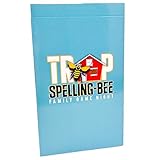
- Trap Spelling Bee: is a family-friendly card game that highlights the humor and culture within the urban community using the unique spelling of slang and ebonic words.
- The game is designed for 2 or more players.
- 92 cards (91 game cards and 1 rule card)
- Designate a Host or take turns asking each player how to spell a Trap Spelling Bee word.
- Each player will have the oppurtunity to say the word, spell the word, and then say the word again to lock it in.
What “every single time” cannot promise
Queen Bee depends on knowing every item in an editor-curated list whose boundaries can evolve. A form accepted in one puzzle may not appear in another, and a seemingly obvious slang term may be excluded. The most defensible promise is therefore procedural: this routine maximizes coverage and makes your progress measurable, but it cannot guarantee every accepted word on every future board.
The Times was reported by Axios in 2023 as having “millions of players per week.” That is a publisher-attributed historical figure, not a current independently audited count, but it helps explain why the game’s vocabulary and editorial choices continue to evolve with its audience.
Quick Recap
Best Value

- 🐝🥃 200 Spelling Cards Inside (50 EASY, 100 MEDIUM, 50 HARD) Buzzing Bee combines fast spelling challenges with adult party fun. Race against the clock, spell correctly, or take a drink—simple rules, endless laughs.
- 🍯💧10 Honey Cards Inside! Take a water break!
- 📋🎲 Buzzing Bee Instructions & Dice Inside! No long instructions or setup. Jump right in and keep the energy high with quick rounds designed for nonstop fun and friendly competition.
- ⏳ 30-Second Timer Inside! 30 seconds to spell the word! Test your spelling skills tipsy or drunk and under pressure.
- 🎂 Ages 21+ Please drink & spell r-e-s-p-o-n-s-i-b-l-y! Ideal for house parties, pregames, birthdays, college nights, or casual hangouts. Great for small groups or larger crowds.
Rank #4

- Brand: Clarkson Potter
- Genre: Games & Activities
Product prices and availability are accurate as of the date/time indicated and are subject to change. Any price and availability information displayed on Amazon at the time of purchase will apply.