Free tools Windows power users keep installed
One-click scans. No signup required.
Start with the home’s demonstrable distinction—not a generic promise of “luxury”—and build the tour around what viewers need to see to understand it. A cinematic video can be atmospheric and useful when every polished scene also provides orientation, evidence, or a clear emotional purpose.
Begin with the property’s defining idea
Before choosing music, camera moves, or equipment, write one sentence that explains what makes this particular home distinctive in a way the listing can substantiate. The idea might be how a view relates to the main living space, how indoor and outdoor areas connect, how the approach creates privacy, or how a sequence of rooms supports a specific use.
“Elegant,” “impressive,” and “cinematic” describe a mood, not a property. A useful thesis describes a relationship the film can show: for example, the route from a sheltered entry into a living space opening onto a garden, or the way a central room connects the home’s entertaining areas. The thesis should be specific enough to guide the shot list and restrained enough to be supported by current evidence. Westby’s luxury real-estate video checklist makes the key point that luxury varies by property, market, price segment, and viewer; it is not a preset visual style.
For every planned scene, ask two questions: What will the viewer understand from this, and what supports any claim attached to it? Keep a scene if it provides orientation, proof, or a deliberate emotional beat. Shorten or remove it if it contributes atmosphere but no useful context or purpose.
What’s actually slowing this PC down?
Pick the symptom - the matching free tool is one click away.
#1 Best Overall

- 【Lightweight & Easy to Adjust】Upgraded trapezoidal flap lock tripod adjusted freely from 19" and 74" in a few seconds to meet different height requirements for variety of shooting environments and photography needs. while it’s only 18" when folded with the pan head removed. 19" compact storage size and 3.15 lbs weight make it easy to carry, you can easily take it anywhere with our lightweight travel tripod carry bag.
- 【Durable & Horizontally Stable】 The professional flexible tripod for cameras and phones provides ultra stability and steadiness for various terrain. Images are aligned precisely, no need to worry the hands will shake, easy and convenient for perfect shooting. Non-slip rubber feet and double sponge pads can provide a firm grip and strong friction. The thicker tube makes the tripod more torsional resistant & anti-shaking. Stability hook for hanging additional weight which can more stable support.
- 【Tripod for All Camera and Phone】Additional quick-release plates and phone mount maximize the compatibility to the greatest extent. Standard 1/4" screw mount compatible with all cameras (Nikon D3500, Fujifilm X-T200, Canon EOS 250D, Olympus, Panasonic), DSLR, SLR, webcams, compact camcorders, digital cinema cameras, projector, ring light, spotting scopes, and binoculars. The 360° phone mount is compatible with iPhone 17 16 15 14 13 12 11/11 Pro/XS Max/XS/XR/ Galaxy Note /S22/Z Flip.
- 【 3-Way Pan Head 360° Rotation】 JOILCAN compact camera tripod is equipped with a stable smooth ergonomic 3-way pan head: headlock, pan lock, and tilt lock, which can satisfy all the needs of vertical, horizontal, and overhead photography, etc. You can freely adjustable angles for 360° panoramic shooting, 180°up and down shooting, and 90°vertical portrait. When you employ pans and tilts during photo or video recording, the tripod offers superb stability and gives you excellent, smooth results.
- 【 Widely Application】 The heavy duty 74 inch camera tripod is suitable for photographing events and video recordings such as selfies, family portrait photos, parties, traveling, hiking, sports, YouTube, Vlog, video conferencing, online meetings, live streaming, recording games, yoga videos, outside with wind, and other activities indoors and outdoors. 4-position leg angle adjustment system helps you take photos flexibly for different scenarios and photography conditions.
Turn the thesis into an evidence map
A camera can show a feature; it cannot establish every fact a viewer might infer from the image. Before scripting narration or on-screen copy, connect each important point to both visual proof and an approved source.
- Thesis point: The relationship, feature, or use the film intends to communicate.
- Visual proof: The wide shot, transition, detail, or context that lets a viewer see it.
- Supporting record: The current listing, technical document, or other responsible source for any accompanying factual claim.
- Record owner: The person or organization able to confirm that information.
- Missing coverage: The shot, angle, transition, or fact that still needs to be obtained.
- Exclusions: Unsupported claims, private material, or areas that must not appear.
This distinction matters most when the film shows a close-up or a striking view. A close-up alone does not establish a finish’s brand, age, origin, rarity, or condition. A view does not prove that it will remain unobstructed or that the property is protected from future change. Dimensions, system performance, boundaries, access, and permitted uses also need appropriate support; do not infer them from what appears on screen.
If a fact cannot be verified, leave it out of voiceover and titles rather than softening it with vague promotional language. The film can still show what is visible, while its copy stays within what the record supports. Make sure the finished sequence, captions, and listing agree: individual shots or statements may be accurate yet combine into an overall impression that is misleading.
Choose a production path that fits the evidence
There is no single production method that suits every luxury property. Choose the least complicated path that can show the points the viewer needs to understand. The main trade-off is between the coverage available in current approved photographs and the additional spatial, sound, or motion evidence an on-site shoot can provide.
Windows Errors? Fix Them Before They Spread
Repair common Windows errors and clear accumulated junk for a smoother, more stable PC - no reinstall needed.Free scan · no reinstallCrashes, No Sound, or Screen Glitches?
Random freezes, missing sound and display glitches usually trace back to one bad driver. Find and replace yours safely.Free scan · under a minute| Production path | Best suited to | What it cannot do by itself | Plan for |
|---|---|---|---|
| Approved-photo edit | A guided overview when the current gallery is complete and covers the important spaces and features. | Show continuous movement or spaces absent from the photographs. | Confirm that images are current, approved, and sufficient for the intended sequence and formats. |
| On-site capture | Showing spatial transitions, changing light, ambient context, or details in motion. | Substitute for careful coverage, access, and factual review. | Property readiness, access, scheduling, light, audio, privacy, and a disciplined shot list. |
| Agent-led video | A welcome, feature explanation, route handoff, or clear next step from the agent. | Improve clarity if a long presentation, poor sound, or on-camera performance distracts from the home. | Give the agent one communication job and record short conversational beats. |
| Lawful aerial context | Showing relevant surroundings or a property’s relationship to its setting when the context is accurate and useful. | Establish legal boundaries, access rights, or a view’s permanence just by showing them. | Verify applicable local rules and permissions for the actual operation and destination. |
| Interactive tour | Letting a viewer explore spaces or relationships at their own pace when the available tour supports that purpose. | Replace every need for a directed story or a concise video overview. | Decide whether exploration or a guided sequence better serves the viewer’s task. |
Use the comparison to resolve practical questions before booking a shoot: Is the photo gallery complete and current? Does the thesis depend on continuous movement? Is the property ready and accessible? Are sound or changing light important? What privacy and usage rights apply? Which destinations and formats must be delivered, and what time or crew can the plan support?
For aerial filming, requirements depend on location and operation. The luxury-video checklist points to FAA commercial-operator guidance as a U.S. starting point, but that does not determine whether a particular flight is lawful. Check local drone, privacy, advertising, listing-service, brokerage, and platform requirements for the property and intended publication.
Write one brief before the shoot
A single brief gives the agent, owner, videographer, and editor a shared definition of a successful film. It should turn the property thesis into a manageable coverage plan and make format, approval, and handoff expectations explicit.
Rank #2

- Camera mount tripod stand with zippered storage bag
- Adjustable height from 16.1inch to 50inch with 3-section,lever-lock legs for simple adjustments
- Folds down quickly and made of lightweight aluminum; It weighs only 1.23 lbs,lightweight and portable, easy to carry for travel,hiking,camping,etc
- 3-way head allows for tilt and swivel motion;portrait or landscape options;Built in Bubble Level,fast and accurate positioning
- Quick-release plate helps ensure fast transitions between shots
- Viewer’s job: What should a prospective buyer be able to understand or do after watching?
- Property thesis: The one specific, supportable idea guiding the film.
- Required coverage: Five to eight spatial relationships, details, or verified facts that serve the thesis.
- Missing shots: What still needs to be captured to make those points clear?
- Exclusions: Private, unapproved, or unsupported material that must stay out of the edit.
- Tone, made actionable: Translate mood into pace, movement, color, sound, typography, and narration rather than relying on adjectives alone.
- Delivery plan: Master destination, orientation, approximate runtime, brand status, and any vertical, teaser, clean, branded, captioned, or silent-safe versions.
- Rights and approvals: Confirm usage rights, review rounds, approvers, and the files required at handoff.
- Logistics: Record access arrangements, light considerations, and other production needs.
Five to eight is a planning target for the brief’s required points, not a rule that the finished film must contain a particular number of shots. The point is to identify enough evidence to tell the story without turning the video into a checklist of rooms. Identify who can verify each fact and who has authority to approve the final version; otherwise, factual questions may surface only after the edit is assembled.
Design the sequence around orientation and proof
A useful tour moves from recognition to understanding. It opens on something specific to the home, helps the viewer get their bearings, develops the defining idea with evidence, and resolves on a strong whole-property image with a current next step.
1. Establish identity
Open on an unmistakable feature, entry, defining room, or view relationship. A generic mood montage can delay the answer to the viewer’s first question: what home am I looking at, and what makes its story distinctive?
2. Give the viewer orientation
Show the approach, circulation, connected spaces, or plan relationship needed to mentally place the rooms. An isolated sequence of attractive interiors may look polished yet leave viewers unsure how the spaces relate. Use a transition or wider view where it helps explain that connection.
3. State or show the thesis
Let the viewer see the relationship at the heart of the film. Narration or a concise title can add context, but should not claim more than the image and approved record support.
4. Develop two or three short proof chapters
Organize supporting material into a few clear ideas rather than a room-by-room inventory. For each chapter, mix the coverage that best explains the point: a wide view for context, a medium view for connection, a detail for a specific feature, and a transition when movement clarifies how one space leads to another. Restore wider context after a close detail so viewers can see where it belongs.
5. Resolve on the home and a current next step
Return to a defining whole-property image and direct viewers to a current destination for full details. Keep volatile information—such as price, listing status, event dates, or temporary incentives—in a maintainable caption or destination unless every published video copy can be updated when it changes.
Rank #3
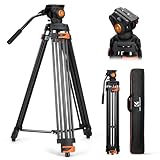
- 【Fluid Head】This fluid head supports 360° horizontal pan and -70°/+90° vertical tilt, enabling diverse shooting angles and providing video creators with stable footage. Also includes detachable handle for a different dominant hand.
- 【Sturdy Aluminum Alloy Tripod】This aluminum alloy is sturdy and durable for use in different shooting environments. Each tripod leg is made of multiple row tubes, with a triangle mid spreader, providing reliable stability with a max load capacity of 17.6lb.
- 【Fast Lock and Installation】Fast and safe camera installation and disassembly in one second, improve work efficiency, suitable for rapid changes in shooting scenes.
- 【Height Adjustment & Easy Portability】3 section telescopic legs and flip locks enable this shooting tripod to extend from 34.6" to 79.5". The tripod can be folded to 36.2" and fit in the carrying bag for easy storage and transportation.
- 【Wide Compatibility】The large quick release plate with 1/4" and 3/8"-16 screw is compatible with Canon Nikon Sony and other DSLR cameras and camcorders. It can also compatible with Camera slider for effortless movement during filming.
Movement, music, narration, natural sound, and titles should reinforce the same hierarchy. Use a camera move because it reveals a relationship or useful detail, not because every room needs a glide. Give viewers time to read a space when a longer hold helps; silence can also be purposeful. Neither a long shot nor silence is automatically a sign of quality.
The BKBN video-guidelines PDF advises testing a movement before recording and notes that transitions between spaces matter; it also suggests straight-line movement with a pan when a room has details worth showing. The PDF could not be fetched directly, so treat these as limited practical guidance rather than a source for additional technical specifications: BKBN, “Video Guidelines”.
Choose equipment after defining the shots
Gear should solve a stated capture or review problem. As Westby’s real-estate video equipment checklist puts it, equipment is justified when it supports a required shot or makes the shoot more reliable. A full kit is not a substitute for a clear brief.
- Moving phone footage: A smartphone gimbal can help if the plan calls for moving shots and the operator has practiced using it. A gimbal is optional, not a requirement for every tour.
- Static shots: A tripod or grip may suit a locked-off view or other shot that does not need a gimbal.
- Speech or useful natural sound: Add a microphone when the brief needs clear speech or sound. Test the actual room rather than assuming the equipment will remove every problem.
- Low or difficult light: Add a compact light only if preparation and available light cannot provide the exposure needed for the planned scene.
- Playback and reliability: Use appropriate support for the movement, test the complete equipment chain and route, review playback, and protect storage and power.
For a phone walkthrough, practice the route before recording. Check that the chosen support works throughout the full movement and that the footage plays back as intended. If the plan uses only approved photographs or locked-off shots, moving-camera equipment may solve no problem at all. Compare gear by compatibility with the planned shot, operator familiarity, reliability, and whether it addresses a specific capture or review need.
Do not buy a tripod, microphone, headphones, light, or other accessory simply because it appears in another creator’s kit. Decide what each item must accomplish, then select only what supports the brief. For a more complex brief involving advanced movement, sound, lighting, aerial work, or a crew, compare a service provider’s proposed coverage, access plan, rights, deliverables, review process, and destination formats rather than choosing on gear alone.
Plan versions and updates before capture
A horizontal master will not necessarily survive a simple vertical crop. If the film needs versions for different destinations, plan the framing and deliverables before the shoot rather than hoping to recover missing space in the edit.
Do these 3 things before closing this tab:
1Fix the driver behind crashes, sound loss and screen glitches2Clear out junk files and repair common Windows errors3Scan for outdated or missing drivers - takes under a minuteSpecify each required version in the brief: orientation, teaser or full-length role, branded or clean copy, captioned version, and silent-safe version where needed. Plan safe framing for important details and captions, and identify a thumbnail approach. Make a deliberate place for current facts that may change. If price, status, event dates, or an incentive could become outdated, keep them in copy that can be maintained—or have a dependable way to update every published video version.
Rank #4

- 【74 Inch Tall Tripod and Compact Tripod】 This tall camera tripod has a height adjustment range of 19-74 inches. It can meet the needs of daily work. This compact tripod comes with a carrying bag for outdoor and indoor shooting. This compact tripod weighs 3.14 lbs / 1.4 kg and is easy to store and stow
- 【Tripod for All Camera and Phone】Standard 1/4" screw mount compatible with all cameras ( Canon, Nikon, Fujifilm, Olympus, Panasonic), DSLR, SLR, and digital cinema cameras, also spotting scopes, projector, compact camcorders, binoculars. The 360° phone mount is compatible with iPhone 17 16 15 14 13 12 11 Pro/XS/XR/MAX/8/8 Plus/X/7 Plus/7/6s Plus/6s/6 Plus/6/Samsung Galaxy S22/ S21 Series/ Galaxy Z Flip/ NOTE/ One Plus 1+Series
- 【Professional 3-Way Pan Head】VICTIV Professional camera tripod stand is equipped with a stable and smooth 3-way pan head, it allows 360° horizontal panoramic shots, 180° up and down shots, and 90° vertical portraits. Non-slip pads provide great grip. You can also hang a backpack on the weight hook for extra stability
- 【Video Tripod for Photography】The video camera tripod is suitable for outdoor and indoor shooting. It can meet the daily shooting needs of video producers, video bloggers, and youtube users. Camera tripods for Photography, food shooting, live streaming, scenery shooting, and portrait shooting, etc
- 【Complete Tripod Units】What You Get: 1X Tripod for cell phone and camera, 1X Universal Phone Holder, 1X Extra Quick Release Plate,1X 3-way Pan Head, 1X Handle, 3X Non-slip pads. Please contact us anytime if any questions
Agree who can approve factual claims, how many review rounds are planned, what usage rights are needed, and which handoff files are required. This avoids discovering after capture that the intended destination needs a format, crop, caption treatment, or clean variant the shoot and edit did not plan for.
Independent reader supportYour contribution helps us test, update, and keep practical guides available for everyone.Make the agent’s role useful and natural
An agent appearance works best with one communication job: welcome the viewer, provide context for a feature, hand off to the route through the property, or give a current next step. It does not need to carry the whole film.
A short stationary opening or closing can be recorded separately from silent property coverage. Voiceover or text-led presentation can be clearer when live sound, performance, occupancy, or factual control makes a moving on-camera presentation less effective. When the agent does speak, use short, conversational beats rather than a long memorized listing speech. Westby’s guidance on appearing and sounding natural on camera covers this role-focused approach.
Recommended Free Tools
Protect privacy and check the real room sound
Before filming, confirm which areas and people are approved to appear. Check the planned frames for art, photographs, screens, vehicles, views, and identifiers that may be private or unapproved. Then inspect mirrors, windows, glossy appliances, and framed art for reflections of the crew or private information. A reflection can put details in the finished video that were never intended to be part of the presentation.
Listen in the actual rooms where recording will happen. HVAC, appliances, traffic, wind, clothing noise, footsteps, and echo can all affect usable sound. Test before recording dialogue or natural sound, and choose a voiceover or text-led approach if live audio does not serve the film clearly.
Review the finished composite, not just the footage
Approval should cover the final combination of images, narration, music, on-screen text, captions, and call to action. Verify claims against current approved records; check that captions are readable and consistent with the listing; and review privacy, reflections, audio clarity, and the final crop. Confirm the agent or text does not obscure a feature the viewer needs to see.
This last pass is also where you catch contradictions between an accurate shot and an inaccurate implication created by the edit. A correct detail paired with overconfident wording, or a view presented as permanent without support, can mislead in combination. The test is whether the finished film helps the viewer understand the property while keeping every factual claim current and defensible.
Best Value

- 【Introducing NEEWER Basic】 Simple and practical, NEEWER Basic is an economical product line that focuses on essential functions and designs, without unnecessary extras and materials
- 【Stable Metal Video Tripod (Basic Version)】 This all metal fluid head tripod offers exceptional stability, and is built to withstand rigorous use. Each tripod leg is made of multiple row tubes, with a triangle mid spreader, and a 73mm enlarged chassis to support up to 17.6lb/8kg. The nonslip rubber feet provide stable support on any terrain and are wear resistant for long lasting durability, perfect for filming, and video recording, and ideal for parties, weddings, sports events, landscapes, etc.
- 【Damped Fluid Head】 Capturing high quality videos using this fluid head, providing 360° pan and -70°/+90° tilt for versatile shooting angles, and smooth and controlled movements. Also includes a bubble level for quick, accurate horizontal alignment, and a detachable handle for a different dominant hand
- 【Quick Height Adjustment & Easy Portability】 This 3 section travel tripod for camera features plastic buckles for quick height adjustment from 33"/84.5cm to 74"/187cm. The plastic buckles securely hold the row tubes together, so you can simply flip them to adjust the height or fold the tripod in seconds. The compact tripod for camera easily fit the included carrying bag, highly portable for on the go photographers and videographers
- 【Versatile Mounting Compatibility】 The 1/4" and the 3/8" mounting screws allow for seamless attachment of DSLR cameras, camcorders, mirrorless cameras, video cameras, sliders, and even cameras with telephoto lenses. This dslr tripod can also work with phone holders or action camera adapters (all not included) to expand your device options. The nonslip rubber pads protect your device from scratches
When to bring in a production professional
If the brief requires advanced movement, lighting, sound, aerial work, or a crew, a real-estate videographer or property-film service may be a better fit than trying to assemble a more complicated shoot alone. Evaluate the proposed coverage, access plan, usage rights, deliverables, review process, and destination formats against the brief. The production path should follow the evidence and the viewer’s needs—not equipment for its own sake.
Frequently Asked Questions
What should I show in a luxury home video tour?
Show a defining, supportable property relationship; enough of the approach, circulation, or connected spaces to orient the viewer; and a few short proof chapters that develop the idea. Combine wider context with useful transitions and details, and include only current facts supported by an appropriate record.
How do I make a property walkthrough feel cinematic without making it hard to understand?
Use atmosphere in service of the home’s story. Give each polished scene an orientation, proof, or emotional purpose, and use movement only when it clarifies a relationship or detail. Test a move before recording, restore wider context after close-ups, and let the viewer read a space when a longer hold helps.
Do I need a gimbal to film a luxury home tour on a phone?
No. A smartphone gimbal is an optional tool for planned moving shots, especially when the operator has practiced with it. A tripod or grip may suit static shots, while a photo-based edit may need no moving-camera support. Choose equipment only when it solves a defined capture or reliability need.
How can I keep a home tour video’s details accurate?
Map each claim to an approved, current source and a shot that supports what the viewer can actually see. Images alone do not establish details such as a material’s origin or condition, system performance, boundaries, access, or a view’s permanence. Review the final images, narration, titles, captions, and call to action together, and keep volatile information in maintainable copy.
The Bottom Line
Plan from the property’s provable distinction: map the evidence, orient the viewer, and build only the shots and versions the brief needs. The result can feel cinematic without asking mood, equipment, or imagery to make claims they cannot support.
Quick Recap
Product prices and availability are accurate as of the date/time indicated and are subject to change. Any price and availability information displayed on Amazon at the time of purchase will apply.

