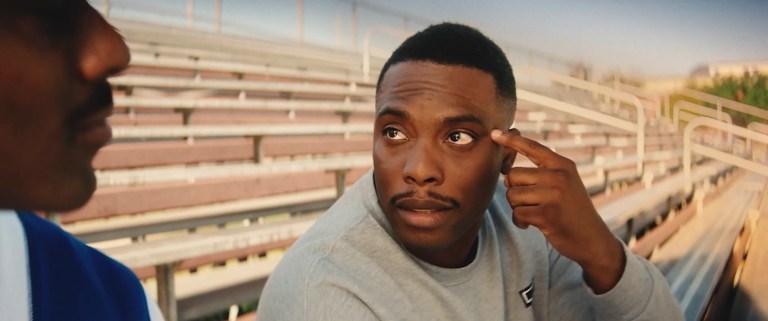
The moment Reacher introduced the towering enforcer fans quickly dubbed the “Dutch Giant,” the rhythm of the show changed. Alan Ritchson’s Jack Reacher is already built like a walking intimidation tactic, so when someone finally entered the frame who could look him in the eye—and then some—it felt seismic. Social media lit up, pause buttons were hit, and Google searches spiked almost instantly.
This wasn’t just another muscle-heavy henchman designed to get flattened by the hero. The Dutch Giant radiated a different kind of threat, one rooted in sheer physical reality rather than swagger or bravado. Viewers sensed immediately that this was a performer whose presence couldn’t be faked, and that authenticity made every second he was on screen crackle.
| # | Preview | Product | Price | |
|---|---|---|---|---|
| 1 |

|
Reacher: Season One | $17.46 | Buy on Amazon |
| 2 |

|
Reacher: Season Two | $19.95 | Buy on Amazon |
| 3 |

|
Reacher: Seasons 1-3 Complete Series Collection | $39.97 | Buy on Amazon |
| 4 |
![Reacher: Season Three [DVD]](https://m.media-amazon.com/images/I/417FcDu+B7L._SL160_.jpg)
|
Reacher: Season Three [DVD] | $15.97 | Buy on Amazon |
What followed was a rare TV phenomenon: a supporting character with minimal dialogue becoming one of the most talked-about elements of the season. The curiosity wasn’t only about how Reacher would handle him, but about who this man actually was and how Prime Video found someone who could so convincingly challenge its unstoppable lead.
A Physical Presence That Rewrote the Power Dynamic
At over seven feet tall, Olivier Richters doesn’t need camera tricks to sell dominance, and Reacher smartly lets the camera linger on that fact. The show frames his entrance less like a typical villain reveal and more like a cinematic event, allowing viewers to recalibrate their understanding of scale and danger. Suddenly, Reacher isn’t the biggest guy in the room, and that alone injects genuine suspense.
#1 Best Overall
- Genre: TV Action & Adventure
- Number of Discs: 3
- Number of Tracks: 0
- Playback Duration: 390
- Rating: NR
Richters’ performance works because it resists caricature. Instead of overplaying menace, he stays controlled and deliberate, letting his size do the talking while projecting calm confidence. It’s a choice that makes the eventual confrontation feel earned rather than gimmicky, and it explains why audiences didn’t just watch the scene—they felt it.
In an era where CGI and editing often manufacture spectacle, the Dutch Giant stopped the show by being unmistakably real. That realism is what sent fans searching for his name, his background, and what might come next, marking the moment when a perfectly cast supporting role turned into a genuine breakout.
From the Netherlands to Hollywood: Olivier Richters’ Unlikely Path to Acting
Before Olivier Richters ever squared off with Jack Reacher, his life followed a path far removed from soundstages and call sheets. Born and raised in the Netherlands, Richters grew up as a towering outlier, hitting extraordinary heights early and learning quickly that the world wasn’t built for someone his size. Long before Hollywood noticed him, his stature shaped everything from daily logistics to career expectations.
A Life Defined by Scale, Not Spotlight
Richters initially channeled his physical gifts into bodybuilding and strength training, developing a frame that looked almost mythic even by elite standards. Standing well over seven feet tall, he became known in fitness circles as the “Dutch Giant,” a nickname that followed him long before Reacher made it global. At this stage, performance meant discipline, repetition, and control, not dialogue or blocking.
The Tool Desk
Outbyte PC Repair FREEClear out junk files and repair common Windows errorsFree Scan →Outbyte Driver Updater FREEFix the driver behind crashes, sound loss and screen glitchesFind Drivers →His early professional life reflected pragmatism rather than ambition. Richters worked in business and entrepreneurship, building companies and treating his physique as an asset rather than a ticket to fame. Acting wasn’t a childhood dream; it was an unlikely opportunity that emerged precisely because he didn’t chase it.
From Novelty Casting to Serious Opportunity
Hollywood first came calling in the way it often does with extreme physiques: background roles, novelty appearances, and parts that leaned heavily on visual shock value. Richters showed up in small roles in major productions like Black Widow and The King’s Man, often uncredited or hidden beneath layers of costuming and effects. These experiences gave him exposure to big-budget filmmaking without yet giving him a voice.
Crucially, Richters didn’t treat those early jobs as gimmicks. He studied how scenes were constructed, how actors used stillness, and how directors framed physical power on screen. Instead of pushing for more screen time, he focused on understanding how presence could tell a story without words.
Training Presence, Not Just Muscle
As opportunities slowly expanded, Richters began investing seriously in acting training. Voice control, movement discipline, and emotional restraint became as important to him as strength and size. His goal wasn’t to become louder or more intimidating, but more believable.
That mindset is what ultimately set him apart. By the time Reacher casting came around, Richters wasn’t just a massive body filling space; he was an actor capable of modulating tension and projecting intelligence through restraint. The Dutch Giant worked because the man playing him understood that less, in this case, was far more.
Richters’ path to Hollywood wasn’t fueled by a single breakout audition or overnight discovery. It was built through patience, self-awareness, and a willingness to let his difference be a starting point rather than the entire story. That slow-burn journey makes his sudden visibility on Reacher feel less like luck and more like inevitability.
Built Different: How Physical Presence Became a Narrative Weapon in Reacher
In Reacher, size isn’t just an aesthetic choice; it’s a storytelling tool. The series has always understood that Jack Reacher’s world operates on physical logic, where power dynamics are read instantly and violence feels inevitable. Introducing Olivier Richters as the Dutch Giant amplified that philosophy by pushing it to its extreme.
From the moment he steps on screen, Richters alters the visual grammar of the show. Even Alan Ritchson’s imposing Reacher suddenly feels measured, not just against an opponent, but against a living obstacle. That shift recalibrates tension before a single punch is thrown.
When the Camera Adjusts to the Actor
What makes the Dutch Giant’s presence so effective is how deliberately Reacher’s direction responds to it. The camera often holds wider frames, allowing Richters’ full scale to dominate the environment rather than chopping him into traditional action coverage. He isn’t shot as a fast-moving threat; he’s framed as an immovable one.
This choice turns his body into a narrative constant. Every step feels weighted, every movement telegraphs consequence. The audience understands, instinctively, that this is not a fight that can be rushed or escaped.
Silence as Threat
Equally important is what Richters doesn’t do. The Dutch Giant doesn’t posture, shout, or overplay menace. His stillness becomes its own form of aggression, suggesting confidence rather than bravado.
That restraint gives the character an intelligence often missing from physically dominant antagonists. He isn’t reckless; he’s patient. The result is a rare kind of villainy where size enhances credibility instead of replacing it.
Recommended Free Tools
Redefining the “Big Guy” Trope
Action television has long treated enormous characters as disposable benchmarks, brought in to be conquered and forgotten. Reacher subverts that expectation by letting Richters’ physicality shape the pacing and emotional stakes of the episode itself. The Dutch Giant isn’t there to be outsmarted quickly; he’s there to test Reacher’s limits.
Rank #2
- Genre: TV Action & Adventure
- Number of Discs: 2
- Number of Tracks: 0
- Playback Duration: 374
- Rating: NR
That shift is crucial to why the role resonated. Viewers didn’t just see a massive man; they felt the show acknowledge what that mass means within its own rules. It’s a reminder that physical presence, when treated seriously, can deepen narrative rather than distract from it.
A Blueprint for Modern Action Stardom
Richters’ breakout moment signals something larger about contemporary TV stardom. In an era increasingly driven by streaming, niche appeal, and global casting, distinct physicality can be a career accelerant rather than a creative ceiling. Reacher didn’t hide or soften his difference; it built an entire dramatic beat around it.
By turning his body into a narrative weapon instead of a novelty, Richters demonstrated how modern action storytelling rewards specificity. The Dutch Giant worked because he wasn’t trying to blend in. He was built, quite literally, to stand apart.
Do these 3 things before closing this tab:
1Fix the driver behind crashes, sound loss and screen glitches2Clear out junk files and repair common Windows errors3Scan for outdated or missing drivers - takes under a minuteThe Casting Gamble: Why Reacher’s Producers Took a Chance on a Real-Life Giant
Casting Olivier Richters as the Dutch Giant wasn’t an obvious or safe decision. Television history is littered with examples of physically imposing performers who look the part but can’t sustain the dramatic weight once the cameras roll. Reacher’s producers knew they were betting the credibility of a key episode on someone whose size alone could either elevate the show or quietly derail it.
What made the gamble compelling was the show’s commitment to realism. Rather than shrinking the world with camera tricks or padding a performer with visual effects, the creative team wanted the audience to feel, viscerally, what it would be like for even Jack Reacher to face someone genuinely bigger. That required a real-life anomaly, not an illusion.
Finding a Giant Who Could Ground the Scene
Richters wasn’t pulled from a traditional acting pipeline. At over seven feet tall, with a background in bodybuilding, fitness entrepreneurship, and international modeling, he existed largely outside scripted television. That outsider status was part of the appeal, but it also raised legitimate concerns about whether he could deliver restraint, timing, and presence without slipping into caricature.
According to those involved in casting, what set Richters apart wasn’t just his measurements, but his control. He understood how to hold space, how to stay still, and how to let the camera come to him rather than forcing a performance. For a role built around tension instead of dialogue, those instincts mattered more than theatrical polish.
What’s actually slowing this PC down?
Pick the symptom - the matching free tool is one click away.
Why Size Became a Creative Asset, Not a Liability
From a production standpoint, casting someone of Richters’ scale created challenges. Blocking scenes, framing shots, and staging fights all had to be rethought to avoid visual distortion or accidental absurdity. Instead of shying away from those obstacles, Reacher’s team leaned into them, letting his presence dictate the rhythm of the episode.
That decision reinforced the show’s tonal identity. Reacher thrives on physical truth: punches land hard, bodies occupy real space, and consequences linger. A digitally enhanced or artificially inflated opponent would have broken that spell. Richters’ authenticity made the danger feel earned rather than manufactured.
A Risk Aligned With Modern Streaming Sensibilities
Streaming-era television is far more open to unconventional casting than network TV ever was. With global audiences and binge-friendly storytelling, standout moments matter as much as lead performances. Reacher’s producers understood that a single, unforgettable supporting character could ripple far beyond one episode.
By casting a real-life giant instead of a familiar character actor, they created a moment that felt instantly shareable and impossible to ignore. The Dutch Giant wasn’t just another obstacle; he was a talking point. That kind of impact is exactly what modern action series are designed to generate, and it’s why the risk paid off so decisively.
Windows Errors? Fix Them Before They Spread
Repair common Windows errors and clear accumulated junk for a smoother, more stable PC - no reinstall needed.Free scan · no reinstallOutdated Drivers Are Slowing You Down
One free scan finds every outdated or missing driver and matches the right update for your exact hardware.Free scan · exact hardware matchMore Than Muscle: Breaking Down the Performance That Elevated the Role
What ultimately turned the Dutch Giant from a viral curiosity into a legitimate breakout was not his size, but his understanding of how to perform within it. Richters resisted the instinct to “sell” the role through exaggerated menace. Instead, he treated stillness as an active choice, letting the audience project fear into the silence.
That restraint gave the character weight beyond his limited screen time. In a genre that often confuses loudness with intensity, Richters’ calm felt unsettling. It suggested control, patience, and confidence—qualities far more intimidating than constant motion.
The Power of Economy in Movement
One of the most striking aspects of Richters’ performance is how little he moves. Every step feels deliberate, every turn of the head measured. That economy makes his eventual bursts of violence feel sudden and unavoidable rather than choreographed.
Action television lives or dies by contrast, and Richters understood that instinctively. By conserving energy on screen, he created a sense that something dangerous was always waiting to be unleashed. When it finally arrives, it lands with impact because the groundwork has been carefully laid.
Free tools Windows power users keep installed
One-click scans. No signup required.
Face Acting at an Uncommon Scale
Despite his imposing frame, Richters never hides behind it. His performance relies heavily on micro-expressions: a narrowing of the eyes, a subtle shift in focus, a flicker of recognition when sizing up Reacher. These details ground the character in human intention rather than turning him into a faceless obstacle.
The camera rewards that precision. Close-ups that could have felt gimmicky instead become effective storytelling tools, revealing calculation rather than brute instinct. It’s a reminder that screen presence isn’t about filling the frame, but about controlling it.
Rank #3
Playing Off Reacher, Not Competing With Him
Crucially, Richters never tries to overshadow Alan Ritchson’s Reacher. The dynamic works because both performers understand their roles within the scene. Richters plays containment while Ritchson plays tension, creating a push-pull that elevates the encounter beyond a standard fight setup.
That awareness speaks to Richters’ instincts as a collaborator. He allows Reacher to remain the narrative center while still feeling like a credible equal. The result is a confrontation that feels earned, not inflated.
Quick wins for a faster PC:
Scan for outdated or missing drivers - takes under a minuteDriver Scan →Repair Windows errors before they cause bigger problemsFix Now →Fix the driver behind crashes, sound loss and screen glitchesFind Drivers →Violence as Character Revelation
When the Dutch Giant finally engages physically, the violence feels purposeful rather than showy. Richters doesn’t rush the choreography or overplay dominance. Each movement reinforces the idea that this character is efficient, experienced, and unafraid.
That approach aligns perfectly with Reacher’s grounded philosophy toward action. Fights are not spectacle for its own sake; they are extensions of character. Richters’ performance honors that rule, making his presence feel organically woven into the show’s DNA rather than inserted as a stunt.
Discipline That Translates On Screen
Much of this control stems from Richters’ background outside traditional acting. Years of bodybuilding and competitive discipline taught him how to command attention without excess. On screen, that translates into patience, posture, and an intuitive understanding of how bodies communicate before words are ever spoken.
It’s a skill set television rarely exploits this effectively. Reacher didn’t just cast Richters for his look; it trusted his discipline to carry narrative weight. That trust is visible in every frame, and it’s why the performance lingers long after the episode ends.
Going Viral Without a Monologue: Fan Reactions, Memes, and Breakout Momentum
What ultimately pushed Olivier Richters from scene-stealer to breakout was not a speech or a signature line, but the internet’s collective fixation on his presence. Within hours of the episode dropping, social media lit up with side-by-side screenshots, reaction videos, and incredulous height comparisons. Viewers weren’t just impressed; they were startled, in the best way.
In an era where dialogue-heavy clips often drive engagement, Richters went viral almost entirely on physical storytelling. His stillness became the hook. Fans rewound scenes just to watch him not move, a rare achievement in action television where motion usually dominates attention.
The Meme-ification of a Modern Heavyweight
Memes quickly followed, framing the “Dutch Giant” as everything from a final boss to a walking intimidation cheat code. The humor worked because it was rooted in authenticity. Richters didn’t feel exaggerated or cartoonish, which made the memes feel like affectionate recognition rather than ironic mockery.
What’s notable is how consistently fans singled out his restraint. Comments praised how he didn’t overact his size or telegraph menace. In meme culture, subtlety is often lost, but here it became the joke and the compliment simultaneously.
Fan Discourse and the Power of Minimalism
Across Reddit threads and fan forums, the conversation shifted from “Who is that guy?” to “Why does he work so well?” Viewers dissected his posture, his eye line, the way he occupied space opposite Alan Ritchson. Many pointed out that he felt like a throwback to classic action enforcers, updated for modern television’s preference for grounded realism.
That level of analysis is rare for a supporting antagonist with limited screen time. It speaks to how strongly Richters’ choices landed. He gave fans just enough to chew on, inviting interpretation rather than dictating it.
From Scene Partner to Career Inflection Point
The viral response didn’t go unnoticed within the industry. Casting conversations quickly reframed Richters not as a novelty physique, but as a performer who could elevate material through control and discipline. His Reacher appearance became a calling card, proof that he could contribute meaningfully to tone and storytelling.
Breakout moments don’t always arrive with applause inside the scene. Sometimes they happen after, in the collective realization that something clicked. For Richters, that realization spread fast, carried by fans who understood they’d just seen the arrival of a new kind of screen presence.
Quick wins for a faster PC:
Clear out junk files and repair common Windows errorsFree Scan →Scan for outdated or missing drivers - takes under a minuteDriver Scan →What the ‘Dutch Giant’ Effect Says About Modern TV Stardom
The sudden elevation of Reacher’s “Dutch Giant” isn’t just a feel-good breakout story. It’s a case study in how modern television creates stars differently than it used to. In an era defined by streaming, fandom, and algorithm-fueled conversation, impact matters more than screen time.
Richters’ rise reflects a shift away from traditional leading-man pipelines. Today’s audience is just as likely to crown a standout presence as they are a top-billed name. The gap between supporting player and breakout star has never been thinner.
Presence Over Prominence
One of the clearest takeaways from the “Dutch Giant” effect is that visibility now comes from memorability, not narrative dominance. Richters didn’t need a sprawling backstory or monologues to register. His physical specificity and controlled performance did the work.
Rank #4
Modern TV rewards actors who understand tone and restraint. In a landscape crowded with heightened performances, stillness reads as confidence. That’s a lesson casting directors and actors alike are increasingly taking to heart.
Crashes, No Sound, or Screen Glitches?
Random freezes, missing sound and display glitches usually trace back to one bad driver. Find and replace yours safely.Free scan · under a minuteWindows Errors? Fix Them Before They Spread
Repair common Windows errors and clear accumulated junk for a smoother, more stable PC - no reinstall needed.Free scan · no reinstallThe Streaming Multiplier Effect
Streaming platforms like Prime Video amplify moments in ways traditional television never could. Scenes are replayed, clipped, shared, and dissected across social media within hours. A single episode can generate weeks of conversation if the performance invites it.
For Richters, this meant his Reacher appearance lived far beyond its original airtime. Fans didn’t just watch him; they analyzed him. That kind of sustained engagement is the new currency of television stardom.
Fandom as Career Accelerator
The response to the “Dutch Giant” underscores how fan discourse now actively shapes career trajectories. Online enthusiasm reframed Richters from an imposing background presence into a performer with clear, marketable appeal. Casting narratives followed fan narratives, not the other way around.
This dynamic gives actors more agency than ever. When audiences champion a performance, the industry listens. Richters’ ascent shows how quickly perception can shift when viewers feel they’ve discovered something special.
Recommended Free Tools
A New Blueprint for Breakout Success
What makes this moment particularly telling is how unforced it feels. Richters didn’t chase virality or lean into self-parody. He trusted the material, his instincts, and the power of understatement.
That restraint aligns perfectly with where prestige action television is headed. As shows like Reacher prioritize grounded realism over spectacle, performers who can command attention without excess are becoming invaluable. The “Dutch Giant” isn’t an outlier; he’s a signpost pointing toward the next evolution of TV stardom.
What’s Next After Reacher: Why Olivier Richters Is Poised for a Bigger Career
The most telling thing about Richters’ post-Reacher momentum isn’t a specific casting announcement; it’s the shift in how the industry talks about him. He’s no longer framed solely as an extreme physical specimen. He’s increasingly discussed as a performer who understands camera language, tone, and the power of presence.
That distinction matters. Hollywood has always had room for size, but sustained careers are built on control, adaptability, and trust from directors. Reacher quietly repositioned Richters as someone who brings all three.
More Than a Physical Casting
At 7’2”, Richters will always be visually arresting, but Reacher proved his value isn’t limited to intimidation. His performance suggested thoughtfulness, discipline, and an ability to calibrate intensity for the scene rather than overpower it. That’s the difference between a novelty and a reliable actor.
Casting directors are increasingly wary of one-note physical roles. Richters’ restraint opens doors to parts that require menace without chaos, authority without caricature. Those are roles that recur across prestige television, studio action films, and high-end streaming projects.
An International Advantage
Richters’ European background and global appeal also position him well in an industry that now thinks internationally by default. Streaming has collapsed borders, and performers who read as authentic across markets are in high demand. His presence feels cinematic in a way that translates cleanly across genres and territories.
That global sensibility pairs naturally with franchise storytelling, where physical specificity and memorable silhouettes matter. Richters doesn’t need excessive dialogue to register, which makes him especially valuable in visually driven narratives.
What’s actually slowing this PC down?
Pick the symptom - the matching free tool is one click away.
Timing Is Everything
Perhaps most crucially, Richters’ breakout arrives at a moment when action television is recalibrating. Audiences are gravitating toward grounded, character-forward intensity rather than exaggerated theatrics. Reacher thrives on that balance, and so does Richters.
He emerged not by stealing focus, but by enhancing the world around him. That’s often what showrunners and filmmakers notice most. Actors who elevate tone without disrupting it become collaborators, not just cast members.
A Career Built for Longevity
What makes Richters’ trajectory especially promising is how patient it appears. There’s no rush to capitalize on attention with gimmick roles or viral self-branding. Instead, his appeal feels durable, built on credibility earned rather than manufactured hype.
In an industry increasingly driven by audience trust, that matters. Viewers believe what they see in Richters, and belief is the foundation of lasting stardom.
Reacher didn’t just introduce the “Dutch Giant” to a wider audience; it reframed Olivier Richters as an actor whose physical presence serves story, not spectacle. If modern television is entering an era where quiet authority beats loud performance, Richters isn’t chasing the trend. He’s already standing at its center.
Quick Recap
Product prices and availability are accurate as of the date/time indicated and are subject to change. Any price and availability information displayed on Amazon at the time of purchase will apply.