The Wizard of Oz feels like a closed book until Wicked opens it from the other side. Gregory Maguire’s 1995 novel, and later the Broadway musical, deliberately reframe Oz as a political, morally ambiguous world where familiar figures are products of history rather than fairy-tale destiny. In doing so, Wicked doesn’t merely add backstory; it challenges the idea that Oz ever had a single, unquestionable canon.
This alternate approach matters most when it comes to characters like the Tin Man, whose original origin in L. Frank Baum’s books is tragic but straightforward. Wicked asks a more unsettling question: what if the Tin Man’s fate wasn’t just bad luck, but the result of systemic cruelty, personal compromise, and unintended consequences? By grounding magic in social forces and emotional choices, Wicked reshapes Oz into a place where transformations happen slowly, painfully, and with blame to go around.

Understanding this rewrite is essential to grasping how a character from Wicked can logically become the Tin Man without contradicting The Wizard of Oz so much as interrogating it. The novel, the stage musical, and the upcoming film adaptations each choose how far to lean into that reinterpretation, smoothing or sharpening the edges depending on tone and audience. What remains consistent is the core idea: Wicked isn’t retconning Oz for shock value, but reimagining it to explore how heroes and villains are made, and how even the most iconic figures can be casualties of the world around them.
Who He Is in Wicked: Boq’s Introduction and His Role in Elphaba and Glinda’s Story
Boq enters Wicked not as a future icon, but as a minor, deeply human presence in Elphaba and Glinda’s shared orbit. He is introduced during their student years at Shiz University, a Munchkinlander from humble means whose earnestness immediately sets him apart from Oz’s more ambitious climbers. At first glance, Boq seems comic or incidental, yet Wicked deliberately positions him as someone shaped by social hierarchies long before magic alters his body.
Quick wins for a faster PC:
Scan for outdated or missing drivers - takes under a minuteDriver Scan →Clear out junk files and repair common Windows errorsFree Scan →Fix the driver behind crashes, sound loss and screen glitchesFind Drivers →#1 Best Overall
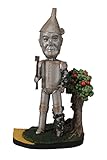
- THE WIZARD OF OZ BOBBLEHEADS: The Tin Man is a once-human man whose body has been completely replaced by tin. He is one of Dorothy’s companions on her quest to see the Wizard of Oz, with the hopes of receiving a new heart.
- POP CULTURE COLLECTIBLES – Royal Bobbles features several different product lines of famous icons including entertainers, artists, and historic/political figures. Each features an authenticity hologram with a unique serial number.
- COLLECTIBLE BOBBLEHEADS – Each premium bobblehead comes in a colorful collector’s box with a custom-cut Styrofoam inner protection. Each over 8” tall, made from high quality, heavyweight polyresin, and individually hand-painted.
- LIFELIKE FIGURINES, EXQUISITE DETAIL – As each bobblehead is carefully researched, crafted with care, and extremely detailed. Royal Bobbles is leading the industry with its realistic and lifelike likenesses, making them right at home in any environment.
- PREMIUM STATUETTES – Founded in 2009, Royal Bobbles is a premium designer and manufacturer of high quality, exquisite collectible figurines, allowing for a high level of detail and durability in every product.
Boq at Shiz: A Study in Unrequited Devotion
In the Broadway musical, Boq’s defining trait is his infatuation with Glinda, whose effortless popularity embodies everything he believes he lacks. His affection is sincere but naïve, driven by the hope that proximity to her might elevate his own standing. Glinda, well-meaning but emotionally careless, redirects Boq’s attention toward Nessarose, believing she is doing a kindness without fully considering the consequences.
This moment is small, almost throwaway in performance, but it becomes one of Wicked’s quiet turning points. Boq’s life is nudged onto a path shaped by obligation rather than choice, mirroring how Oz itself rewards appearances over intention. His devotion is not born of love for Nessarose, but of gratitude to Glinda, an imbalance that will later curdle into resentment and despair.
His Connection to Elphaba: Guilt by Proximity
Boq’s relationship with Elphaba is indirect yet thematically crucial. Elphaba’s bond with her sister Nessarose ties Boq to her fate, even as his suffering becomes another unintended consequence of Elphaba’s moral crusades. Wicked repeatedly emphasizes that Elphaba’s actions, however righteous, ripple outward in ways she cannot control, and Boq is one of the most visible casualties of that ripple effect.
In both the novel and the musical, Boq’s misfortune is never framed as Elphaba’s cruelty, but neither is it absolved as pure accident. He exists in the gray space Wicked loves to occupy, where good intentions collide with fragile systems and vulnerable people pay the price. His story underscores the show’s insistence that no one in Oz is transformed in isolation.
Crashes, No Sound, or Screen Glitches?
Random freezes, missing sound and display glitches usually trace back to one bad driver. Find and replace yours safely.Free scan · under a minuteWindows Errors? Fix Them Before They Spread
Repair common Windows errors and clear accumulated junk for a smoother, more stable PC - no reinstall needed.Free scan · no reinstallNovel vs. Musical: A Sharper Edge, a Softer Lens
Gregory Maguire’s original novel paints Boq as more overtly bitter and politically aware, a man whose disappointments harden him long before magic intervenes. The musical softens his edges, emphasizing romantic longing and emotional confusion to maintain tonal balance. This shift makes Boq more sympathetic onstage, even as it streamlines the path toward his eventual transformation.
Across both versions, however, Boq functions as a narrative hinge between personal choice and systemic cruelty. He is not a villain in waiting, nor a hero undone by fate, but a reminder that Oz grinds people down quietly before it ever remakes them dramatically. Wicked introduces Boq as someone easy to overlook, which is precisely why his eventual fate resonates so deeply when the larger myth of Oz catches up to him.
The First Turning Point: Love, Jealousy, and the Chain of Consequences
Boq’s transformation toward the Tin Man does not begin with axes or enchantments, but with emotional misalignment. His sense of duty to Nessarose is rooted in obligation and gratitude, not desire, and Wicked treats that imbalance as combustible. In Oz, unreciprocated love rarely fades quietly; it metastasizes into control, resentment, and fear of abandonment.
Nessarose’s Magic and the Cost of Control
The pivotal moment arrives when Nessarose, newly empowered as the Governor of Munchkinland, uses magic to keep Boq from leaving her. In both the novel and the musical, this act is framed less as villainy than desperation, a disabled woman clinging to the one person who makes her feel chosen. The spell misfires catastrophically, shrinking Boq’s heart and leaving him on the brink of death.
Do these 3 things before closing this tab:
1Scan for outdated or missing drivers - takes under a minute2Repair Windows errors before they cause bigger problems3Fix the driver behind crashes, sound loss and screen glitchesThis is the first literal step toward the Tin Man mythos. A man defined by misplaced devotion is punished not for cruelty, but for emotional dishonesty, while the magic meant to secure love instead strips him of the very organ that symbolizes it. Wicked makes the subtext text: love that demands possession is indistinguishable from violence.
Elphaba’s Intervention: Mercy with a Price
Elphaba’s attempt to save Boq seals his fate rather than averts it. Her spell preserves his life by replacing what his body can no longer sustain, setting him on a path toward becoming less human with each intervention. What begins as a rescue becomes a gradual erasure, reinforcing Wicked’s central tragedy that even compassion can be complicit in transformation.
The musical simplifies this process, condensing multiple narrative beats into a clearer theatrical progression. The novel lingers longer on Boq’s bitterness and bodily decay, while the stage version focuses on the irony that a man desperate for love loses his heart entirely. In both, however, the chain of consequences is unbroken and irreversible.
From Emotional Hollowing to Physical Metamorphosis
This turning point reframes the Tin Man not as a man who lacks feelings, but as someone whose feelings were exploited, redirected, and ultimately punished. Wicked’s reinterpretation insists that the loss of Boq’s heart is not a moral failing, but the result of a system that confuses obligation with affection and authority with entitlement. The Tin Man’s famous lament gains new weight when viewed through this lens, transforming a fairy-tale figure into a quiet indictment of how Oz destroys those who love incorrectly.
The Tool Desk
Outbyte PC Repair FREEClear out junk files and repair common Windows errorsFree Scan →Outbyte Driver Updater FREEScan for outdated or missing drivers - takes under a minuteDriver Scan →From Man to Metal: The Enchantment That Begins Boq’s Transformation
The path from Boq to the Tin Man does not begin with rust or axes, but with a spell cast in fear. Nessarose’s magic, fueled by unrequited love and a desperate need for control, alters Boq’s body in a way Oz’s doctors cannot undo. His heart is magically constricted, rendering it useless and placing him on the edge of death.
In Wicked, this moment reframes enchantment as violence by accident rather than intent. Nessarose does not mean to mutilate Boq, but the result is the same: a living man rendered incomplete by someone else’s emotional demands. The Wizard of Oz never explains why the Tin Man lacks a heart; Wicked insists that absence is inflicted, not innate.
Rank #2

- Barbie Collector celebrates The Wizard of Oz gold-and-diamond anniversary with an exquisite series of dolls
- Inspired by the 75th anniversary of the classic story The Wizard of Oz
- Enjoy reminiscing your favorite scenes from the classic movie with this collector doll
- A must have for Wizard of Oz fans and Barbie Collectors alike
The Spell That Replaces the Heart
Elphaba’s intervention is where myth hardens into metal. Unable to restore Boq’s damaged heart, she enchants a tin casing to keep his body functioning, effectively turning medical necessity into mechanical transformation. What begins as a protective shell becomes a permanent dependency, each magical reinforcement pulling Boq further from organic life.
The Broadway musical streamlines this idea into a single, legible image: a man who survives only because tin stands in for what magic destroyed. Gregory Maguire’s novel treats the process more gradually, depicting ongoing surgeries and enchantments that replace failing flesh piece by piece. Different mediums, same outcome: Boq lives, but not as himself.
Free tools Windows power users keep installed
One-click scans. No signup required.
Why Tin Matters in Oz Canon
Tin is not an arbitrary choice, and Wicked leans into its symbolism. In L. Frank Baum’s original Oz books, the Tin Woodman loses body parts through repeated accidents, each replaced by tin until nothing human remains. Wicked reverses that causality, offering magic and emotional damage as the source instead of physical mishap.
This reinterpretation allows Wicked to connect its narrative seamlessly to Oz mythology without contradicting it outright. The end result aligns with Baum’s Tin Man, but the journey reframes the loss as systemic and emotional rather than slapstick and random. The enchantment is not about strength or durability; it is about survival at the cost of selfhood.
A Heart Lost Before It Was Gone
By the time Boq’s body begins its physical conversion, Wicked argues that his emotional transformation is already complete. His devotion to Galinda, his resentment of Elphaba, and his entrapment by Nessarose leave him hollow long before tin replaces flesh. The magic merely makes visible what Oz’s social hierarchies have already done.
This is the crucial bridge between Wicked and The Wizard of Oz. The Tin Man does not seek a heart because he never had feelings; he seeks one because his were taken, compressed, and ultimately mechanized. Wicked turns a beloved fairy-tale quest into a tragedy of misdirected love and magical consequences, beginning not with metal, but with a spell that should never have been cast.
Thematic Meaning: How Wicked Reimagines the Tin Man’s Lost Heart
From Physical Absence to Emotional Erasure
In The Wizard of Oz, the Tin Man believes he lacks a heart because he cannot cry, love, or feel fully human. Wicked reframes that absence not as a literal deficiency, but as the result of prolonged emotional damage. Boq’s heart is not missing; it has been misdirected, neglected, and finally overridden by magic meant to control rather than heal.
This shift turns the Tin Man’s iconic quest into something far sadder and more complex. He is not empty by nature, but emptied by circumstance. Wicked suggests that the tragedy lies not in what Boq never had, but in what Oz systematically took from him.
Love as Obligation, Not Choice
One of Wicked’s sharpest thematic pivots is how it treats love as coercion rather than destiny. Boq’s feelings for Galinda are sincere but unreciprocated, while his enforced bond to Nessarose becomes a magical contract he cannot escape. Over time, affection hardens into resentment, and devotion curdles into duty.
The Tin Man’s loss of heart, then, is not about romance gone wrong, but about agency stripped away. Wicked argues that when love is mandated by power or pity, it ceases to be human. Tin replaces flesh not because Boq stops caring, but because caring becomes unbearable.
Recommended Free Tools
Mechanical Survival in a Dehumanizing World
Wicked positions Oz itself as a system that rewards compliance and punishes vulnerability. As Boq adapts to survive within it, he becomes less emotionally flexible, more rigid, more machine-like. Tin becomes the perfect metaphor for a society that values endurance over empathy.
This contrasts sharply with Baum’s original Tin Woodman, whose dismemberment is accidental and external. Wicked internalizes the damage, making the transformation a response to political hierarchy, magical misuse, and social neglect. The Tin Man is no longer a victim of fate, but of governance and fear.
Why the Heart Still Matters
Despite this darker framing, Wicked preserves the essential hope of the Tin Man’s journey. His desire for a heart is not naive; it is an act of remembrance. Somewhere beneath the enchantments and metal plating is the memory of who he was before Oz taught him to survive instead of feel.
That longing aligns Wicked with The Wizard of Oz rather than opposing it. The Scarecrow wants wisdom, the Lion wants courage, and the Tin Man wants his heart back because Wicked insists it once existed. The tragedy deepens, but the emotional logic of the fairy tale remains intact, transformed but not erased.
Rank #3

- Mattel 1999
- Includes axe and oil can
- Special Edition
- Barbie
How This Differs from L. Frank Baum’s Original Oz Books
L. Frank Baum’s Oz books approach the Tin Man from a far more literal, fairy-tale angle, without the psychological or political layering that Wicked introduces. While both versions center on loss and restoration, the cause, meaning, and emotional weight of that loss are fundamentally different. Wicked doesn’t just expand Baum’s mythology; it reframes it through modern ideas of power, consent, and systemic harm.
The Tin Woodman’s Origin Is Accidental, Not Political
In Baum’s The Wonderful Wizard of Oz, the Tin Woodman was once a human woodcutter who gradually lost his body parts after being cursed by the Wicked Witch of the East. Each accident is random and external, the result of a bewitched axe and bad luck rather than deliberate cruelty. His transformation is tragic, but it is also strangely neutral, a series of misfortunes rather than a moral indictment of Oz itself.
Crucially, Baum’s Tin Woodman has no backstory tied to Oz’s ruling class or its social structures. He is not punished for loving the wrong person or trapped by obligation. His loss of heart is mechanical and incidental, not symbolic of emotional repression or political control.
Boq and Nessarose Do Not Exist in Baum’s Canon
Perhaps the most important difference is structural: Boq is a creation of Wicked, not Baum. Nessarose, the Witch of the East as Elphaba’s sister, is also a reinterpretation rather than a direct lift from the books. Baum’s Wicked Witch of the East appears only briefly and is defined by function, not psychology.
By inventing Boq and tying him to Nessarose, Wicked creates a narrative bridge between Oz’s social hierarchy and the Tin Man’s fate. Baum offers no such connective tissue. In the original books, characters do not transform because of romantic obligation, class imbalance, or political coercion; they simply are.
A Loss of Heart Versus a Longing for One
Baum’s Tin Woodman believes he lost his heart entirely, but the story treats this as a misunderstanding rather than a wound. He cries, shows compassion, and proves himself kind long before he receives the Wizard’s symbolic gift. The irony is gentle and reassuring: he never lacked humanity in the first place.
Wicked removes that comfort. Boq’s transformation is framed as an erosion of emotional agency, not a simple mistake. The heart is not just missing; it has been suppressed, protected, and replaced to keep him functioning. Where Baum reassures readers that goodness survives untouched, Wicked suggests it survives at a cost.
From Moral Fable to Political Allegory
Baum wrote Oz as a populist fairy tale, with simple ethics and clear emotional rewards. Suffering exists, but it is rarely interrogated. Wicked, by contrast, retrofits Oz into a world shaped by authority, propaganda, and magical overreach, turning personal tragedy into social commentary.
What’s actually slowing this PC down?
Pick the symptom - the matching free tool is one click away.
This is why the Tin Man’s origin shifts so dramatically between versions. Baum’s story asks whether kindness requires a heart. Wicked asks who gets to keep theirs, and who is forced to give it up to survive.
Independent reader supportYour contribution helps us test, update, and keep practical guides available for everyone.Broadway vs. Film Adaptations: What Changes, What’s Emphasized, What’s Omitted
The leap from Gregory Maguire’s novel to the Broadway stage already reshaped how Boq becomes the Tin Man, and the upcoming film adaptations refine that transformation again. Each version chooses clarity, tone, and audience alignment differently, especially when balancing tragedy with spectacle. The result is a character arc that remains emotionally legible while shifting its sharpest edges depending on the medium.
From Novel Complexity to Broadway Compression
In Maguire’s novel, Boq’s fate unfolds slowly and bleakly, tied to years of resentment, political radicalization, and self-inflicted choices. His transformation into the Tin Man is not a single magical accident but a prolonged unraveling of identity and empathy. It is unsettling, philosophical, and intentionally uncomfortable.
The Broadway musical condenses this into a clearer cause-and-effect sequence. Boq’s love for Glinda, his entrapment by Nessarose, and the botched spell that saves his life but erases his heart all occur within a tightly staged narrative beat. The musical prioritizes emotional immediacy over existential sprawl, ensuring audiences grasp the tragedy in real time.
What the Stage Emphasizes: Sympathy and Spectacle
Onstage, Boq is framed less as a morally compromised figure and more as a casualty of romantic imbalance and authoritarian magic. His transformation is shocking but visually contained, allowing the audience to feel horror without dwelling on physical grotesquery. The emphasis stays on what is lost emotionally, not on the mechanics of bodily change.
This approach aligns with Wicked’s broader theatrical goal: making Oz’s villains legible without making them unbearable. Boq becomes the Tin Man not because he is cruel or foolish, but because he is trapped in a system that values obedience over consent. The stage version asks for empathy first, judgment second.
What the Films Are Likely to Refine
The Wicked films have the opportunity to restore some of the novel’s tonal darkness while maintaining the musical’s clarity. Film allows for closer visual storytelling, which can underscore the horror of transformation without resorting to abstraction. Small choices in framing, pacing, and reaction shots can reintroduce the sense that something irreversible has occurred.
At the same time, the films are expected to align more closely with the iconography of The Wizard of Oz. The Tin Man must feel visually and emotionally compatible with the character audiences already know. That likely means softening the most disturbing implications while sharpening the thematic throughline: a good man reshaped by forces beyond his control.
What’s Omitted, and Why It Matters
Both the musical and its film adaptations omit much of the novel’s political extremism and Boq’s eventual bitterness. His agency in choosing cruelty is downplayed in favor of portraying him as acted upon. This omission keeps the story accessible but shifts responsibility away from the character and onto the world that breaks him.
What remains consistent is the central reinterpretation. Unlike Baum’s Tin Man, who only believes he has lost his heart, Wicked’s version truly has something taken from him. Across stage and screen, that difference defines why this origin story resonates: it reframes a beloved figure not as a whimsical misunderstanding, but as the emotional cost of living in Oz.
How Wicked Recontextualizes the Tin Man in The Wizard of Oz
Wicked does not simply add an origin story to the Tin Man; it fundamentally alters how audiences understand his role in Oz’s moral landscape. Where The Wizard of Oz presents him as a kindly figure suffering from a tragic misconception, Wicked reframes him as a casualty of systemic power, romantic misalignment, and unintended magic. The result is a character whose gentleness is not innate whimsy, but learned restraint after profound loss.
At the center of this reinterpretation is Boq, whose transformation is neither a fairy-tale curse nor a poetic irony. It is an accident born of emotional desperation and political imbalance, tying personal heartbreak directly to institutional harm. Wicked asks viewers to reconsider the Tin Man not as comic relief, but as evidence of how Oz reshapes its citizens to fit rigid expectations.
The Tool Desk
Outbyte PC Repair FREERepair Windows errors before they cause bigger problemsFix Now →Outbyte Driver Updater FREEFix the driver behind crashes, sound loss and screen glitchesFind Drivers →From Belief to Reality: Losing a Heart
In L. Frank Baum’s original text, the Tin Man believes he has lost his heart, even though his actions consistently prove otherwise. His arc is built on irony: the most compassionate character doubts his own humanity. Wicked overturns that idea by making the loss literal, or at least emotionally irreversible.
Boq’s heart is removed to save his life, a drastic magical intervention that prioritizes function over feeling. This shift reframes the Tin Man’s longing for a heart not as insecurity, but as grief. Wicked transforms a metaphor into a wound, giving emotional weight to a quest that was once largely symbolic.
A Tragedy of Intentions, Not Villainy
Crucially, Wicked avoids casting Boq as a villain deserving his fate. His worst actions stem from misplaced affection and social pressure, not malice. In doing so, the story aligns him thematically with Elphaba: both are harmed by a society that confuses compliance with virtue.
This is where Wicked’s reinterpretation becomes most pointed. The Tin Man is not punished for wrongdoing, but reshaped because no one in power pauses to consider what he actually wants. Oz does not destroy people out of cruelty; it does so through indifference.
What’s actually slowing this PC down?
Pick the symptom - the matching free tool is one click away.
Bridging Wicked and The Wizard of Oz
By the time audiences meet the Tin Man again in The Wizard of Oz, his past is invisible but still present. His politeness, his hesitancy, and his obsession with having a heart all read differently once Wicked’s backstory is known. What once felt like gentle neurosis now registers as emotional scar tissue.
This connection does not contradict the 1939 film so much as deepen it. Wicked operates in the negative space of canon, filling in emotional logic without disrupting iconic moments. The Tin Man remains lovable and kind, but he also becomes a quiet indictment of the world that created him.
In recontextualizing the Tin Man, Wicked demonstrates its greatest narrative strength: the ability to honor a beloved myth while challenging its assumptions. By turning a whimsical figure into a tragic one, the story invites audiences to see Oz not as a land of simple enchantment, but as a place where magic has consequences, and kindness often survives in spite of them.
Quick Recap
Product prices and availability are accurate as of the date/time indicated and are subject to change. Any price and availability information displayed on Amazon at the time of purchase will apply.
Free tools Windows power users keep installed
One-click scans. No signup required.

