What’s actually slowing this PC down?
Pick the symptom - the matching free tool is one click away.
A healthy adult German Shepherd needs roughly one to two hours of activity a day as a practical starting range. That does not have to mean one long, strenuous workout: combine suitable physical activity with training or other mental enrichment, and adjust the routine to the individual dog’s age and health. The published guidance is not identical: PetMD recommends one to two hours, while PDSA recommends a minimum of two hours.
What the daily exercise recommendations mean
PetMD’s breed-care guidance gives a healthy adult German Shepherd a daily exercise range of one to two hours. PDSA’s German Shepherd guidance sets a minimum of two hours. These are recommendations, not results from a study measuring a precise requirement for every dog. Treat them as a general starting point rather than two measurements that can be averaged into a universal prescription. PetMD, updated August 11, 2026; PDSA.
The practical takeaway is to plan substantial daily activity for an adult, then judge the routine in light of your own dog. Some breed guidance places the target at the upper end of that range or beyond it; a dog’s age, health and ability to participate safely matter more than mechanically following a number. No source cited here establishes a single exact amount that suits all German Shepherds.
Count the day as a mix of physical activity and purposeful engagement, rather than assuming that every minute must be intense exercise. Walks, hikes, jogging, play and retrieving are among the physical activities identified in breed guidance. Obedience work, agility and other structured problem-solving add a mental component. VCA Animal Hospitals’ German Shepherd guidance describes activity options; PetMD also recommends mental enrichment.
#1 Best Overall

- Dog Friendly Materials: Not Suitable for Aggressive Chewers. Treat dispensing dog toys are made of ABS and nylon material. It is a sturdy, safe food container that resists pet damage, provides a long-lasting and safe play experience. You can give your dog confidently use interactive dog toys. At the same time, in order to make the dog puzzles for smart dogs quieter when rolling, the material of the dog enrichment toys for large dogs roller is made of rubber, less noise
- Food Adjustment Distribution: Mental enrichment toys for dogs have two adjustable switches, you can control the amount of food by adjusting the size of the dog puzzles for large dogs switch to extend the feeding time. Dog toys to keep them busy are also designed with a special spiral structure to make the dog puzzle feeder more challenging. If you want to give a birthday gift to your furry friend, these large dog puzzle toy are good choice, it will like this dog treat dispenser toy
- Improve Intelligence & IQ Training: Dog treat toy is an interactive chase toy that combines puzzles and treat dispensing, pets learn the process of rolling the dog treat puzzle to make treats fall and get treats, which helps to improve intelligence and stimulate the brain, Mental stimulation for dogs will relieve anxiety and reduce boredom, best dog toys to keep them busy for hours. Our dog food puzzle feeders, like other interactive dog toys for boredom are best played under supervision
- Slower Feeding: BoYoYo dog stimulation toys to keep them busy and food puzzles for dogs that reduces your dog's eating speed, cultivate slow eating habits in dogs to promote digestion, allowing your dog to enjoy a more enjoyable mealtime. It is a great alternative to dog slow feeder toy, lick pad for dog, and snuffle mat for dog. These are multi-functional dog puzzles for large dogs
- Attracting Dog Attention: Put your dog's favorite dog food or snacks inside the dog mental stimulation toys to better attract your dog's attention! Keep your dog engaged and active, puzzle treat toys for dogs can divert attention from destructive behavior to positive play, one of the best interactive dog toys for large dogs to keep your dog busy. This interactive dog toy is suitable for medium and large pet, can also be used as a cat puzzle toy and cat treat puzzle
Think of the one-to-two-hour figure as a planning range for a healthy adult, not a stopwatch test. PetMD’s recommendation is a range; PDSA’s is a minimum. Neither recommendation specifies that all of the time should be walking, that it should be done in one outing, or that every dog will thrive on the same routine. If you are deciding where to begin, build a consistent mix of activity and engagement, then tailor it to your dog rather than treating two hours as a universal pass-or-fail threshold.
How to build a useful activity mix
There is no source-backed ranking that says one activity is best for every German Shepherd. Instead, choose activities by considering how physically demanding they are, how much impact or sudden movement they involve, whether they provide opportunities to explore or solve a task, and whether they fit your dog’s age and health. These are practical decision criteria, not findings from a controlled comparison.
| Activity | What it can contribute | Practical consideration |
|---|---|---|
| Walks | Physical activity; can be combined with exploration and training. | Use as part of the day’s overall activity, not as proof that every dog’s needs are met by a walk alone. |
| Hikes or jogging | More sustained physical activity. | Choose a level and setting the individual dog can manage; health and age affect suitability. |
| Play and retrieving | Active play and opportunities to engage with the owner. | For puppies, avoid chasing games that involve sharp, sudden turns, as well as high-impact activity. |
| Obedience training | Mental engagement and structured practice; reward-based work can use treats or toys. | It complements physical exercise; do not treat a reward toy by itself as a replacement for the day’s activity. |
| Agility | Structured activity that combines movement with learning. | Suitability depends on the dog’s age and health. Ask a veterinarian about an appropriate routine if there is a medical concern. |
The activity descriptions reflect options named in VCA’s breed guidance, PetMD’s discussion of enrichment and rewards, and the Royal Kennel Club’s cautions for puppies. The table does not claim that the activities are interchangeable in duration or intensity. A walk, training session and game of retrieving do not necessarily provide the same kind or amount of exertion.
Use the comparison to create variety, not to chase a supposedly perfect activity. A walk can be a straightforward way to add movement and exploration; a hike or jog may involve more sustained exertion; play and retrieving add active interaction; and obedience or agility give the dog a structured task. The right combination depends on what your dog can safely do and what you can provide consistently. If a particular activity involves impacts or sudden changes of direction, be especially cautious with a puppy.
Rank #2

- [Treat Distribution] Our food dispenser has differently sized spheres at both ends. As dogs push the toy, it moves within a fixed area, allowing dogs to continuously chase and play with it. During movement, food is dispensed from the food holes on both sides of the toy.
- [Adjustable Switch] Each of the two spheres with a food dispensing switch, making it suitable for various sizes and types of pet dry food or snack. The switch can be adjusted according to the different sizes of dog food. It also allows control over the amount of food dispensed, extending or shortening the time it takes for pets to obtain food. It is more conducive to a healthy dog diet.
- [Increase Pet Intelligence] This dog treat puzzle toy combines intellectual training with food rewards. When pets push this toy, it will not only be to get delicious food, but it will also stimulate their intelligence and hunting instinct. This design not only meets the needs of pets but also encourages them to learn and grow in the game.
- [Prolonged Play] The dog enrichment toy is designed to limit the amount of treats your dog gets while encouraging more extended playtime. This is intended for effective playtime for dogs and is NOT a chewed toy. It is also dog boredom buster toys and best dog gift to keep them busy when dogs are left home alone, relief anxiety.
- [Attract Dogs' Attention] With barbell shaped design and bright color, the dog puzzle toy ball can attract your dog's attention, stimulate their curiosity and drive them crazy to roll it. Size: 6.1*3.44*3.44in/15.5*8.7*8.7cm.
Mental exercise is useful because it gives the dog something to work through, not because it replaces physical movement. Try brief reward-based obedience practice or play as one part of the day. PetMD mentions treats and toys as training rewards, and an interactive puzzle or treat-dispensing toy can be an optional enrichment aid. It is a supplement to interaction and activity, not a complete exercise plan by itself.
Distribute activity through the day
The daily target is best treated as an overall activity budget, not a requirement to complete one continuous strenuous session. You can distribute walks, play and training across the day, making the combination fit your household and the dog’s tolerance. The cited breed guidance supports daily activity and a mix of activities, but it does not prescribe a particular timetable, number of outings or session length.
- Start with the dog you have. Consider age, current health and the kinds of activity the dog already handles. A general breed recommendation does not account for an individual medical condition.
- Choose more than one kind of engagement. Pair physical activity, such as a walk or suitable play, with a short period of obedience practice or another reward-based activity. PetMD notes treats and toys as possible training rewards.
- Spread the choices across the day if useful. For example, use a walk at one time and play or training at another. This is a flexible way to organize the daily total, not a schedule prescribed by PetMD or PDSA.
- Notice how the individual dog manages the routine. Adjust the activity mix and amount if the dog is not coping well with it, and seek veterinary advice when health or mobility is a concern rather than pushing toward a breed-level target.
There is no single required order. You might put a walk and a training activity at separate times, or combine a walk with brief practice. The important distinction is between spreading a reasonable daily mix across the day and forcing an adult-target workout into one demanding session. PetMD and PDSA do not set a session length or require one continuous block.
Mental enrichment contributes useful structure, but it should not be used to relabel a sedentary day as adequate physical exercise. Treat a puzzle or treat-dispensing toy as an optional aid alongside interaction, training and appropriate movement, not as a substitute for them.
Outdated Drivers Are Slowing You Down
One free scan finds every outdated or missing driver and matches the right update for your exact hardware.Free scan · exact hardware matchPC Slower Than It Used to Be?
A free scan shows the junk files, broken settings and background clutter dragging Windows down - then fixes them in one click.Free scan · Windows 10 & 11Rank #3
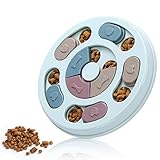
- 【Size】: L9.44" * W9.44"* H1.14" suitable for cats, puppies and small dogs.
- 【Interactive Dog Toys】This is a interactive puppy puzzle , which can easily become the closest companion and toy for your puppies and cats, and will release pressure for dogs. Find food by sliding parts to improve eating pleasure and IQ.
- 【Slow Feed Bowl】This encourages pets to eat at a slower speed, helps to slow down the feeding time to help the dog digest, and can provide your dog with a variety of healthy snacks.
- 【Slow Feede toys】 Use this educational game toy to exercise the dog’s brain, which will help meet the dog’s instinct needs, train the pet’s sense of smell, and let the dog enjoy feeding when using the nose or paw to move the slider, while providing spirit stimulate.
- 【Dog toys】No toy is indestructible. Do not leave toys with unsupervised pets. Remove and replace toy if damaged.
Puppies need a different approach
Do not apply the adult one-to-two-hour target—or PDSA’s two-hour minimum—to a puppy. The Royal Kennel Club advises against high-impact puppy exercise, including jumping down from heights, and against exercise involving sharp, sudden turns, such as chasing a ball. Those cautions make the type of activity as important as the total time: an adult-style workout or an intense chasing game is not a suitable default for a young dog.
The Royal Kennel Club recommends asking a vet, breeder or breed club for advice if you are unsure about puppy exercise. The sources cited here do not establish a universal German Shepherd formula of a certain number of exercise minutes per month of age, so that rule should not be presented as a verified prescription. Get guidance for the puppy in front of you rather than using an unsupported calculation.
Gentle, age-appropriate play and reward-based training can provide engagement without turning activity into high-impact exercise. The exact amount and format for a particular puppy are not specified in the sources; use the advice of a veterinarian or knowledgeable breeder when deciding what is appropriate.
In practice, pay attention to the nature of the activity as well as its duration: avoid jumping down from heights and games that encourage abrupt turns. If you are unsure whether a planned walk, play session or training activity is appropriate for your puppy, ask a vet, breeder or breed club instead of relying on an adult target or a generic minutes-per-month calculation.
Free tools Windows power users keep installed
One-click scans. No signup required.
Rank #4

- 【PRODUCT SIZE】10 inch*10 inch*1.3 inch.
- 【3 WAYS TO PLAY, UPGRADE SLOW FEEDER】Our dog mental stimulation toys have a unique squeak button in the middle, which make it easier to attract the attention of dogs and cats. Three different difficulty designs and the 16-hole dog treat dispenser design maximize slow feeding time, even beyond 20 minutes.
- 【FUNNY STIMULATING TOYS】All kinds of dogs and cats love the puzzle game of Spin & Slide and the Seek & Hide with their smell sense and paw skills to find food. Combining circular orbit sliding game and linear orbit sliding game, smart dog and cat must move the slider correctly to get the food reward hidden in the maze.
- 【NON-REMOVABLE PARTS DOG PUZZLE】Our dog treat puzzle is made of non-toxic materials, very durable and suitable for pets to play for a long time. This dog toy has no removable parts because the design has built-in play parts that fold tightly and won't fall off easily.
- 【ANTI-SLIP & EASY TO CLEAN】: The four corners of the bottom are equipped with four anti-skid pads, which can be well fixed during the dog's slow food process; It is easy to clean, also dishwasher safe.
Adjust for health, mobility and age
A breed-level range cannot account for arthritis, injury, other medical conditions, or an individual dog’s mobility. The American Kennel Club advises owners to ask a veterinarian about an appropriate exercise routine for a dog with a medical condition. VCA’s breed information also discusses joint and mobility issues among German Shepherd health considerations. If your dog has a health limitation, ask the veterinarian what kinds and amounts of activity are suitable rather than treating the general adult target as medical advice. American Kennel Club, “How Much Exercise Does a Dog Need?”; VCA Animal Hospitals.
Age also changes which guidance applies: adult breed recommendations are not puppy instructions. For an older dog or one whose mobility is changing, the sources do not provide a separate German Shepherd time target. A veterinarian can help tailor activity to that dog’s condition and abilities.
Do not assume that a breed recommendation overrides an individual limitation. If a dog has a diagnosed condition, an injury, or joint or mobility concerns, the question is not simply how to reach the breed-level total; it is which kinds of movement and what amount are appropriate for that dog. The AKC’s advice is to consult a veterinarian about a routine when a medical condition is present.
Independent reader supportYour contribution helps us test, update, and keep practical guides available for everyone.Common mistakes to avoid
- Treating one number as a guarantee. PetMD’s one-to-two-hour recommendation and PDSA’s two-hour minimum are general breed guidance, not individualized measurements.
- Counting only vigorous exercise. A sensible activity mix can include walks, play and mental work; not every part of the day needs to be a strenuous session.
- Assuming enrichment replaces movement. Training, toys and reward-based play are valuable additions, but a toy alone does not meet a German Shepherd’s daily exercise needs.
- Using adult expectations for a puppy. Avoid high-impact exercise and activities with sharp turns, and ask a vet, breeder or breed club when uncertain.
- Following a formula despite a health concern. A dog with a medical condition or mobility limitation needs an individualized routine discussed with a veterinarian.
A practical way to decide whether the plan fits
Begin with the adult guidance as a planning range, select a mix of movement and mental engagement that suits your dog, and distribute it in a way that is manageable and safe. Then make adjustments based on the dog’s age, health and response rather than increasing intensity simply to reach a number. If you are unsure whether the activity is appropriate—especially for a puppy or a dog with a health or mobility problem—get individualized advice from a veterinarian or, for a puppy, a breeder or breed club.
The Tool Desk
Outbyte Driver Updater FREEFix the driver behind crashes, sound loss and screen glitchesFind Drivers →Outbyte PC Repair FREEClear out junk files and repair common Windows errorsFree Scan →Best Value

- 【Product Size】10 inch*10 inch*1.2 inch.
- 【Interactive Dog Puzzle Toys 】This is a fun interactive puzzle toy,which can encourage and train your dogs or cats to seek foods by sliding the slider, helping pets to increase IQ by learning sequential steps and the challenging play.
- 【Squeaky Dog Toys】This dog puzzle toys is designed with a sounding device in the middle of the toy,which is to attract the pet's attention.Also,you would enjoy the fun of dog squeak puzzle toy with your pets, greatly improve relations with your pets and get fun during interactive dog games.
- 【Mental Excecise&Boredom Buster】Our memory training puzzle toy can keep smart dogs busy and engaged in more thinking and activities.Therefore,clot stimulation toys are great for reducing dogs’boredom,anxiety and destructive behaviors.
- 【Food-Safe PP Material】This dog treat puzzle is made with toxic-free, food-grade PP material. It is durable for interactive play and mental enrichment but not designed as a chew toy. Always supervise your pet during use.Easily washable with water or in the dishwasher.Note: No toy is indestructible. Remove and replace the toy if damaged.
Frequently Asked Questions
How many hours of exercise does an adult German Shepherd need each day?
For a healthy adult, roughly one to two hours a day is a practical starting range. PetMD recommends one to two hours, while PDSA recommends a minimum of two hours. These are general recommendations, not an exact prescription for every dog, so tailor the routine to age, health and ability.
Does a German Shepherd need two hours of exercise all at once?
No source cited here requires one continuous session or sets a specific schedule. Treat the daily amount as an overall activity budget and, if useful, distribute walks, play and training across the day.
Can training count toward a German Shepherd’s daily activity?
Obedience work and other structured problem-solving provide mental engagement and can be part of a varied routine. They complement physical activity; a toy, puzzle or training session alone should not be treated as a replacement for appropriate movement.
How much exercise does a German Shepherd puppy need?
Do not apply the adult one-to-two-hour range or PDSA’s two-hour minimum to a puppy. The Royal Kennel Club advises avoiding high-impact exercise, including jumping from heights, and activities with sharp, sudden turns such as chasing a ball. Ask a vet, breeder or breed club for advice; the cited guidance does not establish a universal minutes-per-month formula.
Recommended Free Tools
Should I change exercise if my German Shepherd has a health or mobility problem?
Yes. Ask a veterinarian what kinds and amounts of activity are appropriate for a dog with a medical condition or mobility limitation. A general breed recommendation is not individualized medical advice.
Which exercise is best for a German Shepherd: walking, jogging, hiking or agility?
The guidance cited here does not rank activities or identify one best option for every dog. Walks, jogging, hikes, play, retrieving, obedience and agility are options; choose a mix that suits the dog’s age and health and that you can provide safely and consistently.
The Bottom Line
For a healthy adult German Shepherd, plan roughly one to two hours of daily activity as a starting point, recognizing that PDSA recommends a minimum of two hours. Combine appropriate movement with mental engagement, spread activity through the day if useful, and seek individualized advice for puppies or dogs with health and mobility concerns.
Quick Recap
Product prices and availability are accurate as of the date/time indicated and are subject to change. Any price and availability information displayed on Amazon at the time of purchase will apply.

