Led Zeppelin’s fourth album—usually called Led Zeppelin IV—answered critics less through a manifesto than through its presentation and the band’s insistence on artistic freedom. Guitarist and producer Jimmy Page later said he chose to leave the album untitled, in part because he did not want it sold on the band’s name. Singer Robert Plant, meanwhile, had defended the preceding album, Led Zeppelin III, as a necessary step in the group’s development. Calling the fourth LP a strike back is a reasonable interpretation, but not a label the band presented as a single, agreed-upon campaign.
What made the fourth album a response to criticism?
The most visible answer was the original cover: it carried neither the band’s name nor an album title. The record is widely known as Led Zeppelin IV, but that is a conventional name, not a title printed on the original release. Page later explained that the untitled presentation was his idea and connected it to a desire not to rely on the group’s name after US press had called the band “a hype.”
| # | Preview | Product | Price | |
|---|---|---|---|---|
| 1 |

|
Led Zeppelin IV | Buy on Amazon | |
| 2 |

|
Led Zeppelin 180-Gram Vinyl Classic Album Collection: Led Zeppelin I II III IV (Zoso) 4-Pack | $149.89 | Buy on Amazon |
| 3 |
|
Led Zeppelin | $25.97 | Buy on Amazon |
In a 2014 interview, Page said the band had reached a point where it no longer paid attention to critics. He also recalled that the press had not understood the group’s albums. Those are Page’s later recollections, not a complete record of every contemporary review or every band member’s view. The cover can therefore be read as a refusal to market the album through the band’s name, rather than as proof that the group set out to issue a formal rebuttal.
Why Plant defended Led Zeppelin III
The critical tension was already apparent around the previous record. In a 1971 interview preserved in the band’s archive, Robert Plant was asked about negative press surrounding Led Zeppelin III and the difference between audience response and critical opinion. He called the album “an essential thing” in the band’s development and argued that the group could not keep making the same record.
Recommended Free Tools
#1 Best Overall
- Remastered album on 180-gram vinyl, packaged in a sleeve that replicates the LP's first pressing in exacting detail.
Plant also objected to critics he felt made assumptions and condemned performances. His remarks offer release-era evidence of his position: he saw change as necessary, not as a retreat from the band’s identity. They should not be treated as a statement on behalf of every member, but they help explain why the fourth album should not be reduced to a simple return to the earlier sound.
What changed between the two records?
Page later said critics had failed to understand the acoustic direction of Led Zeppelin III. That retrospective assessment aligns with Plant’s 1971 defense of evolution, but it does not establish that the fourth album was designed to undo the third. Its story is better understood as a band continuing to pursue different musical directions while declining to let hostile coverage define the work.
Rank #2
- LED ZEPPELIN
- LED ZEPPELIN II
- LED ZEPPELIN III
- LED ZEPPELIN IV
The fourth album’s songs also existed in performance before its release. Page recalled that Led Zeppelin played “Stairway to Heaven,” “Black Dog,” “Rock and Roll,” and “Going to California” in Belfast on March 5, 1971, and remembered a strong audience response. That account comes from his 2014 interview and should be treated as his recollection, rather than as independent evidence of a universal audience verdict.
When the album was made and released
Led Zeppelin’s official discography gives the release date as November 8, 1971. Rhino’s retrospective describes early sessions at Island Studios in London in December 1970, followed by work at Headley Grange in Hampshire using the Rolling Stones Mobile Studio. Page produced the album. For “When the Levee Breaks,” the label recounts that the band recorded in the house’s entrance hall, with microphones positioned near the stairwell.
Rank #3
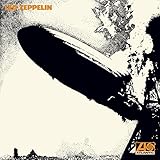
- John Bonham, John Paul Jones, Jimmy Page and Robert Plant came together in 1968 as Led Zeppelin. Over the next decade, the band would become one of the most influential, innovative and successful groups in modern music, selling more than 300 million albums worldwide. Their songs are some of the most celebrated in rock n roll history that, to this day, resonate with fans young and old around the globe. Still, no matter how many times you may have listened to their music, you ve never heard Led Zeppelin like this before.With the 2014 release of deluxe editions of Led Zeppelin, Led Zeppelin II, & Led Zeppelin III, the band will launch an extensive reissue program of all nine of its st
That recording setting is part of the album’s context, but its connection to the critical dispute is indirect. The stronger evidence for the “struck back” interpretation remains the deliberately anonymous cover and the musicians’ comments about press reaction and artistic development.
Independent reader supportYour contribution helps us test, update, and keep practical guides available for everyone.Why it is called Led Zeppelin IV today
Because the original album had no printed title, listeners and later editions needed a practical way to identify it. Led Zeppelin IV became the familiar shorthand, alongside other informal names. The distinction matters: the band’s decision to omit the title was itself part of the presentation, while the number is a later convention rather than the original cover’s wording.
The official discography lists later remastered LP, deluxe vinyl, CD, and digital editions. These are later editions, not original 1971 pressings; format and included companion audio vary by release. The official discography is the appropriate place to check which formats it lists.
Quick Recap
Product prices and availability are accurate as of the date/time indicated and are subject to change. Any price and availability information displayed on Amazon at the time of purchase will apply.
Free tools Windows power users keep installed
One-click scans. No signup required.




