Lala Lajpat Rai reinterpreted aspects of India’s medieval past to support a shared national future for Hindus and Muslims. In his 1924 essays, he made common belonging depend on cooperation and respect for neighbors’ rights—not on the claim that religious differences or communal tensions had disappeared. His account is best read as a political argument for coexistence, not as proof that India’s past was uniformly peaceful.
Why Rai turned to the past
Rai’s treatment of medieval history was part of a larger effort to imagine Hindus and Muslims as members of one Indian nation. Historian Vanya Vaidehi Bhargav’s Being Hindu, Being Indian: Lala Lajpat Rai’s Ideas of Nationhood (2024) describes his search for bonds of common belonging while emphasizing the complexity of his nationalism. The historical framing mattered because accounts of the past could either deepen religious separation or help make a shared political identity imaginable.


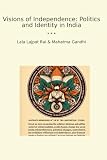

Rai’s own 1924 essay series, The Hindu-Muslim Problem, shows the immediate political purpose of his argument. He was making a case for unity in a period when communal distrust and political disagreements were real concerns. His essays therefore combine appeals to common nationhood with criticism of the forces he believed were increasing estrangement.
How Rai made unity conditional on common ground
In “Religions must be rationalised as much as possible,” Rai argues that people seeking a united India should give greater weight to points of agreement among religions than to their differences. That did not mean, in his account, that faiths were identical or that religious divisions could simply be ignored. It was a practical proposal for making religious diversity compatible with a shared political life.
What’s actually slowing this PC down?
Pick the symptom - the matching free tool is one click away.
#1 Best Overall
His proposal also placed a limit on religious practice: observances that, in his view, inflamed hatred or infringed on a neighbor’s rights should be restrained. Rai thus presented coexistence as something requiring mutual accommodation and civic responsibility, rather than as a natural or effortless condition.
What “one India” meant in his 1924 appeal
In “A plea for mutual co-operation,” Rai links Hindu-Muslim unity to the struggle for national freedom and rejects the idea of a Hindu Raj. He states his political ideal plainly: “India is neither Hindu nor Muslim. It is not even both. It is one. It is India.” The line expresses his claim that India should not be reduced to either religious community—or treated as merely a combination of two separate communal identities.
This is an argument about nationhood, not evidence that the communities already lived in lasting harmony. The same essay addresses distrust and competing communal demands, and Rai treats unity as difficult to achieve. His language points toward a desired political future rather than describing an uninterrupted historical reality.
How he explained growing communal division
In “The history of communal representation,” Rai interprets separate representation and the rise of competing communal organizations as forces contributing to estrangement. That account helps explain why he saw political cooperation as necessary: institutions and organizations organized around separate communal claims could, in his view, weaken a common national outlook.
Crashes, No Sound, or Screen Glitches?
Random freezes, missing sound and display glitches usually trace back to one bad driver. Find and replace yours safely.Free scan · under a minuteWindows Errors? Fix Them Before They Spread
Repair common Windows errors and clear accumulated junk for a smoother, more stable PC - no reinstall needed.Free scan · no reinstallHis essay is a contemporary political interpretation, not a neutral or complete history of how those developments unfolded. It should be attributed to Rai and read as evidence of how he understood the problem, rather than treated on its own as settled historiography.
How to read Rai’s argument alongside later scholarship
Rai’s 1924 essays are primary evidence of what he argued at that moment: that national unity required cooperation, common ground, and restraint when religious practice harmed others. Later scholarship places that appeal within a more complex history of his nationalism. Bhargav’s 2024 study examines his ideas of nationhood and common belonging; a 2022 Journal of Asian Studies article situates Rai in debates involving Hindu nationalism, the Khilafat movement, pan-Islamism, and secular Indian nationalism.
These frames should not be collapsed into a simple choice between “unity” and “communal politics.” Rai’s essays contain both a call for one Indian nation and an analysis of communal divisions. The most precise reading is period-specific: in 1924 he advanced coexistence as a political program while also describing the obstacles he believed stood in its way.
Independent reader supportYour contribution helps us test, update, and keep practical guides available for everyone.What his reinterpretation establishes—and what it does not
- It shows how Rai used an account of the past to argue that Hindus and Muslims could share an Indian national identity.
- It reveals a prescriptive vision of coexistence built on cooperation, emphasis on common ground, and regard for neighbors’ rights.
- It does not establish that medieval India was uniformly peaceful, or that communal conflict and distrust were absent.
- It should be read as Rai’s political and historical argument alongside later scholarship, not as a definitive account of the whole past.
For a fuller scholarly treatment, see Vanya Vaidehi Bhargav, Being Hindu, Being Indian: Lala Lajpat Rai’s Ideas of Nationhood (Penguin Random House India, 2024).
The Tool Desk
Outbyte PC Repair FREEClear out junk files and repair common Windows errorsFree Scan →Outbyte Driver Updater FREEScan for outdated or missing drivers - takes under a minuteDriver Scan →Quick Recap
Best Value
Product prices and availability are accurate as of the date/time indicated and are subject to change. Any price and availability information displayed on Amazon at the time of purchase will apply.