Hospitals responded to pandemic childcare disruption in several ways rather than through one standard program. Some folded childcare into broader staff services, some created temporary on-campus daycare or learning spaces, and others organized volunteer matches between medical trainees and employees. These arrangements were local, time-limited emergency measures shaped by licensing, infection control, staffing, school schedules and available space.
The examples below show how those models worked, what they required and what is—and is not—known about their effect on healthcare workers. They describe 2020 responses and should not be read as evidence that the same services operate today.
Why childcare became a hospital workforce issue
When schools and ordinary daycare closed in spring 2020, healthcare workers still had to report for shifts. A nurse, respiratory therapist, physician or technician could be willing to work yet unable to do so safely without a place for a child to stay during a 12-hour shift. The problem was therefore both a family emergency and a staffing risk.
The U.S. Department of Health and Human Services Office of Inspector General surveyed administrators at 323 hospitals in 46 states, the District of Columbia and Puerto Rico from March 23 to 27, 2020. Some hospitals told the investigators they were providing staff services that included childcare, laundry, groceries and hotel accommodation. The pulse survey is a snapshot of those first pandemic weeks; it does not report what share of hospitals offered childcare. Read the HHS OIG survey.
Free tools Windows power users keep installed
One-click scans. No signup required.
#1 Best Overall
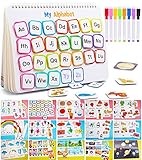
- 【LEARNING WHILE PLAYING】 This is a book helping toddlers to learning while playing.Parents can participate in children’s activities to help them understand thinking, perceive colors, and enhance logical knowledge. The busy book game is an excellent educational toy developed for children over 3 years old
- 【15 THEMES AND 14 DRAWING&WRITING PAGES】 This Busy Book covers 15 themes, including numbers, alphabet, Food & drink, fruits, animals, rainbow, colors, shapes, size discrimination, transportation, weather, week, seasons, holidays and planets. Each themes can enrich the child's knowledge base. There is also a 14-page drawing and writing page to meet the needs of children who love to write and paint, and is equipped with 8 colored pens
- 【DIVERSE LEARNING EXPERIENCE】 This preschool educational toy is multi-functional, allowing child to develop fine motor skills, communication, verbal and problem-solving skills, memory, logic, imagination and visual perception,etc
- 【SAFE TO PLAY】 The certification was passed (CPC,Children’s Product Certificate). This preschool educational toy are made with the highest quality safe material that will withstand through generations of learning. The edges of the flash cards are rounded to avoid any potential harm
- 【BEST GIFT】 Keeping the children busy and get a moment of silence for yourself when you need. So, this is great gift for our children,even for parents.Need to attach the Velcro by yourself
Hospitals also faced an unusual combination of constraints. Children needed supervision during changing school hours, but a childcare room inside a clinical campus had to limit infection risks, meet local rules and avoid diverting staff from patient care. The documented responses show institutions improvising around those constraints rather than deploying a single national template.
Three ways organizations responded
| Approach | Documented example | Who operated it | What the account records |
|---|---|---|---|
| Childcare as part of general staff support | Hospitals interviewed by HHS OIG in March 2020 | Individual hospitals and their support departments | Childcare appeared alongside services such as groceries, laundry and hotel rooms; the survey did not measure program size or duration. |
| Temporary on-site daycare or learning space | CHOC Children’s; Harbor-UCLA Medical Center | Hospital leadership working with clinical, administrative and community teams | Emergency licensing or waiver work, screening, dedicated rooms, age limits, schedules, activities and meals. |
| Volunteer childcare matching | Oregon Health & Science University medical-student project | Medical students matching volunteers directly with healthcare-worker households | 181 of 202 requests were fulfilled over roughly eight weeks; it was not hospital-operated licensed daycare. |
These are different operating models, not stages that every hospital followed. A service could be free to an employee during working hours, as in one California example, while another organization might only coordinate help or provide a referral. The sources do not establish that one model was more effective than the others.
General staff-support services
In the HHS OIG interviews, childcare was one item in a larger package of emergency assistance. That approach let a hospital address several barriers to attendance at once: a worker might need food, a hotel room and childcare, especially when commuting or isolating from family. Because the pulse survey collected administrators’ reports during one week, it cannot show whether a service was available on every shift, how many children it served or whether it continued after March 2020.
Temporary on-campus daycare and learning labs
A hospital could convert nonclinical space into a supervised room for employees’ children. The two detailed California accounts show why this required more than putting toys in a conference room. Leaders had to secure emergency authorization, set an age range and capacity, create entry screening, plan meals and schoolwork, and assign adults who could supervise children without weakening patient services.
Recommended Free Tools
Rank #2

- 36 ACTIVITIES IN ONE BUSY BOOK: Keep preschool learning fresh with 18 hands-on matching activities plus 18 drawing, tracing and coloring activities. Kids explore letters, numbers, colors, shapes, animals, time, weather, emotions and more through varied screen-free play.
- MATCH, TRACE, COLOR & REPEAT: Interactive matching pieces and wipe-clean activity pages turn practice into hands-on play. Kids can build early writing, recognition, hand-eye coordination and fine motor skills while repeating favorite activities again and again.
- PRESCHOOL LEARNING THAT FEELS LIKE PLAY: From alphabet and counting to opposites, body, transportation, seasons and daily routines, the 18 learning themes support early preschool and pre-K skills without feeling like a traditional workbook.
- SCREEN-FREE FUN FOR HOME & TRAVEL: A quiet activity for airplane trips, road trips, restaurants, waiting rooms, homeschool and everyday quiet time. The 8 x 11-inch book and protective storage box make it easy to take preschool activities on the go.
- THICK, WIPE-CLEAN ACTIVITY PAGES: Durable cardboard pages, rounded edges and sturdy spring binding are designed for repeated preschool play. Printed placement guides help young children match pieces and complete activities with greater independence.
Volunteer matching
Matching relies on people in the surrounding institution or community rather than a hospital-run center. At Oregon Health & Science University (OHSU), medical students organized direct matches between volunteers and healthcare-worker households. The project fulfilled 181 of 202 requests over approximately eight weeks in spring 2020. It illustrates a trainee- and community-organized response; it should not be described as a licensed daycare facility operated by OHSU or a hospital. Read the OHSU report.
CHOC Children’s: a daycare opened in 72 hours
CHOC Children’s had a concrete indicator of demand before it opened its temporary center. An emergency communication-system survey found that nearly 600 staff members and physicians lacked backup childcare. The child life department had already prepared activity bins labeled by age group, giving the hospital a starting point when local schools closed.
After the closures, child life staff worked with hospital leadership and other departments to turn a conference center into an on-campus pop-up daycare. The hospital’s account says the center received an emergency operating license and opened within 72 hours of notice of the closures. Its layout included separate nap and play areas, computer stations for school-age children, diaper-changing space and structured activities.
The speed came from broad coordination. Food services addressed meals; physical therapists, information-systems staff and facilities helped with practical setup; legal, human resources, regulatory, safety and security teams handled governance and risk; volunteer services and patient-care teams supplied additional support. This was an institution-wide response, not a child life project acting alone.
Rank #3

- Montessori Toys Busy-Board Help Kids Enhance Independence : Develop children’s independence and self-reliance with our unique designed Montessori busy-board for toddlers! Basic life skills set contains Shoe Tying practice , BUTTON toys, SNAP, LACING, ZIP string toy, and HOOP & LOOP life skills practice busy board, that engages children in mastering life skills through playful practices. Ideal Gifts for Girls Boys.
- Personalized designs protect children's interests: Considering toddlers’ little hands and unskillful approach, we enlarge the size of buttons and button holes, add enough lacing. What’s more, every skill flap is wide enough to allow plenty of room for little hands. So toddlers will have interest in practices. This Montessori busy board will develop fine motor skills, dressing skills, dexterity and brain development.
- Sensory Toys for Toddlers: Toddlers can play button, zipper, lace, tie, snap or other functions of daily supplies with life skills boards. They can explore different fun by practicing variety of dress skills, It is very engaging for children and satisfies their curiosity. So children will enjoy practicing every day. It is a great Fine Motor Skills toy for kids and learning minds to grasp and learn the concept of using everyday items.
- Last for Years: Toddlers toys are made of Nylon, withstand daily use in a busy classroom or daily supplies. Each skill accessory is very sturdy by plenty of tests. Embroidered titles, sturdy, and Not Easy to FADE and SNAP.
- Learning Gifts for Girls Boys: As screen-free toy, perfect for christmas gifts for grandkids, birthday gifts for girls boys, preschool teaching aids, preschool classroom must haves, Teacher Lessons Resoures in Classroom, interactive Montessori education toys, autism therapy materials, travel toys, Montessori dressing frame.
Participants described the immediate value in personal terms. Hematology/oncology fellow Dr. Sonia Morales called the service “heaven-sent,” while Jamie, a recovery-center nurse, said, “Without child life’s kind hearts, I would not have been able to work.” Those quotations are recollections in CHOC’s hospital account, not results from a controlled evaluation. Read CHOC’s account.
Harbor-UCLA: from emergency childcare to a learning lab
Harbor-UCLA Medical Center reported seeking a California emergency licensing waiver and opening an employee childcare center on March 16, 2020. Its procedures included registration, entry screening and infection-control measures. The hospital also coordinated with local schools so children could receive meals and snacks.
As remote education became a larger part of the school day, the operation shifted toward a learning lab rather than functioning only as preschool-style care. The hospital reported weekday hours of 7:30 a.m. to 5 p.m., service for children ages eight through 17, capacity for 40 children and no charge during the employee’s working hours. Screening occurred at entry. Those details describe the 2020 emergency response in California; they are not current availability or a statement about licensing rules in other jurisdictions. Read the Harbor-UCLA account.
What had to be solved before a room could open
The case accounts make the practical work visible. Any hospital considering a comparable emergency arrangement would have had to resolve questions in several categories, although the sources do not establish a universal checklist or legal standard.
What’s actually slowing this PC down?
Pick the symptom - the matching free tool is one click away.
Rank #4

- Counting Animals Toys For Kids:This Preschool Learning Animals Toy includes 36 animals(Lion,Elephant,Sheep,Hippo,Cow,Rhinoceros) in different colors,6 rainbow color sorting bowls,2 tweezers and 1 storage bucket.The Montessori rainbow toys can be used not only to help preschoolers learn different colors and animals, but also for early math counting activities. Kids will enjoy these lovely animal sorting toys and games
- Help To Improve Fine Motor Skills:There are multiple ways to play the counting animal toys.Children can sort different color animals into the corresponding rainbow bowls by using tweezers or hands.Kids can play this sorting&stacking game alone or turn it into a race playing with friends.Through games,kids need to learn picking up,grasping and releasing,which can enhance fine motor skills needed for writing,color recognition,hand-eye coordination.Perfect learning toys and STEM educational tool
- Great Montessori Educational Math Toys:This counting animals math games can help children master early math skill such as counting,grouping,patterning and comparing.Boys and girls can also use this preschool learning toys as a support tool to learn simple mathematical operations including count,add,subtract and so on.This animals matching game is designed to inspire and stimulate children's thinking. This rainbow sensory toy is suitable for kids, and preschoolers
- High Quality & Safety:The STEM rainbow animals sorting toys are made of high quality rubber material.Durable and washable.Colors are vibrant and easy to identify.Each Animal ranges size from 1.2-1.8in. Perfect for preschoolers to grasp.These are great Act-Play toys for Multi-child family or parent-children interaction.The counting animals matching games are also prefect as daycare supplies.The storage bucket provided make the animals learning toys are easy to collect store and carry after playing
- Perfect Preschool Learning Toys For Kids:Nice teaching tool and helpful learning resource for parents, teachers to use in kindergarten daycare classroom or at home.Great Montessori toys for home school activity or as autism learning resource materials.Lovely Animal Toys for Boys and Girls.Comes in a nice, transparent bucket,which makes this set super easy to store and put away.Best Christmas Gift / Birthday Gift /Children's Day Gifts any other holiday gift for children
- Authorization and liability: CHOC described an emergency operating license, while Harbor-UCLA reported seeking an emergency waiver in California. Emergency rules differed by jurisdiction, so one approval could not simply be copied elsewhere.
- Screening and infection control: Harbor-UCLA recorded registration and screening at entry. A hospital also had to decide how to handle symptoms, exposure information, cleaning and movement through the clinical campus.
- Age and developmental needs: CHOC organized supplies by age and provided diaper-changing, nap and play areas. Harbor-UCLA reported serving ages eight through 17, a range suited to schoolwork as well as supervision.
- Hours and shift fit: A weekday schedule such as 7:30 a.m. to 5 p.m. could support many day shifts but would not automatically cover nights, weekends or long clinical handoffs. The published accounts do not claim universal shift coverage.
- Capacity and physical layout: Harbor-UCLA reported capacity for 40 children. CHOC used a conference center with designated functional zones. Space had to support distancing, quiet rest, activities, computers and diapering without obstructing hospital operations.
- Schoolwork, food and activities: Computer stations, structured activities, age-marked activity bins and coordination with schools for meals helped make the spaces usable during school closures. Age-appropriate children’s activity kits were one practical supply, not a substitute for supervision or a childcare license.
- Qualified adults and support teams: CHOC’s list included child life staff, nurses and administrative, facilities, legal, regulatory, security, food-service and volunteer teams. A volunteer-matching project required a different approach to screening, communication and household consent.
- Employee cost and access: Harbor-UCLA reported free care during working hours. Other hospitals’ fees, eligibility rules and reservation systems were not established by these accounts.
These details explain why opening a temporary center was an operational project involving legal, clinical and community partners, not merely a welfare perk added to an existing schedule.
Independent reader supportYour contribution helps us test, update, and keep practical guides available for everyone.What surveys found about childcare pressure
Later studies measured how widespread the problem felt to workers, while also showing why causal claims require care. A 2023 survey at one academic medical center asked employees about on-site childcare during pandemic-related school closures. More than half rated weekday on-site childcare very or extremely important; 60% gave that rating to emergency on-site childcare. Nearly half—49%—said emergency childcare needs had disrupted their work during the previous year, including cancellation of clinics or surgical cases. Because the survey came from one institution, its percentages should not be generalized to every hospital. See the 2023 study record.
A separate analysis by Harry and colleagues used responses from 58,408 healthcare workers at 208 organizations collected from April through December 2020. Twenty-one percent reported childcare stress. The researchers found that childcare stress was associated with anxiety or depression, burnout, an intention to reduce hours and an intention to leave. The design was cross-sectional and observational: it identifies relationships in survey data, not proof that childcare stress caused each outcome or that a particular daycare model would reverse it. Read the JAMA Network Open study.
Did hospitals provide daycare for healthcare workers?
Some did, but the accurate historical answer is qualified. The HHS OIG found hospitals reporting childcare among broader staff services, CHOC opened a licensed pop-up center within 72 hours of local school closures, and Harbor-UCLA described a temporary center that became a learning lab. OHSU’s example used volunteer household matching instead of hospital-operated daycare. None of these accounts demonstrates that most hospitals offered care, that every employee could obtain a place, or that programs continued after schools reopened.
Quick wins for a faster PC:
Repair Windows errors before they cause bigger problemsFix Now →Fix the driver behind crashes, sound loss and screen glitchesFind Drivers →Best Value

- LETTER RECOGNITION: Build early literacy with 26 popsicle alphabet toys featuring uppercase and lowercase letters-perfect abc learning toys for kids ages 3-5 and preschoolers
- MULTI-LEARNING FUN: Supports phonics, letter sounds learning, color matching, and vocabulary with engaging toddler learning activities and alphabet matching game play
- FINE MOTOR SKILLS: Strengthen fine motor development as kids pop, match, and sort pieces-ideal learning resources fine motor toys and tactile preschool educational toys
- HANDS-ON MATCHING PLAY: Use as a fun toddler matching game or letter matching game to boost letter recognition, early education, and kids alphabet learning
- CLASSROOM & HOME USE: Durable plastic set with storage jar-great preschool classroom toys, daycare learning materials, and kindergarten learning toys for everyday play
The programs also served different purposes. A center on a hospital campus could provide predictable supervision during stated hours and a controlled location for screening and schoolwork. Volunteer matching could reach households without a spare room but depended on finding and coordinating suitable volunteers. General staff services could combine childcare with other assistance but may have varied widely in scope. The available evidence does not provide a head-to-head effectiveness comparison.
How to interpret these pandemic-era examples now
These accounts are best read as case studies of rapid institutional adaptation. They show that hospitals treated childcare as part of workforce continuity when ordinary arrangements failed, and that successful setup depended on coordination across clinical departments, administrators, regulators and community partners. They do not establish a permanent benefit, a current provider, or a model that automatically complies with today’s law.
Anyone evaluating a present-day hospital childcare proposal would need fresh confirmation of licensing requirements, infection-control guidance, staffing qualifications, insurance, capacity, hours, school transportation, meals, employee eligibility and cost. Those conditions changed by jurisdiction and by phase of the pandemic. The historical record supports the conclusion that childcare support was possible under emergency conditions—not the assumption that a 2020 program remains open or that every hospital can reproduce it unchanged.
Quick Recap
Product prices and availability are accurate as of the date/time indicated and are subject to change. Any price and availability information displayed on Amazon at the time of purchase will apply.

