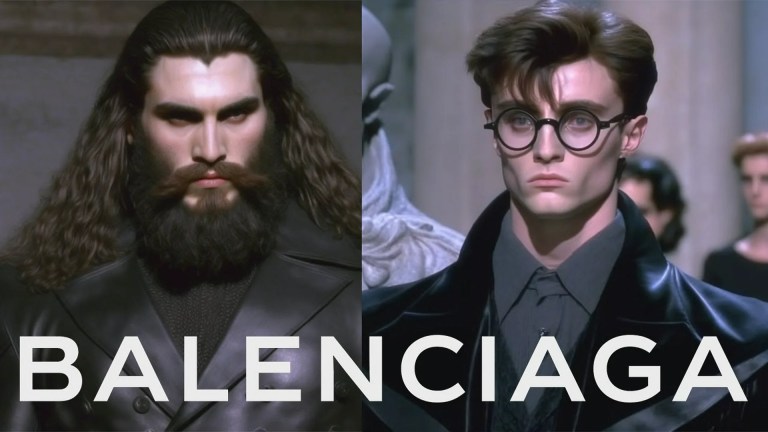
Google’s Veo 2 helped move AI video from short, attractive experiments toward more controllable “shot” generation: users could describe camera movement, lighting, action and style, or animate a reference image. That was a meaningful advance in 2025, but it did not solve continuity, sound, long-form production or physical accuracy. The crucial current fact is that Veo 2 is now historical: Google retired the veo-2.0-generate-001 endpoint on June 30, 2026. New projects should use a currently supported Google model rather than start a Veo 2 integration.
What Google Veo 2 was
Veo 2 was Google DeepMind’s short-form video-generation model for text-to-video and image-to-video creation. Google announced developer availability on April 15, 2025, presenting it as a system that could turn text, images or both into cinematic clips. It appeared through several products rather than one identical application: Gemini, Whisk, Google AI Studio, the Gemini API and Google Cloud.
Those surfaces exposed different controls, limits, resolutions, quotas and availability. “Veo 2” therefore names the model, not a single uniform user experience. Google’s launch announcement is documented at developers.googleblog.com.
Why Veo 2 mattered
More plausible motion
Google said Veo 2 improved the representation of human movement, object motion, deformation, camera movement and environmental interaction. The defensible interpretation is that it often produced more visually plausible motion and cause-and-effect relationships than earlier systems—not that it possessed a scientific understanding of physics. It could still create impossible actions, broken collisions and continuity errors.
Recommended Free Tools
#1 Best Overall

- Legend perfected: Modern design with a matte basalt black finish in an optimized chassis with customizable AlienFX lighting zones, including the striking stadium lighting.
- Game changing graphics: Step into the future of gaming and creation with the NVIDIA GeForce RTX 5070 graphics, powered by NVIDIA Blackwell architecture.
- Marathon gaming unlocked: This high-performance technology ensures clean energy is consistently available, unleashing the top-level power of Intel Core Ultra 7 265F processor as you game, livestream, and multi-task for hours on end.
- Total command: Alienware Command Center software allows you to create and edit AlienFX lighting across the ecosystem, choose and monitor your performance mode across distinct power states, and create custom gaming profiles for your whole library.
- Dell Services: 1 Year Onsite Service provides support when and where you need it. Dell will come to your home, office, or location of choice, if an issue covered by Limited Hardware Warranty cannot be resolved remotely.
Prompt-level cinematic control
Prompts could specify shot size, camera movement, lens or framing, lighting, composition, genre, period, rendering style and subject motion. A request such as “slow lateral tracking shot,” “low-angle close-up” or “aerial establishing shot” behaved more like a shot description than a generic request for moving images.
That was not deterministic filmmaking control. Veo 2 did not guarantee repeatable blocking, exact keyframes, stable actors or an editable timeline. It made the first shot easier to describe, not the entire production predictable.
Image-to-video
Veo 2 could animate a still image, including concept art, a product image, character design or storyboard frame. Whisk Animate used Veo 2 for this purpose, letting a user provide visual composition before asking the model to add motion. Supplying the appearance in advance can reduce the number of visual decisions the model must invent, although it does not guarantee identity preservation or prevent distortion.
Rank #2

- Model: Dell OptiPlex 7050 Small Form Factor (SFF)
- Processor: Intel Core i7-7700 3.60 GHz
- Memory: 32GB DDR4 Ram
- Storage: 1TB Solid State Drive (SSD) Fast Boot + Storage
- Operating System: Windows 11 Pro (64-bit)
Google described the consumer rollout and Whisk workflow at blog.google.
What’s actually slowing this PC down?
Pick the symptom - the matching free tool is one click away.
What it could actually generate
The following specifications belong to particular documented surfaces, not every Veo 2 experience.
| Capability | Documented detail |
|---|---|
| Gemini consumer experience at launch | Eight-second, 720p, 16:9 MP4 clips from text; subscriber and rollout limits applied |
| Google Cloud endpoint | veo-2.0-generate-001; 5–8 seconds, 720p, 24 FPS, MP4 |
| Inputs | Text and image; image input up to 20 MB on the documented Cloud endpoint |
| Aspect ratios | 9:16 and 16:9 on the documented Cloud endpoint |
| Outputs per prompt | Up to four on the documented Cloud endpoint |
| Language | English prompts on the documented Cloud endpoint |
| Sound generation | Not supported |
| Video extension | Not supported |
| Reference images and prompt rewriting | Supported in the Cloud documentation |
| Provenance | SynthID was used for Google outputs; C2PA credentials are listed for the Cloud endpoint |
Google’s Gemini API model page describes Veo 2 as suitable for standard 1080p content, while the Google Cloud table lists 720p. That is a material documentation discrepancy, possibly reflecting different products or revisions. Do not advertise “1080p Veo 2” without naming the endpoint and date. Consult the Gemini API model page and the Cloud specification.
Rank #3

- 【POWERFUL PERFORMANCE】 – AMD Ryzen 5 5500 6-Core 12-Thread Desktop Processor (up to 4.2GHz). Effortlessly handle 3A games, 4K video editing, and multitasking.
- 【SMOOTH GAMING】 – Equipped with GeForce RTX 3050 6GB GDDR6 Graphics Card. Experience high-frame-rate 1080P gaming with ray tracing.
- 【FAST & AMPLE STORAGE】 – 16GB DDR4 3200MHz RAM + 1TB NVMe SSD. Enjoy rapid game loads, quick file transfers, and ample space for your entire library.
- 【KEEP COOL】 – Advanced ARGB air cooling system with multiple fans. Maintains stable performance and low noise even during marathon gaming sessions.
- 【READY TO USE】 – Features built-in Wi-Fi, multiple USB ports, HDMI and DisplayPort (DP) outputs for flexible monitor connectivity. A complete prebuilt gaming computer, plug and play right out of the box.
How the prompt-to-shot workflow changed
Veo 2 encouraged users to write prompts as compact shot briefs:
- Define the subject and action.
- Choose framing and camera movement.
- Specify setting, lighting and time of day.
- Add lens, depth-of-field and visual-style guidance.
- Use a reference image when appearance or composition matters.
- Generate multiple candidates and select for motion and continuity.
- Edit the chosen clips and add sound externally.
For example:
“Slow lateral tracking shot of a red fox walking through fresh snow at blue hour in a quiet pine forest. Low camera angle, shallow depth of field, soft moonlight, visible breath, realistic paw impressions, natural movement, cinematic wildlife-documentary style. No text, logos or extra subjects.”
Do these 3 things before closing this tab:
1Scan for outdated or missing drivers - takes under a minute2Repair Windows errors before they cause bigger problems3Fix the driver behind crashes, sound loss and screen glitchesSpecificity can backfire when instructions conflict. “Static camera” and “fast orbit,” or “one subject” and “a crowd,” give the model incompatible priorities. Describe the constraints that matter most instead of stacking decorative adjectives.
Rank #4

- Intel Core i9-14900KF CPU, B760 chipset motherboard, 32GB DDR5 6000MT/s RGB Memory, 1TB NVMe M.2, WiFi, Windows 11
- NVIDIA GeForce RTX 5070, Display Port/HDMI
- Closed Loop Liquid Cooling with 240mm Radiator
- 2x USB 3.0, 1x Headphone, 1x Mic
- PSU Power cover with Filtered Ventilated Vertical Side mount Radiator support
Where the technology still failed
- Hands and fingers could change shape.
- Faces, clothing patterns and character identity could drift between frames.
- Text, signs and product logos were often unstable.
- Objects, shadows and reflections could appear or disappear.
- Motion could become repetitive, rubber-like or physically impossible.
- Camera movement might not match the written instruction.
- A reference image could preserve an awkward pose or create a difficult perspective to animate.
- Clips were short, so a finished sequence still required selection, editing, continuity work and post-production.
- There was no native dialogue, music, ambience or foley because sound generation was unsupported.
A compelling eight-second clip was therefore evidence of a useful shot generator, not a complete filmmaking system or proof of reliable long-form scene construction.
Independent reader supportYour contribution helps us test, update, and keep practical guides available for everyone.Access and economics
Consumer products
Veo 2 rolled into Gemini’s paid consumer experience on web and mobile, subject to language, subscriber and rollout conditions. Whisk offered an experimental image-and-animation workflow. Plan names and entitlements changed after launch, so those historical descriptions should not be read as current access guarantees.
Developer and enterprise access
Google AI Studio and the Gemini API used the model identifier veo-2.0-generate-001. Generation was asynchronous: submit a request, wait for the long-running operation, then retrieve the MP4. Google Cloud documented regional access including us-central1 and europe-west3, with quota and platform restrictions.
Best Value

- Content Creation Workstation PC: Powered by the Intel Hexa-Core i5 (8th Gen) processor with 32GB DDR4 RAM and NVIDIA's Quadro K1200 4GB Graphics Card, this Workstation PC Computer is built for creative environments
- NVIDIA's Quadro K1200 4GB Graphics Card: Graphic support built to be an efficient workstation for creative applications like photo and video editing, 3D Design, AutoCAD, and much more
- Software Compatibility: Workstation PC for use with independent software vendors (ISV) and certified for use with modeling, rendering, and engineering software from Adobe, AutoCAD, 3DS Max, and many more
- Massive Storage Solutions: An ultra-fast 1TB Solid State Drive (SSD) setup as the primary boot device; Boot and load programs with little to no lag; An additional 4TB Hard Disk Drive (HDD) is installed for additional storage; Never run out of storage
- Connectivity for Creative Projects: USB 3.0 (x5) | USB 2.0 (x4) | USB Type-C (x1) | DisplayPort (x2) | Serial Port (x1) | VGA Port (x1) | Audio Combo Jack (x1) | Audio In (x1) | Audio Out (x1) | RJ-45 Ethernet (x1) | Internal SATA (x3)
Historical API price
The Gemini API pricing page listed Veo 2 at $0.35 per generated second on the paid tier, with no free-tier availability. A five- to eight-second clip therefore cost about $1.75 to $2.80 in raw generation charges. Retries, discarded results, storage, orchestration, editing and audio increase the cost of a usable shot. Those figures describe the historical Gemini API price, not every Google Cloud commercial arrangement. See the pricing page.
Safety and provenance
Google said Veo 2 outputs were marked with SynthID, an embedded watermarking technology. Google Cloud also listed C2PA content credentials. They are different systems: SynthID is Google’s watermarking approach, while C2PA is a broader metadata and provenance standard. Either can help indicate origin, but neither proves that every frame is authentic, unedited, legally cleared or made with everyone’s consent.
Why “redefined” is fair—and limited
Veo 2 helped redefine expectations by making a prompt behave more like a camera-direction brief and by combining text-to-video with image-to-video in widely visible Google products. It raised the quality bar for motion, framing and cinematic intent.
It did not redefine filmmaking in the stronger sense. It lacked native audio, dependable character continuity, long scenes, video extension and deterministic control. Its most durable contribution was moving AI video closer to controllable shot creation while exposing the production gaps that remained.
Free tools Windows power users keep installed
One-click scans. No signup required.
Veo 2’s retirement and what to use now
Google’s Gemini API documentation and pricing list Veo 2 as deprecated, with shutdown on June 30, 2026. Google Cloud directs users toward Veo 3.1 or another currently generally available model. A new application should therefore begin with the live model documentation and migration guidance, not the retired endpoint: Google Cloud’s Veo documentation and current Gemini API pricing.
| Need | Practical direction |
|---|---|
| Understand AI-video history | Study Veo 2 as a milestone and case study |
| Build a new Google API integration | Use a currently supported Veo successor |
| Enterprise Google Cloud deployment | Choose a supported model with the required region, quota and governance controls |
| Timeline-based creative editing | Evaluate creator platforms such as Runway or Adobe Firefly |
| OpenAI-native creative workflow | Evaluate Sora |
| Consumer experimentation | Compare current plans and limits before subscribing; model names and entitlements change |
| Motion experiments on another consumer platform | Evaluate Kling, while checking current terms and availability |
These alternatives serve different workflows; the available evidence does not establish a universal quality winner or current pricing comparison.
Quick Recap
Product prices and availability are accurate as of the date/time indicated and are subject to change. Any price and availability information displayed on Amazon at the time of purchase will apply.