Good Fortune announces itself with a clever hook and an even cleverer sense of self-importance. Built around a body-swap–adjacent conceit that places a chronically unlucky everyman in the orbit of sudden privilege, the film clearly wants to interrogate how wealth, access, and perception shape moral character. It’s the kind of high-concept pitch that sounds sharp in a logline and noble in intent, especially in an era primed for eat-the-rich parables.
Keanu Reeves’ involvement signals a tonal pivot from the jump. This is a lighter, deliberately disarming Reeves, leaning into affability rather than stoicism, as if the film is banking on his inherent decency to soften its critique. That choice telegraphs Good Fortune’s central tension: it wants to say something pointed about class and entitlement, but it also wants to be liked.
| # | Preview | Product | Price | |
|---|---|---|---|---|
| 1 |

|
Good Fortune - DVD | $7.50 | Buy on Amazon |
| 2 |
|
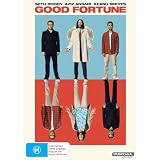
Good Fortune DVD | Seth Rogen, Aziz Ansari, Keanu Reeves | Region 4 (Australia) | $24.88 | Buy on Amazon |
| 3 |

|
Point of View: Good Fortune | $21.33 | Buy on Amazon |
| 4 |

|
Good Fortune (DVD) | $53.00 | Buy on Amazon |
| 5 |

|
Zootopia 2 | $29.99 | Buy on Amazon |
What follows is a satire that gestures toward systemic critique while rarely committing to the discomfort such critique requires. The film circles big ideas—meritocracy as myth, empathy as luxury, luck as moral alibi—without ever tightening the screws. Good Fortune knows what it wants to talk about; it’s less certain how hard it wants to push.
The Idea Versus the Execution
At its core, the film argues that perspective is everything, and that proximity to privilege corrodes accountability. Yet the storytelling defaults to soft irony and easy reversals, flattening the very inequalities it aims to expose. Reeves’ genial presence becomes both an asset and a limitation, grounding the film in warmth while blunting its satirical edge, leaving Good Fortune hovering between thoughtful commentary and feel-good fable.
Free tools Windows power users keep installed
One-click scans. No signup required.
#1 Best Overall
- A well-meaning but rather inept angel named Gabriel meddles in the lives of a struggling gig worker and a wealthy venture capitalist.
Keanu Reeves Against Type: A Looser, Lighter Performance That Almost Saves the Film
If Good Fortune works at all on a moment-to-moment level, it’s largely because Keanu Reeves approaches the material with an unexpected looseness. This isn’t the monkish stoicism of John Wick or the soulful minimalism of his prestige turns. Reeves plays against his own iconography, letting awkward pauses, gentle self-mockery, and a quietly elastic sense of timing do the heavy lifting.
The performance is consciously unglamorous, even a little schlubby, and that’s the point. Reeves understands that satire lives or dies on contrast, and he leans into the discomfort of watching a fundamentally decent man float through systems that reward him for reasons that have nothing to do with merit. It’s a subtle recalibration of his screen persona, and one that feels carefully judged rather than desperate to prove range.
Comedy Through Earnestness
What Reeves brings most effectively is sincerity as a comic weapon. He plays moments of privilege-induced obliviousness not as arrogance but as genuine confusion, which creates laughs without turning the character into a caricature. The humor often lands because Reeves allows himself to look slightly lost, as if he’s always half a step behind the moral implications of what’s happening.
That approach also aligns with the film’s softer instincts, for better and worse. Reeves makes the character likable enough that the audience wants to stay with him, even when the script hesitates to interrogate his advantages too aggressively. His warmth becomes a buffer, insulating the film from its own sharper observations.
Quick wins for a faster PC:
Clear out junk files and repair common Windows errorsFree Scan →Fix the driver behind crashes, sound loss and screen glitchesFind Drivers →When Performance Outpaces the Script
There are stretches where Reeves seems to be acting in a more daring movie than the one around him. He finds grace notes in scenes that otherwise default to easy punchlines or tidy reversals, suggesting an internal reckoning the screenplay never fully dramatizes. You can feel him searching for emotional consequences that the film is reluctant to impose.
That tension is ultimately why the performance only almost saves Good Fortune. Reeves gives the satire a human center and a breezy accessibility, but his decency also exposes how reluctant the film is to let its critique sting. He lightens the load, even as the movie might have benefited from a little more weight.
Satire Without a Bite: When Social Commentary Pulls Its Punches
For a film that gestures toward systemic critique, Good Fortune often seems strangely allergic to discomfort. Its satire identifies the machinery of privilege, the quiet ways success gets smoothed out for the already comfortable, but rarely presses hard enough to make those observations sting. The movie knows what it wants to talk about, yet it’s content to circle the issue rather than confront it head-on.
Big Ideas, Soft Edges
The screenplay sets up a fertile contrast between moral self-perception and material reality, but it repeatedly opts for gentle irony over sharper insight. Scenes that could interrogate how institutions reward affability over accountability instead resolve with tidy beats and reassuring humor. The result is satire that recognizes inequality as a concept but hesitates to explore its consequences in any sustained way.
Windows Errors? Fix Them Before They Spread
Repair common Windows errors and clear accumulated junk for a smoother, more stable PC - no reinstall needed.Free scan · no reinstallOutdated Drivers Are Slowing You Down
One free scan finds every outdated or missing driver and matches the right update for your exact hardware.Free scan · exact hardware matchThis restraint feels intentional, as if the film is worried about alienating viewers it wants to keep comfortable. Rather than letting awkward silences or ethical contradictions linger, Good Fortune rushes to smooth them over with likability and charm. It’s pleasant, but it also undercuts the urgency of what the movie seems to be about.
Rank #2
- Seth Rogen, Aziz Ansari, Keanu Reeves
When Likability Becomes a Shield
Reeves’ inherent warmth becomes both an asset and a limitation here. His character’s decency is so foregrounded that the film rarely asks the audience to reckon with how that decency coexists with unearned advantage. Instead of forcing a reckoning, the narrative treats good intentions as a kind of moral alibi.
That choice keeps the tone buoyant but blunts the film’s social critique. Satire thrives on friction, on the uneasy recognition that good people can still benefit from bad systems. Good Fortune acknowledges that idea in theory, then backs away before it can make anyone squirm.
A Comfortable Critique in an Uncomfortable Moment
In an era crowded with sharper, more confrontational social comedies, the film’s reluctance to escalate feels especially noticeable. Its observations are valid but familiar, and without a stronger point of view, they land as agreeable commentary rather than provocation. You leave recognizing the themes, but not necessarily feeling challenged by them.
That’s the paradox at the heart of Good Fortune. It wants to be socially conscious without being socially abrasive, thoughtful without being thorny. In choosing comfort over confrontation, the film ensures its message is easy to digest, even if it ultimately leaves you wanting something with a little more bite.
Tone Trouble: Balancing Quirk, Sincerity, and Moral Messaging
If Good Fortune stumbles most visibly, it’s in how often it seems unsure which emotional register it wants to occupy. The film oscillates between offbeat comedy, earnest character study, and soft-edged moral fable, rarely committing fully to any one mode. That tonal wavering doesn’t sink the movie outright, but it does dilute the impact of what should be its most pointed ideas.
Quirk Without Enough Bite
The quirky elements are designed to make the satire palatable, even charming. Odd character beats, gentle absurdities, and whimsical setups give the film an indie-comedy sheen that invites easy laughs rather than uneasy reflection. The problem is that quirk becomes a pressure-release valve, defusing tension just when the story could press harder.
Satire needs escalation, but Good Fortune often treats oddness as an end in itself. Instead of using humor to expose contradictions or sharpen its critique, the film leans on eccentricity to keep things light. The result is a tone that feels pleasant and mildly amusing, but rarely incisive.
The Tool Desk
Outbyte PC Repair FREEClear out junk files and repair common Windows errorsFree Scan →Outbyte Driver Updater FREEScan for outdated or missing drivers - takes under a minuteDriver Scan →Sincerity as a Safety Net
Reeves’ performance plays a major role in shaping that tonal softness. His shift toward an almost disarming sincerity is refreshing, especially for an actor so often cast as stoic or mythic. He brings an open-hearted vulnerability that makes the character instantly readable and emotionally accessible.
Yet that sincerity also functions as a safety net for the film’s moral messaging. Because Reeves radiates decency, the story is hesitant to put him in situations that might complicate or tarnish that image. The film gestures at moral ambiguity, then retreats into reassurance, as if worried that genuine discomfort might feel like betrayal.
Rank #3
- Factory sealed DVD
When the Message Gets Smoothed Over
This balancing act ultimately weakens the film’s social ambitions. The themes are present and clearly articulated, but they arrive pre-softened, wrapped in humor and goodwill rather than sharpened by consequence. Moments that could force the audience to confront uncomfortable truths instead resolve with emotional clarity and narrative neatness.
Good Fortune wants to believe that awareness alone is meaningful progress, and that belief shapes its tone at every turn. The film isn’t wrong to value empathy and kindness, but by smoothing over its own contradictions, it limits how far its satire can go. What remains is a movie that gestures toward critique while keeping one foot firmly planted in emotional comfort, a choice that feels increasingly cautious given the moment it’s trying to speak to.
Supporting Players and Missed Opportunities: Characters That Feel Like Ideas, Not People
If Reeves provides the film with its emotional center, the supporting cast is tasked with carrying the satirical weight around him. Unfortunately, this is where Good Fortune most clearly reveals its limitations. The secondary characters are less people than narrative signposts, introduced to illustrate social positions rather than embody them.
Archetypes in Place of Individuals
Nearly every supporting role feels built to serve a thesis rather than a life. The struggling worker, the opportunistic elite, the well-meaning liberal friend — each arrives with just enough shading to avoid caricature, but not enough interiority to feel real. They function as rhetorical tools, clarifying the film’s ideas without ever complicating them.
That clarity may be intentional, but it comes at a cost. Satire thrives on specificity, on the messiness of human behavior that resists easy categorization. By sanding down these characters into recognizable types, the film removes the friction that might have sharpened its social critique.
Strong Performers, Thin Material
What makes this especially frustrating is that the actors themselves are clearly capable of more. Several supporting performances hint at deeper emotional currents — flashes of resentment, insecurity, or self-deception — only for the script to quickly redirect them back toward their symbolic function. These moments feel like doors briefly cracked open, then firmly shut.
The film seems wary of letting any secondary character challenge Reeves’ moral gravity. Instead of colliding worldviews, we get orbiting perspectives that reinforce the same central lesson. Conflict exists, but it’s carefully contained, never allowed to destabilize the film’s carefully maintained tonal balance.
Satire Without Resistance
As a result, Good Fortune rarely feels in danger of its own ideas. No supporting character pushes the premise far enough to expose its blind spots or contradictions. Everyone ultimately speaks the same emotional language, even when they’re meant to represent opposing sides of a social divide.
This lack of resistance flattens the film’s satirical edge. Without fully realized characters capable of surprising behavior or uncomfortable truths, the social commentary remains abstract and polite. The film knows what it wants to say, but it rarely allows its characters to argue back in ways that might make that message feel earned rather than assumed.
Rank #4
Direction and Script: Sharp Setup, Soft Follow-Through
Good Fortune opens with a confidently staged premise, one that promises bite. The film establishes its moral chessboard quickly and cleanly, laying out a class-conscious what-if that feels primed for escalation. For a moment, it seems ready to interrogate its own assumptions, or at least let them clash messily on screen.
Do these 3 things before closing this tab:
1Scan for outdated or missing drivers - takes under a minute2Repair Windows errors before they cause bigger problems3Fix the driver behind crashes, sound loss and screen glitchesA Concept That Arrives Fully Formed
The script’s early scenes benefit from their precision. The rules of the film’s social experiment are clearly defined, and the direction keeps things brisk without feeling rushed. There’s an appealing simplicity to how the film frames wealth, labor, and moral responsibility — not subtle, but legible in a way that invites broader audiences into the conversation.
That clarity, however, soon becomes a limitation. Once the premise is established, the narrative largely circles it, reiterating its thesis rather than evolving it. Scenes feel designed to confirm what the audience already understands, not to complicate or challenge it.
Safe Choices Behind the Camera
As a director, the film’s guiding hand favors restraint over risk. Visual choices are clean and functional, occasionally elegant, but rarely expressive enough to add subtext the script won’t provide. Moments that could lean into discomfort or absurdity are instead smoothed into tonal neutrality, keeping the satire accessible but blunted.
This approach aligns with the film’s overall politeness. Even when characters brush against ethical hypocrisy or emotional contradiction, the direction pulls back before things get truly uneasy. It’s a film that seems afraid of alienating viewers, even at the expense of its own sharpness.
Recommended Free Tools
Keanu Reeves as a Tonal Anchor
Keanu Reeves’ performance fits neatly within this softened framework. He brings warmth, self-awareness, and a slightly playful ease that lightens the film’s mood, especially compared to his more stoic recent roles. There’s an intentional gentleness here, a sense that Reeves is meant to disarm rather than provoke.
While this tonal shift is refreshing, it also contributes to the film’s lack of friction. Reeves becomes a stabilizing force in a story that might benefit from instability. His presence reassures the audience that the film’s moral universe is fundamentally safe — which, for satire, can be a quiet problem.
Ambition Without Escalation
Ultimately, the script never quite justifies the boldness of its initial idea. The themes are socially conscious and timely, but they land with a softness that feels at odds with the material’s potential. Instead of building toward sharper insights or unexpected reversals, the film settles into affirmation.
Good Fortune wants to be thoughtful without being confrontational, humane without being messy. In doing so, it sacrifices the very tension that could have elevated its social satire from agreeable to essential.
What’s actually slowing this PC down?
Pick the symptom - the matching free tool is one click away.
Best Value
The Cultural Moment Problem: Why ‘Good Fortune’ Feels Timely Yet Strangely Safe
Good Fortune arrives primed for relevance. Its concerns about privilege, moral luck, and the invisible systems that reward some while grinding others down are very much of the moment. Yet for a film so attuned to contemporary anxieties, it often feels hesitant to truly interrogate them.
Satire Without Teeth in an Age That Demands Them
The film gestures toward structural inequality and ethical complacency, but it frames these ideas in a way that feels almost pre-digested. Rather than exposing uncomfortable contradictions or forcing characters into morally compromised corners, Good Fortune reassures the audience that decency will prevail if everyone just tries a little harder. In an era shaped by sharper, more confrontational social comedies, that approach can feel curiously outdated.
This is satire designed not to provoke debate, but to nod knowingly. The jokes land, the observations register, yet the film rarely pushes past surface recognition into genuine critique. It’s less a scalpel than a padded prod, content to acknowledge the problem without fully unsettling the viewer.
The Reeves Effect: Charm as Cushion
Keanu Reeves’ tonal shift plays directly into this safety net. His performance is intentionally disarming, radiating a self-aware kindness that makes even ethically dubious moments feel forgivable. It’s an appealing choice, and one that aligns with Reeves’ cultural status as Hollywood’s most trusted presence.
But that trust comes at a cost. When the film leans on Reeves’ inherent likability, it blunts the impact of its social commentary. The character becomes a conduit for empathy rather than a challenge to the audience’s assumptions, softening conflicts that might otherwise cut deeper.
Timely Themes, Carefully Contained
What ultimately limits Good Fortune is its unwillingness to embrace the messiness its themes demand. The film recognizes the cultural moment but seems wary of fully engaging with its sharper edges, opting instead for emotional clarity and moral reassurance. In doing so, it mirrors the very comfort-seeking tendencies it lightly critiques.
The result is a film that feels relevant without feeling urgent. Good Fortune understands the conversation it wants to join, but it speaks in a measured, agreeable tone when a bolder voice might have made it resonate longer — and linger harder — after the credits roll.
Final Verdict: Is Keanu Reeves Enough to Justify a Toothless Social Satire?
A Pleasant Watch, Not a Provocative One
As a piece of social satire, Good Fortune ultimately plays it safe, choosing accessibility over abrasion. It wants to comment on inequality, moral luck, and self-satisfaction without ever making the audience squirm, and that restraint defines the experience. The film is agreeable, even gently thoughtful, but rarely challenging in a way that sharpens its point. What’s left is a satire that recognizes society’s faults without insisting we confront our complicity in them.
Reeves Carries the Movie — and Softens It
Keanu Reeves is undeniably the film’s greatest asset, and his lighter, more playful energy makes Good Fortune an easy watch. He brings warmth, humor, and an almost apologetic charm that smooths over narrative rough spots and tonal hesitations. Yet that same warmth acts as a buffer, insulating the film from the harsher implications of its ideas. Reeves doesn’t so much sharpen the satire as he cushions it, turning potential discomfort into reassurance.
Worth Your Time, If Expectations Are Calibrated
For viewers drawn to Reeves’ evolving screen persona or those curious about socially conscious comedies that won’t leave emotional bruises, Good Fortune delivers modest pleasures. It’s competently made, well-intentioned, and occasionally insightful, even if it stops short of saying anything truly unsettling. The film feels designed to be liked rather than argued with, and in that sense, it succeeds.
In the end, Keanu Reeves is enough to make Good Fortune watchable, likable, and occasionally engaging — but not enough to elevate its satire beyond polite observation. The film gestures toward critique while keeping one foot firmly planted in comfort, offering reflection without friction. As a cultural artifact, it’s pleasant and timely; as a social satire, it’s a missed opportunity that smiles when it should dare to bite.
Quick Recap
Product prices and availability are accurate as of the date/time indicated and are subject to change. Any price and availability information displayed on Amazon at the time of purchase will apply.
Quick wins for a faster PC:
Fix the driver behind crashes, sound loss and screen glitchesFind Drivers →Repair Windows errors before they cause bigger problemsFix Now →Scan for outdated or missing drivers - takes under a minuteDriver Scan →



