When Chris Pratt talks about The Electric State, the Marvel comparison tends to arrive before the movie even does. That’s partly because Pratt has spent nearly a decade as one of the MCU’s most recognizable faces, and audiences have been trained to read any big-budget sci‑fi adventure through that lens. Fair or not, his presence alone invites expectations of quippy heroes, emotional redemption arcs, and a familiar blend of spectacle and heart.
There’s also the surface-level overlap that makes the comparison feel inevitable. The Electric State is a visually ambitious sci‑fi story with massive world-building, cutting-edge effects, and a journey driven by character rather than pure concept. In an era where the MCU has defined what “accessible blockbuster science fiction” looks like, films that aim for wide appeal often get grouped into the same cinematic conversation, regardless of intent.

A Familiar Star in an Unfamiliar World
Pratt himself has acknowledged that audiences are quick to connect dots, especially when an actor becomes synonymous with a franchise as culturally dominant as Marvel. His role in The Electric State may involve large-scale action and emotional stakes, but it’s rooted in a very different narrative tradition. Where the MCU thrives on interconnected storytelling and serialized mythology, this film is built as a standalone experience, more introspective and mood-driven than franchise-forward.
Why the Comparison Misses the Bigger Picture
The Electric State draws more heavily from dystopian science fiction and graphic novel storytelling than superhero cinema. Its tone leans melancholic and reflective, favoring atmosphere and quiet emotional beats over punchlines and crossover-ready spectacle. The MCU comparison keeps coming up because of shared DNA in scale and casting, but as Pratt has suggested, the film’s creative intent lives far outside Marvel’s well-worn playbook.
#1 Best Overall

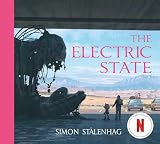
- IMMERSE YOURSELF IN SIMON STÅLENHAG'S EPIC ADVENTURE: Experience the surreal beauty and haunting dystopia of an alternate 1997 America through an RPG campaign based on the acclaimed art book The Electric State.
- DISCOVER A WORLD IN DECLINE: Navigate a fantasy landscape filled with discarded battle drones and the remnants of a once-thriving tech-driven society, creating a visually and emotionally stunning backdrop for your tabletop roleplaying adventure.
- BUILD STRONG CHARACTER BONDS: Collaborate with your friends as you uncover secrets, face moral dilemmas, and challenge your perceptions of friendship, loyalty, and survival.
- POWERED BY THE YEAR ZERO ENGINE: Enjoy the dynamic, award-winning mechanics from Free League’s popular games like Tales From the Loop and Blade Runner RPG, delivering smooth gameplay and rich storytelling opportunities.
- A JOURNEY-DRIVEN ILLUSTRATED RULEBOOK: This role-playing game quest book emphasizes exploration and personal growth, focusing on the travelers' experiences and how the post-apocalyptic world shapes them along the way.
What Chris Pratt Actually Said: Breaking Down His Comments on Tone, Scale, and Familiarity
When Pratt has addressed the Marvel comparisons directly, his approach has been notably measured. Rather than rejecting the MCU connection outright, he’s acknowledged why audiences instinctively make it. For an actor whose modern career was shaped by Guardians of the Galaxy, familiarity is part of the package, and Pratt seems well aware of how that shapes expectations before a trailer even rolls.
At the same time, he’s been careful to separate recognition from repetition. In discussing The Electric State, Pratt has emphasized that shared scale doesn’t automatically translate to shared storytelling DNA. Big visuals and emotional stakes may feel MCU-adjacent on the surface, but he’s framed the similarities as circumstantial rather than foundational.
Tone: Familiar Energy, Different Emotional Weight
One of Pratt’s key clarifications centers on tone. While the MCU often balances danger with humor and forward momentum, he’s described The Electric State as more subdued and emotionally heavy. The film allows moments to linger, prioritizing mood and internal reflection over constant banter or crowd-pleasing reversals.
Pratt has pointed out that this tonal shift was intentional, both in performance and pacing. His role doesn’t rely on the charismatic swagger audiences associate with Star-Lord, but on restraint and vulnerability. That distinction, he suggests, is where the film quietly breaks from Marvel expectations, even if it doesn’t announce that difference loudly.
What’s actually slowing this PC down?
Pick the symptom - the matching free tool is one click away.
Scale Without the Superhero Framework
Another point Pratt has addressed is scale, which often fuels the MCU comparison more than anything else. The Electric State is undeniably massive in scope, filled with expansive environments and ambitious visual effects. Pratt has acknowledged that this alone invites blockbuster shorthand, especially in a post-MCU landscape where scale is often equated with spectacle-first storytelling.
However, he’s been clear that the scale here serves a different purpose. Rather than building toward climactic battles or franchise setup, the world exists to support a more personal journey. The size of the story is meant to contrast with the characters’ isolation, not to elevate them into mythic heroes.
Why Familiarity Isn’t the Same as Formula
Perhaps Pratt’s most telling insight revolves around audience comfort. He’s suggested that familiarity can be a doorway rather than a destination, drawing viewers in before revealing something tonally unexpected. In that sense, any MCU-like feeling is more about access than imitation, using recognizable elements to ease audiences into a stranger, more contemplative world.
Pratt doesn’t deny that his presence carries Marvel baggage, but he’s framed that as an unavoidable reality rather than a creative crutch. The Electric State, in his view, isn’t trying to replicate what worked before. It’s leveraging familiarity to tell a story that ultimately moves at its own pace, with its own emotional priorities, far removed from the machinery of a shared cinematic universe.
Surface-Level Similarities: Shared DNA Between ‘The Electric State’ and the MCU
While Chris Pratt has been careful to separate The Electric State from his Marvel work, he hasn’t dismissed the comparisons outright. In interviews, he’s acknowledged that certain similarities are real, at least on the surface. Big-budget sci-fi, extensive visual effects, and a blend of human emotion with heightened world-building naturally invite MCU parallels, especially when audiences are primed to make them.
Pratt’s point isn’t that those connections are accidental, but that they’re structural rather than philosophical. Modern blockbuster filmmaking, particularly at this scale, shares a visual language shaped in large part by Marvel’s influence. From motion-capture performances to expansive digital environments, The Electric State operates within a cinematic toolkit that audiences now associate with franchise filmmaking.
Rank #2
A Familiar Blockbuster Vocabulary
One similarity Pratt has openly discussed is the use of humor as a pressure valve. While The Electric State is more subdued overall, it still allows moments of levity to coexist with heavier themes, a balance that Marvel helped popularize. Pratt has noted that this tonal flexibility is less about copying Marvel’s formula and more about meeting audience expectations for accessibility in large-scale sci-fi.
There’s also the matter of pacing and clarity. Like the MCU, The Electric State prioritizes clean storytelling even when navigating complex worlds. Pratt has framed this as a necessity of scale: when a film introduces massive concepts and unfamiliar environments, grounding the audience with clear emotional throughlines becomes essential.
Outdated Drivers Are Slowing You Down
One free scan finds every outdated or missing driver and matches the right update for your exact hardware.Free scan · exact hardware matchPC Slower Than It Used to Be?
A free scan shows the junk files, broken settings and background clutter dragging Windows down - then fixes them in one click.Free scan · Windows 10 & 11Star Power and Audience Association
Pratt himself is perhaps the most obvious connective tissue. He’s fully aware that for many viewers, his presence alone triggers Marvel associations, regardless of the role. Rather than pushing back against that, he’s described it as part of the cultural shorthand audiences bring into the theater, something filmmakers can’t control but can thoughtfully account for.
Importantly, Pratt has emphasized that this shared DNA doesn’t dictate creative intent. The Electric State may look and feel familiar at a glance, but those similarities exist at the level of craft and expectation, not narrative ambition. The comparisons, as he sees them, are understandable starting points, not definitive statements about what the film is trying to be.
Where the Comparison Stops: How ‘The Electric State’ Fundamentally Differs From Marvel
While Pratt acknowledges why audiences instinctively draw Marvel comparisons, he’s been clear that The Electric State is not operating on the same narrative wavelength. The similarities end once the film’s emotional priorities come into focus. Where the MCU is designed around escalation and interconnected momentum, this story deliberately moves inward.
A More Intimate, Melancholic Core
Pratt has described The Electric State as quieter and more reflective than anything he’s done in Marvel. The film leans into loneliness, disconnection, and a sense of cultural decay, themes that rarely drive MCU storytelling. Even when spectacle is present, it’s filtered through a more somber lens, prioritizing mood over momentum.
That tonal restraint is a key distinction. Marvel films often use humor to keep the experience buoyant, even in darker chapters, but here the levity is sparing and situational. Pratt has suggested that when humor appears, it’s meant to humanize the characters rather than release tension on a rhythmic schedule.
Standalone Storytelling, Not Franchise Architecture
Another point Pratt has emphasized is intent. The Electric State is not designed as a launching pad for sequels, spin-offs, or an interconnected universe. Its story is self-contained, with a clear beginning, middle, and end that doesn’t depend on future installments to feel complete.
That freedom shapes the film’s structure. Without the need to seed future narratives or balance multiple character arcs for long-term payoff, the story can afford to be more focused and, at times, unresolved in ways Marvel films rarely allow themselves to be.
Theme Over Triumph
At its core, The Electric State isn’t about heroism in the traditional blockbuster sense. Pratt has framed it as a film more concerned with consequence than victory, exploring how technological progress leaves people behind rather than empowering them. The emotional arc isn’t built around saving the world, but around navigating it after something essential has already been lost.
Do these 3 things before closing this tab:
1Scan for outdated or missing drivers - takes under a minute2Clear out junk files and repair common Windows errors3Fix the driver behind crashes, sound loss and screen glitchesThat thematic weight is where the comparison truly breaks down. Marvel’s stories are aspirational by design, rooted in identity, power, and responsibility. The Electric State, by contrast, is reflective and cautionary, using its sci‑fi framework to ask what happens when optimism fades, and what kind of humanity remains in its wake.
A More Melancholic Sci‑Fi Vision: Themes, World‑Building, and Emotional Weight
Where the MCU often frames futurism as aspirational or empowering, The Electric State leans into a quieter sense of loss. Chris Pratt has been clear that while both worlds involve advanced technology and heightened reality, the emotional temperature couldn’t be more different. This is a future defined less by possibility than by aftermath, where progress has already come and gone, leaving scars rather than solutions.
That distinction is what fuels many of the surface-level comparisons. Pratt acknowledges that audiences are conditioned to associate large-scale sci‑fi with Marvel-style momentum, but he’s careful to note that The Electric State isn’t chasing that rhythm. Instead, it invites viewers to sit with discomfort and unanswered questions, trusting mood and atmosphere to carry as much weight as plot.
World‑Building as Emotional Backdrop
The film’s world-building reinforces that melancholy at every turn. Rather than sleek cities or utopian tech hubs, the landscape is fragmented and decaying, filled with remnants of a society that once believed machines would make life better. Pratt has described the setting as emotionally textured, where the environment itself tells a story of abandonment and unintended consequences.
The Tool Desk
Outbyte PC Repair FREERepair Windows errors before they cause bigger problemsFix Now →Outbyte Driver Updater FREEFix the driver behind crashes, sound loss and screen glitchesFind Drivers →Unlike the MCU, where settings often exist to facilitate action or spectacle, these spaces are meant to linger. Empty highways, forgotten machines, and silent communities aren’t just visual flavor; they underscore the film’s central idea that technological advancement doesn’t guarantee human connection. The world feels lived in, but also left behind.
Robots, Humanity, and What’s Been Lost
One of the most striking differences Pratt points out is how artificial intelligence is framed. In Marvel, AI often becomes a mirror for power, control, or moral responsibility. In The Electric State, robots are closer to ghosts, symbols of a failed promise rather than a looming threat or heroic ally.
That shift allows the film to explore empathy in unexpected ways. The emotional core isn’t about stopping a villain or mastering technology, but about recognizing what was sacrificed along the way. Pratt has suggested that this perspective makes the story feel more intimate, even when the scale is vast.
Emotional Weight Over Escapism
Ultimately, the film’s emotional weight is where Pratt draws the firmest line between this project and his Marvel work. He’s noted that The Electric State doesn’t rush to reassure the audience or tie every thread into a satisfying bow. Moments are allowed to breathe, and sometimes to hurt, without the safety net of humor or spectacle to soften the impact.
Recommended Free Tools
That approach reshapes the viewing experience. Rather than offering escapism through triumph, the film asks viewers to reflect on vulnerability, regret, and resilience. It’s a sci‑fi story that looks forward only to better understand what’s already been lost, and that intentional heaviness is precisely what sets it apart from the MCU comparisons that inevitably follow.
Chris Pratt Outside Star‑Lord: Career Context and Why This Role Matters
For better or worse, Chris Pratt’s modern screen identity is inseparable from Star‑Lord. The role didn’t just launch him into blockbuster territory; it cemented a persona built on charm, humor, and emotional accessibility, all wrapped in a self‑aware Marvel framework. When audiences see Pratt in a science‑fiction setting, the MCU comparison is almost automatic, even before tone or story are considered.
Rank #4

- ✯ A GIFT THEY'LL ACTUALLY LOVE - Be a legend with this signed printed poster of one of the mega blockbuster movies, Electric State 2025. A starstruck present for them and top present-giving points to you!
- ✯ YOU WON'T FIND A BETTER PRODUCT FOR THE PRICE - Just like the real thing but without the cost, Fans and collectors of any age will be delighted to receive this authentic-looking display that makes for a unique addition to their collectors' memorabilia
- ✯ ARRIVES READY TO GIVE AS A GIFT - Our 16" x 12" poster prints come framed in a sleek Black Polycarbonate frame that compliments the matt mount display. Lightweight, but of the highest quality - Simply perfect for a birthday, Christmas, or any kind of gift!
- ✯ QUALITY ALL THE WAY - Professionally made and finished in our studio, these displays are quality checked and parcelled up with care using robust packing materials to ensure they arrive in mint condition
That familiarity is part of why The Electric State sparks conversation so quickly. Pratt has acknowledged that he understands the instinct to draw parallels, especially when a recognizable face steps into another large‑scale, effects‑driven world. But he’s been careful to frame those similarities as surface‑level, rooted more in audience expectation than in the film’s creative DNA.
Moving Beyond the Marvel Persona
Since Guardians of the Galaxy, Pratt has spent years navigating roles that oscillate between reinforcing and reshaping his public image. Franchises like Jurassic World leaned into spectacle and traditional heroism, while projects such as The Tomorrow War and Passengers explored more introspective or morally ambiguous territory. The Electric State sits firmly in that latter camp, even if its visual scope suggests something more conventional.
Quick wins for a faster PC:
Repair Windows errors before they cause bigger problemsFix Now →Scan for outdated or missing drivers - takes under a minuteDriver Scan →Pratt has described the character as quieter and more grounded than Star‑Lord, driven less by bravado and more by weariness. There’s no constant undercutting of emotion with humor, and no expectation that the audience will root for him through charisma alone. That restraint, he’s suggested, was part of what drew him to the role in the first place.
Why the Comparison Keeps Coming Up
The MCU looms large over modern blockbuster storytelling, and Pratt is one of its most recognizable ambassadors. When he appears in a sci‑fi narrative involving technology, large environments, and emotional stakes, the Marvel lens is almost unavoidable. Pratt hasn’t pushed back against that reality, but he has emphasized that The Electric State wasn’t designed to fit into the same storytelling rhythms.
In interviews, he’s pointed out that Marvel films are engineered for momentum, clarity, and payoff. The Electric State, by contrast, allows ambiguity and discomfort to remain unresolved. The similarities exist in scale and genre, not in intention, and Pratt seems keenly aware that understanding that distinction is key to appreciating the film on its own terms.
A Role That Signals Creative Intent
More than anything, this project reflects where Pratt appears to be steering his career. While he remains a bankable franchise star, The Electric State suggests a growing interest in material that prioritizes mood, theme, and emotional texture over immediate audience gratification. It’s a choice that complicates his blockbuster résumé rather than simplifying it.
Free tools Windows power users keep installed
One-click scans. No signup required.
Pratt hasn’t framed the film as a rejection of Marvel or of Star‑Lord, but as a necessary expansion beyond that shadow. In doing so, he’s asking audiences to meet him somewhere different, in a story that trades quips for quiet moments and easy heroism for reflection. That shift is exactly why the MCU comparison exists, and also why, once the film begins, it gradually falls away.
Independent reader supportYour contribution helps us test, update, and keep practical guides available for everyone.The Russo Brothers Factor: How Their MCU Legacy Shapes Audience Expectations
If Chris Pratt’s presence invites Marvel comparisons, the involvement of Anthony and Joe Russo all but guarantees them. As the architects behind Captain America: The Winter Soldier, Civil War, and Avengers: Endgame, the Russos helped define the modern MCU’s balance of spectacle, character, and emotional payoff. For many audiences, their names carry a built-in promise of scale, momentum, and narrative clarity.
Pratt has acknowledged that reality without frustration. In discussing The Electric State, he’s noted that people naturally associate the Russos with Marvel because that’s where most viewers encountered their storytelling voice. The comparison, in his view, is understandable, but incomplete.
From Franchise Architects to Adaptation Filmmakers
What Pratt and the Russos have emphasized in interviews is that The Electric State isn’t an attempt to replicate the MCU formula under a different name. Unlike Marvel, which is designed around interconnected arcs and forward propulsion, this film is a self-contained adaptation rooted in tone and atmosphere. The Russos aren’t building toward a crossover or a cultural event; they’re translating Simon Stålenhag’s haunting visual language into narrative form.
That distinction matters because it reframes their creative priorities. Pratt has described the Russos on this project as more restrained and contemplative, less interested in delivering crowd-pleasing beats and more focused on letting moments linger. The scale is still there, but it’s in service of mood rather than momentum.
Why Familiar DNA Doesn’t Mean Familiar Intent
Part of the confusion comes from how deeply the Russos’ Marvel work reshaped blockbuster expectations. Audiences have been trained to anticipate tonal balance, clear heroes, and emotional catharsis, especially when familiar creative names are involved. Pratt has been careful to point out that The Electric State resists those instincts by design.
He’s explained that the film allows sadness, uncertainty, and unresolved tension to coexist without being softened by humor or spectacle. While the Russos’ technical confidence is evident, their storytelling approach here is intentionally quieter. The similarities lie in craftsmanship, not in emotional objectives.
Recalibrating What “A Russo Film” Means
In that sense, The Electric State functions as a recalibration of the Russo Brothers’ public identity as much as Pratt’s. The film challenges the idea that their careers are permanently tethered to Marvel’s rhythms. Pratt has suggested that audiences expecting another Endgame-scale experience may be surprised, but not alienated, once they adjust their expectations.
Do these 3 things before closing this tab:
1Fix the driver behind crashes, sound loss and screen glitches2Repair Windows errors before they cause bigger problems3Scan for outdated or missing drivers - takes under a minuteRather than rejecting their MCU legacy, the Russos seem to be using it as a foundation from which to explore different storytelling modes. Pratt’s comments consistently return to that idea: the familiar names may draw people in, but the film itself is asking to be judged on its own emotional wavelength.
What Viewers Should Expect Going In: Reframing the Film Beyond Franchise Thinking
A Mood Piece, Not a Momentum Machine
Pratt has been clear that The Electric State isn’t engineered for the same emotional cadence as an MCU entry. Viewers shouldn’t expect rapid-fire reversals, quippy releases of tension, or the kind of third-act escalation designed to leave audiences cheering. Instead, the film prioritizes atmosphere, lingering images, and a sense of melancholy that’s allowed to breathe.
That approach aligns closely with Simon Stålenhag’s source material, where meaning often emerges from silence and suggestion rather than explicit narrative payoff. Pratt has framed the experience as more reflective than rousing, asking viewers to sit with the story rather than race through it. It’s a recalibration of how blockbuster-scale visuals can be used.
Familiar Faces, Different Emotional Contract
Part of the MCU comparison stems from the comfort audiences associate with Pratt himself. His Marvel persona trained viewers to expect charm as a safety net, even in darker moments. In The Electric State, that safety net is deliberately thinner.
Quick wins for a faster PC:
Clear out junk files and repair common Windows errorsFree Scan →Fix the driver behind crashes, sound loss and screen glitchesFind Drivers →Repair Windows errors before they cause bigger problemsFix Now →Pratt has noted that his performance here operates in a more restrained register, shaped by loss, displacement, and emotional distance. The film isn’t interested in undercutting those feelings for accessibility. Instead, it trusts viewers to engage with a quieter, more unsettled emotional space.
Scale as Backdrop, Not Spectacle
Visually, The Electric State may still feel expansive, which is where franchise thinking can sneak back in. But Pratt has emphasized that the scale exists to contextualize the characters’ isolation, not to overwhelm the story. The machines, ruined landscapes, and retro-futuristic imagery function as environmental storytelling rather than narrative engines.
This is where expectations matter most. The film uses big visuals to evoke mood and memory, not to promise constant escalation. Audiences primed for action-driven pacing may initially feel off-balance, but that disorientation is part of the design.
Ultimately, Pratt’s message is less about distancing the film from the MCU and more about asking audiences to meet it on its own terms. The Electric State isn’t rejecting blockbuster language; it’s speaking it more softly. For viewers willing to let go of franchise reflexes, the reward is a more introspective kind of cinematic experience, one that lingers long after the final image fades.
Quick Recap
Product prices and availability are accurate as of the date/time indicated and are subject to change. Any price and availability information displayed on Amazon at the time of purchase will apply.




