Free tools Windows power users keep installed
One-click scans. No signup required.
George Harrison died from cancer on November 29, 2001, in Beverly Hills, California. He was 58. His death followed a prolonged illness involving throat, lung, and brain tumors, but Harrison’s legacy was much larger than the circumstances of his final illness: he was a Beatles songwriter and guitarist, a pioneer in bringing Indian musical ideas to Western rock, a solo artist, a spiritual seeker, a benefit-concert organizer, and a member of the Traveling Wilburys.
George Harrison died from cancer on November 29, 2001, in Beverly Hills, California. He was 58. His death followed a prolonged illness involving throat, lung, and brain tumors, but Harrison’s legacy was much larger than the circumstances of his final illness: he was a Beatles songwriter and guitarist, a pioneer in bringing Indian musical ideas to Western rock, a solo artist, a spiritual seeker, a benefit-concert organizer, and a member of the Traveling Wilburys.
| # | Preview | Product | Price | |
|---|---|---|---|---|
| 1 |
|
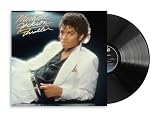
Thriller | $19.97 | Buy on Amazon |
| 2 |

|
Rumours | $23.05 | Buy on Amazon |
| 3 |
![Chronicle: The 20 Greatest Hits[2 LP]](https://m.media-amazon.com/images/I/411qOkbEPUL._SL160_.jpg)
|
Chronicle: The 20 Greatest Hits[2 LP] | $27.89 | Buy on Amazon |
| 4 |

|
Purple Rain | $22.99 | Buy on Amazon |
| 5 |

|
Greatest Hits Volume I & II | $26.97 | Buy on Amazon |
What happened to George Harrison?
Harrison had experienced serious health problems for several years before his death. Contemporaneous reports described earlier treatment for throat cancer, surgery for lung cancer, and later treatment for a brain tumor. In 2001, reports also noted that a cancerous growth had been removed from his lung.
In July of that year, Harrison and his wife, Olivia, rejected reports that he was imminently dying while acknowledging that he had undergone substantial medical treatment. He died several months later after the progression of his cancer. The available contemporary evidence supports describing his death as cancer-related, with a history involving throat, lung, and brain tumors, without claiming a more specific diagnosis or treatment sequence than the sources establish.
#1 Best Overall
Harrison died in Beverly Hills, California, on November 29, 2001, at the age of 58. Some contemporaneous biographical material has carried a conflicting date, but November 29 is the date used by the most authoritative death records and should be treated as the correct date.
George Harrison was more than the “quiet Beatle”
Harrison became internationally famous as the Beatles’ lead guitarist, but the nickname “quiet Beatle” can obscure the scale of his contribution. He developed a distinctive guitar vocabulary, expanded the group’s sound with twelve-string guitar and other instruments, and wrote songs that became essential parts of the Beatles’ catalogue.
His Beatles compositions included “While My Guitar Gently Weeps,” “Something,” “Here Comes the Sun,” and “Taxman.” “Something,” in particular, established Harrison as a songwriter whose work could stand beside the compositions of John Lennon and Paul McCartney. His importance was not limited to the number of songs he wrote: he helped push the Beatles toward new musical textures and toward a broader understanding of what a rock song could contain.
His encounter with Indian music changed his artistic direction
Harrison’s interest in Indian music and spirituality became one of the defining elements of his life and work. He studied sitar with Ravi Shankar and explored Indian musical forms during the Beatles’ later period. This was not simply a decorative experiment or a brief episode in the band’s history. It became part of Harrison’s continuing musical language and spiritual outlook.
His use of the sitar and his interest in Indian religious ideas helped introduce those sounds and subjects to a large Western popular-music audience. The influence also shaped his collaborations, public interests, and later songwriting. Harrison’s work in this area is best understood as a long-term artistic relationship with Indian music, particularly through his association with Shankar, rather than as a claim that he mastered or represented the whole of the Indian classical tradition.
Rank #2
- Iconic Album: Rumours stands as one of the best-selling albums in music history, certified nineteen times platinum and widely regarded as the definitive album of the 1970s that transcends genre and generations
- Classic Tracks: Features timeless rock staples including Dreams, Don't Stop, Go Your Own Way, You Make Loving Fun, The Chain, and Gold Dust Woman, creating a collection that reads like a greatest hits package
- Legendary Performances: Showcases the magical collaboration of Stevie Nicks, Lindsey Buckingham, Mick Fleetwood, and the entire band delivering impeccable songwriting and passionate playing on every track
- Vinyl LP Format: This pressing captures the monumental 1977 album by the British-American rock band in authentic vinyl format, preserving the original sound quality and listening experience
- Musical Excellence: A vital rock album that succeeds through its exceptional composition and emotional depth, making it an essential addition to any music collection regardless of your preferred genre
All Things Must Pass launched his solo career
After the Beatles broke up, Harrison released All Things Must Pass in 1970. The triple album was his major solo breakthrough and gave him the space to present songs that had accumulated during the Beatles years but had not received room on the group’s albums.
The record included “My Sweet Lord,” “What Is Life,” and the title song. Its scale and songwriting made clear that Harrison was not merely a former Beatle trying to continue his career. He had a substantial musical identity of his own, combining rock, gospel-influenced arrangements, devotional themes, and densely layered production.
For listeners coming to Harrison’s solo work for the first time, George Harrison’s All Things Must Pass album remains the most direct starting point. It is also the clearest physical music recommendation for understanding the breadth of his post-Beatles songwriting. The album was later inducted into the GRAMMY Hall of Fame.
Recommended Free Tools
The Concert for Bangladesh established a new benefit-concert model
Harrison’s humanitarian work reached a global audience through The Concert for Bangladesh, organized with Ravi Shankar in 1971. The concerts brought together prominent musicians to raise awareness and funds for refugees affected by the Bangladesh Liberation War and its associated humanitarian crisis.
The event demonstrated that a major rock concert could be organized around urgent relief rather than ordinary commercial promotion. It also helped establish a model later followed by other large-scale benefit performances. The concert film and live album extended its reach, and the album won the 1973 Grammy Award for Album of the Year.
Harrison’s role was significant because he used his fame, relationships, and organizational influence to turn Shankar’s concern into an international event. The project was not a minor side activity in his career; it became one of the most important examples of a popular musician using a global platform for humanitarian fundraising.
Rank #3
- Records have been cleaned and new sleeved.
- 2 LP release.
- Made in Spain.
His later career included Cloud Nine and the Traveling Wilburys
Harrison continued recording after the success of All Things Must Pass, although his solo output was not always as prominent in popular culture. His 1987 album Cloud Nine brought him back to a broad commercial audience and included “Got My Mind Set on You.” The album was produced with Jeff Lynne, who became an important collaborator.
The Tool Desk
Outbyte Driver Updater FREEFix the driver behind crashes, sound loss and screen glitchesFind Drivers →Outbyte PC Repair FREEClear out junk files and repair common Windows errorsFree Scan →Harrison was also a member of the Traveling Wilburys, the informal supergroup featuring Bob Dylan, Roy Orbison, Tom Petty, and Jeff Lynne. The group’s records showed Harrison working in a relaxed collaborative setting rather than attempting to recreate the Beatles. His friendships and musical partnerships with figures such as Eric Clapton, Dylan, Lynne, Orbison, Petty, and Shankar form an important part of his post-Beatles story.
In 1992, Harrison undertook an international tour—his first in 18 years. The limited nature of his touring career made the performances particularly notable, especially for fans who had rarely had the opportunity to see him perform as a solo artist.
Harrison’s spiritual life shaped his music
Harrison’s spiritual interests were closely connected to his music, but they should not be reduced to a publicity image. His engagement with Indian religious ideas, meditation, and devotional music affected the subjects he returned to in his songs and the way he approached fame.
That outlook also helps explain the contrast between Harrison’s public profile and his artistic ambitions. He was one of the most recognizable musicians in the world, yet much of his work questioned material success and celebrity. The tension between worldly fame and spiritual detachment runs through songs such as “Within You Without You,” “My Sweet Lord,” and “All Things Must Pass.”
Quick wins for a faster PC:
Fix the driver behind crashes, sound loss and screen glitchesFind Drivers →Clear out junk files and repair common Windows errorsFree Scan →Rank #4
- Prince designed "Purple Rain" as the project that would make him a superstar, and surprisingly, that is exactly what happened. Simultaneously more focused and ambitious than any of his previous records, "Purple Rain" finds Prince consolidating his funk and R&B roots while moving boldly into pop,rock, and heavy metal with nine superbly crafted songs. Although Prince's songwriting is at a peak, the presence of the Revolution pulls the music into sharper focus, giving it a tougher, more aggressive edge. Even with all of his new, but uncompromising, forays into pop Prince hasn't abandoned funk. Taken together, all of the stylistic experiments add up to a stunning statement of purpo
Recognition after his death
Harrison was inducted posthumously into the Rock & Roll Hall of Fame as a solo artist in 2004. The honor recognized his work beyond the Beatles, including his songwriting, guitar playing, Indian-music influence, spiritual outlook, collaborations, and humanitarian projects.
The Recording Academy records 12 Grammy wins and 39 nominations for Harrison, along with an individual Lifetime Achievement Award presented in 2015. His honors also include the GRAMMY Hall of Fame induction of All Things Must Pass and the 1973 Album of the Year award for The Concert for Bangla Desh.
These posthumous honors reinforce an important point: Harrison’s historical significance does not depend solely on his membership in the Beatles. The Beatles made him famous, but his solo records, collaborations, spiritual interests, and benefit-concert work gave him a distinct legacy.
What to watch, read, and hear next
- Listen: Start with All Things Must Pass, then explore Cloud Nine, Harrison’s Beatles songs, and the Traveling Wilburys.
- Read: I Me Mine offers Harrison’s own perspective, while a reputable biography can provide additional personal, spiritual, and career context.
- Watch: George Harrison: Living in the Material World is a major documentary treatment of his life and work. Its current format and availability vary by territory and should be checked before purchasing or streaming.
A useful way to approach Harrison’s story is to move outward from the Beatles: first hear the songs he wrote within the group, then listen to All Things Must Pass, and finally follow the connections to Ravi Shankar, the Concert for Bangladesh, the Traveling Wilburys, and his later spiritual work. That sequence reveals why his death at 58 marked the loss not merely of a former Beatle, but of an unusually wide-ranging artist.
Windows Errors? Fix Them Before They Spread
Repair common Windows errors and clear accumulated junk for a smoother, more stable PC - no reinstall needed.Free scan · no reinstallCrashes, No Sound, or Screen Glitches?
Random freezes, missing sound and display glitches usually trace back to one bad driver. Find and replace yours safely.Free scan · under a minuteFrequently Asked Questions
When did George Harrison die?
George Harrison died from cancer on November 29, 2001, in Beverly Hills, California. He was 58.
Best Value
- ----------------------------------------
- Availability: Pre-Order
- Format: Vinyl
- Genre: Rock
- Released: 2025-08-22
What type of cancer did George Harrison have?
Contemporary reports described earlier throat cancer, lung cancer requiring surgery, and later treatment for a brain tumor. The safest summary is that he died after a prolonged cancer illness involving throat, lung, and brain tumors.
What is the best George Harrison album to hear first?
His most important solo starting point is All Things Must Pass, the 1970 triple album featuring “My Sweet Lord” and “What Is Life.”
Was George Harrison inducted into the Rock & Roll Hall of Fame?
Yes. He was inducted posthumously as a solo artist in 2004.
The Bottom Line
George Harrison died from cancer in Beverly Hills on November 29, 2001, at 58. His enduring importance rests on the full arc of his work: Beatles guitarist and songwriter, student and advocate of Indian music, creator of All Things Must Pass, organizer of the Concert for Bangladesh, collaborator with the Traveling Wilburys, and musician whose spiritual outlook shaped generations of listeners.
Quick Recap
Product prices and availability are accurate as of the date/time indicated and are subject to change. Any price and availability information displayed on Amazon at the time of purchase will apply.