Free tools Windows power users keep installed
One-click scans. No signup required.
Science fiction need not begin with complicated physics or a spaceship: in Gautam Bhatia’s 15-book sampler, it can be a way into questions about power, identity, history, communication and how societies might live. The list is deliberately not a ranking or a definitive canon. Bhatia, a constitutional law scholar and science-fiction author, describes it as a guide to the genre’s variety for readers curious about “dipping [their] toes into it.”
Bhatia published the list in Scroll.in on June 15, 2024. He pushes back against the idea that science fiction is only technical, dry, or the preserve of a narrow mid-century literary tradition. The books below show the range he wants new readers to encounter: political thought, speculative history, space opera, dystopia, climate fiction and horror, alongside very different imagined worlds.

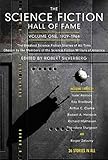


The order is the order of Bhatia’s recommendations, not a ranking. Several entries are translated works; translator credits are included where his article supplies them.
Politics, power and alternative societies
The Dispossessed — Ursula K. Le Guin
Le Guin sets an anarchist society on the inhospitable moon Anarres against the more familiar world of Urras. Bhatia points to the novel’s questions about freedom and oppression, and about whether a society can be built beyond entrenched power structures and hierarchies.
#1 Best Overall
Ninefox Gambit — Yoon Ha Lee
The opening novel of the Machineries of Empire trilogy turns a ruling system’s calendar into a mechanism for enforcing consensus reality. When people depart from that consensus, “calendrical rot” follows. Bhatia emphasizes the book’s social commentary and its concern with resistance to repression, within a military science-fiction framework.
Vagabonds — Hao Jingfang, translated by Ken Liu
A project to build a utopian society on Mars shapes this novel’s relationship between Mars and Earth. Bhatia contrasts its more state-led society with the anarchism of The Dispossessed, offering two sharply different ways to imagine political life beyond Earth. Hao’s short story “Folding Beijing” also won a Hugo Award; Bhatia’s article does not specify the award year.
History, censorship and the pressure of the state
Roadside Picnic — Arkady and Boris Strugatsky, translated from Russian by Olena Bormashenko
After an alien visit, humans confront the mysterious things left behind. Bhatia connects the novel’s Cold War setting to anxieties about the nuclear arms race and notes that some works by the Strugatsky brothers circulated through samizdat under Soviet censorship. Andrei Tarkovsky’s film Stalker is based on the book.
Rank #2
Kindred — Octavia Butler
A Black woman living in the 1970s is repeatedly pulled back to a slave plantation in the early 1800s. Butler brings time-travel science fiction and alternate history into conversation with African-American writing, using the premise to confront the violence of plantation slavery.
The Tool Desk
Outbyte PC Repair FREERepair Windows errors before they cause bigger problemsFix Now →Outbyte Driver Updater FREEScan for outdated or missing drivers - takes under a minuteDriver Scan →The Queue — Basma Abdel Aziz, translated from Arabic by Elisabeth Jaquette
In a fictional country Bhatia describes as a thinly veiled Egypt, people wait in a queue imposed by the authorities. He situates the dystopian novel in the aftermath of the Egyptian Arab Spring and the rise of the al-Sisi dictatorship, with attention to state power as well as ordinary courage, kindness and brutality.
Palestine +100 — edited by Basma Ghalayini
This short-story collection imagines Palestine and Israel in 2048, a century after the 1948 Nakba. Its stories come from Gaza, the West Bank and Israel. Bhatia places it within the +100 series, alongside Iraq +100 and Kurdistan +100.
Rank #3
Identity, relationships and contact across difference
Solaris — Stanisław Lem, translated from Polish by Bill Johnston
A planet-spanning ocean appears to be alive and affects the minds of the human investigators studying it. Bhatia highlights Lem’s imagery and the novel’s engagement with environmental destruction. The book was also adapted by Tarkovsky.
Ancillary Justice — Ann Leckie
The first book in a trilogy centers on a sentient spaceship and considers gender, identity, personhood and “the other.” Bhatia describes it as space opera whose interest lies not just in grand spectacle but in those questions.
Quick wins for a faster PC:
Repair Windows errors before they cause bigger problemsFix Now →Scan for outdated or missing drivers - takes under a minuteDriver Scan →Children of Time — Adrian Tchaikovsky
Intelligent spiders develop a society through accelerated evolution while humans search for a home. Bhatia draws attention to the novel’s linked themes of first contact, communication between species, human nature and conflict.
Rank #4

- Used Book in Good Condition
The Mountain in the Sea — Ray Nayler
Sentient octopuses, the challenge of communication and competing corporate interests around a sanctuary meet in this novel. Bhatia places it at the intersection of climate fiction and first contact. His 2024 article called the book an Arthur C. Clarke Award finalist “this year,” referring to its publication context rather than the current year.
Space opera, deep time and alien worlds
Look to Windward — Iain M. Banks
This Culture novel unfolds centuries after a Mind’s role in the destruction of a star. The consequences approach the world the Mind maintains, while an enemy civilization threatens the Culture. Bhatia characterizes the book as reflective and melancholic space opera.
The House of Suns — Alastair Reynolds
This standalone novel follows cloned humans who travel the galaxy and reunite every 200,000 years. Bhatia singles out its sense of deep time, long memory and awe.
PC Slower Than It Used to Be?
A free scan shows the junk files, broken settings and background clutter dragging Windows down - then fixes them in one click.Free scan · Windows 10 & 11Outdated Drivers Are Slowing You Down
One free scan finds every outdated or missing driver and matches the right update for your exact hardware.Free scan · exact hardware matchBest Value
Science fiction with horror, satire and melancholy
A Planet for Rent — Yoss, translated from Spanish by David Frye
In this linked-story mosaic, Earth becomes a vacation destination for advanced aliens and humans are treated as exhibits. Bhatia describes its tone as darkly comic and melancholic.
Rosewater — Tade Thompson
Aliens arrive near Lagos with apparently healing powers and potentially more troubling intentions. Bhatia describes this British-Nigerian writer’s novel as a blend of science fiction and body horror that moves between comedy and seriousness.
How to choose a first book from the list
There is no prescribed starting point: Bhatia’s selection is meant to show breadth, not to rank the books. A useful way to choose is by the kind of question or reading experience you want:
- For political systems and resistance: try The Dispossessed, Ninefox Gambit or The Queue.
- For history and its violence: consider Kindred or Palestine +100.
- For alien contact and communication: look to Solaris, Children of Time or The Mountain in the Sea.
- For vast scale and spacefaring stories: choose Look to Windward or the standalone The House of Suns.
- For a darker or more unsettling mood: consider A Planet for Rent or Rosewater.
Readers looking for translated fiction can also use the credited translators as a guide: this list names translations from Russian, Polish, Arabic and Spanish, as well as Hao Jingfang’s novel translated by Ken Liu.
The source article identifies books and, in some cases, series relationships, but it does not establish preferred editions, formats, current stock or availability in any market. Those details depend on retailer and region.
Quick Recap
Product prices and availability are accurate as of the date/time indicated and are subject to change. Any price and availability information displayed on Amazon at the time of purchase will apply.




