Quick wins for a faster PC:
Fix the driver behind crashes, sound loss and screen glitchesFind Drivers →Repair Windows errors before they cause bigger problemsFix Now →Scan for outdated or missing drivers - takes under a minuteDriver Scan →Movies have moved from imagining computing power as a hidden, almost mystical “brain” to showing server racks and purpose-built facilities. Jason Verge’s 2014 survey for Data Center Knowledge traces that shift across ten films—but the data center is often a story device for AI, hacking, surveillance, or simulation, not a realistic portrait of computing infrastructure.
From invisible computer brains to visible server rooms
In Jason Verge’s October 31, 2014 article, the changing image of the data center is as important as the technology it supposedly contains. Early examples make computing power abstract: a central intelligence, an enemy system, or the machinery behind a virtual world. Later films put recognizable racks and rooms on screen, even when the surrounding plot remains fantastical. Verge’s piece is a trade-publication interpretation, not a systematic film study or technical audit; its plausibility judgments should be understood as his editorial assessments. Read Verge’s original article.
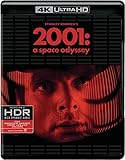
![2001: A Space Odyssey [Blu-ray] by Warner Home Video](https://m.media-amazon.com/images/I/51W5Q2gwXYL._SL160_.jpg)
Ten films, three ways to imagine computing infrastructure
The films Verge discusses are not presented in strict chronological order. Read together, they show three recurring uses for data-center imagery: as the hidden machinery of an AI, as a place where characters manipulate networks, and as a physical facility that gives a virtual or surveillance system a visible home.
| Film | What the computing system does in the story | How Verge describes its depiction |
|---|---|---|
| 2001: A Space Odyssey (1968) | HAL 9000 is the antagonist; its “brain room” is presented as the machinery behind the AI. | A supercomputer or data-center-like brain room, rather than a contemporary facility. Verge notes that Arthur C. Clarke wrote the source material. |
| The Terminator (1984) and Terminator 2: Judgment Day (1991) | Skynet is an AI antagonist supported by a vast computing system. | A data-center-like system is implied, with the computer threat more central than a recognizable facility. |
| Entrapment (1999) | A server-room heist depends on manipulating connections. | Verge calls the patch-cable scene implausible. |
| The Matrix (1999) | Machines maintain a virtual simulation in which human beings are used as an energy source. | The infrastructure supports a fictional premise; it is not a description of real energy systems. |
| Ocean’s Eleven (2001) | Characters hack a casino security-camera system. | Verge points to traditional-looking racks and patch-cable activity. |
| Live Free or Die Hard (2007) | Hackers attack critical systems; Warlock, played by Kevin Smith, operates from a basement command center. | Verge criticizes the portrayal of access to critical systems through a single dashboard as implausible. |
| Iron Man 2 (2010) | Computing infrastructure appears alongside the film’s technology-driven story. | Verge notes Oracle branding, a Larry Ellison cameo, and Oracle Exadata servers. The article speculates about paid placement, but does not establish it as fact. |
| Tron: Legacy (2010) | Computing infrastructure belongs to a futuristic digital world. | Its server-room cabinets are spaced evenly rather than arranged in conventional rows. Verge speculates about heat profiles but offers no engineering evidence for that interpretation. |
| Skyfall (2012) | A server room is part of the villain’s operational setting. | Verge calls the neatly arranged room more realistic-looking and attributes the phrase “data center movie of the year” to Compass Datacenters CEO Chris Crosby. |
| Transcendence (2014) | Johnny Depp’s character becomes an AI with human awareness and builds a facility in the fictional town of Brightwood. | Verge describes a five-story underground facility powered by a large solar-panel array and using nanotechnology. The article gives its in-film cost as $38 million. |
Why the films’ data centers matter to their plots
AI as a hidden antagonist
HAL and Skynet make computing infrastructure feel powerful without requiring the audience to understand a facility’s layout. The threat is the intelligence and its control, while the physical machines remain secondary. Transcendence makes a related idea more tangible: an AI’s ambitions acquire a location, a construction project, and a striking fictional price tag.
Free tools Windows power users keep installed
One-click scans. No signup required.
#1 Best Overall
- The disk has English audio.
Hacking as a visual shortcut
Entrapment, Ocean’s Eleven, and Live Free or Die Hard turn technical access into something viewers can watch: cables are moved, a screen is manipulated, or a command center concentrates the action. Verge distinguishes the films’ more recognizable equipment from the implausibility he sees in particular hacking mechanics. Showing racks does not, by itself, make a scene technically credible.
Surveillance and simulated worlds
In Skyfall, the room’s orderly appearance gives the villain’s operation a physical setting. In The Matrix, by contrast, infrastructure enables a vast virtual reality, but the premise of humans serving as the machines’ energy source is fictional. The data center can be central to a movie’s world without functioning as a realistic model of one.
What “realistic” means in this comparison
Verge’s comments are about how a facility or technical action looks in a movie, not the result of an engineering review. His praise for Skyfall concerns the room’s neat arrangement; his criticism of Entrapment and Live Free or Die Hard concerns the depicted access methods. These are useful distinctions: visual specificity, plot function, and technical plausibility are separate questions.
- Visual specificity: Does the film show identifiable racks or a facility, or mainly suggest a powerful computer system?
- Plot function: Does the infrastructure support AI, a heist, surveillance, a simulation, or the construction of a facility?
- Plausibility: Does Verge consider the room or technical action convincing? His view is an editorial judgment, not a verified engineering finding.
The $38 million figure belongs to the fiction
Verge reports that the facility built in Transcendence costs $38 million. That is a figure for the fictional Brightwood project as described in the 2014 article—not a real construction cost, a current benchmark, or an independently validated estimate. Its value in the film is dramatic: the AI’s power becomes legible through the scale and price of a physical site.
Quick Recap
Rank #4

- Region A NTSC
- Widescreen
- 1080pHD
- Dolby Digital
Rank #3

- Factory sealed DVD
Product prices and availability are accurate as of the date/time indicated and are subject to change. Any price and availability information displayed on Amazon at the time of purchase will apply.




