Recommended Free Tools
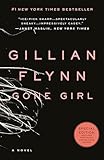
In Sally O’Reilly’s 2019 essay, the contemporary heroine is not required to be admirable, predictable or safely respectable. In Gone Girl, Amy Dunne turns the appearance of the perfect wife into part of a deception; in Sally Rooney’s Conversations with Friends, Frances and Bobbi pursue experimental lives with an anarchic streak. O’Reilly’s point is not that these women are moral examples, but that fiction can make their contradictions central to the story.
What O’Reilly means by an imperfect heroine
O’Reilly, identified in the essay as a Lecturer in Creative Writing at The Open University, argues that modern heroines’ flaws are “not only centre stage, they are celebrated.” Her 2019 formulation is that “The 21st-century heroine may be scarred, imperfect or absurd.” The emphasis is on permission: a woman protagonist need not embody conventional virtue or make herself easy to approve of in order to hold the reader’s attention.

![Gone Girl[GONE GIRL -LP][LARGE PRINT] [Paperback]](https://m.media-amazon.com/images/I/31oKrqLq93L._SL160_.jpg)


That does not mean every flaw is harmless, or that a character’s actions should be excused. Rather, the story can ask readers to follow a woman who is compromised, strategic, self-deceiving, difficult or in flux without reducing her to a cautionary lesson. Moral complexity becomes a source of narrative tension, not a defect the plot must tidy away.
Two different kinds of nonconformity
Amy Dunne: deception behind respectability
O’Reilly uses Amy in Gillian Flynn’s domestic-noir novel Gone Girl to show how a heroine can manipulate the role of the “perfect wife.” Amy outsmarts her husband and practices deception while appearing to meet the expectations attached to that role. The contrast between respectable surface and concealed strategy is central to the example: Amy’s intelligence and agency do not make her morally uncomplicated.
What’s actually slowing this PC down?
Pick the symptom - the matching free tool is one click away.
#1 Best Overall
Frances and Bobbi: experimentation without a conventional script
In Conversations with Friends, O’Reilly points instead to Frances and Bobbi’s experimental lives and anarchic attitude, including their sexual experimentation. Their example is not the same as Amy’s calculated deception. It illustrates a different refusal of prescribed behavior: the characters move through relationships and choices without serving as tidy models of conventional femininity.
Read together, the novels suggest useful questions rather than a ranking of heroines: Does a character resist expectations openly or use them as cover? Does the story reward, punish or leave her conduct unresolved? Is her agency expressed through rebellion, deception, survival or change? Those lenses help distinguish the kinds of imperfection O’Reilly brings into view.
A literary lineage, not a claim of sudden invention
O’Reilly places this contemporary openness within a long, selective literary lineage. Her examples reach back to unsettling or transgressive figures such as Medea, Grendel’s mother, the Sirens, Dido, Cleopatra and Gretel, then to Chaucer’s Wife of Bath and Shakespeare’s Portia, Lady Macbeth, Juliet and Desdemona. These characters differ sharply in period, genre and motive; together, they complicate any simple account of women in literature as merely passive or virtuous.
Later examples extend that range rather than forming a comprehensive history: George Eliot’s Dorothea Brooke and Muriel Spark’s Jean Brodie sit alongside Katniss Everdeen, Sarah Waters’s Frances Wray and Lilian Barber in The Paying Guests, Hortense Roberts in Andrea Levy’s Small Island, and Olive Kitteridge in Elizabeth Strout’s linked stories. The point of the sequence is breadth. A female protagonist can unsettle social norms in very different ways, and no single model stands for all the others.
Flaws can coexist with survival and growth
O’Reilly also invokes Eleanor Oliphant, a lonely, traumatized outsider whose strength and capacity for growth become more apparent than they first seem. That example complicates the idea that a flawed heroine must remain fixed in her worst moment. A character can change without becoming conventionally compliant or receiving a complete moral makeover.
O’Reilly connects Eleanor to literary antecedents such as Jane Eyre, and describes Bridget Jones as a descendant of Elizabeth Bennet. These pairings point to an inheritance of women whose judgments, awkwardness or independence shape the narrative. Growth may reveal unexpected strengths and strategies; it need not erase a character’s oddness or make her fit a prescribed ideal.
Independent reader supportYour contribution helps us test, update, and keep practical guides available for everyone.What the essay says about its moment—and what it does not prove
O’Reilly reads fictional noncompliance alongside public attention to male bullying and sexual harassment, and argues that contemporary fiction reflects diverse female lives. These are cultural interpretations offered by the essay, not measurements of reader preference or publishing behavior. The article supplies examples and an argument, but no named survey, study or statistic establishing how often imperfect heroines appear or whether their popularity has increased.
So the strongest conclusion is interpretive, not universal: O’Reilly sees contemporary fiction making more narrative room for women who are morally ambiguous, unpredictable and unlike conventional ideals. Her closing idea that “conformity is optional” belongs with the possibility of change and unexpected strength—not with a claim that all readers want the same heroine, or that every story celebrates every choice she makes.
Quick Recap
Product prices and availability are accurate as of the date/time indicated and are subject to change. Any price and availability information displayed on Amazon at the time of purchase will apply.




