Free tools Windows power users keep installed
One-click scans. No signup required.
Four Letters of Love is both Niall Williams’s 1997 novel and a feature-film adaptation written by Williams and directed by Polly Steele. The story follows Nicholas Coughlan and Isabel Gore, two people presented as destined for one another whose lives are kept apart by family upheaval, grief, faith, misplaced love, coincidence and fate.
What is Four Letters of Love about?
Nicholas Coughlan’s life changes when his father, William, suddenly says that God has told him to become a painter. William abandons his civil-service career, his wife and his son, leaving Nicholas to live with the consequences of a decision he cannot understand.
| # | Preview | Product | Price | |
|---|---|---|---|---|
| 1 |
|
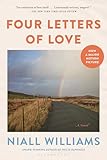
Four Letters of Love | $11.13 | Buy on Amazon |
| 2 |

|
A Real Kind of Love: (Four Letter Word, #1) | $3.99 | Buy on Amazon |
| 3 |

|
Love Letters | $7.99 | Buy on Amazon |
| 4 |

|
The Four Loves | $9.76 | Buy on Amazon |
| 5 |

|
Four Letter Word (Love Logic Book 2) | $5.99 | Buy on Amazon |
Isabel Gore’s family is also transformed by catastrophe: her brother suffers a serious accident, and her parents send her to convent school. Nicholas and Isabel grow along separate paths, shaped by loss, belief and other people’s choices. They do not know one another, yet the story frames their eventual meeting as an extraordinary convergence. The production synopsis recorded by the British Council says: “When they meet, it will be like a miracle.”
Is it a book or a movie?
It is both. Williams’s novel was first published on 1 September 1997. The paperback edition listed in Pan Macmillan/Picador’s Spring 2024 rights guide runs to 352 pages. The film is a later adaptation written by Williams from his own novel and directed by Polly Steele.
Do these 3 things before closing this tab:
1Scan for outdated or missing drivers - takes under a minute2Clear out junk files and repair common Windows errors3Fix the driver behind crashes, sound loss and screen glitches#1 Best Overall
| Version | Key details |
|---|---|
| Novel | Niall Williams; first published 1 September 1997; Picador paperback, 352 pages in the Spring 2024 rights guide. |
| Film | Directed by Polly Steele and written by Niall Williams; identified as a 2024 UK/Ireland production by AX1 Entertainment. Apple TV lists a 2025 release. |
Who is in the film?
- Pierce Brosnan
- Helena Bonham Carter
- Gabriel Byrne
- Ann Skelly
- Fionn O’Shea
The British Council lists Debbie Gray and Douglas Cummins among the producers; AX1 Entertainment also lists Martina Niland as co-producer.
How long is the film?
Film records give different running times. The British Council UK Films Database records a 125-minute drama project and marked it as in post-production on a page updated 12 May 2025. Apple TV’s listing gives a runtime of 1 hour 49 minutes and identifies the regions of origin as the United Kingdom, Ireland and United States. These are platform and production-record metadata differences, not a confirmed editing history, so viewers should use the runtime shown by the service in their territory.
Novel versus film: what changes for the audience?
The adaptation relationship is clear, but a novel and a feature film deliver this material differently. The following distinctions are practical viewing and reading expectations rather than measured audience results.
Narrative compression
A 352-page novel can spend longer on the Coughlan and Gore families, the events that separate Nicholas and Isabel, and the emotional consequences of decisions made before the couple meet. A feature film must select and compress that material into a single running time, so connective detail and secondary episodes may be less extensive on screen.
Interior lives
Williams’s prose can remain close to Nicholas’s and Isabel’s thoughts, memories and spiritual questions. Steele’s film has to externalize much of that experience through performance, dialogue, image, setting and sound. Readers who value literary narration may find the book more expansive; viewers who prefer embodied emotion may respond more immediately to the actors.
Faith, fate and the uncanny
William’s conviction that God has instructed him to paint places faith at the center of Nicholas’s family story. The lovers’ separation and eventual convergence also invite questions about destiny, coincidence and the possibility of miracles. The novel can dwell on those ideas through language and reflection, while the film must express them through dramatic situations and visual mood. References to ghosts and other uncanny elements are part of the comparison readers should expect, but they should not be mistaken for a claim that the story is a documented supernatural event.
Rank #3
Family history and Irish landscape
The family backstories are not decorative: William’s departure and Isabel’s brother’s accident determine the routes the young characters take. The Irish setting likewise carries emotional weight, giving the adaptation an opportunity to make place visible while the novel can render it through Williams’s descriptive language.
Romantic tone
The central romance is built on anticipation rather than an established relationship. Nicholas and Isabel are portrayed as made for each other before they have met, making longing, delay and faith in an unseen connection more important than conventional courtship scenes.
The Tool Desk
Outbyte Driver Updater FREEScan for outdated or missing drivers - takes under a minuteDriver Scan →Outbyte PC Repair FREEClear out junk files and repair common Windows errorsFree Scan →Where can you watch Four Letters of Love?
Apple TV and Curzon Home Cinema have film-specific listings, but availability, purchase or rental options and release timing depend on territory and date. Search for the title in the service available in your market and confirm the current listing before renting or buying. A listing in one country does not establish availability everywhere.
Rank #4
Should you read the novel first?
Read first if you want the fullest access to the two families’ histories, the characters’ interior perspectives and Williams’s literary treatment of faith, fate and the Irish landscape. Watch first if you would rather encounter the story through performances and visual atmosphere, or if you want the film’s interpretation to stand on its own before comparing it with the source.
There is no required order: the film is an adaptation, not a replacement for the novel, and the novel does not require prior knowledge of the film.
Is it based on a true story?
No source cited for the title presents Four Letters of Love as a true story. The documented basis is Williams’s novel and his screenplay adaptation of that novel. Its themes of grief, religious conviction, coincidence and family trauma may feel realistic, but that does not make the plot a nonfiction account.
Quick wins for a faster PC:
Clear out junk files and repair common Windows errorsFree Scan →Scan for outdated or missing drivers - takes under a minuteDriver Scan →Repair Windows errors before they cause bigger problemsFix Now →Best Value
How widely has the novel been published?
Pan Macmillan/Picador’s Spring 2024 rights guide says the novel was sold in over twenty countries and describes it as an international bestseller. The publisher’s Spring 2025 rights guide instead says it became a global bestseller translated into over 30 languages. These are publisher-reported reach descriptions from different guides, not an independently audited sales total, and the figures should not be combined.
The Bottom Line
Four Letters of Love is a literary love story in two forms: Williams’s 1997 novel offers the broader interior and family journey, while Steele’s film brings Nicholas and Isabel’s fate-driven meeting to the screen through its cast and visual setting. Check Apple TV or Curzon Home Cinema for current, territory-specific availability.
Quick Recap
Product prices and availability are accurate as of the date/time indicated and are subject to change. Any price and availability information displayed on Amazon at the time of purchase will apply.