Windows Errors? Fix Them Before They Spread
Repair common Windows errors and clear accumulated junk for a smoother, more stable PC - no reinstall needed.Free scan · no reinstallCrashes, No Sound, or Screen Glitches?
Random freezes, missing sound and display glitches usually trace back to one bad driver. Find and replace yours safely.Free scan · under a minuteFor a franchise built on the certainty that death eventually comes for everyone, Final Destination has been conspicuously absent for more than a decade. Final Destination: Bloodlines locking in a 2025 release date doesn’t just end that silence; it marks a deliberate re-entry point for a series that once defined studio-era horror in the early 2000s. The timing is intentional, arriving at a moment when legacy franchises are being reassessed, rebuilt, and repositioned for a new generation of moviegoers.
The 2025 date matters because it reflects a studio shake-up that reshaped priorities behind the scenes. Rather than rushing the film into an overcrowded post-pandemic slate, the studio opted for breathing room, signaling confidence in the brand and a willingness to let development align with evolving horror trends. Bloodlines is being positioned not as a nostalgic cash-in, but as a carefully timed revival meant to reassert Final Destination as a theatrical event rather than a streaming footnote.
| # | Preview | Product | Price | |
|---|---|---|---|---|
| 1 |

|
Final Destination: Bloodlines (Blu-ray) | $9.99 | Buy on Amazon |
| 2 |

|
Final Destination 6-Film Collection (Blu-Ray) | $19.99 | Buy on Amazon |
| 3 |
![Final Destination Bloodlines [Blu-ray] [2025]](https://m.media-amazon.com/images/I/4130N640UUL._SL160_.jpg)
|
Final Destination Bloodlines [Blu-ray] [2025] | $16.35 | Buy on Amazon |
| 4 |
|
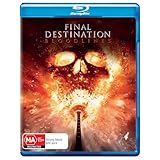
Final Destination: Bloodlines Blu-ray | $20.43 | Buy on Amazon |
Just as importantly, the release window hints at a strategic shift in how the franchise views its future. By stepping away from annualized expectations and giving the reboot space, the studio is framing Bloodlines as a potential foundation rather than a final chapter. In an era where horror franchises live or die by reinvention, 2025 suggests Final Destination isn’t simply returning—it’s recalibrating what survival looks like in a very different cinematic landscape.
Inside the Studio Shake-up: How Corporate Restructuring Reshaped Bloodlines’ Timeline
Final Destination: Bloodlines didn’t arrive at its 2025 date by accident. Its path was directly shaped by sweeping corporate changes inside Warner Bros. Discovery, where leadership shifts triggered a full reassessment of theatrical priorities, franchise value, and what kinds of films were worth long-term investment. In that environment, Bloodlines went from a quiet legacy project to a strategic test case.
#1 Best Overall
The restructuring forced studios to take a harder look at what deserved theatrical real estate versus a streaming debut. Horror, especially recognizable horror, suddenly regained value as a cost-efficient genre that could still drive box office turnout. That recalibration created space for Final Destination to return not as filler, but as a calculated release.
From Streaming Consideration to Theatrical Confidence
Earlier in development, Bloodlines was widely viewed as a potential streaming-first title, a fate shared by many mid-budget revivals during the height of platform expansion. Corporate belt-tightening changed that equation. As Warner Bros. Discovery pivoted away from volume-driven streaming and back toward theatrical identity, Bloodlines benefitted from a renewed emphasis on eventized releases.
Locking in 2025 allowed the studio to reposition the film as part of a broader theatrical horror strategy rather than a one-off revival. The extra runway meant creative teams weren’t forced to rush production to meet internal quotas. Instead, the timeline reflects a belief that Final Destination still has box office relevance when treated as a destination rather than disposable content.
Leadership Changes and a Reset on Franchise Thinking
Behind the scenes, new executive oversight brought a more cautious, franchise-first philosophy. Rather than greenlighting sequels based on name recognition alone, studios began asking whether a property could support sustained storytelling and theatrical longevity. Bloodlines’ delayed release suggests it passed that test.
Free tools Windows power users keep installed
One-click scans. No signup required.
The 2025 date also aligns with a broader effort to future-proof franchises instead of burning through them. By spacing Bloodlines away from other horror tentpoles and giving it development breathing room, the studio signaled interest in longevity rather than a quick spike. It’s a markedly different approach from the rapid sequel churn that defined the franchise’s early years.
Why Timing Became the Strategy
In the wake of restructuring, timing became as important as concept. A 2025 release positions Bloodlines in a more stable theatrical landscape, with audiences re-acclimated to genre releases on the big screen. It also avoids direct competition with overstuffed slates that once buried mid-tier horror titles.
That patience reflects a studio learning from recent misfires. Bloodlines isn’t being used to plug a scheduling gap; it’s being placed deliberately, with the expectation that a properly timed Final Destination can once again feel unavoidable. In a franchise built on inevitability, the irony is clear: survival this time depended on waiting.
From Dormancy to Momentum: The Long Road to Final Destination: Bloodlines
For a franchise once defined by relentless forward motion, Final Destination spent much of the last decade in an unusual state of limbo. After 2011’s Final Destination 5 closed the book with a clever full-circle ending, the series became a familiar Hollywood question mark: recognizable, profitable, but creatively exhausted. Bloodlines didn’t emerge from a straight line of sequels, but from years of uncertainty about whether the franchise should exist at all.
Do these 3 things before closing this tab:
1Scan for outdated or missing drivers - takes under a minute2Repair Windows errors before they cause bigger problems3Fix the driver behind crashes, sound loss and screen glitchesThe gap wasn’t accidental. Shifting audience tastes, franchise fatigue, and the rise of prestige horror forced studios to reconsider what a Final Destination movie should look like in the modern theatrical landscape. What followed was less a reboot scramble and more a prolonged recalibration.
A Franchise That Refused to Die Quietly
Development on a new Final Destination film surfaced repeatedly throughout the 2010s, often with conflicting creative directions. Early pitches ranged from a straightforward reboot to high-concept reinventions that flirted with abandoning the franchise’s defining mechanics altogether. None of them stuck long enough to justify production.
What ultimately stalled progress was the fear of redundancy. Without a compelling evolution of the franchise’s central idea, another sequel risked feeling like a greatest-hits reel of elaborate deaths. Bloodlines only gained traction once the creative conversation shifted from escalation to perspective.
The Studio Shake-Up That Changed the Equation
Momentum arrived alongside broader structural changes inside the studio system. As leadership turned over and priorities were reassessed, Final Destination benefited from executives more willing to let genre properties gestate rather than forcing them into immediate release windows. Bloodlines moved forward not because it filled a gap, but because it fit a revised long-term strategy.
The 2025 release date reflects that recalibrated thinking. Instead of chasing quick returns, the studio positioned the film to reintroduce the franchise as an event, with enough distance from its predecessors to feel intentional rather than obligatory. It’s a subtle but meaningful shift in how legacy horror brands are handled.
Reframing the Mythology for a New Era
Bloodlines also represents a tonal and structural rethink rather than a hard reset. The title itself suggests an expansion of the franchise’s internal logic, hinting at inherited consequences and generational fallout rather than random catastrophe. That approach aligns with modern horror’s preference for mythology-driven storytelling without sacrificing accessibility.
Rank #2
- DVD Collection
- Digital Copy
- 6 Film Collection
By allowing the project time to develop, the studio created space for this reframing to land. The goal isn’t to overwrite what Final Destination was, but to reinterpret its rules for an audience that’s grown more attentive to narrative cohesion. The long road to Bloodlines wasn’t just about waiting out market conditions; it was about earning the right to bring Death back into the spotlight on its own terms.
What ‘Bloodlines’ Signals About the Franchise’s Creative Reboot
At its core, Bloodlines represents a philosophical shift more than a cosmetic one. Rather than trying to outdo previous films in sheer spectacle, the new installment appears focused on recontextualizing why Death operates the way it does. That recalibration suggests a franchise finally comfortable interrogating its own mythology instead of simply repeating it.
What’s actually slowing this PC down?
Pick the symptom - the matching free tool is one click away.
From Set Pieces to Story Engine
Earlier Final Destination films were defined by their elaborate cause-and-effect death sequences, which gradually became the brand’s main attraction. Bloodlines signals a move away from deaths as isolated showstoppers and toward using them as narrative pressure points. The danger is still present, but it’s now framed as part of a broader system rather than a series of escalating stunts.
This approach reflects how horror audiences have changed. Modern genre hits reward internal logic and emotional continuity, and Bloodlines seems designed to meet those expectations without abandoning the franchise’s DNA. The tension comes not just from how Death strikes, but from understanding why it targets certain people at certain moments.
A Softer Reboot Without Erasing the Past
Importantly, Bloodlines isn’t positioned as a clean slate. The 2025 release date gives the film enough distance to function as an entry point for new viewers while still acknowledging the continuity longtime fans remember. That balance is crucial for a property whose appeal is built on shared rules and recurring themes.
The title’s emphasis on lineage hints at consequences that ripple across time, suggesting that past events still matter. Instead of ignoring earlier films, Bloodlines appears ready to treat them as foundational text, reframed through a contemporary lens. It’s a reboot in spirit, not in denial.
The Tool Desk
Outbyte Driver Updater FREEFix the driver behind crashes, sound loss and screen glitchesFind Drivers →Outbyte PC Repair FREERepair Windows errors before they cause bigger problemsFix Now →Why the Timing Matters
Landing the film in 2025 reinforces the sense that this is a deliberate reintroduction rather than a nostalgic cash-in. The extra runway allowed the creative team to rethink tone, structure, and scope, while the studio could recalibrate expectations for what Final Destination should be in a post-revival horror landscape. Timing, in this case, becomes part of the storytelling.
That patience also signals confidence. The studio isn’t rushing to capitalize on brand recognition alone, but betting that a carefully positioned return will resonate longer. Bloodlines arriving when it does suggests a franchise aiming for longevity over immediacy.
Setting the Template for What Comes Next
If Bloodlines succeeds, it likely becomes the blueprint for future Final Destination projects. The emphasis on mythology, perspective, and generational impact opens narrative doors that the franchise previously left unexplored. That expansion could sustain multiple stories without relying on simple escalation.
More broadly, the film reflects how legacy horror properties are being reshaped across the industry. With Bloodlines, Final Destination isn’t just coming back; it’s redefining the terms of its existence. The creative reboot is less about survival and more about evolution, a necessary distinction for a franchise built around inevitability.
Release Date Strategy: Positioning Bloodlines in the 2025 Horror Landscape
Securing a 2025 release date places Final Destination: Bloodlines in a horror marketplace that looks very different from the one the franchise last occupied. Studios are now more selective with theatrical horror, favoring event-style releases that feel communal and conversation-driven. By choosing 2025, the studio is signaling that Bloodlines isn’t filler content, but a title meant to compete for attention rather than slip through the cracks.
The timing also benefits from distance. With several legacy horror revivals clustered in the early 2020s, Bloodlines arrives after the initial wave of reboots and requels, when audiences are more receptive to refined takes instead of novelty alone. That breathing room allows Final Destination to reassert its identity without being overshadowed by louder, more aggressive franchise returns.
Studio Shake-Up and Strategic Recalibration
The road to 2025 wasn’t purely creative; it was shaped by behind-the-scenes restructuring. Shifts in studio leadership and distribution priorities reportedly slowed development, but they also reframed expectations for what a Final Destination film should deliver. In a landscape increasingly driven by streaming-first horror, the decision to hold Bloodlines for a theatrical window underscores renewed confidence in the brand’s box office viability.
This recalibration reflects a broader industry pattern. Studios emerging from internal shake-ups are reassessing legacy IP, focusing on fewer releases with clearer positioning. Bloodlines benefited from that mindset, evolving from a simple franchise continuation into a strategically timed tentpole meant to anchor a specific moment on the release calendar.
Quick wins for a faster PC:
Repair Windows errors before they cause bigger problemsFix Now →Scan for outdated or missing drivers - takes under a minuteDriver Scan →Clear out junk files and repair common Windows errorsFree Scan →Rank #3
- Final Destination
Finding the Right Window in a Crowded Genre
Horror in 2025 is expected to be dense, with original concepts, sequels, and prestige-leaning genre hybrids all vying for attention. Placing Bloodlines in this environment suggests the studio believes the Final Destination formula still offers something singular. Its appeal isn’t shock value alone, but the ritualistic anticipation of fate unfolding, a rhythm that plays well with audiences seeking shared theatrical experiences.
Rather than chasing trends, the release strategy positions Bloodlines as counterprogramming to elevated slow-burn horror and franchise overload alike. It’s familiar without feeling dated, structured without being formulaic. That balance could allow it to stand out amid a year where horror fans are forced to be selective.
What the Date Signals About the Franchise’s Future
A 2025 release date also functions as a statement of intent. The studio isn’t treating Bloodlines as a one-off experiment, but as a potential cornerstone for renewed franchise planning. Choosing a year that allows for careful rollout, marketing runway, and audience buildup hints at long-term ambitions rather than short-term exploitation.
If Bloodlines connects, its placement in 2025 gives the studio room to respond thoughtfully, whether that means sequels, spin-offs, or deeper world-building. In that sense, the release date isn’t just about when the film arrives, but about how Final Destination is being repositioned for the years that follow.
Recommended Free Tools
The Business of Death: Why Studios Still Bet on Final Destination
Final Destination occupies a rare space in modern horror economics. It’s a legacy franchise without a singular masked icon or mythology-heavy canon, yet its premise remains instantly legible to audiences. That clarity is precisely why, amid studio shake-ups and budget scrutiny, the series still looks like a dependable bet.
A Proven Model With Predictable Returns
Historically, Final Destination films have been modestly budgeted and reliably profitable. The franchise has never relied on A-list stars or sprawling production costs, instead monetizing concept, suspense, and inventive set pieces. In an era where studios are wary of bloated budgets, that math is hard to ignore.
Bloodlines fits neatly into that equation. By keeping scale controlled while promising theatrical spectacle, the studio can aim for strong margins rather than record-breaking grosses. For executives recalibrating risk after internal restructuring, that’s an appealing balance.
Brand Recognition Without Franchise Fatigue
Unlike long-running slasher series that demand continuity knowledge, Final Destination thrives on reinvention. Each installment resets the board, allowing new audiences to jump in without homework. That accessibility gives the brand longevity without the exhaustion that plagues more lore-heavy franchises.
The long gap since the last film also works in Bloodlines’ favor. Nostalgia has had time to build, but the concept hasn’t been overexposed. From a business standpoint, it’s a revival without the burden of recent misfires.
Theatrical Horror as a Reliable Anchor
Studios have learned that certain horror properties still perform best in theaters, particularly those built around communal reactions. Final Destination’s elaborate death sequences are designed for gasps, laughter, and shared tension, making it a natural fit for theatrical release rather than streaming-first deployment.
Securing a 2025 date signals confidence that Bloodlines can function as an event, not just content. In a marketplace where studios are cutting volume and prioritizing impact, that distinction matters. The franchise’s ability to reliably draw opening-weekend crowds gives it value beyond pure box office numbers.
Strategic IP in an Era of Consolidation
Studio shake-ups often lead to hard decisions about which legacy properties are worth preserving. Final Destination’s survival through this process suggests it’s viewed as flexible IP, capable of evolving with audience tastes without expensive reinvention. Bloodlines benefiting from a carefully chosen release window reflects that internal consensus.
More than a sequel, the film represents a test case. If Final Destination can still thrive theatrically in 2025, it reinforces the idea that smartly managed horror franchises remain essential tools in a studio’s portfolio, especially during periods of corporate transition.
Independent reader supportYour contribution helps us test, update, and keep practical guides available for everyone.Fan Expectations and Franchise Legacy: Can Bloodlines Revitalize the Brand?
For longtime fans, Bloodlines arrives carrying a specific kind of expectation: not reinvention for its own sake, but a confident return to what Final Destination does best. The franchise has never relied on a single icon or mythology, but it has cultivated a reputation for inventive, cruelly clever set pieces that turn everyday environments into lethal puzzles. A 2025 release date suggests the studio understands that expectation and believes the material is strong enough to meet it.
Rank #4
- Horror Movies
Crucially, the extended development window signals intention rather than obligation. In a post-shake-up landscape where rushed releases are often casualties of corporate pressure, Bloodlines’ placement implies a desire to get the formula right, not simply keep the IP active.
Honoring the Formula Without Repeating It
The core Final Destination premise remains deceptively simple, but fans are acutely sensitive to execution. Each sequel is judged less on narrative continuity and more on creativity, escalation, and how effectively it taps into contemporary anxieties. Bloodlines is expected to reflect modern fears and settings while maintaining the franchise’s signature rhythm of suspense and inevitability.
Free tools Windows power users keep installed
One-click scans. No signup required.
The studio’s decision to hold the film for 2025 suggests confidence that it offers something distinct rather than derivative. In an era where legacy horror often leans on callbacks and overt nostalgia, Final Destination’s strength lies in evolving the concept instead of revisiting past moments beat for beat.
A New Entry Point for a New Generation
Final Destination has always functioned as a gateway horror franchise, particularly for younger audiences discovering theatrical scares for the first time. Bloodlines securing a prime release year positions it to serve that same role again, potentially reintroducing the brand to viewers who know it more as cultural shorthand than lived experience.
From a studio perspective, that accessibility is part of the value proposition. The shake-up that reshaped release priorities appears to have favored properties that can grow audiences rather than merely satisfy existing ones, and Final Destination’s plug-and-play nature fits that mandate.
What Bloodlines Signals About the Franchise’s Future
Whether Bloodlines sparks a new run of sequels or remains a standalone revival will depend on how well it balances familiarity with surprise. The fact that it survived internal restructuring and emerged with a clear theatrical date suggests the studio sees more than short-term returns.
If successful, Bloodlines could reset Final Destination as a recurring event franchise rather than a dormant legacy title. In that sense, its 2025 release isn’t just about timing; it’s a statement about confidence in the brand’s ability to evolve without losing its identity.
What Comes After Bloodlines: The Future of Final Destination at the Studio
Bloodlines arriving in 2025 doesn’t just close a long gap between sequels; it effectively tests whether Final Destination still belongs in a theatrical-first future. The studio shake-up that reshuffled priorities placed greater emphasis on scalable, mid-budget genre films that can perform reliably without superhero-sized risk. In that environment, Final Destination stands out as a rare horror property with brand recognition, flexible storytelling, and no dependence on returning characters.
The decision to give Bloodlines a firm release date rather than quietly diverting it to streaming signals a larger strategic bet. The studio appears to view the franchise as an adaptable engine rather than a nostalgia play, one that can respond to shifting audience fears and changing theatrical habits. If Bloodlines delivers, it positions Final Destination as a repeatable theatrical option in a market increasingly cautious about greenlighting original horror at scale.
A Franchise Built for Modular Expansion
Unlike mythology-heavy horror series, Final Destination thrives on concept over continuity. That makes it unusually well-suited to modern franchise planning, where studios value properties that can expand or pause without narrative strain. Bloodlines could easily function as the first chapter in a loose new cycle, opening the door to future installments that experiment with tone, setting, or even release models.
This modular design also aligns with post-shake-up development strategies favoring creative autonomy at controlled budgets. New filmmakers can be brought in without the pressure of managing dense lore, while the studio maintains a consistent brand promise. It’s a low-friction way to keep a horror franchise alive without oversaturating the market.
Theatrical Confidence in a Cautious Era
Locking Bloodlines into a 2025 theatrical window reflects confidence not just in the film, but in audience appetite for communal horror experiences. Final Destination has always benefited from packed theaters reacting in unison to its elaborate set pieces. The studio’s choice suggests it still sees value in that shared tension, even as many genre titles debut digitally.
That confidence carries implications beyond a single release. A strong performance could reaffirm theatrical horror as a dependable pillar rather than a gamble, encouraging further investment in similarly scaled franchises. For Final Destination specifically, it may mark the transition from a once-dormant series to a deliberately paced, event-style brand.
Ultimately, what comes after Bloodlines depends on whether inevitability still resonates in a crowded horror landscape. By emerging intact from a studio shake-up and landing a 2025 release, Final Destination has already beaten the odds once. If audiences respond, the franchise’s future may be less about cheating death and more about proving it was never really gone.
What’s actually slowing this PC down?
Pick the symptom - the matching free tool is one click away.
Quick Recap
Product prices and availability are accurate as of the date/time indicated and are subject to change. Any price and availability information displayed on Amazon at the time of purchase will apply.

