Free tools Windows power users keep installed
One-click scans. No signup required.
Film noir is a darkly skeptical way of telling crime stories: wrongdoing exposes a compromised society, while guilt, fear, and paranoia shape the characters’ choices. The label is flexible rather than a checklist, but shadows, morally compromised protagonists, and tangled narration often help create noir’s distinctive atmosphere.
What is film noir?
The Library of Congress describes film noir as fictional crime work in which crime becomes a dark metaphor for social problems, not simply an exception to an otherwise orderly world. Its stories often inhabit a disillusioned, fearful, and morally compromised society. Identifying the culprit may matter less than what the case reveals about the protagonist’s cynical view of that society. Library of Congress: Genre-form Guide: Film noir
That makes noir more than a murder mystery photographed in darkness. Its characters, images, and storytelling tend to reinforce one another, creating a world of suspicion and narrowed choices. These are recurring tendencies, not requirements every film must satisfy.
What makes a film noir?
No single device defines the genre. The Library of Congress points to a cluster of features that can work together:
#1 Best Overall
![Noir Archive Volume 1: 1944-1954 (9 Movie Collection) [Blu-ray]](https://m.media-amazon.com/images/I/513q0sCFhrL._SL160_.jpg)
- REGION A CODED BLU-RAY DISC (US & CANADA)
- Treasure trove of noir classics from the genre's golden age (1944-1954) includes Address Unknown, Escape in the Fog, The Guilt of Janet Ames, The Black Book (aka The Reign of Terror), Johnny Allegro, 711 Ocean Drive, Assignment Paris, The Miami Story.
- All in high definition. 12 hrs, 3 Blu-ray discs. B&W.
- Visual unease: low-key lighting, deep shadows, oblique angles, and unbalanced compositions can make a setting feel unstable. The style has affinities with German Expressionism.
- Compromised people and institutions: protagonists may be antiheroic hardboiled detectives, while associates and other characters may be corrupt. A femme fatale is one familiar character type, not a condition of entry.
- A bleak moral outlook: guilt, fear, paranoia, and disillusionment color the story, and characters often seem to have fewer good options than they hoped.
- Nonlinear or tangled storytelling: flashbacks, voice-over, and convoluted narration appear in many examples, but none is mandatory.
- Crime as a lens on society: the crime points toward wider troubles rather than functioning only as a puzzle to solve.
A detective, a fatalistic voice-over, or a single shadowy scene does not by itself make a film noir. The label fits best when the film’s tone, social meaning, characters, narrative, and visual choices support the same dark perspective.
When did classic film noir emerge?
The Library of Congress places the main noir cycle in the 1940s and into the 1950s. The label also reaches backward or forward to films outside that period when they evoke the mood and feel of classical noir. Its examples include The Maltese Falcon (1941), Double Indemnity (1944), Murder, My Sweet (1944), The Blue Dahlia (1946), Out of the Past (1947), Kiss Me Deadly (1955), and Touch of Evil (1958). Library of Congress: Genre-form Guide: Film noir
Rank #2
![Noir Archive Volume 2: 1954-1956 (9-film Collection) [Blu-ray]](https://m.media-amazon.com/images/I/51CB6D4MDSL._SL160_.jpg)
- It's time once again for film noir fans to rejoice with 9 more major studio film noirs from the period 1954-1956
Where should a newcomer begin?
This four-film route moves from an accessible introduction to noir’s increasingly unsettled worlds. It is a viewing recommendation drawn from the Library of Congress’s examples, not a definitive canon.
- The Maltese Falcon (1941): Begin with a hardboiled detective story and a world in which trust is scarce.
- Double Indemnity (1944): Continue with a story of crime and compromised choices.
- Out of the Past (1947): See how noir’s fatalistic mood can shape a character’s history and present predicament.
- Touch of Evil (1958): End with a later film associated with the classical cycle, and notice how the period’s noir atmosphere could persist beyond its center.
The Library of Congress also names Murder, My Sweet, The Blue Dahlia, and Kiss Me Deadly as examples, and notes that Chinatown invokes classical noir mood. Library of Congress: Genre-form Guide: Film noir
Rank #3
![Noir Archive Volume 3: 1957-1960 (9-film Collection) [Blu-ray]](https://m.media-amazon.com/images/I/51ZOO8a3o3L._SL160_.jpg)
- From out of the shadows comes a 9-Film 3-disc collection of classic film noir
How is neo-noir different from classic noir?
“Classic noir” usually refers to the historical cycle centered on the 1940s and 1950s. “Neo-noir” describes later films that adapt, question, or extend noir conventions. The boundary is porous: the Library of Congress includes works outside the classic cycle when they evoke its mood, while the British Film Institute describes later films as reworking the tradition. BFI: Where to begin with neo-noir
The BFI points to John Boorman’s Point Blank (1967), Robert Altman’s The Long Goodbye (1973), and Chinatown (1974) as part of a later wave. These works broadened noir’s social analysis and challenged Hollywood storytelling conventions. Classic noir developed under the Motion Picture Production Code; its decline and abandonment in 1968 allowed filmmakers to address darker material more directly. The BFI also discusses Blade Runner (1982) as a later example. BFI: Where to begin with neo-noir
Rank #4

- French Noir Collection II [Rhine Virgin | The Beast is Loose | Trapped by Fear | Passion of Slow Fire]
| Question | Classic noir | Neo-noir |
|---|---|---|
| Historical relationship | Primarily the 1940s and into the 1950s cycle described by the Library of Congress. | Later films that adapt, question, or extend noir conventions, as described by the BFI. |
| Use of crime | Crime often serves as a dark metaphor for social problems. | May retain that function while broadening social analysis; approaches vary by film. |
| Style and storytelling | Often associated with shadows, low-key lighting, oblique compositions, and sometimes flashbacks or voice-over. | May reuse or revise noir’s visual and narrative conventions rather than simply reproduce them. |
| Hollywood conventions | Developed under the Motion Picture Production Code. | Some later works more directly challenge earlier Hollywood conventions; the Code’s decline and abandonment in 1968 enabled darker material. |
The distinction is useful, not absolute: dates alone cannot settle whether a film belongs under either label.
Independent reader supportYour contribution helps us test, update, and keep practical guides available for everyone.How can viewers explore and preserve classic cinema?
For a documentary-minded viewer, noir also opens onto cinema history: what survives, how films are preserved, and how audiences encounter older works.
The Tool Desk
Outbyte PC Repair FREEClear out junk files and repair common Windows errorsFree Scan →Outbyte Driver Updater FREEFix the driver behind crashes, sound loss and screen glitchesFind Drivers →Quick Recap
Best Value
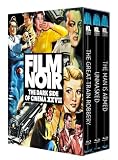
- 3 film noir classics from Poverty Row Studio Republic Pictures
- From the KL Studio Classics label
- Volume 27 of the Film Noir: The Dark Side of Cinema series
- Includes new audio commentaries for all three films
- AFI Collection at the Library of Congress: The American Film Institute says it established the collection in 1968 and that it holds more than 37,000 films from cinema’s first half-century. AFI estimates that more than 50 percent of films shown before 1950 are lost forever; that is an estimate, not a complete census. AFI: AFI Collection at the Library of Congress
- National Film Registry: The Library of Congress says selected films are considered culturally, historically, or aesthetically significant and are recommended for preservation. Library of Congress: National Film Registry FAQ
- BFI collections: The British Film Institute says its fiction collection contains more than 50,000 titles and that collections are shared through cinema screenings, DVD and Blu-ray releases, and online access. Check current collection and programme listings for present availability. BFI: Introduction to the BFI collections
Product prices and availability are accurate as of the date/time indicated and are subject to change. Any price and availability information displayed on Amazon at the time of purchase will apply.




