Feluda is not too brilliant for film. The challenge is making his intelligence—and the clues that support his deductions—visible without slowing the story. Satyajit Ray’s two Feluda films show why the answer depends on what an adaptation keeps, compresses or changes: one critic sees a mystery weakened by changes in Joi Baba Felunath, while Ray himself praised the film’s wit, visual quality and acting.
Why Feluda’s intelligence is hard to adapt
In prose, a writer can report what a detective notices, explain why a detail matters and connect that detail to a solution. A film can do those things too, but it must make them work through images, dialogue, performance and timing. If a clue is hidden too long, the solution may feel arbitrary; if it is explained too soon, suspense can disappear.


That is the central adaptation test: does the film give viewers enough evidence to follow Feluda’s reasoning while preserving the mystery’s pace, character and visual life? This is a way to assess the films, not a claim that cinema cannot convey thought or that prose is inherently superior.
From children’s magazine story to screen
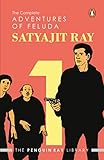
Satyajit Ray introduced Feluda in a children’s magazine story in 1965, then developed the detective in novels. The character’s life on the page matters because the films are adaptations of stories whose clues, language and atmosphere were built for reading. Readers interested in the source material can look for Feluda books by Satyajit Ray.
Do these 3 things before closing this tab:
1Fix the driver behind crashes, sound loss and screen glitches2Clear out junk files and repair common Windows errors3Scan for outdated or missing drivers - takes under a minute#1 Best Overall
Ray directed Sonar Kella (The Golden Fortress) and Joi Baba Felunath (The Elephant God), both starring Soumitra Chatterjee as Feluda. The British Film Institute describes Feluda as a popular young sleuth whom Ray brought to the big screen in those films. The film year for Joi Baba Felunath is not consistent across the cited accounts: Criterion gives 1978, while Nandini Ramnath’s 2021 essay gives 1979. Without a primary film record to settle the difference, it is safer not to assign a single year here.
What the films retain—and what can be lost
Sonar Kella: the fan-favorite benchmark
Ramnath’s 2021 essay describes Sonar Kella as a fan favorite and identifies it as Ray’s first Feluda adaptation. That makes it a useful point of comparison, but not proof that every viewer will prefer it or that it solves every challenge of adapting Feluda. The relevant question is how successfully the film turns the story’s investigation into something viewers can see and follow.
Rank #2
- Comes with secure packaging
- Easy to read text
- This product will be an excellent pick for you
Joi Baba Felunath: compression and mystery structure
Ramnath argues that Joi Baba Felunath cuts plot points that may be difficult to film and changes the ending, weakening the mystery. Her criticism gets at a real pressure in adaptation: removing a scene can do more than shorten a story if that scene carries evidence, prepares a reveal or makes the solution feel earned. That is her critical assessment, not a universal audience verdict.
Ray’s own view was more favorable. In a historical Cineaste interview republished by Satyajit Ray Org, he said: “Among the children’s films, I like Joi Baba Felunath (The Elephant God). It works very well. It’s got wit. It’s got film eye. It’s got a face, a very satisfying face, and some wonderful acting.” His praise foregrounds qualities a plot-focused critique may give less weight: visual design, performance and the film’s overall character.
Rank #3
Fidelity is not the only measure
Ray did not describe adaptation as a duty to reproduce every element unchanged. In the same historical interview, he said, “Often the screenplay evolves as a criticism of the original.” He also explained: “After reading a story many times, you may feel that a certain character would not behave the way the author has described, so some changes are made.” These comments address his approach to adaptation in general; they should not be taken as an explanation of a specific Feluda screenplay.
That distinction helps make sense of the disagreement. A departure from a book can be deliberate and artistically convincing, yet still leave a mystery less persuasive if it removes or rearranges information viewers need. The useful question is not simply whether a film is faithful, but what each change does to the clues, the characters and the experience of watching.
Rank #4
So, is Feluda too brilliant for the movies?
No. His brilliance is adaptable, but it places demands on the filmmaking. The films must make observation and deduction legible without turning the investigation into a string of explanations. Ray’s praise of Joi Baba Felunath and Ramnath’s criticism of its mystery can both be taken seriously: one values the film’s cinematic qualities, while the other argues that changes damaged the story’s puzzle. Together they show why adapting Feluda is not a matter of transferring cleverness intact; it is a matter of finding a cinematic form for it.
Quick Recap
Best Value
Product prices and availability are accurate as of the date/time indicated and are subject to change. Any price and availability information displayed on Amazon at the time of purchase will apply.




